
Choosing the best kitten food brands in 2026 is one of the most important decisions you can make for your kitten’s health. During the first year of life, kittens grow quickly and need the right balance of protein, healthy fats, vitamins, and minerals to support strong bones, muscles, brain development, and a healthy immune system. Feeding a complete and balanced kitten formula gives your pet the nutrients needed for healthy growth and helps build good eating habits from an early age.
With so many kitten food brands available today, finding the right one can feel confusing. Some foods focus on high-quality animal protein, while others include ingredients that support digestion, healthy skin, and a shiny coat. You may also wonder whether wet food or dry food is a better choice, which brands veterinarians recommend, or how to choose a formula that fits your kitten’s age and needs. Understanding what makes a kitten food nutritious is more important than choosing a product based only on its packaging or popularity.
In this guide, you’ll discover the best kitten food brands in 2026 based on ingredient quality, nutritional value, brand reputation, and overall performance. We’ll compare the top wet and dry kitten foods, explain the key ingredients to look for, highlight ingredients to avoid, and share practical feeding tips to help you make an informed decision. Whether you have a playful 8-week-old kitten or a growing indoor cat, this guide will help you choose food that supports a healthy and happy start to life
How We Selected the Best Kitten Food Brands in 2026
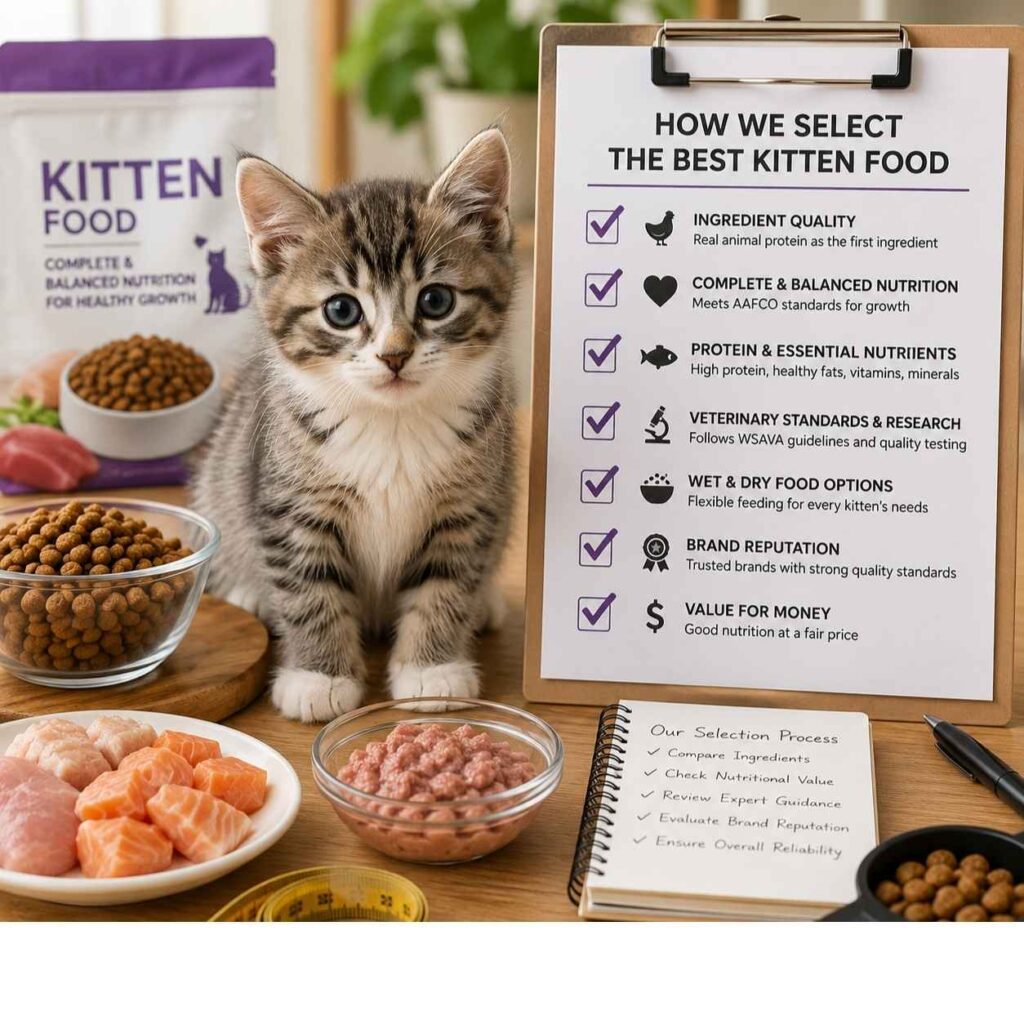
With so many kitten food brands available today, choosing the right one can feel overwhelming. Some products focus on attractive packaging and marketing, while others are backed by quality ingredients and nutritional research. To help you make a better decision, we carefully evaluated each brand using practical criteria that matter for a kitten’s health and development.
Rather than ranking foods based on popularity alone, we looked at ingredient quality, nutritional value, safety standards, expert recommendations, and overall value for money. Our goal was to recommend kitten foods that support healthy growth during the first year of life.
Ingredient Quality
One of the first things we checked was the ingredient list. High-quality kitten food should start with a real source of animal protein, such as chicken, turkey, or salmon. Growing kittens need plenty of protein to build strong muscles and stay active.
We also looked for healthy fats like DHA and Omega-3 fatty acids, which play an important role in brain and eye development.
Complete and Balanced Nutrition
Every food included in this guide is made specifically for kittens and provides complete and balanced nutrition for growth.
We gave preference to products that meet AAFCO nutritional standards, as these formulas are designed to provide the essential nutrients kittens need during their first year. This includes nutrients like taurine, calcium, phosphorus, vitamins, and minerals that support healthy bones, muscles, and overall development.
Protein and Essential Nutrients
Kittens grow quickly, so they need more protein and calories than adult cats. We selected foods that provide high-quality animal protein along with healthy fats to support energy, muscle development, and a healthy body weight.
We also considered formulas that include beneficial ingredients such as probiotics, prebiotics, and natural antioxidants to support digestion, gut health, and a strong immune system.
Veterinary Standards and Research
We also considered whether brands follow recognized nutritional guidelines and invest in research, product testing, and quality control.
Brands that follow recommendations from organizations such as WSAVA (World Small Animal Veterinary Association) and maintain high manufacturing standards received greater consideration during our evaluation.
Wet and Dry Food Options
Every kitten has different eating habits. Some prefer wet food because of its soft texture, while others enjoy dry kibble or a combination of both.
For that reason, we included brands that offer both wet and dry kitten food, giving pet owners more flexibility to choose a feeding routine that suits their kitten.
Brand Reputation
A trusted brand can give pet owners extra confidence. We looked at each company’s reputation for ingredient quality, manufacturing practices, product safety, and customer satisfaction.
Brands with a consistent history of producing reliable kitten food and maintaining strong quality standards ranked higher in our selection process.
Value for Money
Paying more doesn’t always mean getting better nutrition. We wanted this guide to include options for different budgets without sacrificing quality.
Whether you’re looking for a premium recipe with carefully sourced ingredients or a more affordable everyday option, every brand on this list offers good nutritional value for growing kittens.
Our Selection Process
We didn’t choose these brands based on advertising or popularity. Each recommendation was selected after comparing ingredient quality, nutritional value, expert guidance, product reputation, and overall reliability.
The result is a list of the best kitten food brands in 2026 that can help support healthy growth, strong muscles, a healthy digestive system, and long-term well-being throughout your kitten’s first year.
10 Best Kitten Food Brands in 2026
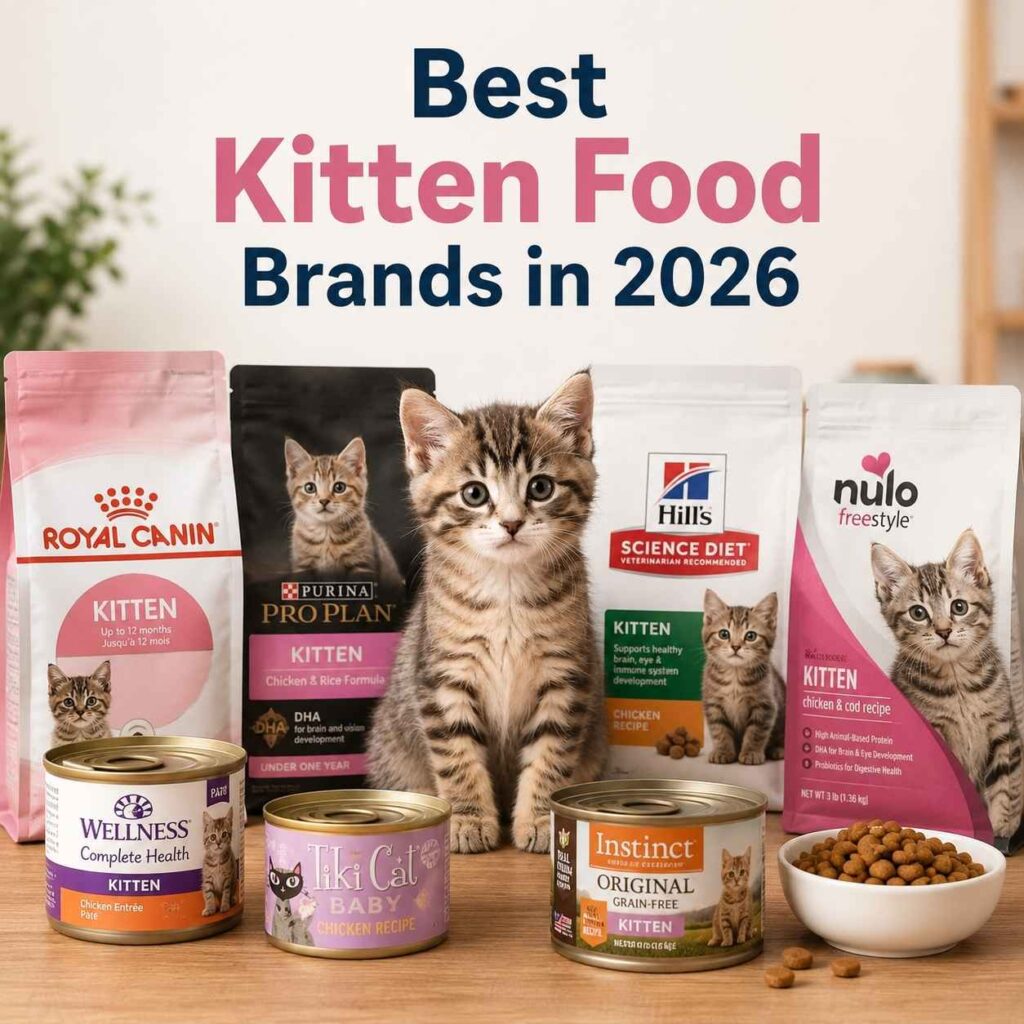
Finding the right food for your kitten isn’t always easy. With so many brands on the market, it’s hard to know which ones actually provide the nutrition a growing kitten needs.
A good kitten food should do more than satisfy hunger. It should support healthy growth, brain development, strong muscles, healthy bones, and a strong immune system. That’s why we focused on products made with real animal protein, healthy fats, and important nutrients like DHA, taurine, and Omega-3 fatty acids.
After comparing ingredient quality, nutritional value, expert recommendations, and overall brand reputation, we narrowed the list down to the kitten food brands that consistently deliver quality nutrition.
1. Purina Pro Plan Kitten
Best for: Overall nutrition and healthy growth
Overview
If you’re looking for an all-around reliable kitten food, Purina Pro Plan Kitten is one of the strongest options available. It has earned the trust of many veterinarians and cat owners because it provides balanced nutrition designed specifically for growing kittens.
Most recipes start with real chicken, giving kittens the high-quality protein they need to build lean muscles and stay active. The formula also contains DHA from fish oil, which supports healthy brain and eye development during the first year.
Another reason this brand stands out is its well-balanced formula. It includes antioxidants to help strengthen the immune system along with calcium and phosphorus for healthy bones and teeth. Since it’s available in both wet and dry varieties, it’s easy to create a feeding routine that suits your kitten.
Key Features
- Real chicken as the first ingredient
- Rich in high-quality animal protein
- DHA for healthy brain and vision development
- Taurine for heart and eye health
- Calcium and phosphorus for strong bones
- Complete and balanced nutrition
- Available in wet and dry formulas
Pros
- Excellent protein quality
- Trusted by many veterinarians
- Supports healthy growth from weaning to adulthood
- Easy to combine with wet or dry feeding
- Gentle on most kittens’ stomachs
Cons
- Costs slightly more than budget brands
- Includes grains, which some owners prefer to avoid
Best For
- First-time kitten owners
- Indoor and outdoor kittens
- Fast-growing kittens
- Anyone looking for a dependable premium kitten food
2. Royal Canin Kitten
Best for: Digestive health and sensitive stomachs
Overview
Royal Canin Kitten is well known for creating formulas that match the nutritional needs of kittens during their rapid growth stage. Instead of using a one-size-fits-all approach, the company focuses on ingredients that are easy to digest and support healthy development from weaning until adulthood.
One feature that makes this food stand out is its digestive support. The recipe contains highly digestible proteins along with prebiotics that help maintain a healthy balance in the gut. This can be especially helpful for kittens with sensitive stomachs or those adjusting to solid food.
The formula also provides DHA, taurine, Omega-3 fatty acids, vitamins, and minerals to support healthy brain development, vision, heart function, and strong bones. The kibble is small enough for young kittens to chew comfortably, and the wet food options add extra moisture to their diet.
Key Features
- Complete and balanced kitten nutrition
- Highly digestible proteins
- Added prebiotics for digestive support
- DHA for brain and eye development
- Taurine for heart and vision
- Calcium and phosphorus for healthy bones
- Available in wet and dry formulas
Pros
- Excellent for sensitive stomachs
- Helps support healthy digestion
- Small kibble that’s easy for kittens to eat
- Recommended by many veterinarians
- Wet and dry options available
Cons
- More expensive than many competitors
- Not suitable for owners looking only for grain-free food
Best For
- Kittens with digestive issues
- Indoor kittens
- First-year growth
- Owners who want a veterinarian-recommended formula
3. Hill’s Science Diet Kitten
Best for: Science-backed nutrition
Overview
Hill’s Science Diet Kitten has built a strong reputation by combining veterinary research with high-quality ingredients. Every recipe is carefully formulated to provide growing kittens with the nutrients they need during the first year of life.
Real chicken is the main ingredient in many formulas, supplying the protein needed for healthy muscle development. The food also includes DHA from fish oil to support healthy brain and eye development.
Along with protein, the recipe contains antioxidants, vitamins, minerals, taurine, calcium, and phosphorus to support healthy bones, a strong immune system, and overall development. The ingredients are easy to digest, making this food a good choice for many kittens, including those with sensitive digestion.
Whether you prefer wet food, dry food, or a combination of both, Hill’s offers several options that meet AAFCO nutritional standards.
Key Features
- Real chicken as the primary ingredient
- Science-backed nutrition
- DHA for brain development
- Taurine for heart and eye health
- Antioxidants to support immunity
- Calcium and phosphorus for bone health
- Available in wet and dry formulas
Pros
- High-quality ingredients
- Easy to digest
- Supports healthy growth and development
- Recommended by many veterinarians
- Great for mixed feeding
Cons
- Costs more than budget brands
- Limited grain-free recipes
Best For
- Growing kittens
- Owners looking for science-based nutrition
- Kittens with sensitive stomachs
- Families wanting a trusted premium food
4. Blue Buffalo Baby BLUE Healthy Growth Formula
Best for: Natural ingredients and high-protein nutrition
Overview
If you prefer feeding your kitten recipes made with natural ingredients, Blue Buffalo Baby BLUE Healthy Growth Formula is worth considering. It starts with real chicken as the primary ingredient, providing plenty of high-quality protein to support healthy muscles and steady growth.
The recipe also includes wholesome ingredients like brown rice and vegetables to provide balanced energy throughout the day. To support healthy development, Blue Buffalo adds DHA and ARA, nutrients naturally found in a mother’s milk that help with brain and eye development.
Another highlight is the inclusion of LifeSource Bits, a blend of antioxidants, vitamins, and minerals that supports immune health. Combined with taurine, calcium, phosphorus, and healthy Omega fatty acids, the formula provides complete nutrition for growing kittens.
Blue Buffalo offers both wet and dry kitten food, giving owners flexibility when planning daily meals.
Key Features
- Real chicken as the first ingredient
- High-quality protein
- DHA and ARA for brain development
- Taurine for heart and vision
- LifeSource Bits with antioxidants
- Omega-3 and Omega-6 fatty acids
- Available in wet and dry formulas
Pros
- Made with natural ingredients
- High protein for healthy growth
- Supports brain, immune, and digestive health
- No artificial flavors in many recipes
- Wet and dry options available
Cons
- Higher price than standard kitten foods
- Some kittens need a gradual transition
Best For
- Active kittens
- Owners who prefer natural ingredients
- High-protein diets
- Families looking for a premium kitten food
5. Wellness CORE Kitten
Best for: High-protein and grain-free nutrition
Overview
If you’re looking for a grain-free kitten food that’s packed with protein, Wellness CORE Kitten is a strong option to consider. It’s specially made for growing kittens and focuses on providing the nutrients they need to stay active and develop properly during their first year.
The recipes feature real chicken and turkey as the main protein sources, helping support lean muscle growth while providing plenty of energy for everyday play and exploration. Instead of relying on fillers, Wellness CORE uses quality animal ingredients to create a balanced diet for growing kittens.
To support healthy development, the formula includes DHA from salmon oil, which plays an important role in brain and eye development. It also contains taurine, Omega-3 and Omega-6 fatty acids, along with essential vitamins and minerals that help maintain a healthy heart, strong bones, healthy skin, and a soft, shiny coat.
Another feature many pet owners appreciate is the addition of probiotics, which help support healthy digestion and maintain a balanced gut. Since digestive health is important during the transition to solid food, this can be a valuable benefit for many kittens.
Wellness CORE is available in both wet and dry formulas, making it easy to choose the feeding style that works best for your kitten. The recipes are made without corn, wheat, soy, or artificial flavors, making them a popular choice for owners who prefer foods with a simpler ingredient list. They also meet AAFCO nutritional standards for complete and balanced kitten nutrition.
Key Features
- Real chicken and turkey provide high-quality animal protein.
- Grain-free recipe.
- DHA from salmon oil supports brain and eye development.
- Probiotics help promote healthy digestion and gut health.
- Taurine supports normal heart and vision function.
- Omega-3 and Omega-6 fatty acids help maintain healthy skin and a shiny coat.
- Complete and balanced nutrition for growing kittens.
Pros
- High in animal protein to support healthy muscle development.
- Grain-free recipe made with quality ingredients.
- Contains probiotics for digestive support.
- Free from artificial colors, flavors, and preservatives.
- Available in both wet and dry kitten food.
Cons
- Costs more than many standard kitten food brands.
- A grain-free diet may not be necessary for healthy kittens unless recommended by a veterinarian.
Best For
- Kittens that need a high-protein diet.
- Owners looking for a grain-free kitten food.
- Active and playful kittens.
- Families who prefer premium recipes made with natural ingredients.
6. Instinct Original Kitten
Best for: Raw-inspired nutrition and high animal protein
Overview
If you want to feed your kitten a diet that’s rich in animal protein, Instinct Original Kitten is worth considering. This premium formula is inspired by a raw diet while offering the convenience of traditional wet and dry kitten food. It’s designed to support healthy growth and provide balanced nutrition throughout your kitten’s first year.
Real chicken is the first ingredient in most recipes, giving kittens the high-quality protein they need to build lean muscles and maintain healthy energy levels. The formula also includes DHA to support brain and eye development, along with taurine, Omega-3 and Omega-6 fatty acids, calcium, phosphorus, and other essential nutrients that help support healthy bones, muscles, and a strong immune system.
One feature that makes Instinct stand out is its freeze-dried raw coating on the dry kibble. This coating adds extra flavor while providing a raw-inspired eating experience that many kittens enjoy. The brand also offers wet food options, making it easy to combine wet and dry meals for added hydration and variety.
Like the other foods on this list, Instinct Original Kitten meets AAFCO nutritional standards, giving pet owners confidence that their kittens are getting complete and balanced nutrition.
Key Features
- Real chicken as the first ingredient.
- Raw-inspired recipe with freeze-dried raw coating.
- High-quality animal protein to support muscle growth.
- DHA for healthy brain and eye development.
- Probiotics for digestive and gut health.
- Taurine for heart and vision support.
- Available in both wet and dry kitten food.
Pros
- Very high in animal protein.
- Supports healthy muscle development and daily energy.
- Includes probiotics to promote healthy digestion.
- Made without artificial colors or preservatives.
- Great option for mixed feeding.
Cons
- More expensive than many traditional kitten foods.
- The raw-inspired formula may not be necessary for every kitten.
Best For
- Active and fast-growing kittens.
- Owners looking for a protein-rich kitten food.
- Families interested in raw-inspired nutrition.
- Kittens that enjoy both wet and dry meals.
7. Purina ONE Healthy Kitten
Best for: Affordable nutrition with trusted quality
Overview
If you’re searching for a kitten food that offers good nutrition without stretching your budget, Purina ONE Healthy Kitten is a solid choice. It combines quality ingredients with balanced nutrition at a price that works well for many pet owners.
Real chicken is the first ingredient, providing the high-quality protein kittens need to build strong muscles as they grow. The recipe also contains DHA, a nutrient naturally found in a mother’s milk, to support healthy brain and vision development.
Along with protein, the formula provides taurine, calcium, phosphorus, vitamins, and minerals that help support healthy bones, heart function, and a strong immune system. Antioxidants are included to support natural defenses, while highly digestible ingredients help promote healthy digestion.
Purina ONE offers both wet and dry kitten food, making it easy to create a mixed feeding routine that adds both variety and hydration. The recipes also meet AAFCO nutritional standards for growing kittens, giving owners peace of mind that they’re feeding a complete and balanced diet.
One of the biggest advantages of this brand is its value. It delivers reliable nutrition from a well-established pet food company without the premium price tag of some competitors.
Key Features
- Real chicken as the first ingredient.
- Complete and balanced nutrition for growing kittens.
- DHA to support brain and eye development.
- Antioxidants for immune system support.
- Taurine for heart and vision health.
- Calcium and phosphorus for strong bones and teeth.
- Available in wet and dry formulas.
Pros
- Excellent value for the price.
- High-quality protein from real chicken.
- Supports healthy growth and development.
- Easy to find in most pet stores and supermarkets.
- Trusted brand with a long-standing reputation.
Cons
- Contains grains, which some owners prefer to avoid.
- Offers fewer specialty recipes than some premium brands.
Best For
- Budget-conscious pet owners.
- Growing kittens that need complete daily nutrition.
- First-time cat owners.
- Families looking for a trusted and affordable kitten food.
.
8. IAMS Proactive Health Healthy Kitten
Best for: Budget-friendly nutrition and everyday feeding
Overview
If you’re looking for a kitten food that offers good nutrition without a premium price, IAMS Proactive Health Healthy Kitten is a dependable option. It’s designed to support healthy growth during your kitten’s first year while providing the essential nutrients needed for everyday development.
Real chicken is the first ingredient, giving kittens a quality source of animal protein to help build strong muscles. The recipe also includes DHA, an important nutrient that supports healthy brain and eye development during the early stages of life.
To support overall health, the formula contains taurine, calcium, phosphorus, vitamins, and minerals that contribute to healthy bones, strong teeth, and normal heart function. It also includes natural fiber and prebiotics to promote healthy digestion, while Omega-3 and Omega-6 fatty acids help maintain healthy skin and a soft, shiny coat.
Although IAMS mainly offers dry kitten food, it provides complete and balanced nutrition that works well for most healthy kittens. It’s widely available and offers excellent value, making it a practical choice for pet owners who want quality nutrition at an affordable price.
Key Features
- Real chicken as the first ingredient.
- Complete and balanced nutrition for growing kittens.
- DHA to support brain and eye development.
- Prebiotics for healthy digestion.
- Taurine for heart and vision health.
- Omega-3 and Omega-6 fatty acids for healthy skin and coat.
- Rich in essential vitamins and minerals.
Pros
- Budget-friendly without sacrificing nutrition.
- High-quality protein supports healthy muscle growth.
- Easy for most kittens to digest.
- Supports healthy brain, immune system, and digestion.
- Easy to find in pet stores and supermarkets.
Cons
- Limited wet food options.
- Contains grains, which may not suit every owner’s preference.
Best For
- Budget-conscious pet owners.
- Healthy kittens during their first year.
- Everyday feeding.
- Families looking for a trusted and affordable kitten food.
9. Tiki Cat Baby Kitten
Best for: High-moisture wet food and protein-rich nutrition
Overview
For pet owners who prefer feeding wet food, Tiki Cat Baby Kitten is one of the best options available. Its recipes are rich in moisture and animal protein, helping kittens stay hydrated while supporting healthy growth and muscle development.
Many recipes feature real chicken, chicken liver, salmon, or other quality animal proteins as the main ingredients. These provide the essential amino acids growing kittens need to develop strong muscles and maintain healthy energy levels.
The formula also contains DHA to support brain and eye development, along with taurine, calcium, phosphorus, vitamins, and minerals that contribute to healthy bones, teeth, and heart function.
One of the biggest advantages of this food is its high moisture content. Extra hydration supports urinary health and is especially helpful for kittens that don’t drink much water. The soft texture is also easy to eat, making it an excellent choice for kittens that are transitioning from milk to solid food.
The recipes are made without artificial colors or flavors and meet AAFCO nutritional standards for complete and balanced kitten nutrition.
Key Features
- High-quality animal protein from real meat.
- High-moisture wet food for better hydration.
- DHA to support brain and eye development.
- Taurine for healthy heart and vision.
- Calcium and phosphorus for strong bones and teeth.
- Soft texture that’s easy for young kittens to eat.
- Complete and balanced nutrition.
Pros
- Rich in protein and moisture.
- Helps support hydration and urinary health.
- Easy to chew and digest.
- Made with quality animal ingredients.
- No artificial colors or flavors.
Cons
- Costs more than many standard wet foods.
- Fewer dry food options than some competing brands.
Best For
- Kittens transitioning from milk to solid food.
- Owners who prefer wet kitten food.
- Kittens that need extra hydration.
- Families looking for a premium, protein-rich diet.
10. Open Farm Kitten Recipe
Best for: Premium-quality ingredients and responsibly sourced nutrition
Overview
If ingredient quality and transparency are important to you, Open Farm Kitten Recipe is a premium option worth considering. The brand focuses on responsibly sourced ingredients and high-quality animal protein to provide balanced nutrition for growing kittens.
Real chicken and turkey are the primary ingredients in the recipe, supplying the protein needed for healthy muscle development and everyday energy. The formula also includes DHA, taurine, Omega-3 and Omega-6 fatty acids, calcium, phosphorus, vitamins, and minerals that support healthy brain development, strong bones, healthy skin, and overall growth.
To promote digestive health, Open Farm adds both prebiotics and probiotics to its recipes. The food is also made without artificial preservatives, flavors, or colors, making it a popular choice among owners who prefer natural ingredients.
Another reason many pet owners choose Open Farm is its commitment to responsible sourcing and ingredient transparency. Many of its ingredients come from farms that follow high animal welfare standards, giving owners greater confidence in what they’re feeding their kittens.
The recipes meet AAFCO nutritional standards and are available in both wet and dry formulas, allowing you to choose the feeding routine that works best for your kitten.
Key Features
- Responsibly sourced chicken and turkey.
- High-quality animal protein for healthy muscle development.
- DHA for brain and eye development.
- Prebiotics and probiotics for digestive health.
- Taurine for heart and vision support.
- Omega-3 and Omega-6 fatty acids for healthy skin and coat.
- Complete and balanced nutrition for growing kittens.
Pros
- Premium-quality ingredients with responsible sourcing.
- High in quality animal protein.
- Supports digestion, immunity, and healthy development.
- Free from artificial colors, flavors, and preservatives.
- Available in both wet and dry kitten food.
Cons
- One of the more expensive kitten food brands.
- May not be available in every local pet store.
Best For
- Owners looking for premium-quality kitten food.
- Kittens that need high-quality protein.
- Families who value responsibly sourced ingredients.
- Pet owners who prefer natural recipes with ingredient transparency.
- Growing kittens that need complete daily nutrition.
Best Wet Kitten Food Brands
Wet kitten food is an excellent choice for growing kittens because it contains a high amount of moisture, making it easier to stay hydrated. It also has a soft texture that is simple for young kittens to chew and digest, especially during the transition from milk to solid food. Many veterinarians recommend feeding wet food daily or combining it with dry food to provide a
balanced diet.
The best wet kitten food is made with real animal protein and provides complete and balanced nutrition. Look for formulas that contain DHA for brain development, taurine for heart and eye health, Omega-3 fatty acids for healthy skin and coat, and essential vitamins and minerals to support healthy growth. Choosing a recipe that meets AAFCO nutritional standards helps ensure your kitten receives the nutrients needed during the first year.
Comparison of the Best Wet Kitten Food Brands
| Brand | Best For | Main Protein Source | Key Benefits |
| Purina Pro Plan Kitten | Overall nutrition | Chicken | High protein, DHA, complete nutrition |
| Royal Canin Kitten | Sensitive digestion | Chicken | Soft texture, digestive support |
| Hill’s Science Diet Kitten | Balanced nutrition | Chicken | Easy to digest, antioxidant-rich |
| Blue Buffalo Baby BLUE | Natural ingredients | Chicken | DHA, LifeSource Bits, high-quality protein |
| Wellness CORE Kitten | Grain-free nutrition | Chicken & Turkey | High protein, probiotics |
| Tiki Cat Baby Kitten | Hydration | Chicken, Salmon | High moisture, premium animal protein |
| Open Farm Kitten Recipe | Premium ingredients | Chicken & Turkey | Responsibly sourced, digestive support |
Our Top Pick
Purina Pro Plan Kitten is our top recommendation for wet kitten food. It provides complete and balanced nutrition with high-quality animal protein, DHA, taurine, and essential vitamins and minerals. The soft texture is easy for kittens to eat, while the formula supports healthy growth, brain development, and a strong immune system.
Best for Young Kittens
Tiki Cat Baby Kitten is one of the best choices for very young kittens that are learning to eat solid food. Its soft texture and high moisture content make it easy to chew while helping kittens stay hydrated.
Best for Sensitive Stomachs
Royal Canin Kitten is an excellent option for kittens with digestive concerns. Its highly digestible ingredients and prebiotics help support healthy digestion and improve nutrient absorption.
Best Natural Wet Kitten Food
Blue Buffalo Baby BLUE Healthy Growth Formula is a great choice for owners looking for natural ingredients. It contains real chicken, DHA, antioxidants, and essential nutrients to support healthy growth without relying on artificial flavors or preservatives.
Best Premium Wet Kitten Food
Open Farm Kitten Recipe offers premium-quality nutrition with responsibly sourced ingredients. It combines high-quality animal protein with probiotics, prebiotics, and healthy fats to support digestion, immune health, and overall development.
Is Wet Food Better Than Dry Food?
Wet food and dry food each have their own benefits. Wet food helps increase water intake and is often more appealing to picky eaters. Dry food is more convenient to store, usually costs less, and can help reduce plaque buildup through chewing.
Many veterinarians recommend mixed feeding, which combines wet and dry kitten food. This approach gives your kitten the benefits of both options, including better hydration, a variety of textures, and complete, balanced nutrition. The best choice depends on your kitten’s age, health, eating habits, and your veterinarian’s advice.
Wet vs Dry Kitten Food: Which Is Better?
Many new pet owners wonder whether wet food or dry food is the better choice for their kitten. The truth is that both types of kitten food offer important benefits. The right option depends on your kitten’s age, health, eating habits, and your daily routine.
Wet kitten food contains more moisture, which helps keep kittens hydrated and supports urinary health. It also has a soft texture that is easy to chew, making it an excellent choice for young kittens and picky eaters. Dry kitten food, on the other hand, is convenient to store, usually costs less, and can stay fresh in the bowl longer. It also encourages chewing, which may help reduce plaque buildup on teeth.
The best kitten food is one that provides complete and balanced nutrition for growth and meets AAFCO nutritional standards. Whether you choose wet food, dry food, or a combination of both, make sure it contains high-quality animal protein, DHA, taurine, Omega-3 fatty acids, vitamins, and minerals to support healthy development.
Wet Kitten Food vs Dry Kitten Food
| Feature | Wet Kitten Food | Dry Kitten Food |
| Moisture Content | High, supports hydration | Low, requires more water intake |
| Protein Quality | Often high in animal protein | High-quality formulas also provide excellent protein |
| Texture | Soft and easy to chew | Crunchy kibble encourages chewing |
| Digestion | Easy for young kittens to digest | Suitable for healthy kittens after weaning |
| Storage | Refrigerate after opening | Easy to store and has a longer shelf life |
| Cost | Usually more expensive | More budget-friendly |
| Feeding Convenience | Best served fresh | Can remain in the bowl longer |
| Best For | Young kittens, picky eaters, extra hydration | Everyday feeding and budget-conscious owners |
Which Option Should You Choose?
If your kitten is between 8 and 12 weeks old, wet food is often easier to eat because of its soft texture and high moisture content. As your kitten grows, you can gradually introduce dry kitten food to provide more variety and help your kitten adjust to different textures.
For most healthy kittens, mixed feeding is one of the best approaches. Combining wet and dry kitten food gives your pet the hydration benefits of wet food while also providing the convenience of dry food. It can also make mealtime more enjoyable and encourage healthy eating habits.
No matter which feeding method you choose, always provide fresh, clean water and follow the feeding guidelines on the food package. Regular checkups with your veterinarian can also help ensure your kitten is getting the right nutrition at every stage of growth.
How to Choose the Best Kitten Food
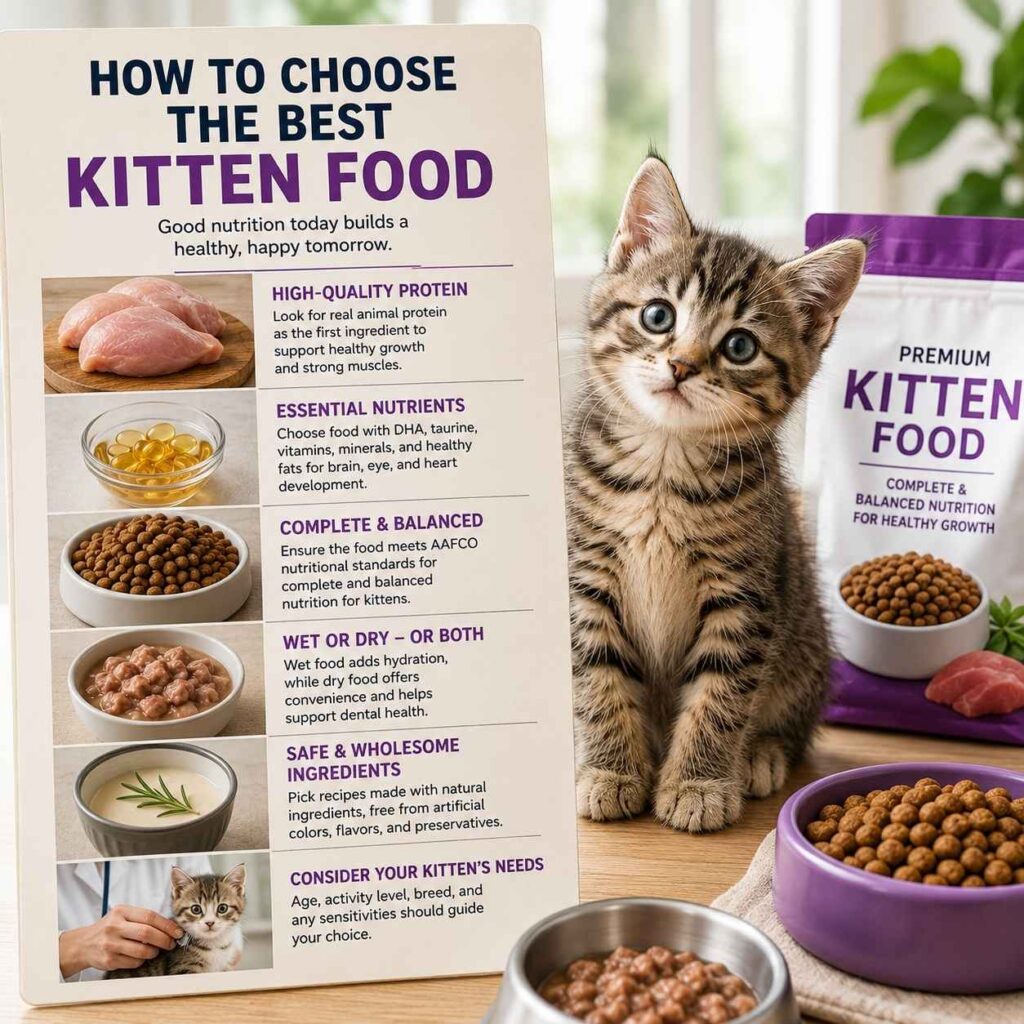
Choosing the best kitten food is about more than picking a well-known brand. Every kitten has different nutritional needs based on age, activity level, and overall health. A high-quality kitten food should provide complete and balanced nutrition to support healthy growth during the first year of life.
Before buying any kitten food, read the ingredient list and nutrition label carefully. Look for formulas that meet AAFCO nutritional standards and contain high-quality ingredients that support brain development, muscle growth, healthy digestion, and a strong immune system.
1. Choose Food Made for Kittens
Always select food that is specially formulated for kittens. Growing kittens need more protein, calories, vitamins, and minerals than adult cats. Kitten formulas are designed to support rapid growth, healthy bones, and developing muscles.
Avoid feeding adult cat food to young kittens because it may not provide enough nutrients for healthy development.
2. Look for Real Animal Protein
High-quality animal protein should be the first ingredient on the label. Ingredients such as chicken, turkey, salmon, or other real meats provide the essential amino acids kittens need to build strong muscles and stay active.
A protein-rich diet also supports healthy growth and helps maintain a healthy body weight.
3. Check for Essential Nutrients
The best kitten food should include important nutrients that support overall development, such as:
- DHA for healthy brain and eye development
- Taurine for heart health and good vision
- Omega-3 and Omega-6 fatty acids for healthy skin and a shiny coat
- Calcium and phosphorus for strong bones and teeth
- Vitamins and minerals to support the immune system
- Probiotics and prebiotics for healthy digestion and gut health
4. Consider Wet, Dry, or Mixed Feeding
Both wet and dry kitten food have their own advantages.
- Wet food provides extra moisture and is easier for young kittens to chew.
- Dry food is convenient, affordable, and easy to store.
- Mixed feeding combines the benefits of both and is recommended by many veterinarians.
Choose the option that matches your kitten’s preferences and daily routine.
5. Think About Your Kitten’s Health Needs
Some kittens may need a special formula based on their health or lifestyle.
For example:
- Indoor kittens may benefit from balanced calorie formulas.
- Kittens with sensitive stomachs may need highly digestible ingredients and added prebiotics.
- Food allergies or sensitivities may require limited-ingredient or grain-free recipes, but these should only be used if recommended by your veterinarian.
6. Buy From Trusted Kitten Food Brands
Well-known brands often invest in nutritional research, ingredient testing, and quality control. Choosing trusted manufacturers such as Purina Pro Plan, Royal Canin, Hill’s Science Diet, Wellness CORE, or Open Farm can give you more confidence in the food’s safety and nutritional value.
7. Choose Food That Fits Your Budget
Healthy kitten food is available at different price points. Premium brands may include higher-quality ingredients and additional nutritional benefits, but many affordable options also provide complete and balanced nutrition.
The best choice is a food that offers good ingredient quality, meets your kitten’s nutritional needs, and fits your budget for long-term feeding.
Quick Checklist Before Buying Kitten Food
Use this checklist when comparing different kitten food brands:
- Made specifically for growing kittens
- Meets AAFCO nutritional standards
- Real chicken, turkey, salmon, or another animal protein listed first
- Contains DHA and taurine
- Includes vitamins, minerals, and healthy fats
- Supports healthy digestion with probiotics or prebiotics
- Free from unnecessary artificial colors and flavors
- Produced by a trusted and reputable pet food brand
Taking a few extra minutes to compare ingredients and nutrition labels can help you choose the best kitten food for your pet. A balanced diet during the first year lays the foundation for a healthy, active, and happy adult cat.
Ingredients to Look for in the Best Kitten Food
Reading the ingredient label is one of the easiest ways to choose a healthy kitten food. While attractive packaging and marketing claims can catch your attention, the ingredient list tells you what your kitten is actually eating. High-quality kitten food should provide complete and balanced nutrition with the right mix of protein, healthy fats, vitamins, and minerals to support healthy growth.
Below are the most important ingredients and nutrients to look for when comparing the best kitten food brands in 2026.
| Ingredient | Why It Matters |
| Real chicken, turkey, or salmon | Provides high-quality animal protein for muscle growth |
| DHA | Supports brain and eye development |
| Taurine | Essential for healthy heart function and vision |
| Omega-3 and Omega-6 fatty acids | Promote healthy skin and a shiny coat |
| Calcium and phosphorus | Build strong bones and healthy teeth |
| Probiotics and prebiotics | Support healthy digestion and gut health |
| Vitamins and minerals | Strengthen the immune system and overall development |
| Natural antioxidants | Help protect cells and support immune health |
Real Animal Protein
The first ingredient should be a named source of animal protein, such as chicken, turkey, salmon, or duck. Protein is the foundation of a kitten’s diet because it helps build lean muscles, supports healthy growth, and provides energy for daily activities.
Avoid foods where the first ingredient is a filler instead of real meat.
DHA
DHA (Docosahexaenoic Acid) is an important Omega-3 fatty acid that supports healthy brain and eye development. Many premium kitten foods include DHA from fish oil because growing kittens need it during their first year.
Taurine
Taurine is an essential amino acid that cats cannot produce in enough amounts on their own. It supports healthy vision, heart function, reproduction, and nervous system health. A quality kitten food should always contain added taurine.
Healthy Fats
Healthy fats such as Omega-3 fatty acids and Omega-6 fatty acids help maintain healthy skin, a soft coat, and normal brain development. They also provide energy for active kittens.
Look for ingredients like fish oil or salmon oil, which are natural sources of healthy fats.
Calcium and Phosphorus
Growing kittens need strong bones and teeth. Calcium and phosphorus work together to support proper bone development and healthy skeletal growth.
These minerals are especially important during the rapid growth stage.
Probiotics and Prebiotics
A healthy digestive system helps kittens absorb nutrients more efficiently.
- Probiotics are beneficial bacteria that support gut health.
- Prebiotics feed those healthy bacteria and improve digestion.
Many premium kitten food brands include these ingredients to reduce digestive upset and support overall wellness.
Vitamins and Minerals
The best kitten food should provide a complete blend of essential vitamins and minerals, including vitamins A, D, E, and B-complex vitamins. These nutrients help support the immune system, healthy growth, energy production, and overall health.
Natural Antioxidants
Antioxidants help protect your kitten’s cells from damage and support a healthy immune system. Ingredients such as vitamin E and vitamin C are commonly added to premium kitten foods for this purpose.
Quick Ingredient Checklist
When shopping for kitten food, choose products that include:
- Real chicken, turkey, salmon, or another named animal protein
- DHA for brain and eye development
- Taurine for heart and vision health
- Omega-3 and Omega-6 fatty acids
- Calcium and phosphorus for healthy bones
- Probiotics and prebiotics for digestion
- Essential vitamins and minerals
- Natural antioxidants for immune support
Choosing kitten food with these key ingredients will give your growing kitten the nutrition needed for healthy development, strong muscles, healthy digestion, and a long, active life.
Ingredients to Avoid in Kitten Food
Not every kitten food on the market offers the same level of quality. Some products contain ingredients that add little nutritional value or are included mainly to reduce production costs. While these ingredients are not always harmful, choosing a formula with high-quality, nutritious ingredients is a better way to support your kitten’s healthy growth and development.
When comparing the best kitten food brands in 2026, take a few minutes to read the ingredient label. A food made with real animal protein, healthy fats, and essential nutrients is usually a better choice than one filled with unnecessary additives or low-quality ingredients.
Ingredients You Should Limit or Avoid
| Ingredient | Why You Should Avoid or Limit It |
| Artificial colors | Add no nutritional value and are only used to improve appearance. |
| Artificial flavors | High-quality kitten food should taste good because of real meat, not added flavorings. |
| Artificial preservatives | Some owners prefer natural preservatives instead of artificial ones. |
| Excess fillers | Large amounts of low-quality fillers can reduce the overall nutritional value of the food. |
| Added sugar | Kittens do not need added sugar in their diet. |
| Unnamed meat ingredients | Ingredients listed as “meat” without identifying the animal source provide less transparency. |
| Excess salt | Too much sodium is unnecessary in a healthy kitten diet. |
Artificial Colors
Artificial colors make food look more attractive to people, but they do not provide any health benefits for kittens. Cats choose food based on smell rather than color, so these additives are unnecessary.
Artificial Flavors
Premium kitten food gets its flavor from real chicken, turkey, salmon, or other animal proteins. Artificial flavors are generally not needed when high-quality ingredients are used.
Artificial Preservatives
Many quality kitten food brands use natural preservatives such as mixed tocopherols (a form of vitamin E) to help keep food fresh. Some pet owners prefer foods that avoid unnecessary artificial preservatives.
Low-Quality Fillers
Some kitten foods contain large amounts of inexpensive fillers that provide less nutritional value than high-quality animal protein. While certain grains can be part of a balanced diet, foods that rely heavily on fillers instead of real meat may not provide the best nutrition for growing kittens.
Added Sugar
Sugar is not a necessary part of a kitten’s diet. A complete and balanced kitten food gets its nutrition from quality protein, healthy fats, vitamins, and minerals rather than added sweeteners.
Unnamed Meat Ingredients
Look for foods that clearly identify the protein source, such as chicken, turkey, or salmon. Named animal proteins provide greater transparency than vague ingredient names like “meat” or “animal protein.”
Excess Salt
A balanced kitten food already contains the appropriate amount of sodium needed for normal body functions. Extra salt does not provide additional health benefits.
Don’t Judge a Food by One Ingredient
It is important to remember that no single ingredient determines whether a kitten food is good or bad. Instead, evaluate the entire recipe, including:
- High-quality animal protein as the first ingredient
- Complete and balanced nutrition
- DHA and taurine for healthy development
- Omega-3 and Omega-6 fatty acids
- Vitamins and minerals
- Probiotics or prebiotics for digestive support
- Compliance with AAFCO nutritional standards
Choosing kitten food with wholesome ingredients and avoiding unnecessary additives can help support healthy growth, better digestion, a strong immune system, and long-term health throughout your kitten’s life.
Kitten Feeding Guide by Age
Feeding your kitten the right amount of food at the right time is just as important as choosing the best kitten food brand. During the first year of life, kittens grow quickly and need more calories, protein, and essential nutrients than adult cats. As they grow, their feeding schedule and portion sizes should change to match their nutritional needs.
The following feeding guide provides general recommendations. Always check the feeding instructions on your kitten food package and consult your veterinarian if your kitten has special dietary needs.
Kitten Feeding Schedule by Age
| Kitten Age | Meals Per Day | Recommended Food |
| 4–8 weeks | 4–6 small meals | Soft wet kitten food or moistened kitten kibble |
| 8–12 weeks | 4 meals | Wet food, dry food, or a mix of both |
| 3–6 months | 3 meals | Complete and balanced wet and dry kitten food |
| 6–12 months | 2–3 meals | High-quality kitten food with balanced nutrition |
| 12 months and older | 2 meals | Gradually transition to adult cat food (unless advised otherwise by your veterinarian) |
4–8 Weeks
At this stage, kittens are moving from their mother’s milk or kitten milk replacer to solid food. Soft wet kitten food or dry kibble mixed with warm water is usually easier to eat.
Feed small meals several times a day because young kittens have small stomachs but high energy needs.
8–12 Weeks
Most kittens are fully weaned and can eat complete and balanced kitten food. Feed about four small meals daily to support rapid growth.
Choose a formula that contains animal protein, DHA, taurine, calcium, phosphorus, and essential vitamins and minerals for healthy development.
3–6 Months
Your kitten becomes more active during this stage and continues to grow quickly. Three meals a day usually provide enough nutrition for most healthy kittens.
Many owners use mixed feeding, offering both wet and dry kitten food to provide hydration, variety, and balanced nutrition.
6–12 Months
Growth begins to slow, but kittens still need food specially formulated for their life stage. Feeding two or three meals each day is usually enough to support healthy weight and continued development.
Continue feeding a high-quality kitten food that meets AAFCO nutritional standards until your kitten is ready for adult cat food.
When to Switch to Adult Cat Food
Most kittens can transition to adult cat food at around 12 months of age. By this time, their nutritional needs begin to change, and adult formulas become more appropriate.
When changing foods, make the transition gradually over 7 to 10 days by mixing increasing amounts of the new food with the current kitten food. This helps reduce the risk of digestive upset.
Feeding Tips for Healthy Growth
Follow these simple tips to keep your kitten healthy:
- Feed food made specifically for growing kittens.
- Follow the recommended portion sizes on the food package.
- Provide fresh, clean water at all times.
- Avoid overfeeding, even if your kitten seems hungry.
- Introduce new foods gradually.
- Monitor your kitten’s weight and body condition regularly.
- Schedule regular veterinary checkups to ensure healthy growth.
A consistent feeding schedule and a complete, balanced diet will help your kitten develop strong muscles, healthy bones, a healthy immune system, and plenty of energy for play and learning during the first year of life.
Common Mistakes to Avoid When Choosing Kitten Food
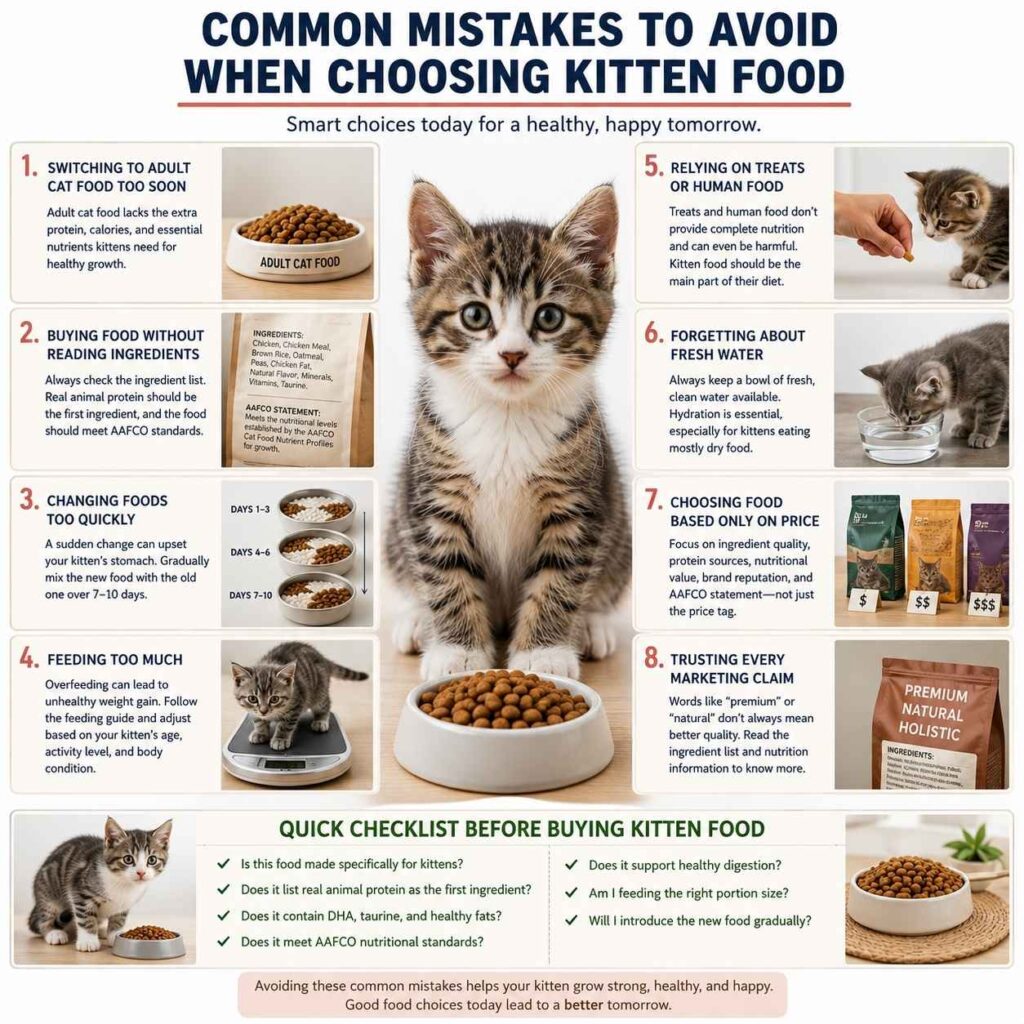
Picking a nutritious kitten food is only part of the job. The way you choose, introduce, and feed that food can have a big impact on your kitten’s health.
Many new pet owners make small mistakes without realizing it. While these mistakes are common, they can affect your kitten’s growth, digestion, and overall well-being. Knowing what to avoid can make feeding time much easier and help your kitten get the balanced nutrition needed during the first year of life.
1. Switching to Adult Cat Food Too Soon
It’s tempting to think your kitten can eat the same food as an adult cat, especially as they grow bigger. However, kittens have very different nutritional needs.
They need extra protein, calories, healthy fats, DHA, taurine, calcium, and phosphorus to support their rapid growth and development.
In most cases, kittens should stay on kitten food until they’re about 12 months old, unless your veterinarian recommends an earlier transition.
2. Buying Food Without Reading the Ingredients
Eye-catching packaging doesn’t always mean the food inside is the best choice.
Before buying any kitten food, take a moment to check the ingredient list. A quality formula should list a named animal protein—such as chicken, turkey, or salmon—as the first ingredient. It’s also a good idea to make sure the food provides complete and balanced nutrition and meets AAFCO standards.
3. Changing Foods Too Quickly
A sudden change in diet can upset your kitten’s stomach and lead to digestive problems like vomiting or diarrhea.
Whenever you introduce a new food, do it gradually. Mix a small amount of the new food with the old one and slowly increase the new food over 7 to 10 days. This gives your kitten’s digestive system enough time to adjust.
4. Feeding Too Much
Growing kittens have healthy appetites, but that doesn’t mean they should eat unlimited amounts.
Overfeeding can lead to unnecessary weight gain, especially as kittens become less active. Following the feeding guide on the package and adjusting portions based on your kitten’s age and activity level is usually the best approach.
Checking your kitten’s weight regularly can also help you spot any changes early.
5. Relying on Treats or Human Food
Treats can be useful for training or occasional rewards, but they shouldn’t replace a balanced diet.
Human food often doesn’t provide the nutrients kittens need, and some foods can even be unsafe for cats. A high-quality kitten food should remain your kitten’s main source of daily nutrition.
6. Forgetting About Fresh Water
Water is just as important as food.
Even if your kitten enjoys wet food, always keep a bowl of clean, fresh water available. Kittens that eat mostly dry food especially need enough water to stay hydrated and support healthy digestion.
7. Choosing Food Based Only on Price
Price alone doesn’t tell you whether a kitten food is good or bad.
Instead of choosing the cheapest or most expensive option, compare the things that really matter:
- Quality of the ingredients
- Animal protein sources
- Overall nutritional value
- Brand reputation
- AAFCO nutritional statement
A little comparison can help you find a food that offers both quality and good value.
8. Trusting Every Marketing Claim
Words like “premium,” “natural,” or “holistic” may sound impressive, but they don’t always reflect the actual quality of the food.
Rather than relying on marketing, read the ingredient list and nutritional information. Understanding what’s inside the bag is a much better way to judge whether a food is right for your kitten.
Quick Checklist Before Buying Kitten Food
Before adding a new kitten food to your cart, ask yourself these simple questions:
- Is this food made specifically for kittens?
- Does it list real animal protein as the first ingredient?
- Does it contain DHA, taurine, and healthy fats?
- Does it meet AAFCO nutritional standards?
- Does it support healthy digestion?
- Am I feeding the right portion size?
- Will I introduce the new food gradually?
Paying attention to these details can make a real difference. A healthy diet, consistent feeding routine, and good food choices give your kitten the best chance to grow into a healthy, active adult cat.
Frequently Asked Questions (FAQs)
What is the best kitten food brand in 2026?
The best choice depends on your kitten’s needs, but Purina Pro Plan Kitten, Royal Canin Kitten, and Hill’s Science Diet Kitten continue to rank among the top options. They offer complete and balanced nutrition, high-quality animal protein, and essential nutrients that support healthy growth throughout the first year.
Is wet food or dry food better for kittens?
Both can be excellent choices. Wet food helps increase water intake and is usually easier for young kittens to eat, while dry food is convenient, easy to store, and often more economical. Many veterinarians recommend feeding a combination of both to provide variety and balanced nutrition.
How long should kittens stay on kitten food?
Most kittens should continue eating kitten food until they reach around 12 months of age. After that, you can gradually transition to adult cat food over the course of a week. If your kitten has special health needs, your veterinarian may recommend a different schedule.
What ingredients should I look for in kitten food?
Look for foods that start with real animal protein and include nutrients such as DHA, taurine, Omega-3 fatty acids, calcium, phosphorus, vitamins, minerals, and probiotics. These nutrients help support healthy growth, brain development, digestion, and a strong immune system.
Is grain-free kitten food necessary?
Not for most kittens.
Healthy kittens can usually digest grains without any issues. Grain-free diets are generally recommended only when a veterinarian identifies a food allergy or sensitivity.
How often should I feed my kitten?
Young kittens usually need four to six small meals each day. As they grow older, you can gradually reduce feeding to two or three meals per day, depending on their age and your veterinarian’s advice.
Can kittens eat adult cat food?
Adult cat food isn’t designed to meet the nutritional needs of growing kittens.
To support proper growth and development, kittens should eat food made specifically for their life stage until they’re around one year old.
How can I tell if a kitten food is good quality?
A quality kitten food should contain real animal protein as the first ingredient, provide complete and balanced nutrition, meet AAFCO standards, and come from a trusted manufacturer with strong quality and safety practices.
Can I switch my kitten’s food overnight?
It’s better not to.
Changing foods too quickly can upset your kitten’s stomach. Gradually mixing the new food with the old food over 7 to 10 days is the safest way to make the transition.
What feeding method works best for kittens?
Many pet owners have good results with mixed feeding, which combines wet and dry kitten food. This gives kittens extra hydration from wet food while still providing the convenience and texture of dry kibble
Conclusion
Choosing the best kitten food brands in 2026 is an investment in your kitten’s future health. The right food provides much more than daily nutrition—it supports healthy growth, brain development, strong bones, healthy muscles, and a resilient immune system during the most important stage of your kitten’s life.
As you compare different brands, don’t be influenced by advertising alone. Instead, pay close attention to the ingredient list, nutritional quality, and whether the food provides complete and balanced nutrition for growing kittens. Choosing recipes with real animal protein, DHA, taurine, healthy fats, vitamins, and minerals will give your kitten the nutrients needed to thrive.
Every kitten is different, so the best food is the one that matches your kitten’s age, activity level, health, and individual needs. Combined with a consistent feeding schedule, fresh water, and regular veterinary checkups, a high-quality diet will help your kitten grow into a healthy, happy companion for years to come.