
Feeding your kitten the right food is one of the best things you can do for its health. During the first year, kittens grow very quickly. Their bodies need high-quality protein, healthy fats, vitamins, and minerals to build strong bones, healthy muscles, and a strong immune system. They also need important nutrients that support brain and eye development. This is why many new cat owners ask the same question: Wet vs Dry Food for Kittens: What’s Better?
The truth is that there is no one-size-fits-all answer. Both wet food and dry food have their own benefits. Wet food provides extra moisture, which helps keep kittens hydrated and is usually easier to chew. Dry food, also known as kibble, is easy to store, costs less, and stays fresh longer after serving. When you choose a high-quality kitten food that is specially made for growing kittens, both options can provide complete and balanced nutrition.
In this guide, you’ll learn the key differences between wet and dry kitten food in a simple and practical way. We’ll compare their nutrition, hydration, cost, convenience, and dental benefits. You’ll also discover the pros and cons of each option, learn when feeding both types of food may be the best choice, and get useful tips to help your kitten grow into a healthy and happy adult cat. By the end of this article, you’ll have the confidence to choose the feeding plan that works best for your kitten.
Quick Comparison: Wet vs Dry Kitten Food
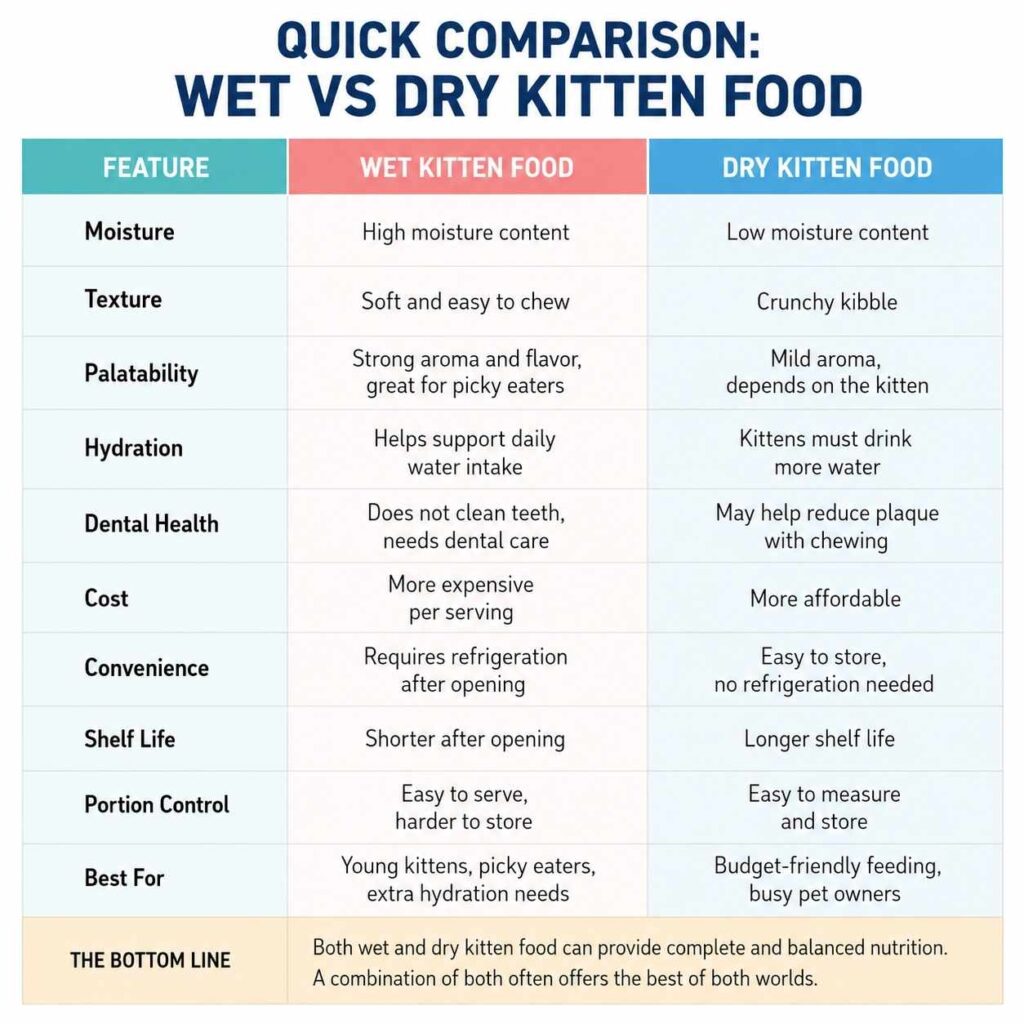
If you’re looking for a quick answer, both wet kitten food and dry kitten food can be healthy choices for growing kittens. The most important thing is to choose a food that is specially made for kittens and provides complete and balanced nutrition. A high-quality formula should contain real animal protein, healthy fats, vitamins, minerals, DHA, taurine, and other essential nutrients that support healthy growth.
Wet food and dry food each have their own advantages. Wet food contains a high amount of moisture, which helps keep kittens hydrated and is easier for young kittens to chew. Dry food, also called kibble, is more affordable, easy to store, and convenient for daily feeding. Many pet owners choose to feed both wet and dry food so their kittens can enjoy the benefits of each.
The table below highlights the main differences between wet and dry kitten food.
| Feature | Wet Kitten Food | Dry Kitten Food |
| Moisture Content | High (about 70–80%) | Low (about 8–10%) |
| Hydration | Helps keep kittens hydrated | Kittens need to drink more fresh water |
| Protein Quality | High when made with real animal protein | High in quality kitten formulas |
| Healthy Fats | Supports energy and brain development | Also provides healthy fats for growth |
| Calories | Lower calorie density per serving | Higher calorie density per serving |
| Texture | Soft and easy to chew | Crunchy kibble |
| Best for Young Kittens | Excellent | Better after kittens adjust to solid food |
| Storage | Refrigerate after opening | Store easily at room temperature |
| Shelf Life | Short after opening | Long shelf life |
| Cost | Usually more expensive | More budget-friendly |
| Convenience | Needs regular serving | Can stay fresh in the bowl longer |
| Dental Health | Does not clean teeth | Chewing kibble may provide a small benefit, but regular dental care is still necessary |
There is no single type of food that is best for every kitten. The right choice depends on your kitten’s age, health, activity level, and eating habits. Whether you feed wet food, dry food, or a combination of both, choose a high-quality kitten food that supports healthy muscles, strong bones, brain development, and a healthy immune system. A balanced diet, along with fresh water and regular veterinary care, will help your kitten grow into a healthy and active adult cat.
Understanding Your Kitten’s Nutritional Needs
Kittens grow very quickly during their first year of life. Their bodies need extra energy and the right nutrients to support healthy development. During this stage, their muscles, bones, brain, and immune system are still growing. Feeding a high-quality kitten food made especially for growing kittens gives them the nutrition they need to stay active, healthy, and strong.
One of the most important nutrients in a kitten’s diet is high-quality animal protein. Protein helps build strong muscles, repair body tissues, and support healthy growth. Healthy fats provide energy and help the body absorb important vitamins. Nutrients like DHA support brain and eye development, while taurine is essential for healthy vision and heart function. Your kitten also needs calcium and phosphorus to build strong bones and teeth during this important stage of life.
A healthy kitten diet should also include vitamins, minerals, and antioxidants that help strengthen the immune system. Some kitten foods contain probiotics, which support healthy digestion and improve nutrient absorption. Whether you feed wet food, dry food, or a mix of both, choose a product that is specially made for kittens. Adult cat food does not provide the same balance of nutrients that growing kittens need.
When buying kitten food, always read the label before making a choice. Look for products that are labeled as complete and balanced for kittens and meet nutritional standards set by AAFCO. This helps ensure your kitten receives the right balance of protein, healthy fats, vitamins, and minerals in every meal.
Essential Nutrients Every Kitten Needs
| Nutrient | Why It Matters |
| High-Quality Animal Protein | Builds strong muscles and supports healthy growth. |
| Healthy Fats | Provide energy and help keep the skin and coat healthy. |
| DHA | Supports healthy brain and eye development. |
| Taurine | Helps maintain healthy vision and heart function. |
| Calcium | Builds strong bones and teeth. |
| Phosphorus | Works with calcium to support healthy bone growth. |
| Vitamins and Minerals | Support normal body functions and overall health. |
| Omega-3 Fatty Acids | Help support brain development and a healthy coat. |
| Probiotics | Promote healthy digestion and support gut health. |
| Fresh Water | Keeps your kitten hydrated and supports digestion and urinary health. |
Giving your kitten the right nutrition during the first year creates a strong foundation for a healthy adult life. A balanced diet, the right portion sizes, and a regular feeding schedule can help your kitten grow into a happy, active, and healthy cat.
What Is Wet Kitten Food?
Wet kitten food is specially made to meet the nutritional needs of growing kittens. It contains a high amount of moisture, usually between 70% and 80%, which helps keep kittens hydrated throughout the day. You can buy it in cans, trays, or pouches. Because it has a soft texture and rich flavor, many kittens enjoy eating it. It is also a good choice for young kittens that are moving from milk to solid food or are still developing their teeth.
A high-quality wet kitten food provides complete and balanced nutrition. It is usually made with real animal protein, healthy fats, vitamins, and essential minerals that support healthy growth. Many formulas also include important nutrients such as DHA, taurine, Omega-3 fatty acids, calcium, and phosphorus. These nutrients help build strong muscles and bones, support brain and eye development, and keep your kitten’s heart and immune system healthy.
Wet kitten food comes in different textures to suit different eating habits. Some kittens enjoy smooth food, while others prefer shredded meat or chunks in gravy. If your kitten is a picky eater, trying different textures may help you find the one it enjoys the most.
Common Types of Wet Kitten Food
You can choose from several types of wet kitten food, including:
- Pâté: Smooth and soft, making it ideal for young kittens.
- Chunks in Gravy: Small pieces of meat served in a flavorful gravy.
- Shredded Meat: Thin strips of meat with extra moisture.
- Mousse: A light and creamy texture that is easy to eat.
- Minced Formula: Finely chopped meat that is simple to chew and digest.
Benefits of Wet Food for Kittens
Wet food offers many benefits for growing kittens.
- High moisture content helps keep kittens well hydrated.
- Soft texture makes it easier to chew and swallow.
- A good choice during the weaning stage.
- Rich smell and taste encourage picky eaters to eat better.
- Supports urinary tract and kidney health by increasing daily water intake.
- Provides high-quality animal protein for healthy muscle growth.
- Contains essential nutrients that support brain development and a strong immune system.
- Works well for kittens that have trouble chewing dry kibble.
Drawbacks of Wet Food for Kittens
Wet kitten food also has a few disadvantages to keep in mind.
- It usually costs more than dry kitten food.
- It can spoil quickly after opening.
- Opened food should be stored in the refrigerator.
- It should not be left in the food bowl for long periods.
- It may require more frequent feeding during the day.
- It creates more packaging waste than dry food.
Is Wet Kitten Food the Right Choice?
Wet kitten food is an excellent option for many growing kittens because it provides balanced nutrition and extra hydration in every meal. It is especially helpful for young kittens, picky eaters, and kittens that need more water in their diet. However, there is no single feeding method that works for every kitten.
The best choice depends on your kitten’s age, health, activity level, and eating habits. Many pet owners feed both wet food and dry food to give their kittens the benefits of each. A balanced feeding plan, along with fresh water and regular veterinary care, can help your kitten grow into a healthy and active adult cat.
What Is Dry Kitten Food?
Dry kitten food, also called kibble, is one of the most popular choices for feeding growing kittens. Many pet owners like it because it is affordable, easy to store, and simple to serve. Unlike wet food, dry kitten food contains only about 8% to 10% moisture. Even with its lower moisture content, it can still provide complete and balanced nutrition when it is specially made for kittens.
A high-quality dry kitten food contains real animal protein, healthy fats, vitamins, and essential minerals that support healthy growth. Many formulas also include important nutrients such as DHA, taurine, Omega-3 fatty acids, calcium, and phosphorus. These nutrients help build strong muscles and bones, support brain and eye development, and keep your kitten’s heart and immune system healthy. Since dry food contains very little water, your kitten should always have access to fresh, clean drinking water.
Most brands make dry kitten food in small kibble pieces that are easier for young kittens to chew. Many formulas are also designed to be tasty and easy to digest, which helps kittens develop healthy eating habits. When choosing a product, look for one that is labeled complete and balanced for kittens. Avoid feeding adult cat food because it does not provide the nutrients growing kittens need.
Benefits of Dry Food for Kittens
Dry kitten food offers several benefits for both kittens and pet owners.
- Easy to store and has a long shelf life.
- Usually costs less than wet kitten food.
- Simple and convenient for everyday feeding.
- Stays fresh in the food bowl for a longer time.
- Works well with automatic feeders.
- Small kibble pieces encourage chewing.
- Can be used in puzzle feeders to provide mental stimulation.
- Provides complete and balanced nutrition for growing kittens.
- Easy to measure for accurate portion control.
Drawbacks of Dry Food for Kittens
Although dry food has many advantages, it also has a few downsides.
- Low moisture content means kittens need to drink more water.
- Some young kittens may find kibble difficult to chew at first.
- It contains more calories per serving, so overfeeding can lead to unhealthy weight gain.
- Some picky eaters may prefer the smell and texture of wet food.
- Open bags should be stored properly to keep the food fresh and nutritious.
Tips for Choosing the Best Dry Kitten Food
When comparing different brands, keep these points in mind.
- Choose a product with real animal protein as the first ingredient.
- Make sure it is labeled complete and balanced for kittens.
- Look for DHA to support brain and eye development.
- Check that it contains taurine for healthy vision and heart function.
- Choose formulas with calcium and phosphorus to support strong bones and teeth.
- Look for healthy fats and Omega-3 fatty acids to support normal growth.
- Avoid products with unnecessary fillers or artificial preservatives whenever possible.
- Buy from trusted brands that follow high-quality safety standards.
Is Dry Kitten Food a Good Choice?
Dry kitten food is a healthy and practical option for many growing kittens. It provides the essential nutrients needed for healthy development while offering convenience, easy storage, and a longer shelf life. For the best results, feed the right portion size based on your kitten’s age, weight, and activity level, and always make sure fresh, clean water is available. If you want to give your kitten the benefits of both food types, you can also combine dry food with wet food as part of a balanced feeding routine.
Wet vs Dry Food for Kittens: Side-by-Side Comparison
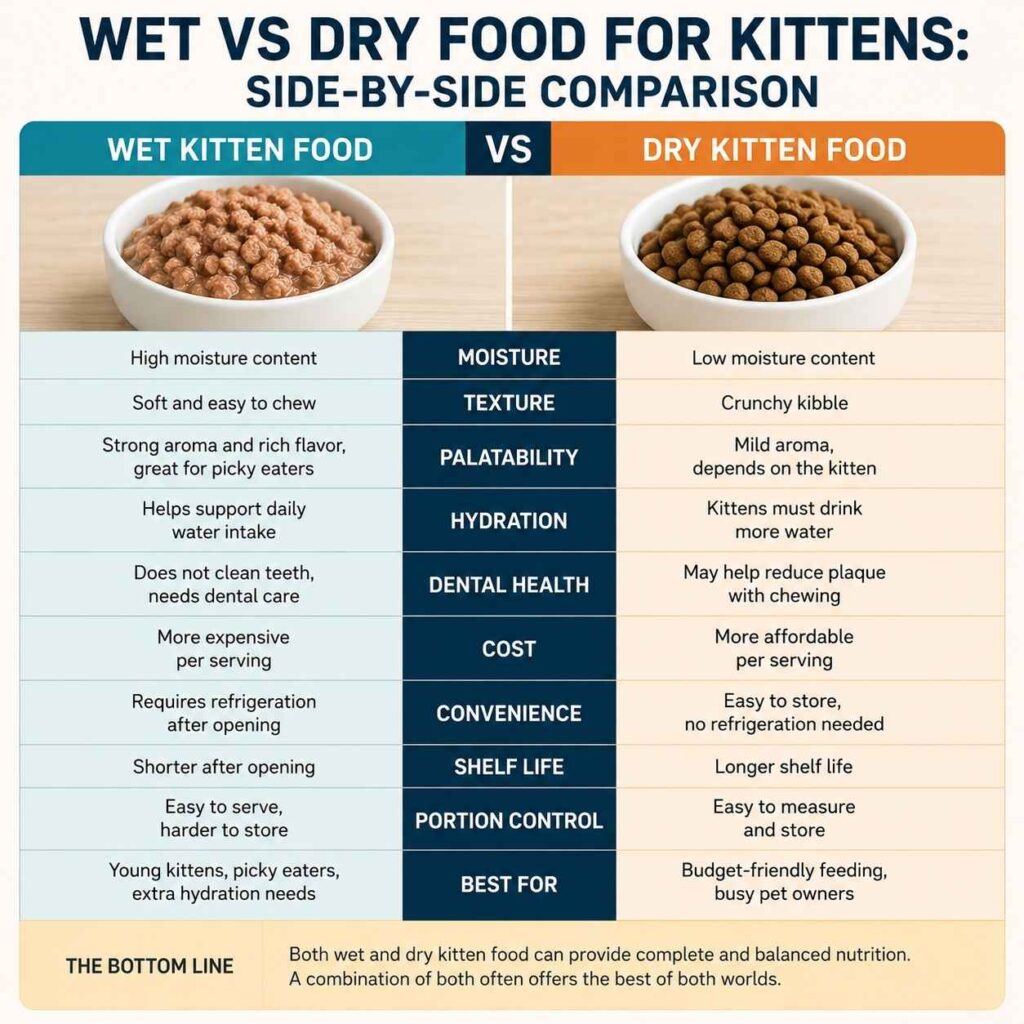
Both wet kitten food and dry kitten food can help your kitten grow into a healthy adult cat. The key is to choose a high-quality food that is specially made for kittens and provides complete and balanced nutrition. Good kitten food should contain real animal protein, healthy fats, DHA, taurine, vitamins, and minerals to support healthy growth.
Although both types of food provide the nutrients your kitten needs, they are not exactly the same. Wet food contains much more moisture, while dry food is easier to store and usually costs less. They also differ in texture, calorie content, convenience, and feeding routine. Knowing these differences will help you choose the option that best fits your kitten’s needs and your daily lifestyle.
Some kittens prefer the soft texture of wet food, while others enjoy crunchy kibble. Many veterinarians recommend feeding a combination of both because it allows kittens to benefit from the advantages of each.
Wet Food vs Dry Food: Detailed Comparison
| Factor | Wet Kitten Food | Dry Kitten Food |
| Moisture Content | High (70–80%), which helps keep kittens hydrated | Low (8–10%), so kittens need to drink more water |
| Nutrition | Complete and balanced when made for kittens | Complete and balanced when made for kittens |
| Protein Quality | Rich in high-quality animal protein | High-quality brands also provide excellent protein |
| Healthy Fats | Support energy and brain development | Support healthy growth and daily energy needs |
| Calories | Lower calorie density per serving | Higher calorie density per serving |
| Texture | Soft and easy to chew | Crunchy kibble |
| Best for Young Kittens | Ideal during weaning and early growth | Better after kittens adjust to solid food |
| Hydration | Increases daily water intake | Depends on drinking enough fresh water |
| Storage | Refrigerate after opening | Easy to store at room temperature |
| Shelf Life | Short after opening | Long shelf life |
| Cost | Usually more expensive | More budget-friendly |
| Convenience | Needs regular serving | Stays fresh in the bowl longer |
| Automatic Feeders | Not suitable for long periods | Works well with automatic feeders |
| Picky Eaters | Often more appealing because of its smell and texture | Some kittens may be less interested |
| Portion Control | Needs careful measuring | Easy to measure and serve |
Which Option Is Better?
There is no single answer because every kitten is different. Wet food is a great choice for kittens that need extra hydration, are still learning to chew, or are picky eaters. Dry food is a practical option for pet owners who want an affordable, easy-to-store food that is simple to serve every day.
As long as the food is specially formulated for kittens, both wet and dry food can provide the nutrients needed for healthy growth, strong muscles, healthy bones, and a strong immune system.
Can You Feed Both Wet and Dry Food?
Yes. Many pet owners choose to feed both wet food and dry food as part of their kitten’s daily diet. This approach gives kittens the extra moisture and rich flavor of wet food while also providing the convenience and longer shelf life of dry kibble. It also helps kittens become familiar with different textures, which may reduce picky eating as they grow.
No matter which feeding method you choose, keep an eye on your kitten’s appetite, weight, energy level, and overall health. Feed the right portion size, provide fresh, clean water every day, and schedule regular veterinary checkups. These simple habits will help your kitten grow into a healthy, active, and happy adult cat.
Is Wet or Dry Food Better for Kitten Growth?
Many new cat owners wonder whether wet food or dry food helps kittens grow better. The truth is that healthy growth depends more on the quality of the food than the type of food. A high-quality kitten food that is specially made for growing kittens will provide the nutrients needed for healthy development, whether it is wet or dry.
Growing kittens need plenty of high-quality animal protein, healthy fats, vitamins, and minerals every day. Protein helps build strong muscles and repair body tissues. Healthy fats provide energy and support normal growth. Important nutrients like DHA help with brain and eye development, while taurine supports healthy vision and heart function. Calcium and phosphorus work together to build strong bones and teeth.
How Wet Food Supports Kitten Growth
Wet kitten food offers several benefits during the early stages of life.
- Soft texture makes it easy for young kittens to chew and swallow.
- High moisture content helps keep kittens hydrated.
- Rich smell and taste encourage kittens with a small appetite to eat.
- Provides essential nutrients that support muscle growth and brain development.
- A great choice during the weaning stage.
How Dry Food Supports Kitten Growth
Dry kitten food also provides excellent nutrition for growing kittens.
- Delivers concentrated nutrition in every serving.
- Provides protein and healthy fats to support steady growth.
- Makes portion control simple and accurate.
- Easy to serve for several meals throughout the day.
- Helps kittens get used to chewing crunchy kibble as they grow.
Does Wet Food Help Kittens Grow Faster?
No. Wet food does not make kittens grow faster than dry food. Healthy growth depends on getting the right amount of calories and nutrients every day. A kitten that eats a complete and balanced diet will grow at a healthy rate, whether the food is wet or dry.
Does Dry Food Provide Enough Nutrition?
Yes. High-quality dry kitten food provides all the essential nutrients a growing kitten needs. The most important thing is to choose a product that is labeled complete and balanced for kittens. Because dry food contains very little moisture, always make sure your kitten has access to fresh, clean drinking water throughout the day.
Which Feeding Option Is Best?
For many kittens, feeding both wet food and dry food is a practical choice. Wet food helps increase daily water intake and offers a soft, tasty meal. Dry food is convenient, easy to store, and simple to measure. A mixed feeding routine also introduces different textures and flavors, which may help prevent picky eating later in life.
No matter which feeding method you choose, focus on quality instead of choosing one type of food over the other. Look for kitten food made with real animal protein and essential nutrients like DHA, taurine, Omega-3 fatty acids, calcium, and phosphorus. Feed the right portion size based on your kitten’s age and weight, provide fresh water every day, and schedule regular veterinary checkups. These simple steps will help your kitten grow into a healthy, active, and happy adult cat.
Which Food Keeps Kittens Better Hydrated?
Keeping your kitten hydrated is just as important as feeding the right food. Water helps with digestion, nutrient absorption, body temperature, and many other important body functions. It also supports healthy kidneys and a healthy urinary tract. Since many kittens do not drink enough water on their own, the type of food you choose can have a big impact on their daily water intake.
When comparing wet food vs dry food for kittens, wet food is the clear winner for hydration. Wet kitten food contains about 70% to 80% moisture, while dry kitten food contains only 8% to 10% moisture. This means kittens get extra water with every bite of wet food. Kittens that eat mostly dry food need to drink more fresh water throughout the day to stay properly hydrated.
Moisture Comparison
| Food Type | Average Moisture Content | Hydration Benefit |
| Wet Kitten Food | 70–80% | Provides a large amount of daily hydration |
| Dry Kitten Food | 8–10% | Low moisture, so kittens need to drink more water |
Benefits of Wet Food for Hydration
Wet kitten food can help keep your kitten hydrated in several ways.
- Provides extra water with every meal.
- Supports healthy digestion.
- Helps maintain a healthy urinary tract.
- Supports normal kidney function.
- May reduce the risk of dehydration, especially in warm weather.
- A good option for kittens that do not drink enough water.
- Soft texture makes meals easy to eat while increasing water intake.
How to Keep Your Kitten Hydrated on a Dry Food Diet
Dry kitten food can still be part of a healthy diet if your kitten drinks enough water. These simple tips can help.
- Always provide fresh, clean drinking water.
- Wash and refill the water bowl every day.
- Place water bowls in different areas of your home.
- Keep water away from the litter box to encourage drinking.
- Consider adding a small amount of wet food to your kitten’s diet if your veterinarian recommends it.
Signs Your Kitten May Be Dehydrated
Watch for these common signs that your kitten may not be getting enough water.
- Dry or sticky gums.
- Low energy or unusual tiredness.
- Poor appetite.
- Sunken-looking eyes.
- Less frequent urination.
- Skin that returns slowly after being gently lifted.
If your kitten shows these signs or refuses to drink water, contact your veterinarian as soon as possible.
Which Food Is Better for Hydration?
If your goal is to increase your kitten’s daily water intake, wet kitten food is the better choice. Its high moisture content helps keep kittens hydrated and supports healthy kidney and urinary tract function. However, kittens that eat dry food can also stay healthy if they always have access to plenty of fresh, clean water.
The most important thing is to choose a complete and balanced kitten food and make sure your kitten stays well hydrated every day. Good nutrition, fresh drinking water, and regular veterinary checkups work together to support healthy growth and long-term health.
Which Option Is Better for Dental Health?
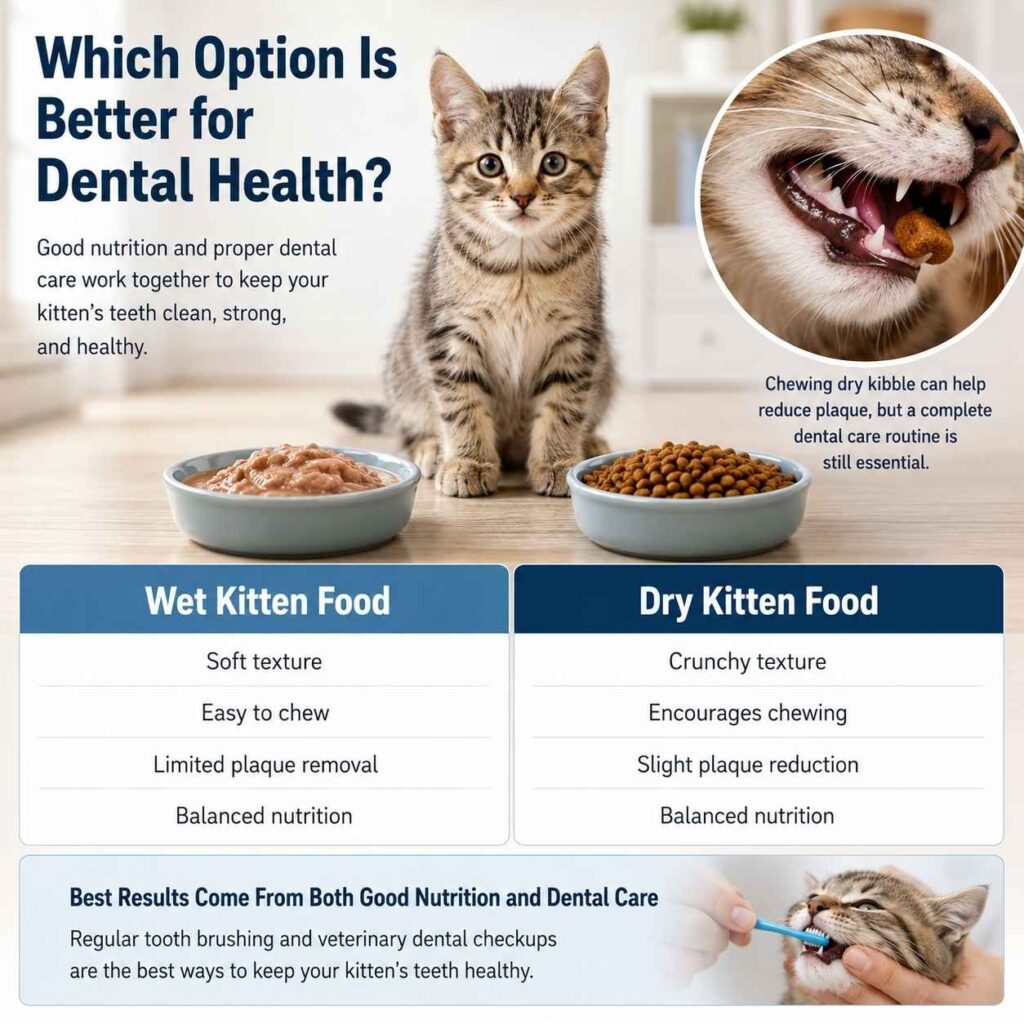
Many people think that dry kitten food keeps a kitten’s teeth clean. While dry kibble does encourage chewing, it is important to know that food alone cannot keep your kitten’s teeth healthy. Good dental health comes from a combination of proper nutrition, regular tooth brushing, and routine veterinary checkups.
Dry kitten food has a crunchy texture that may provide a small benefit by encouraging chewing. However, it does not remove plaque or prevent tartar buildup on its own. Wet kitten food has a soft texture and does not create the same chewing action, but that does not mean it is bad for your kitten’s teeth. As long as your kitten receives proper dental care, both wet and dry food can be part of a healthy diet.
Wet Food vs Dry Food for Dental Health
| Factor | Wet Kitten Food | Dry Kitten Food |
| Texture | Soft and moist | Crunchy kibble |
| Chewing | Minimal | Encourages more chewing |
| Plaque Control | Limited | May provide a small benefit |
| Tartar Prevention | Limited without dental care | Limited without dental care |
| Overall Oral Health | Depends on daily dental care | Depends on daily dental care |
Tips for Keeping Your Kitten’s Teeth Healthy
Healthy teeth require more than choosing between wet food and dry food. These simple habits can help protect your kitten’s oral health.
- Brush your kitten’s teeth regularly with a toothpaste made for cats.
- Start tooth brushing at a young age so your kitten becomes comfortable with the routine.
- Schedule regular veterinary dental checkups.
- Feed a complete and balanced kitten diet.
- Always provide fresh, clean drinking water.
- Watch for changes in your kitten’s eating habits or mouth health.
Signs of Dental Problems in Kittens
Dental problems are easier to treat when they are found early. Contact your veterinarian if you notice any of these signs.
- Bad breath that does not go away.
- Red or swollen gums.
- Yellow or brown buildup on the teeth.
- Trouble chewing food.
- Dropping food while eating.
- Bleeding gums.
- Loss of appetite caused by mouth pain.
Which Food Is Better for Dental Health?
Dry kitten food has a small advantage because chewing crunchy kibble may provide a slight benefit for the teeth. However, it is not a substitute for proper dental care. Wet kitten food is not harmful to healthy teeth when it is part of a balanced diet and your kitten receives regular oral care.
The best way to keep your kitten’s teeth healthy is to combine good nutrition with daily tooth brushing, regular veterinary checkups, and healthy feeding habits. This routine is much more effective than relying on any single type of food to protect your kitten’s teeth.
Cost Comparison: Wet vs Dry Food
The cost of feeding your kitten is something most pet owners think about. Both wet kitten food and dry kitten food can provide complete and balanced nutrition, but they are different when it comes to price, storage, and daily feeding costs. Understanding these differences can help you choose a feeding plan that fits your budget without compromising your kitten’s health.
In most cases, wet kitten food costs more per meal because it contains a high amount of moisture and is sold in cans, trays, or pouches. Dry kitten food is usually more affordable and stays fresh for longer after opening. However, price should not be the only factor when choosing food. A high-quality kitten food made with real animal protein, healthy fats, and essential nutrients is a better investment in your kitten’s long-term health.
Wet Food vs Dry Food Cost Comparison
| Expense | Wet Kitten Food | Dry Kitten Food |
| Average Daily Cost | Higher | Lower |
| Cost Per Meal | More expensive | More affordable |
| Shelf Life After Opening | Short | Long |
| Storage | Refrigerate after opening | Store in a cool, dry place |
| Packaging | Cans, trays, or pouches | Large bags available |
| Food Waste | May spoil if not used quickly | Usually less waste |
| Long-Term Value | Great for hydration and picky eaters | Excellent for daily feeding on a budget |
When Wet Food Is Worth the Extra Cost
Although wet food costs more, it can be the better option in some situations.
- Young kittens that are learning to eat solid food.
- Kittens that need extra hydration.
- Picky eaters that prefer soft, flavorful meals.
- Kittens recovering from illness or surgery, if your veterinarian recommends it.
- Families that follow a mixed feeding routine.
When Dry Food Is the Better Budget Choice
Dry kitten food is a practical option for pet owners who want to keep feeding costs under control.
- Lower cost per serving.
- Available in larger bags for better value.
- Longer shelf life after opening.
- Less food waste.
- Works well with automatic feeders.
- Easy to measure for accurate portion control.
Can You Save Money by Feeding Both?
Yes. Many pet owners feed both wet food and dry food to balance nutrition and cost. For example, you can offer wet food once a day to help with hydration and serve dry food for the remaining meals. This gives your kitten the benefits of both types of food without greatly increasing your monthly feeding expenses.
Is More Expensive Kitten Food Always Better?
Not always. A higher price does not automatically mean better quality. Instead of looking only at the cost, read the ingredient list and nutrition label carefully.
Choose a kitten food that:
- Lists real animal protein as the first ingredient.
- Is labeled complete and balanced for kittens.
- Contains DHA, taurine, and Omega-3 fatty acids.
- Provides essential vitamins and minerals for healthy growth.
- Comes from a trusted manufacturer with high-quality safety standards.
Which Option Offers Better Value?
If your budget allows, wet kitten food is an excellent choice because it provides extra hydration and is often more appealing to kittens. If you need a more affordable option, dry kitten food offers balanced nutrition, convenience, and long-term value.
For many families, a combination of wet and dry food is the best solution. It helps support healthy growth, keeps feeding costs under control, and gives kittens the benefits of both types of food.
Can You Feed Both Wet and Dry Food Together?
Yes, you can feed your kitten both wet food and dry food. In fact, many veterinarians recommend a mixed feeding routine because it combines the benefits of both. As long as both foods are specially made for kittens and provide complete and balanced nutrition, your kitten can grow and develop normally on a combination diet.
Feeding both types of food gives your kitten extra moisture from wet food and the convenience of dry kibble. It also introduces different textures and flavors while your kitten is still young. This can help reduce picky eating habits later in life and make it easier to switch foods if needed.
Benefits of Feeding Both Wet and Dry Food
A mixed feeding routine offers several advantages.
- Increases daily water intake through wet food.
- Provides high-quality animal protein to support muscle growth.
- Supplies important nutrients such as DHA, taurine, Omega-3 fatty acids, calcium, and phosphorus.
- Helps kittens get used to both soft and crunchy textures.
- Makes meals more enjoyable for picky eaters.
- Gives pet owners more flexibility at feeding time.
- Balances nutrition, convenience, and cost.
How to Combine Wet and Dry Food
There is no perfect feeding schedule for every kitten. The right plan depends on your kitten’s age, weight, activity level, and daily calorie needs. The example below shows a simple mixed feeding routine that many pet owners follow.
| Time of Day | Suggested Meal |
| Morning | Wet kitten food |
| Afternoon | Dry kitten food |
| Evening | Wet or dry kitten food, depending on your feeding plan |
Always follow the feeding guide on the food packaging and adjust the portion size to match your kitten’s needs. Remember that both wet food and dry food contain calories, so the total amount fed each day should stay within the recommended daily intake.
Tips for a Successful Mixed Feeding Routine
These simple habits can help your kitten enjoy a healthy and balanced diet.
- Choose wet and dry foods that are specially made for kittens.
- Introduce new foods slowly over 7 to 10 days.
- Measure each meal to avoid overfeeding.
- Remove leftover wet food after 30 to 60 minutes.
- Store opened wet food in the refrigerator.
- Keep dry food in a cool, dry place and seal the bag after each use.
- Make sure fresh, clean drinking water is always available.
Common Mistakes to Avoid
Avoid these common mistakes when feeding both wet and dry food.
- Feeding more calories than your kitten needs.
- Mixing kitten food with adult cat food.
- Changing foods too quickly without a gradual transition.
- Ignoring changes in your kitten’s weight or body condition.
- Leaving wet food out for several hours.
Is Mixed Feeding the Best Choice?
For many healthy kittens, the answer is yes. A combination of wet and dry food provides balanced nutrition, extra hydration, more variety, and greater convenience. However, every kitten is different. Some do very well on only wet food, while others stay healthy on dry food alone.
If your kitten has a medical condition or special dietary needs, ask your veterinarian for advice before making changes to its diet.
The most important thing is to choose a high-quality kitten food that provides real animal protein, healthy fats, vitamins, and essential minerals. Whether you feed wet food, dry food, or both, proper portion control, fresh drinking water, and regular veterinary checkups will help your kitten grow into a healthy, active adult cat.
How Much Wet and Dry Food Should a Kitten Eat?
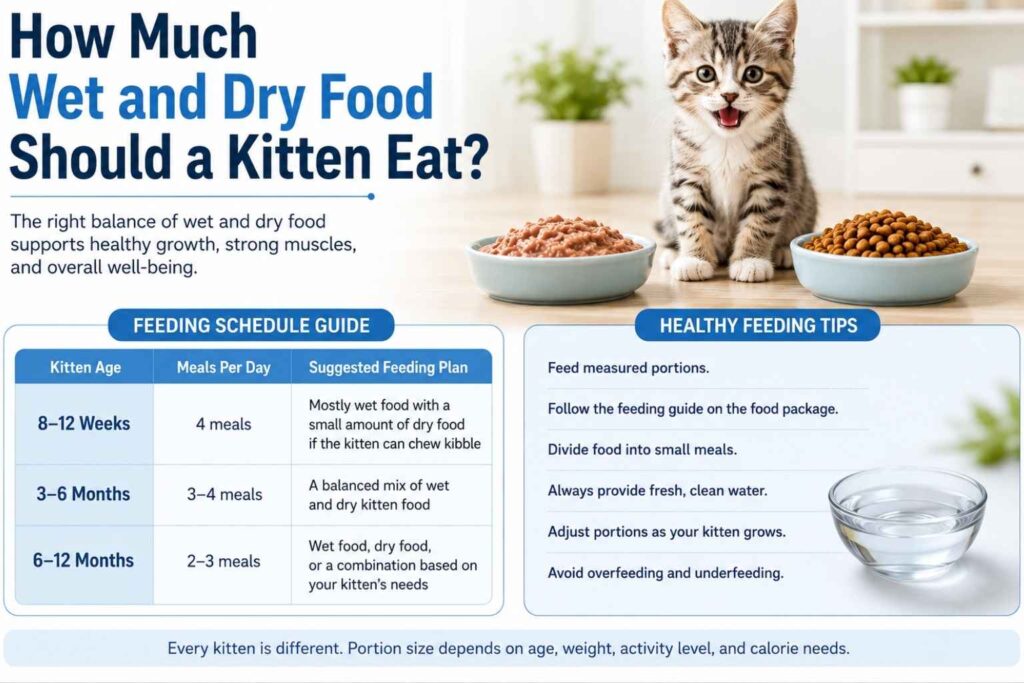
Feeding your kitten the right amount of food is just as important as choosing the right type of food. Kittens grow very quickly during their first year, so they need enough calories and nutrients to support healthy development. The ideal portion depends on your kitten’s age, weight, activity level, and the calorie content of the food you choose.
There is no single feeding amount that works for every kitten. Wet kitten food and dry kitten food contain different amounts of calories, so always check the feeding guide on the package. If you feed both wet and dry food, adjust the portions so your kitten gets the right number of calories each day without overeating.
General Feeding Guide by Age
The table below shows a simple feeding schedule for healthy kittens. Use it as a general guide, and adjust the portions based on your kitten’s growth and your veterinarian’s advice.
| Kitten Age | Meals Per Day | Suggested Feeding Plan |
| 8–12 Weeks | 4 meals | Mostly wet kitten food with a small amount of dry food if your kitten can chew kibble comfortably |
| 3–6 Months | 3–4 meals | A balanced mix of wet and dry kitten food |
| 6–12 Months | 2–3 meals | Wet food, dry food, or a combination based on your kitten’s needs |
Tips for Portion Control
Feeding the right portion helps your kitten grow at a healthy pace.
- Follow the feeding instructions on the food package.
- Measure each meal with a measuring cup or kitchen scale.
- Divide the daily food into several small meals.
- Adjust portion sizes as your kitten grows.
- Avoid leaving food available all day unless your veterinarian recommends free-feeding.
- Limit treats so they do not replace balanced meals.
Signs Your Kitten Is Eating the Right Amount
A healthy feeding routine should support steady growth and good overall health.
Look for these signs:
- Healthy and steady weight gain.
- Plenty of energy for playing and exploring.
- A soft, shiny coat.
- Firm, well-formed stools.
- A healthy appetite at mealtime.
- Normal growth for your kitten’s age.
Signs Your Kitten May Be Eating Too Much or Too Little
Watching your kitten’s weight and eating habits can help you spot problems early.
Your kitten may be eating too much if:
- It gains weight very quickly.
- You cannot easily feel its ribs.
- It leaves food behind but continues to receive full portions.
Your kitten may be eating too little if:
- It is losing weight or not growing as expected.
- It seems tired or less active than normal.
- It finishes every meal but still acts hungry.
- Its coat looks dull or rough.
If these signs continue, review your feeding routine and talk to your veterinarian.
Should You Feed on a Schedule or Free-Feed?
For most kittens, a regular feeding schedule is the better choice. Feeding meals at the same time each day helps create healthy eating habits and makes portion control much easier. It also allows you to notice changes in your kitten’s appetite, which can be an early sign of illness.
Leaving dry food out all day, also called free-feeding, can make it difficult to know how much your kitten is eating. It may also increase the risk of overeating and unhealthy weight gain.
By choosing a high-quality kitten food, serving the right portion size, and adjusting meals as your kitten grows, you can support healthy muscles, strong bones, a healthy body weight, and normal development throughout your kitten’s first year.
How Much Wet and Dry Food Should a Kitten Eat?
Feeding your kitten the right amount of food is just as important as choosing the right type of food. Kittens grow very quickly during their first year, so they need enough calories and nutrients to support healthy development. The ideal portion depends on your kitten’s age, weight, activity level, and the calorie content of the food you choose.
There is no single feeding amount that works for every kitten. Wet kitten food and dry kitten food contain different amounts of calories, so always check the feeding guide on the package. If you feed both wet and dry food, adjust the portions so your kitten gets the right number of calories each day without overeating.
General Feeding Guide by Age
The table below shows a simple feeding schedule for healthy kittens. Use it as a general guide, and adjust the portions based on your kitten’s growth and your veterinarian’s advice.
| Kitten Age | Meals Per Day | Suggested Feeding Plan |
| 8–12 Weeks | 4 meals | Mostly wet kitten food with a small amount of dry food if your kitten can chew kibble comfortably |
| 3–6 Months | 3–4 meals | A balanced mix of wet and dry kitten food |
| 6–12 Months | 2–3 meals | Wet food, dry food, or a combination based on your kitten’s needs |
Tips for Portion Control
Feeding the right portion helps your kitten grow at a healthy pace.
- Follow the feeding instructions on the food package.
- Measure each meal with a measuring cup or kitchen scale.
- Divide the daily food into several small meals.
- Adjust portion sizes as your kitten grows.
- Avoid leaving food available all day unless your veterinarian recommends free-feeding.
- Limit treats so they do not replace balanced meals.
Signs Your Kitten Is Eating the Right Amount
A healthy feeding routine should support steady growth and good overall health.
Look for these signs:
- Healthy and steady weight gain.
- Plenty of energy for playing and exploring.
- A soft, shiny coat.
- Firm, well-formed stools.
- A healthy appetite at mealtime.
- Normal growth for your kitten’s age.
Signs Your Kitten May Be Eating Too Much or Too Little
Watching your kitten’s weight and eating habits can help you spot problems early.
Your kitten may be eating too much if:
- It gains weight very quickly.
- You cannot easily feel its ribs.
- It leaves food behind but continues to receive full portions.
Your kitten may be eating too little if:
- It is losing weight or not growing as expected.
- It seems tired or less active than normal.
- It finishes every meal but still acts hungry.
- Its coat looks dull or rough.
If these signs continue, review your feeding routine and talk to your veterinarian.
Should You Feed on a Schedule or Free-Feed?
For most kittens, a regular feeding schedule is the better choice. Feeding meals at the same time each day helps create healthy eating habits and makes portion control much easier. It also allows you to notice changes in your kitten’s appetite, which can be an early sign of illness.
Leaving dry food out all day, also called free-feeding, can make it difficult to know how much your kitten is eating. It may also increase the risk of overeating and unhealthy weight gain.
By choosing a high-quality kitten food, serving the right portion size, and adjusting meals as your kitten grows, you can support healthy muscles, strong bones, a healthy body weight, and normal development throughout your kitten’s first year.
How to Transition Between Wet and Dry Food
If you want to change your kitten’s food, do it slowly. Switching from wet food to dry food, or the other way around, too quickly can upset your kitten’s stomach. A gradual transition gives your kitten time to get used to the new taste, texture, and ingredients. It also helps reduce the chance of digestive problems such as diarrhea, vomiting, or stomach discomfort.
Whether you are introducing dry kibble for the first time, changing to wet food, or starting a mixed feeding routine, take your time. Most kittens adjust well when the new food is introduced over 7 to 10 days.
7-Day Food Transition Schedule
Use this simple guide to help your kitten adjust to its new food.
| Day | Current Food | New Food |
| Days 1–2 | 75% | 25% |
| Days 3–4 | 50% | 50% |
| Days 5–6 | 25% | 75% |
| Day 7 | 0% | 100% |
If your kitten has a sensitive stomach, extend the transition to 10 to 14 days instead of rushing the process.
Tips for a Smooth Food Transition
These simple steps can make the change easier for your kitten.
- Introduce only one new food at a time.
- Mix the old food and the new food well at each meal.
- Feed your kitten at the same times every day.
- Always provide fresh, clean drinking water.
- Watch your kitten’s appetite, energy level, and stool quality.
- Store wet and dry food properly to keep it fresh.
Signs Your Kitten Is Adjusting Well
Most kittens adapt to a new diet without any problems.
Look for these positive signs:
- Eats meals with a good appetite.
- Stays active and playful.
- Has firm, well-formed stools.
- Shows no signs of vomiting.
- Continues to gain weight at a healthy rate.
Signs the Transition Is Happening Too Quickly
Slow down the transition if you notice any of these signs.
- Diarrhea or loose stools.
- Frequent vomiting.
- Refusing to eat.
- Stomach discomfort.
- Low energy.
- Sudden weight loss.
If these problems last for more than a day or two, or if they become severe, contact your veterinarian for advice.
Common Mistakes to Avoid
Many feeding problems happen because food is changed too quickly. Avoid these common mistakes.
- Switching foods overnight.
- Introducing several new foods at the same time.
- Feeding more than the recommended portion size.
- Forgetting to provide fresh drinking water.
- Feeding adult cat food instead of kitten food.
- Giving too many treats during the transition.
The Bottom Line
A slow and steady transition is the safest way to change your kitten’s diet. Whether you are switching from wet food to dry food, introducing wet food for the first time, or feeding both together, giving your kitten enough time to adjust helps support healthy digestion and reduces unnecessary stress.
Choose a high-quality, complete and balanced kitten food, feed the right portion size, and keep a regular feeding schedule. These simple habits will help your kitten enjoy a smooth transition and continue growing into a healthy, active adult cat.
Signs Your Kitten Likes Their Diet
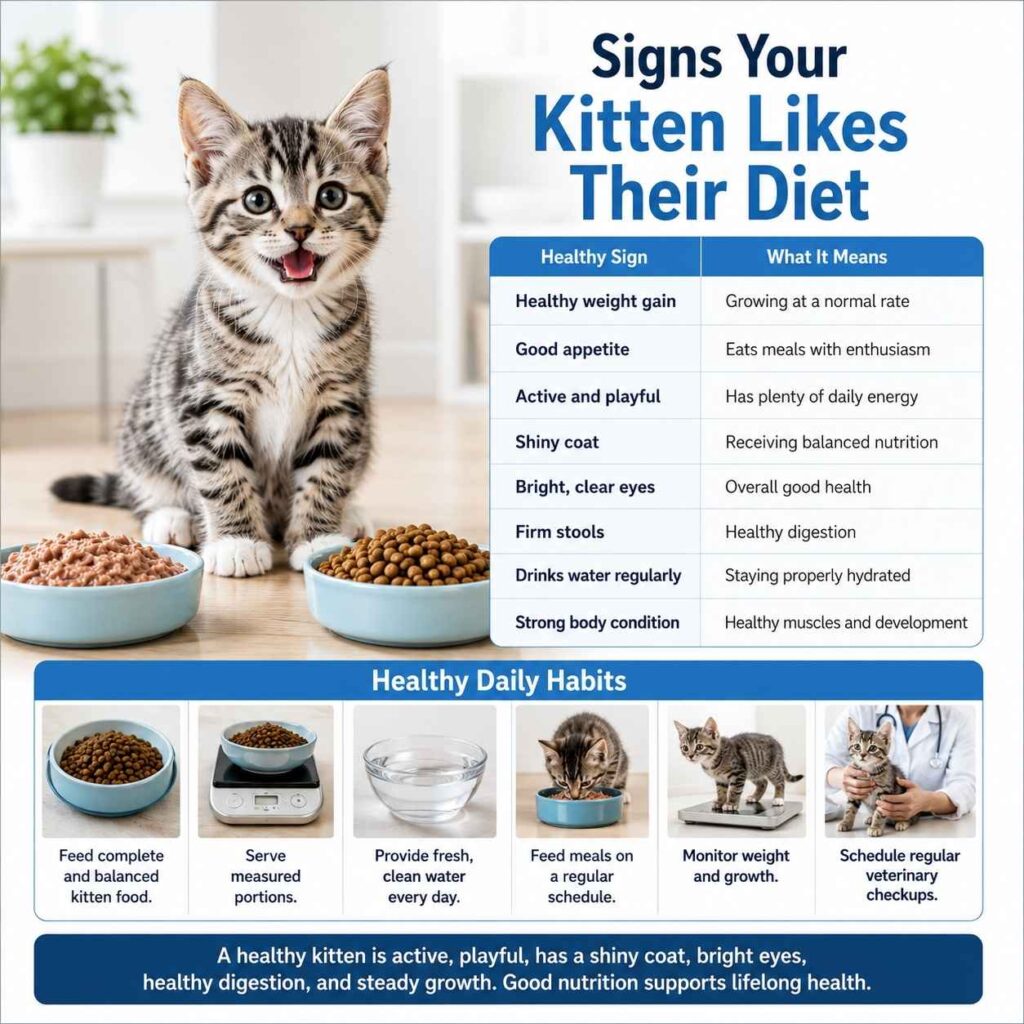
The right diet does more than fill your kitten’s stomach. It gives your kitten the nutrients needed for healthy growth, strong muscles, a shiny coat, and plenty of energy. Whether you feed wet kitten food, dry kitten food, or a mix of both, your kitten’s overall health is the best way to tell if the diet is working.
Every kitten is different, but healthy kittens usually show clear signs that they are getting the nutrition they need. By watching your kitten’s appetite, energy level, weight, and overall condition, you can easily see if its current diet is supporting healthy development.
Healthy Signs to Look For
A healthy kitten will usually show these positive signs:
- Steady and healthy weight gain.
- Plenty of energy for playing and exploring.
- A soft, shiny coat.
- Bright, clear eyes.
- Healthy skin and clean ears.
- A good appetite at mealtimes.
- Firm, well-formed stools.
- Normal digestion without frequent vomiting or diarrhea.
- Strong muscles and a healthy body condition.
- Regular drinking and normal urination.
Growth Milestones of a Healthy Kitten
The table below shows some of the most common signs of healthy growth.
| Area | Healthy Signs |
| Weight | Gains weight steadily as it grows |
| Appetite | Eats meals with enthusiasm |
| Energy | Active, playful, and curious |
| Coat | Soft, smooth, and shiny |
| Eyes | Bright and clear with no discharge |
| Digestion | Firm stools and comfortable digestion |
| Hydration | Drinks water regularly and urinates normally |
| Body Condition | Lean, strong, and well-proportioned |
Signs Your Kitten’s Diet May Need Improvement
Sometimes a kitten may need a different food or a change in its feeding routine. Watch for these warning signs:
- Slow or poor weight gain.
- Low energy or unusual tiredness.
- A dull or rough-looking coat.
- Dry or flaky skin.
- Frequent vomiting or diarrhea.
- Constipation or ongoing digestive problems.
- Poor appetite.
- Unhealthy weight gain.
- Always seeming hungry, even after meals.
These signs do not always mean the food is the problem. They can also be caused by illness, parasites, food sensitivities, or other health conditions. If you notice any of these changes, speak with your veterinarian.
How to Monitor Your Kitten’s Health
A few simple habits can help you make sure your kitten stays healthy as it grows.
- Feed measured portions at the same times every day.
- Weigh your kitten every few weeks to track healthy growth.
- Always provide fresh, clean drinking water.
- Watch for changes in appetite, stool quality, or behavior.
- Schedule regular veterinary checkups during your kitten’s first year.
The Bottom Line
A healthy kitten is usually active, playful, and excited for mealtime. It gains weight at a steady rate, has a shiny coat, bright eyes, and healthy digestion. These are all good signs that your kitten is getting the nutrition it needs.
Whether you choose wet food, dry food, or a combination of both, focus on feeding a high-quality, complete and balanced kitten food. Regularly checking your kitten’s health and growth will help ensure it gets the right nutrition for a happy, healthy life.
Common Feeding Mistakes to Avoid
Choosing a high-quality kitten food is only part of the job. Healthy feeding habits are just as important. The wrong feeding routine can affect your kitten’s growth, digestion, and overall health. By avoiding these common mistakes, you can help your kitten grow into a strong and healthy adult cat.
1. Feeding Adult Cat Food Too Soon
Kittens need more calories and nutrients than adult cats. They require extra high-quality animal protein, healthy fats, DHA, taurine, calcium, and phosphorus to support healthy growth.
What to do: Feed a kitten formula that is labeled complete and balanced until your veterinarian recommends switching to adult cat food, usually around 12 months of age.
2. Overfeeding Your Kitten
Giving your kitten too much food does not help it grow faster. It can lead to unhealthy weight gain and increase the risk of obesity later in life.
What to do: Measure each meal carefully and follow the feeding guide on the food package. Adjust portions as your kitten grows.
3. Underfeeding Your Kitten
Feeding too little can prevent your kitten from getting the nutrients and energy needed for healthy development.
What to do: Feed regular meals every day and monitor your kitten’s weight and body condition.
4. Changing Food Too Quickly
A sudden switch from one food to another can upset your kitten’s stomach.
What to do: Introduce new food slowly over 7 to 10 days by mixing it with the current food.
5. Not Providing Enough Fresh Water
Fresh water is essential, especially if your kitten eats mostly dry kitten food. Good hydration supports digestion, kidney health, and the urinary tract.
What to do: Refill the water bowl every day and keep it clean. Place it in a quiet area where your kitten can drink comfortably.
6. Giving Too Many Treats
Treats are fine in small amounts, but too many can replace balanced meals and add unnecessary calories.
What to do: Offer treats only occasionally and choose treats made for kittens whenever possible.
7. Ignoring Portion Sizes
Guessing how much food to serve can lead to overfeeding or underfeeding.
What to do: Use a measuring cup or kitchen scale to serve the correct amount at every meal.
8. Leaving Wet Food Out Too Long
Wet food can spoil if it stays at room temperature for too long.
What to do: Remove leftover wet food after 30 to 60 minutes and store unused portions in the refrigerator according to the manufacturer’s instructions.
9. Choosing Food Based Only on Price
A lower price does not always mean good value. Some inexpensive foods may contain lower-quality ingredients or fewer essential nutrients.
What to do: Choose a kitten food with real animal protein as the first ingredient and make sure it is labeled complete and balanced for kittens.
10. Skipping Regular Veterinary Checkups
Even kittens that eat a healthy diet need regular health checks to make sure they are growing properly.
What to do: Visit your veterinarian regularly during your kitten’s first year. Discuss your kitten’s weight, feeding routine, and any nutrition concerns.
Healthy Feeding Checklist
Use this quick checklist to support your kitten’s health.
- Feed a complete and balanced kitten food.
- Measure every meal to avoid overfeeding.
- Always provide fresh, clean drinking water.
- Introduce new foods gradually.
- Feed meals at the same times each day.
- Limit treats and avoid feeding table scraps.
- Monitor your kitten’s weight and growth.
- Schedule regular veterinary checkups.
The Bottom Line
Healthy nutrition is about more than choosing between wet food and dry food. Feeding the right portions, providing fresh water, following a regular meal schedule, and visiting your veterinarian all help support your kitten’s healthy development.
By avoiding these common feeding mistakes, you can give your kitten the best possible start and help it grow into a healthy, active, and happy adult cat.
Frequently Asked Questions
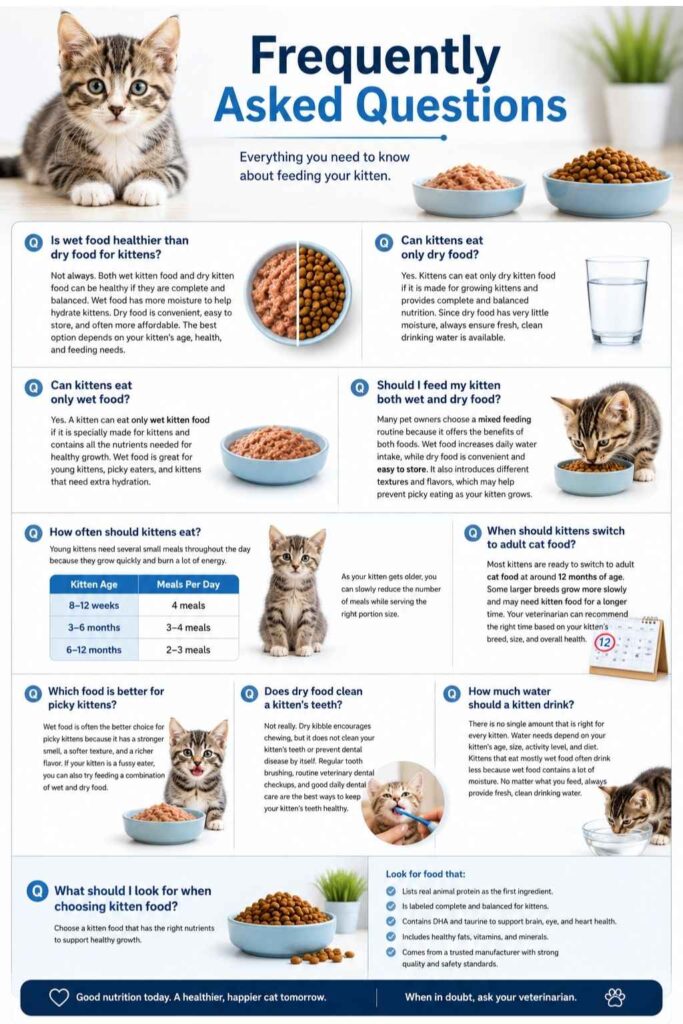
Is wet food healthier than dry food for kittens?
Not always. Both wet kitten food and dry kitten food can be healthy choices if they are labeled complete and balanced for kittens. Wet food contains more moisture, which helps keep kittens hydrated. Dry food is easy to store, costs less in many cases, and is convenient for daily feeding. The best option depends on your kitten’s age, health, and feeding needs.
Can kittens eat only dry food?
Yes. Kittens can eat only dry kitten food if it is made for growing kittens and provides complete and balanced nutrition. Since dry food contains very little moisture, always make sure your kitten has access to fresh, clean drinking water throughout the day.
Can kittens eat only wet food?
Yes. A kitten can eat only wet kitten food if it is specially made for kittens and contains all the nutrients needed for healthy growth. Wet food is a great option for young kittens, picky eaters, and kittens that need extra hydration.
Should I feed my kitten both wet and dry food?
Many pet owners choose a mixed feeding routine because it offers the benefits of both foods. Wet food helps increase daily water intake, while dry food is convenient and easy to store. Feeding both also introduces different textures and flavors, which may help prevent picky eating as your kitten grows.
How often should kittens eat?
Young kittens need several small meals throughout the day because they grow quickly and burn a lot of energy.
| Kitten Age | Meals Per Day |
| 8–12 weeks | 4 meals |
| 3–6 months | 3–4 meals |
| 6–12 months | 2–3 meals |
As your kitten gets older, you can slowly reduce the number of meals while serving the right portion size.
When should kittens switch to adult cat food?
Most kittens are ready to switch to adult cat food at around 12 months of age. Some larger cat breeds grow more slowly and may need kitten food for a longer time. Your veterinarian can recommend the right time based on your kitten’s breed, size, and overall health.
Which food is better for picky kittens?
Wet food is often the better choice for picky kittens because it has a stronger smell, a softer texture, and a richer flavor. If your kitten is a fussy eater, you can also try feeding a combination of wet and dry food.
Does dry food clean a kitten’s teeth?
Not really. Dry kibble encourages chewing, but it does not clean your kitten’s teeth or prevent dental disease by itself. Regular tooth brushing, routine veterinary dental checkups, and good daily dental care are the best ways to keep your kitten’s teeth healthy.
How much water should a kitten drink?
There is no single amount that is right for every kitten. Water needs depend on your kitten’s age, size, activity level, and diet. Kittens that eat mostly wet food often drink less because wet food contains a lot of moisture. No matter what you feed, always provide fresh, clean drinking water.
What should I look for when choosing kitten food?
Choose a kitten food that has the right nutrients to support healthy growth.
Look for food that:
- Lists real animal protein as the first ingredient.
- Is labeled complete and balanced for kittens.
- Contains DHA and taurine to support brain, eye, and heart health.
- Includes healthy fats, vitamins, and minerals.
- Comes from a trusted manufacturer with strong quality and safety standards.
Conculision
Choosing between wet food and dry food for kittens does not have to be difficult. Both can support healthy growth when they provide complete and balanced nutrition. The right choice depends on your kitten’s age, health, activity level, and your daily routine.
Whether you feed wet food, dry food, or a combination of both, focus on quality ingredients, proper portion sizes, fresh drinking water, and regular veterinary checkups. A healthy feeding routine during your kitten’s first year will help build the foundation for a long, active, and happy life.
Final Verdict: Wet vs Dry Food for Kittens
So, wet vs dry food for kittens—which one is better? The truth is that both can be great choices. The most important thing is to choose a high-quality kitten food that is labeled complete and balanced for growing kittens. There is no single food that is right for every kitten. The best choice depends on your kitten’s age, health, activity level, and eating habits.
Wet kitten food is a great option if you want to increase your kitten’s daily water intake. Its soft texture makes it easy to eat, especially for young kittens or picky eaters. Dry kitten food is a practical choice because it is easy to store, lasts longer after opening, and is often more budget-friendly. Both wet and dry food can provide the high-quality animal protein, healthy fats, DHA, taurine, vitamins, and minerals that kittens need for healthy growth, strong muscles, brain development, and a strong immune system.
For many pet owners, feeding both wet and dry food works well. A mixed feeding routine gives your kitten the hydration benefits of wet food and the convenience of dry kibble. It also helps your kitten get used to different textures and flavors, which may reduce picky eating later in life.
Whatever feeding method you choose, focus on quality instead of price. Look for kitten food made with real animal protein and essential nutrients. Feed the right portion size, provide fresh, clean drinking water every day, and keep a regular feeding schedule. Regular veterinary checkups are also important to make sure your kitten is growing well.
In the end, the best food is the one that keeps your kitten healthy, active, and happy. With a balanced diet, proper care, and plenty of love, your kitten will have a strong foundation for a long and healthy life.