Choosing the right food is one of the biggest decisions you will make for your kitten. Good nutrition during the first year helps your kitten grow strong and healthy. It supports muscle growth, brain development, healthy bones, and a strong immune system. In recent years, grain-free kitten food has become more popular in the United States. Many pet owners choose it because they believe it contains more animal protein and is a healthier option. While that may be true for some products, grain-free food is not the right choice for every kitten.
Many people assume that food without grains is always better. That is a common misunderstanding. Most healthy kittens can digest grains like rice and oats without any trouble. In fact, many high-quality kitten foods that include grains provide complete and balanced nutrition. The most important thing is not whether the food contains grains. It is the quality of the ingredients and whether the food gives your kitten all the nutrients needed for healthy growth.
This guide will help you understand grain-free kitten food in a simple way. You will learn its benefits, possible drawbacks, and how it compares with grain-inclusive food. We will also explain when a grain-free diet may be a good choice and when it may not be necessary. You will discover what to look for on food labels and how to choose the best food for your kitten. By the end of this guide, you will have clear and practical information to help you make the right decision for your kitten’s health.
What Is Grain-Free Kitten Food?
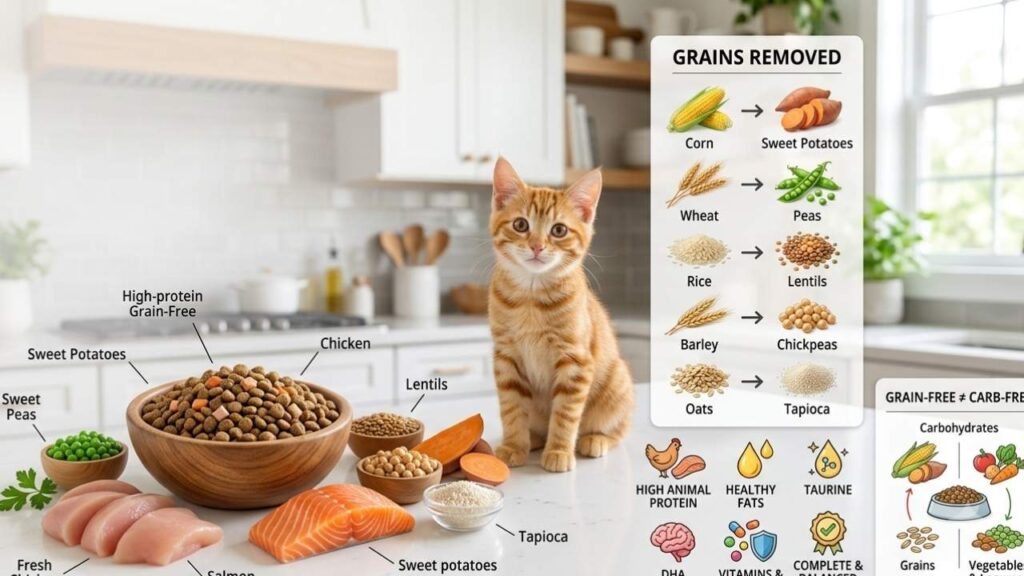
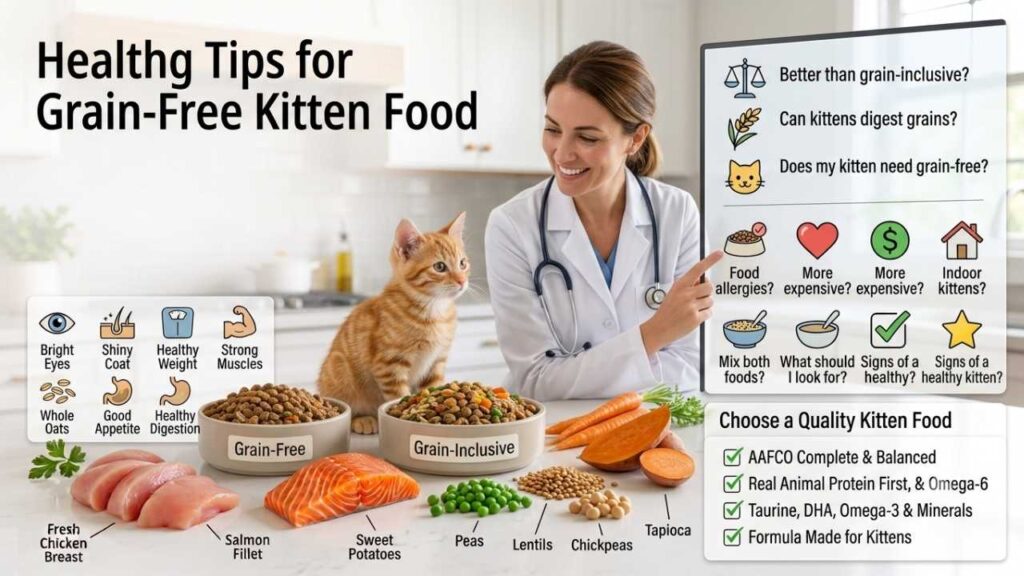
Grain-free kitten food is made without common grains such as corn, wheat, rice, barley, and oats. Instead, it uses other ingredients like sweet potatoes, peas, lentils, chickpeas, or tapioca to provide carbohydrates. These recipes are designed to give growing kittens the nutrients they need while replacing traditional grains with other energy sources.
Many people think grain-free food has no carbohydrates, but that is not true. Kittens need carbohydrates for energy, especially during their first year of life. Grain-free foods simply get those carbohydrates from different ingredients instead of grains. The source changes, but the goal is still to provide energy and support healthy growth.
Most grain-free kitten foods are rich in animal protein. They often include chicken, turkey, salmon, or duck as the main ingredients. Protein helps build strong muscles and supports healthy body development. Quality formulas also contain healthy fats, vitamins, minerals, taurine, and DHA. Taurine is important for healthy eyes and heart function. DHA helps support brain development and healthy vision while your kitten is growing.
When choosing grain-free kitten food, always check that it is complete and balanced for kittens. Look for the AAFCO nutritional statement on the package. This shows that the food meets the nutritional requirements for growing kittens. Whether you choose wet food or dry food, balanced nutrition is much more important than whether the recipe contains grains.
It is also helpful to understand the difference between grain-free and gluten-free food. These terms do not mean the same thing. Grain-free food contains no grains at all. Gluten-free food removes gluten, which is a protein found in grains like wheat, barley, and rye. However, gluten-free food may still include grains such as rice or corn because they do not contain gluten.
Common Grains Removed from Grain-Free Kitten Food
| Common Grain | Common Replacement |
| Corn | Sweet potatoes |
| Wheat | Peas |
| Rice | Lentils |
| Barley | Chickpeas |
| Oats | Tapioca or potatoes |
It is important to remember that not every kitten needs a grain-free diet. Most healthy kittens can digest grains without any problems. The best kitten food is one that provides complete and balanced nutrition. Look for high-quality animal protein, healthy fats, essential vitamins, minerals, and enough calories to support healthy growth. Choosing a well-balanced formula is more important than choosing a food simply because it is grain-free.
Why Do Some Pet Owners Choose Grain-Free Kitten Food?
Grain-free kitten food has become a popular choice among many pet owners. Some people believe it is healthier because it often contains more animal protein and fewer grain ingredients. Others think it is closer to what cats would naturally eat. While these reasons sound good, grain-free food is not the best option for every kitten. The right diet depends on your kitten’s age, health, and nutritional needs. Your veterinarian can also help you decide what is best.
One common belief is that kittens cannot digest grains properly. However, this is not true for most healthy kittens. Grains such as rice and oats are easy to digest when they are properly cooked. They can also provide energy, fiber, vitamins, and minerals. In a high-quality kitten food, grains can be part of a healthy and balanced diet.
Some pet owners choose grain-free food because their kitten has digestive problems or food sensitivities. A kitten with vomiting, diarrhea, itchy skin, or frequent stomach upset may need a closer look at its diet. In some situations, a veterinarian may suggest trying a grain-free diet as part of an elimination diet. This can help identify the ingredient causing the problem. However, true grain allergies are rare in cats. In most cases, food allergies are caused by certain animal proteins, not grains.
Another reason grain-free food is popular is the quality of ingredients found in many premium formulas. These foods often use chicken, turkey, salmon, or duck as the main source of protein. They may also include fish oil, taurine, DHA, probiotics, vitamins, minerals, and antioxidants. These nutrients help support healthy muscles, brain development, digestion, and a strong immune system. Many pet owners prefer these recipes because they focus on high-quality nutrition.
Marketing has also increased interest in grain-free pet food. You may see labels with phrases like “high protein,” “natural ingredients,” or “ancestral diet.” These claims can make a product look more appealing. However, they do not always mean the food is better. The most important thing is whether the food provides complete and balanced nutrition for growing kittens and meets AAFCO nutritional standards.
Before switching your kitten to a grain-free diet, look at the overall quality of the food instead of focusing only on the word “grain-free.” A well-made grain-inclusive kitten food can be just as healthy as a grain-free formula. The best choice is a food that provides complete nutrition, uses quality ingredients, and supports your kitten’s healthy growth and development.
Pros of Grain-Free Kitten Food
Grain-free kitten food can be a good option for some kittens. It is not a requirement for every kitten, but certain formulas offer real benefits when they are made with high-quality ingredients. The most important thing is to choose a food that provides complete and balanced nutrition for healthy growth. A grain-free label alone does not make a food better.
May Help Kittens With Food Sensitivities
Some kittens have sensitive stomachs or react to certain ingredients in their food. They may experience vomiting, diarrhea, itchy skin, or ongoing stomach discomfort. In these cases, your veterinarian may recommend a grain-free diet for a short time to help identify the cause of the problem.
Keep in mind that true grain allergies are uncommon in cats. Most food allergies are linked to animal proteins, not grains. That is why it is important to get the right diagnosis before changing your kitten’s diet.
Often Contains More High-Quality Animal Protein
Many grain-free kitten foods list real animal protein as the first ingredient. Common choices include chicken, turkey, salmon, duck, and whitefish. These proteins provide essential amino acids that help build strong muscles and support healthy growth.
Kittens grow very quickly during their first year. They need a protein-rich diet to develop properly and stay active every day.
May Support Healthy Skin and a Shiny Coat
Many premium grain-free formulas contain healthy fats from ingredients such as fish oil, salmon oil, or chicken fat. These fats provide Omega-3 and Omega-6 fatty acids, which help keep your kitten’s skin healthy and its coat soft and shiny.
Healthy fats also support brain development, eye health, and a strong immune system while your kitten is growing.
May Improve Digestion for Some Kittens
Some grain-free foods include ingredients that help support digestion. Pumpkin, probiotics, prebiotics, and natural fiber can help maintain a healthy digestive system and support regular bowel movements.
Not every kitten will see the same results. Some kittens may benefit more than others because every kitten has different nutritional needs.
Often Made With Premium Ingredients
Many grain-free kitten foods are made with carefully selected ingredients. These may include real chicken, turkey, salmon, sweet potatoes, pumpkin, cranberries, flaxseed, vitamins, minerals, taurine, and DHA. Together, these nutrients help support healthy growth, brain development, heart health, strong eyesight, and overall well-being.
Even so, premium ingredients are only part of the picture. The food should also provide complete and balanced nutrition and meet AAFCO standards for growing kittens.
Potential Benefits of Grain-Free Kitten Food
| Benefit | How It Helps Your Kitten |
| High-quality animal protein | Supports muscle growth and healthy development |
| Healthy fats | Provide energy and support brain development |
| Omega-3 and Omega-6 fatty acids | Help maintain healthy skin and a shiny coat |
| Digestive support ingredients | May support healthy digestion in sensitive kittens |
| Taurine and DHA | Support heart health, vision, and brain development |
| Premium ingredients | Provide important nutrients for healthy growth |
Grain-free kitten food can be a good choice for some kittens, especially when it is made with high-quality ingredients and balanced nutrition. However, it is not the right choice for every kitten. The best food is one that meets your kitten’s nutritional needs, supports healthy growth, and provides complete and balanced nutrition, whether it contains grains or not.
Cons of Grain-Free Kitten Food
Grain-free kitten food can be a good choice in some situations, but it is not perfect. Many people believe it is healthier than regular kitten food, but that is not always true. Like any diet, it has both advantages and disadvantages. Understanding the possible downsides can help you choose the right food for your kitten.
Usually Costs More Than Regular Kitten Food
Grain-free kitten food is often more expensive than regular kitten food. Many brands sell it as a premium product and use high-quality meat and other specialty ingredients. This higher quality can increase the price.
If your kitten is healthy and does not have food sensitivities, spending extra on grain-free food may not provide additional health benefits.
Most Healthy Kittens Do Not Need a Grain-Free Diet
Most healthy kittens can digest grains without any problems. Ingredients like rice and oats can provide energy, fiber, vitamins, and minerals when they are part of a balanced diet. Removing grains does not automatically make kitten food healthier.
The overall quality of the food is much more important than whether it contains grains.
Grain-Free Does Not Always Mean Better Nutrition
Many pet owners think grain-free food is always the healthier choice. In reality, the nutrition depends on the ingredients, not the label.
Some grain-free foods still contain too many carbohydrates from ingredients like peas or potatoes. Others may use lower-quality ingredients. Always choose a food with real animal protein, healthy fats, taurine, DHA, essential vitamins, and minerals. It should also include an AAFCO statement showing it is complete and balanced for growing kittens.
Some Recipes Contain Too Many Plant Ingredients
To replace grains, some manufacturers use large amounts of peas, lentils, chickpeas, potatoes, or tapioca. These ingredients can be part of a healthy recipe, but they should not replace high-quality animal protein.
Cats are obligate carnivores, which means they need animal-based protein to grow and stay healthy. A good kitten food should list real meat as the first ingredient.
There Is Limited Scientific Evidence
At this time, there is no strong scientific evidence showing that grain-free diets are healthier for most healthy kittens. Unless your veterinarian recommends a grain-free diet because of a medical condition or food sensitivity, there is little reason to avoid grains.
Instead of following popular trends, choose a food that provides complete and balanced nutrition and supports healthy growth.
Marketing Can Be Misleading
Many grain-free products are promoted with words like “natural,” “premium,” or “high protein.” These claims can make the food seem better than other options. However, marketing does not always reflect the actual nutritional quality of the product.
The best way to judge a kitten food is by reading the ingredient list and checking whether it provides complete and balanced nutrition.
Pros and Cons at a Glance
| Pros | Cons |
| May help some kittens with food sensitivities | Usually costs more than grain-inclusive food |
| Often contains high-quality animal protein | Not needed for most healthy kittens |
| May support healthy skin and a shiny coat | Grain-free does not always mean better nutrition |
| Many premium formulas include DHA and taurine | Some recipes use large amounts of peas or potatoes |
| Can be helpful if recommended by a veterinarian | Research does not show clear benefits for every kitten |
Grain-free kitten food is not the right choice for every kitten. Some kittens may benefit from it, while many healthy kittens do well on high-quality grain-inclusive food. The most important thing is to choose a complete and balanced diet that provides the nutrients your kitten needs to grow, stay active, and live a healthy life.
Grain-Free vs Grain-Inclusive Kitten Food
Many kitten owners wonder whether grain-free food or grain-inclusive food is the better choice. The simple answer is that both can be healthy when they provide complete and balanced nutrition. One option is not automatically better than the other. The right choice depends on your kitten’s health, growth, and any advice from your veterinarian.
Grain-free kitten food removes ingredients such as corn, wheat, rice, barley, and oats. Instead, it uses other ingredients like sweet potatoes, peas, lentils, chickpeas, or potatoes. Many grain-free recipes also include a high amount of animal protein from chicken, turkey, salmon, or duck.
Grain-inclusive kitten food contains grains that provide energy, fiber, vitamins, and minerals. Most healthy kittens digest properly cooked grains very well. For kittens without food sensitivities, grains are usually not harmful and can be part of a nutritious diet.
When comparing the two types of food, focus on ingredient quality rather than the grain content alone. A high-quality grain-inclusive food can be just as nutritious as a premium grain-free formula. Look for real meat as the first ingredient, healthy fats, taurine, DHA, vitamins, minerals, and an AAFCO statement showing the food is complete and balanced for kittens.
Grain-Free vs Grain-Inclusive Kitten Food Comparison
| Feature | Grain-Free Food | Grain-Inclusive Food |
| Grain content | Does not contain common grains | Contains one or more grains |
| Carbohydrate sources | Sweet potatoes, peas, lentils, chickpeas, potatoes | Rice, oats, barley, corn, and other grains |
| Protein level | Often higher in animal protein | Varies by brand and recipe |
| Digestibility | May help some sensitive kittens | Easy for most healthy kittens to digest |
| Cost | Usually more expensive | Often more affordable |
| Best for | Kittens with specific dietary needs or veterinary advice | Most healthy growing kittens |
| Nutrition | Depends on ingredient quality and balance | Depends on ingredient quality and balance |
Which Option Is Better?
There is no single answer that works for every kitten. If your kitten is healthy, active, and growing normally, a high-quality grain-inclusive food is often an excellent choice. If your kitten has food sensitivities or your veterinarian recommends a grain-free diet, a carefully selected grain-free formula may be a better fit.
Whatever you choose, make sure the food provides complete and balanced nutrition. Look for high-quality animal protein, healthy fats, taurine, DHA, vitamins, and minerals. Also provide fresh water, feed the right portion sizes, and schedule regular veterinary checkups. These habits are just as important as choosing between grain-free and grain-inclusive food.
In the end, the best kitten food is the one that supports healthy growth, keeps your kitten active, and meets its individual nutritional needs.
Does My Kitten Really Need Grain-Free Food?
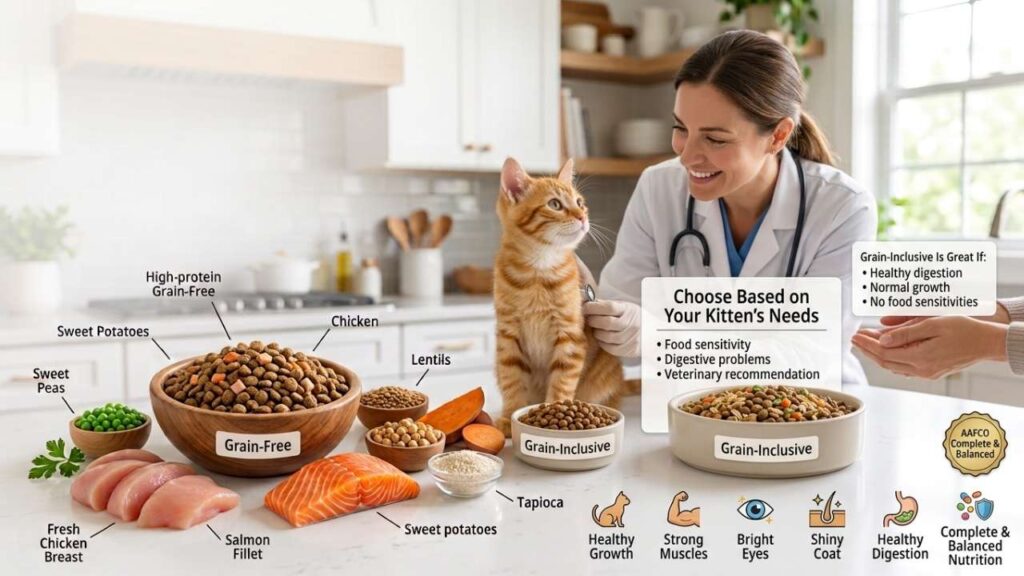
Many pet owners think grain-free food is the healthiest choice for every kitten. In reality, most healthy kittens do not need a grain-free diet. They can digest properly cooked grains without any problems. A high-quality grain-inclusive kitten food can provide everything a growing kitten needs to stay healthy.
The most important thing is not whether the food contains grains. What matters is that your kitten gets complete and balanced nutrition. Look for food that provides high-quality animal protein, healthy fats, taurine, DHA, essential vitamins, minerals, and enough calories to support healthy growth.
When Grain-Free Food May Be a Good Choice
A grain-free diet may be helpful for some kittens, but only in certain situations. Your veterinarian may recommend it if your kitten has a specific health problem or food sensitivity. The decision should be based on your kitten’s individual needs, not on popular trends or marketing claims.
A grain-free diet may be a good option if your kitten:
- Has a diagnosed food sensitivity or food intolerance.
- Has ongoing digestive problems, such as vomiting or diarrhea.
- Has skin irritation or frequent itching related to food.
- Needs an elimination diet recommended by a veterinarian.
- Responds better to a grain-free formula after a veterinary evaluation.
If you choose a grain-free food, make sure it meets AAFCO standards and provides complete and balanced nutrition for growing kittens.
When Grain-Free Food May Not Be Necessary
Most healthy kittens do very well on grain-inclusive food made with high-quality ingredients. If your kitten is active, growing normally, and has a healthy coat, there is usually no need to avoid grains.
A grain-inclusive diet is often a good choice if your kitten:
- Has no signs of food allergies or food sensitivities.
- Digests regular kitten food without any problems.
- Is growing well according to your veterinarian.
- Eats a complete and balanced diet with quality animal protein.
- Does not have a medical condition that requires a special diet.
Signs Your Kitten Is Thriving on Its Current Diet
Instead of focusing only on whether the food is grain-free, pay attention to your kitten’s overall health. A balanced diet should help your kitten grow, stay active, and feel its best.
Healthy signs include:
- Steady weight gain and normal growth.
- Bright eyes and a soft, shiny coat.
- Strong muscles and plenty of energy for play.
- Normal, well-formed stools.
- A healthy appetite and consistent energy levels.
If your kitten shows these signs, its current diet is likely providing the nutrition it needs.
Talk to Your Veterinarian Before Changing Your Kitten’s Diet
There is no need to switch your kitten’s food unless there is a good reason. If you think your kitten has a food allergy, digestive problem, or another nutrition-related issue, talk to your veterinarian first. They can identify the cause of the problem and recommend the most suitable diet.
The best kitten food is not simply grain-free or grain-inclusive. It is a food that provides complete and balanced nutrition, contains high-quality animal protein, healthy fats, taurine, DHA, vitamins, and minerals, and supports healthy growth throughout your kitten’s first year.
Common Ingredients in Grain-Free Kitten Food
Grain-free kitten food does not contain common grains such as corn, wheat, rice, barley, or oats. Instead, it uses other ingredients to provide energy and nutrition. A good grain-free formula should also include high-quality animal protein, healthy fats, vitamins, and minerals to support your kitten’s growth.
When choosing kitten food, do not focus only on the words “grain-free.” The quality of the ingredients is much more important. Look for a food that lists real animal protein as the first ingredient and includes an AAFCO statement showing it provides complete and balanced nutrition for growing kittens.
Animal Protein Sources
Animal protein is the most important part of a kitten’s diet. Cats are obligate carnivores, which means they need nutrients that come from animal sources. Protein helps build strong muscles, supports healthy organs, and promotes normal growth.
Common animal protein sources include:
- Chicken
- Turkey
- Salmon
- Duck
- Whitefish
- Lamb
These ingredients also provide essential amino acids, including taurine. Taurine is important for healthy heart function, good eyesight, and overall development.
Healthy Carbohydrate Sources
Even though grain-free foods do not contain traditional grains, they still include carbohydrates to provide energy. They also contain fiber, which helps support healthy digestion.
Common carbohydrate sources include:
- Sweet potatoes
- Potatoes
- Peas
- Lentils
- Chickpeas
- Tapioca
These ingredients replace grains while helping keep the food balanced and nutritious.
Healthy Fats
Healthy fats are an important part of a kitten’s diet. They provide energy and help the body absorb certain vitamins. They also support brain development, healthy skin, and a soft, shiny coat.
Common healthy fat sources include:
- Salmon oil
- Fish oil
- Chicken fat
- Flaxseed
These ingredients are rich in Omega-3 and Omega-6 fatty acids, which play an important role during your kitten’s first year.
Essential Vitamins and Minerals
Growing kittens need a variety of vitamins and minerals to stay healthy. These nutrients help build strong bones and teeth, support muscle growth, and strengthen the immune system.
Important nutrients include:
- Vitamin A
- Vitamin D
- Vitamin E
- Calcium
- Phosphorus
- Zinc
- Iron
- Selenium
A balanced combination of these nutrients helps your kitten grow properly and stay healthy.
Digestive Support Ingredients
Many grain-free kitten foods include ingredients that help support a healthy digestive system. These can be especially helpful for kittens with sensitive stomachs.
Common digestive support ingredients include:
- Pumpkin
- Probiotics
- Prebiotics
- Beet pulp
- Natural fiber
These ingredients may help improve digestion and support healthy, regular stools.
Key Ingredients and Their Benefits
| Ingredient | Main Benefit |
| Chicken | High-quality protein for muscle growth |
| Turkey | Lean protein that supports healthy development |
| Salmon | Rich in protein and Omega-3 fatty acids |
| Duck | Easily digestible source of animal protein |
| Sweet potatoes | Provide energy and dietary fiber |
| Peas | Supply carbohydrates, fiber, and plant nutrients |
| Lentils | Provide fiber and additional nutrients |
| Chickpeas | Offer carbohydrates and fiber |
| Pumpkin | Helps support healthy digestion |
| Salmon oil | Promotes healthy skin and a shiny coat |
| Fish oil | Supports brain development and healthy vision with DHA |
| Flaxseed | Provides healthy fats and fiber |
| Taurine | Supports heart health and eye function |
| DHA | Helps brain and eye development |
| Probiotics | Support a healthy digestive system |
| Vitamins and minerals | Help maintain healthy growth and a strong immune system |
When choosing grain-free kitten food, look beyond the label. The best food is one that contains real animal protein, healthy fats, taurine, DHA, and a balanced mix of vitamins and minerals. A high-quality, complete, and balanced formula will support your kitten’s growth and overall health, whether it contains grains or not.
How to Choose the Best Grain-Free Kitten Food
Not all grain-free kitten foods are the same. Some are made with high-quality ingredients and provide complete nutrition, while others rely on large amounts of plant-based ingredients or lower-quality fillers. That is why it is important to look beyond the words “grain-free” on the package. The best kitten food is one that provides complete and balanced nutrition and supports healthy growth during your kitten’s first year.
Before buying any kitten food, take a few minutes to read the ingredient list and nutrition label. A well-balanced recipe with high-quality animal protein is much more important than simply choosing a grain-free product.
Choose a Food That Meets AAFCO Standards
Always look for an AAFCO nutritional adequacy statement on the package. This statement shows that the food is complete and balanced for growing kittens.
A good kitten food should provide the right amount of protein, healthy fat, vitamins, minerals, and other essential nutrients your kitten needs every day.
Look for Real Animal Protein First
The first ingredient should be a named animal protein because protein is the foundation of a healthy kitten diet.
Look for foods that list:
- Chicken
- Turkey
- Salmon
- Duck
- Whitefish
These ingredients help build strong muscles, support healthy organs, and promote normal growth. Choose foods where real meat appears before plant-based ingredients.
Check for Essential Nutrients
Protein is important, but kittens also need many other nutrients to grow properly.
Choose a grain-free kitten food that includes:
- Taurine for heart and eye health
- DHA for brain and vision development
- Omega-3 and Omega-6 fatty acids for healthy skin and a shiny coat
- Calcium and phosphorus for strong bones and teeth
- Essential vitamins and minerals for immune system support
These nutrients are especially important during your kitten’s first year.
Avoid Unnecessary Artificial Additives
Many high-quality kitten foods use natural ingredients and do not rely on artificial additives.
When possible, choose foods that do not contain:
- Artificial colors
- Artificial flavors
- Artificial preservatives
Simple, high-quality ingredients are often a better choice.
Decide Between Wet Food, Dry Food, or Both
Both wet and dry grain-free kitten food can be healthy options.
Wet food contains more moisture, which helps keep kittens hydrated. It is also soft and easy for young kittens to eat.
Dry food is convenient, easy to store, and can stay fresh in the bowl for a longer time.
Many veterinarians recommend feeding both wet and dry food. This gives your kitten variety while providing the benefits of each type.
Read the Guaranteed Analysis
The guaranteed analysis tells you how much protein, fat, fiber, and moisture the food contains.
Compare different products and choose one that is made specifically for kittens. Growing kittens need more protein and energy than adult cats, so kitten formulas are the better choice.
Read the Ingredient List Carefully
Ingredients are listed by weight, so the first few ingredients make up most of the recipe.
A high-quality grain-free kitten food should include:
- Real animal protein near the top of the ingredient list
- Healthy fats such as fish oil or chicken fat
- Nutritious vegetables and natural fiber sources
- Essential vitamins and minerals
Choose foods that focus on animal protein instead of recipes that rely heavily on peas, potatoes, or other plant ingredients.
Checklist for Choosing the Best Grain-Free Kitten Food
| What to Look For | Why It Matters |
| AAFCO statement | Confirms the food is complete and balanced for kittens |
| Real chicken, turkey, salmon, or duck as the first ingredient | Provides high-quality animal protein |
| Taurine | Supports heart and eye health |
| DHA | Helps brain and vision development |
| Omega-3 and Omega-6 fatty acids | Support healthy skin and a shiny coat |
| Vitamins and minerals | Help support healthy growth and a strong immune system |
| No unnecessary artificial colors or flavors | Indicates better ingredient quality |
| Formula made for kittens | Meets the nutritional needs of growing kittens |
Choosing the best grain-free kitten food is about more than avoiding grains. Focus on foods that provide complete and balanced nutrition, high-quality animal protein, healthy fats, and essential nutrients. If you are unsure which food is right for your kitten, ask your veterinarian for advice based on your kitten’s age, health, and nutritional needs.
Feeding Tips for Grain-Free Kitten Food
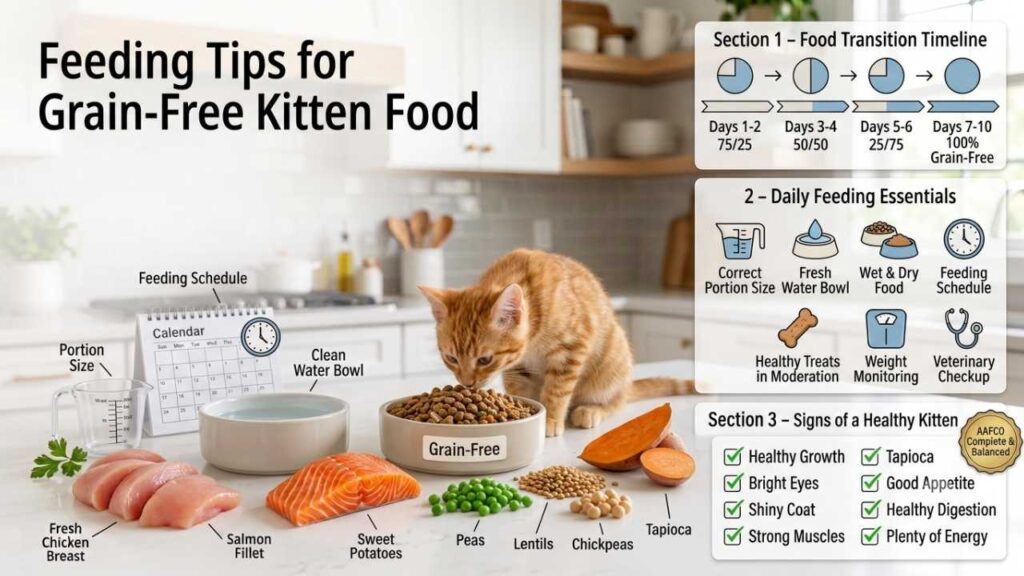
If you choose to feed your kitten grain-free food, make the change slowly and choose a formula that provides complete and balanced nutrition. A sudden change in diet can upset your kitten’s stomach. A gradual transition helps your kitten adjust more comfortably and supports healthy growth.
Switch to Grain-Free Food Gradually
Do not change your kitten’s food all at once. A slow transition gives the digestive system time to adapt and lowers the chance of digestive problems.
Follow this simple feeding plan:
| Days | Current Food | New Grain-Free Food |
| 1–2 | 75% | 25% |
| 3–4 | 50% | 50% |
| 5–6 | 25% | 75% |
| 7–10 | 0% | 100% |
If your kitten develops vomiting, diarrhea, or refuses to eat, slow down the transition. If the symptoms continue, contact your veterinarian.
Feed the Right Amount
Giving your kitten the correct portion is important for healthy growth. Feeding too much can lead to excess weight gain, while feeding too little may prevent your kitten from getting enough nutrients.
The right amount of food depends on:
- Your kitten’s age
- Body weight
- Activity level
- Whether you feed wet food or dry food
- The feeding guide on the food package
Use the manufacturer’s feeding guide as a starting point and adjust the amount if your veterinarian recommends it.
Always Provide Fresh Water
Your kitten should always have access to clean, fresh water. Even if you feed wet grain-free food, fresh drinking water is still essential.
Good hydration supports healthy digestion, kidney function, and overall health.
Feed Meals on a Regular Schedule
Kittens need several small meals each day because they grow quickly and use a lot of energy.
A general feeding schedule is:
- 8 to 12 weeks: 4 small meals each day
- 3 to 6 months: 3 meals each day
- 6 to 12 months: 2 to 3 meals each day
Feeding your kitten at the same times each day helps maintain energy levels and supports healthy development.
Monitor Your Kitten’s Growth
After switching to a new food, pay attention to your kitten’s overall health.
Signs that your kitten is doing well include:
- Steady weight gain
- A healthy appetite
- Bright, clear eyes
- A soft, shiny coat
- Plenty of energy
- Normal, well-formed stools
These signs usually mean your kitten is getting the nutrition it needs.
Watch for Digestive Problems
Some kittens need time to adjust to a new diet. During the first few weeks, watch for signs such as:
- Vomiting
- Diarrhea
- Constipation
- Excessive gas
- Loss of appetite
If these problems continue for more than a few days, speak with your veterinarian before continuing the new food.
Keep Treats to a Minimum
Treats should only be a small part of your kitten’s daily diet. Too many treats can reduce your kitten’s appetite for balanced meals and may lead to unhealthy weight gain.
Choose treats made for kittens and offer them only in moderation.
Schedule Regular Veterinary Checkups
Regular veterinary visits help make sure your kitten is growing as expected. Your veterinarian can check body weight, overall health, and nutritional needs. They can also recommend changes if your kitten has digestive problems, food sensitivities, or other health concerns.
Quick Feeding Tips Checklist
| Feeding Tip | Why It Matters |
| Change food over 7–10 days | Helps prevent digestive upset |
| Follow the recommended portion size | Supports healthy growth and weight |
| Provide fresh water every day | Keeps your kitten well hydrated |
| Feed according to your kitten’s age | Meets changing nutritional needs |
| Monitor weight and stool quality | Helps spot nutrition problems early |
| Limit treats | Supports a balanced diet |
| Visit your veterinarian regularly | Helps ensure healthy growth and development |
Feeding grain-free kitten food the right way is just as important as choosing the right product. A balanced diet, proper portion sizes, fresh water, and regular veterinary care all play an important role in your kitten’s health. Whether you choose grain-free or grain-inclusive food, providing complete nutrition and following a consistent feeding routine will help your kitten grow into a healthy adult cat.
When Should You Avoid Grain-Free Food?
Grain-free kitten food is not the best choice for every kitten. While it can be helpful in certain situations, most healthy kittens do well on high-quality grain-inclusive food. Choosing a grain-free diet without a clear reason may increase your food costs without offering extra health benefits.
Before changing your kitten’s food, think about its overall health, nutritional needs, and your veterinarian’s advice. The goal is to choose a food that provides complete and balanced nutrition, not simply one that removes grains.
Your Kitten Has No Food Sensitivities
If your kitten is healthy and has no problems eating its current food, there is usually no reason to switch to a grain-free diet.
A high-quality grain-inclusive food is often a great choice if your kitten has:
- Healthy digestion
- Clear skin with no irritation
- A soft, shiny coat
- Plenty of energy
- Steady and healthy growth
These signs show that your kitten is getting the nutrition it needs.
You Are Choosing Grain-Free Because of Marketing
Many pet food brands use words like “grain-free,” “natural,” or “premium” to make their products more appealing. While some of these foods are excellent, the label alone does not guarantee better nutrition.
Instead of relying on marketing claims, read the ingredient list. Look for real animal protein, healthy fats, taurine, DHA, essential vitamins and minerals, and an AAFCO statement showing the food is complete and balanced for kittens.
The Food Contains Too Many Plant Ingredients
Some grain-free recipes replace grains with large amounts of peas, lentils, chickpeas, or potatoes. These ingredients can be part of a balanced recipe, but they should not replace animal protein.
Cats are obligate carnivores, so animal protein should be the main ingredient in their diet. Choose foods that list chicken, turkey, salmon, duck, or another named meat first.
Your Veterinarian Has Not Recommended It
If your veterinarian has not found a food allergy, food intolerance, or another medical reason, switching to grain-free food may not be necessary.
Changing your kitten’s diet without a clear reason can sometimes upset its stomach. It can also make it harder to identify the cause of future digestive problems if they occur.
It Does Not Fit Your Budget
Grain-free kitten food is often more expensive than grain-inclusive food. If it does not fit your budget, do not worry. Many affordable kitten foods provide complete and balanced nutrition and contain high-quality animal protein along with the nutrients growing kittens need.
The price of the food is less important than its nutritional quality.
Your Kitten Is Already Healthy
If your kitten is growing well and stays healthy on its current food, there is usually no reason to change diets just because grain-free food is popular.
Signs your kitten is doing well include:
- Healthy weight gain
- Strong muscles
- Bright eyes
- A soft, shiny coat
- Healthy digestion
- A good appetite
- Plenty of energy
If your kitten shows these signs, its current diet is likely meeting its nutritional needs.
Situations Where Grain-Free Food May Not Be the Best Choice
| Situation | Recommendation |
| Healthy kitten with no food sensitivities | Continue feeding a complete and balanced diet |
| Choosing grain-free because of advertising | Focus on ingredient quality instead |
| Grain-free food contains too many plant ingredients | Choose a recipe with more animal protein |
| No recommendation from your veterinarian | Talk to your veterinarian before changing foods |
| Limited budget | Choose a high-quality grain-inclusive kitten food |
| Kitten is healthy and growing well | No need to change diets without a medical reason |
Grain-free kitten food can be a good option for some kittens, but it is not necessary for all of them. The best food is one that provides complete and balanced nutrition, contains high-quality animal protein, and supports healthy growth. If you are unsure which diet is right for your kitten, ask your veterinarian for advice based on your kitten’s individual needs.
Common Myths About Grain-Free Kitten Food
Grain-free kitten food has become more popular over the years, but it has also created many common myths. Some pet owners believe that removing grains automatically makes a kitten’s diet healthier. That is not always true. The quality of the ingredients and the overall nutrition are much more important than whether the food contains grains. Knowing the facts can help you choose the best food for your kitten.
Myth 1: Grain-Free Food Is Always Healthier
Many people believe grain-free kitten food is always the healthier option. In reality, a grain-free label does not guarantee better nutrition.
A healthy kitten food should provide:
- Complete and balanced nutrition
- High-quality animal protein
- Healthy fats
- Taurine
- DHA
- Essential vitamins and minerals
These nutrients matter far more than whether the recipe contains grains.
Myth 2: Kittens Cannot Digest Grains
Some people think kittens cannot digest grains because cats are obligate carnivores. This is another common misunderstanding.
While kittens need animal protein as the main part of their diet, most healthy kittens can digest properly cooked grains without any problems. Ingredients like rice and oats can provide energy, fiber, and other nutrients as part of a balanced diet.
Myth 3: Every Kitten Needs Grain-Free Food
Grain-free food is not necessary for every kitten.
Most healthy kittens grow well on high-quality grain-inclusive food that meets AAFCO nutritional standards. A grain-free diet is usually recommended only when a veterinarian identifies a food sensitivity or another medical reason.
Choosing grain-free simply because it is popular does not always provide extra health benefits.
Myth 4: Grains Are the Main Cause of Food Allergies
Many pet owners think grains are the most common cause of food allergies in cats. In fact, this is rarely the case.
Most food allergies in cats are linked to certain animal proteins, not grains. Although grain allergies can happen, they are uncommon. If your kitten has itching, stomach problems, or ongoing skin issues, your veterinarian can help identify the real cause.
Myth 5: Grain-Free Food Always Contains More Protein
Some grain-free foods contain a high amount of animal protein, but not all of them.
Some recipes replace grains with peas, potatoes, or lentils instead of adding more meat. That means a grain-free label does not always mean the food is higher in protein.
Always read the ingredient list and choose foods that list real chicken, turkey, salmon, duck, or another named animal protein as the first ingredient.
Myth 6: Any Grain-Free Food Is Suitable for Kittens
Not all grain-free foods are made for growing kittens.
Kittens need more protein, healthy fats, vitamins, and minerals than adult cats. A grain-free food designed for adult cats may not meet these needs.
Always choose a formula made specifically for kittens. It should provide complete and balanced nutrition along with taurine, DHA, and other essential nutrients.
Myth vs. Fact
| Myth | Fact |
| Grain-free food is always healthier. | The overall quality and balance of the food matter most. |
| Kittens cannot digest grains. | Most healthy kittens digest cooked grains without any problems. |
| Every kitten should eat grain-free food. | Most kittens do well on high-quality grain-inclusive diets. |
| Grains are the main cause of food allergies. | Animal proteins are a more common cause of food allergies. |
| Grain-free food always contains more protein. | Protein levels depend on the recipe, not the label. |
| All grain-free foods are suitable for kittens. | Choose a formula made specifically for growing kittens. |
Understanding these common myths can help you make better decisions about your kitten’s diet. Instead of following marketing trends, focus on foods that provide complete and balanced nutrition, high-quality animal protein, and the essential nutrients your kitten needs to grow. If you are unsure which food is right for your kitten, ask your veterinarian for advice before making any major changes to its diet.
Frequently Asked Questions
Is grain-free kitten food better than grain-inclusive food?
Not always. Grain-free food is not automatically healthier than grain-inclusive food. Both can support healthy growth when they provide complete and balanced nutrition. The most important things to look for are high-quality animal protein, healthy fats, taurine, DHA, essential vitamins and minerals, and an AAFCO statement showing the food is made for growing kittens.
Can kittens digest grains?
Yes. Most healthy kittens can digest properly cooked grains like rice and oats without any trouble. These ingredients can provide energy, fiber, vitamins, and minerals as part of a balanced diet. True grain allergies are rare in kittens.
Does my kitten need grain-free food?
In most cases, no. Healthy kittens usually do well on high-quality grain-inclusive food. A grain-free diet may be helpful if your kitten has a diagnosed food sensitivity or if your veterinarian recommends it for a specific health reason.
Can grain-free food help with food allergies?
It depends on what is causing the allergy. Most food allergies in cats are linked to certain animal proteins, not grains. If your kitten has symptoms such as itching, vomiting, diarrhea, or skin irritation, your veterinarian can help find the cause and recommend the right diet.
Is grain-free kitten food more expensive?
Yes, in many cases it is. Grain-free kitten food often costs more because many brands sell it as a premium product. However, a higher price does not always mean better nutrition. Compare the ingredients and nutritional value before making your choice.
Can I feed grain-free food to an indoor kitten?
Yes. Indoor kittens can eat grain-free food if it provides complete and balanced nutrition. However, living indoors does not mean a kitten needs a grain-free diet. Choose food based on your kitten’s age, health, and nutritional needs.
Can I mix grain-free and grain-inclusive kitten food?
Yes. Many pet owners feed both types of food together. If you decide to mix them, introduce the new food slowly over 7 to 10 days. This helps reduce the risk of digestive upset. Make sure both foods are made for kittens and provide complete and balanced nutrition.
What should I look for when buying grain-free kitten food?
Choose a food that includes:
- An AAFCO nutritional adequacy statement
- Real animal protein as the first ingredient
- Taurine for heart and eye health
- DHA for brain and vision development
- Omega-3 and Omega-6 fatty acids
- Essential vitamins and minerals
- A formula made specifically for growing kittens
How do I know if my kitten is doing well on its food?
A healthy kitten usually shows these signs:
- Steady growth and healthy weight gain
- Bright, clear eyes
- A soft, shiny coat
- Strong muscles
- A healthy appetite
- Plenty of energy
- Normal, well-formed stools
If your kitten has ongoing digestive problems, poor growth, or skin issues, speak with your veterinarian to find out if a diet change is needed.
Final Verdict
Grain-free kitten food can be a good choice for some kittens, especially if they have specific food sensitivities or if a veterinarian recommends it. Many grain-free formulas contain high-quality animal protein, healthy fats, taurine, DHA, and other important nutrients that support healthy growth. However, grain-free food is not necessary for every kitten, and removing grains does not automatically make a diet healthier.
Most healthy kittens grow well on high-quality grain-inclusive food that provides complete and balanced nutrition. Instead of choosing food based on trends or marketing claims, focus on ingredient quality, nutritional balance, and your kitten’s individual needs. Whether you choose grain-free or grain-inclusive food, select a formula made specifically for kittens that meets AAFCO standards and lists real animal protein as the first ingredient.
The best kitten food is the one that helps your kitten grow strong, stay active, maintain a healthy weight, and get all the nutrients needed during its first year of life. If you are unsure which food is right for your kitten, talk to your veterinarian. They can recommend the best diet based on your kitten’s age, health, and lifestyle.