
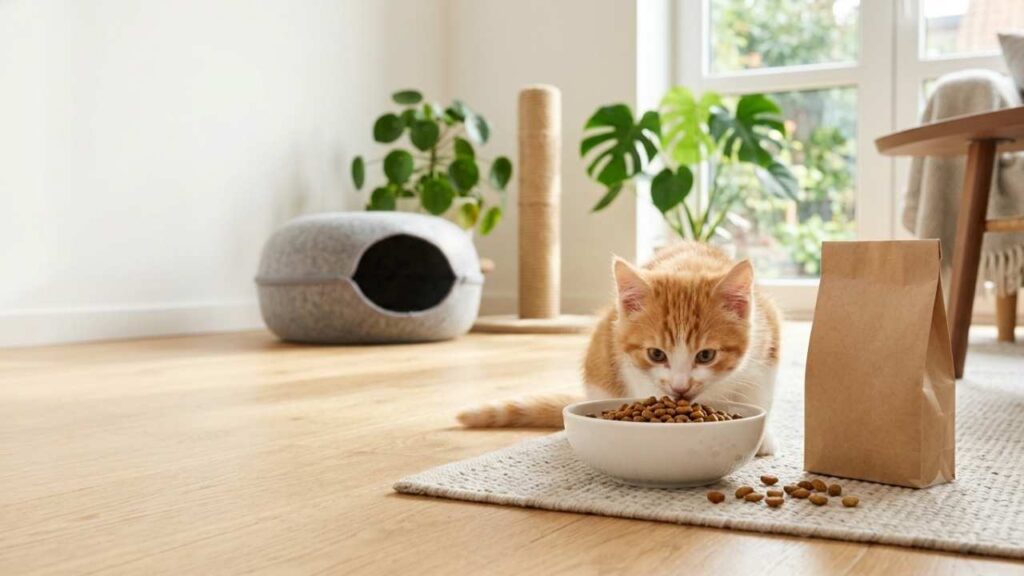
Choosing the best dry kitten food for indoor kittens is one of the most important decisions you can make for your pet. Indoor kittens grow quickly and need the right balance of protein, healthy fats, vitamins, and minerals to support their growing bodies. Unlike outdoor cats, they spend most of their time inside, so they often burn fewer calories and rely completely on the food you provide. A high-quality dry kitten food can help build strong muscles, healthy bones, a shiny coat, and a strong immune system during this important stage of life.
Not all dry kitten foods offer the same nutrition. Some recipes are made with real animal protein and meet AAFCO standards for complete and balanced nutrition, while others contain unnecessary fillers that provide little nutritional value. The best options also include important nutrients like DHA for brain development, taurine for heart and eye health, and calcium and phosphorus for strong bones and teeth. Choosing the right food now can support healthy growth and help your kitten develop lifelong healthy eating habits.
In this guide, you’ll discover the best dry kitten food for indoor kittens based on ingredient quality, nutritional value, safety, and overall value. We’ll compare popular brands, explain what ingredients to look for, share a helpful feeding guide, and answer common questions that many new kitten owners have. By the end of this article, you’ll have the knowledge to choose a dry kitten food that keeps your indoor kitten healthy, active, and happy.
What Makes Indoor Kittens Different?
Indoor kittens have different nutritional needs than kittens that spend time outdoors. They are usually less active because they live inside the home. This means they burn fewer calories during the day. Even so, they still need a diet rich in animal protein, healthy fats, vitamins, and minerals to support healthy growth. Feeding the best dry kitten food for indoor kittens helps build strong muscles, healthy bones, and a strong immune system while maintaining a healthy weight.
During the first year of life, kittens grow quickly. Their bodies need complete and balanced nutrition that meets AAFCO standards. High-quality dry kitten food should contain real meat, such as chicken, turkey, or salmon, as the first ingredient. It should also provide important nutrients like DHA to support brain development, taurine for heart and eye health, and calcium and phosphorus for strong bones and teeth. These nutrients help indoor kittens develop into healthy adult cats.
Indoor kittens also depend completely on their owners for food and exercise. Since they are not hunting or exploring outside, they need a carefully balanced diet that supports their indoor lifestyle. Some premium dry kitten foods include probiotics, prebiotics, and omega-3 and omega-6 fatty acids to improve digestive health, support healthy skin, and keep their coat soft and shiny. These added nutrients also help strengthen the immune system during the early months of growth.
Another common concern for indoor kittens is maintaining a healthy weight as they grow. Feeding too many calories or choosing food with unnecessary fillers like corn, wheat, and artificial additives can lead to unwanted weight gain over time. A high-quality kitten kibble made with real animal protein and natural ingredients provides better nutrition without adding empty calories. It also keeps kittens feeling satisfied for longer.
Fresh water is just as important as choosing the right dry food. Dry kitten food contains much less moisture than wet food, so indoor kittens should always have access to clean drinking water. Providing fresh water every day supports healthy digestion, kidney function, and overall well-being.
Understanding these unique needs makes it easier to choose the right dry food for your kitten. A nutritious diet, regular feeding schedule, and plenty of fresh water will give your indoor kitten the best start to a healthy and active life.
Expert Tip
When choosing dry kitten food, don’t focus only on the brand name. Always read the ingredient list. If real chicken, turkey, or salmon appears as the first ingredient, the food usually provides better-quality protein than recipes that rely mainly on fillers.
How to Choose the Best Dry Kitten Food for Indoor Kittens
Choosing the right dry kitten food can make a big difference in your kitten’s health and development. There are many options available, but not all of them provide the same level of nutrition. The best dry kitten food for indoor kittens should support healthy growth, strong muscles, brain development, and a healthy immune system. Here are the most important things to look for before buying.
Look for AAFCO-Approved Nutrition
Always choose a dry kitten food that meets AAFCO standards for complete and balanced nutrition. This means the food provides the essential nutrients growing kittens need during their first year. Foods that meet AAFCO guidelines are formulated to support healthy development and are suitable as a complete daily diet.
Choose Real Meat as the First Ingredient
The first ingredient should be a high-quality animal protein such as chicken, turkey, or salmon. Cats are obligate carnivores, which means they need protein from animal sources to grow properly. Real meat helps build lean muscles and provides the amino acids kittens need for healthy development.
Pick a High-Protein Formula
Growing kittens need more protein than adult cats. A high-protein dry kitten food supports muscle growth, healthy energy levels, and overall body development. Look for recipes that contain quality animal protein instead of relying on plant-based protein or fillers.
Check for DHA and Healthy Fats
DHA, an omega-3 fatty acid often sourced from fish oil, plays an important role in brain and vision development. Healthy fats also provide energy and help keep your kitten’s skin healthy and coat shiny. Foods containing omega-3 and omega-6 fatty acids are an excellent choice for indoor kittens.
Make Sure It Contains Taurine
Taurine is an essential amino acid that cats cannot produce in enough amounts on their own. It supports healthy vision, heart function, and the nervous system. Every high-quality dry kitten food should contain adequate taurine to meet your kitten’s daily needs.
Support Strong Bones with Calcium and Phosphorus
Kittens grow rapidly during their first year, so they need the right balance of calcium and phosphorus to build strong bones and teeth. A balanced mineral content supports healthy skeletal development without causing nutritional imbalances.
Choose Small, Easy-to-Chew Kibble
Young kittens have smaller mouths and developing teeth. Small kibble pieces are easier to chew and encourage comfortable eating. Many premium kitten foods are specially designed with bite-sized kibble for growing kittens.
Look for Digestive Support
A healthy digestive system helps kittens absorb nutrients more effectively. Dry foods that include probiotics, prebiotics, or natural fiber from ingredients like pumpkin or beet pulp can promote healthy digestion and support firm stools. Good digestive health also strengthens the immune system.
Avoid Low-Quality Fillers and Artificial Additives
Read the ingredient list carefully. Avoid foods that contain large amounts of fillers such as corn, wheat, or soy as primary ingredients. It is also best to avoid artificial colors, flavors, and preservatives whenever possible. Instead, choose recipes made with wholesome ingredients and real animal protein.
Consider Your Kitten’s Indoor Lifestyle
Indoor kittens are usually less active than outdoor cats, so they benefit from nutrient-dense food that supports healthy growth without providing unnecessary calories. A balanced formula helps maintain a healthy weight while delivering the vitamins, minerals, and antioxidants needed for a strong immune system.
By focusing on these features, you can confidently choose a dry kitten food that provides complete and balanced nutrition. A high-quality diet during the first year lays the foundation for a healthy adult cat and helps your indoor kitten thrive for years to come.
Expert Tip
If your kitten suddenly refuses a new food, don’t switch back immediately. Give the transition a few more days unless your kitten becomes sick. Many kittens need time to adjust to a new taste and texture.
Best Dry Kitten Food for Indoor Kittens
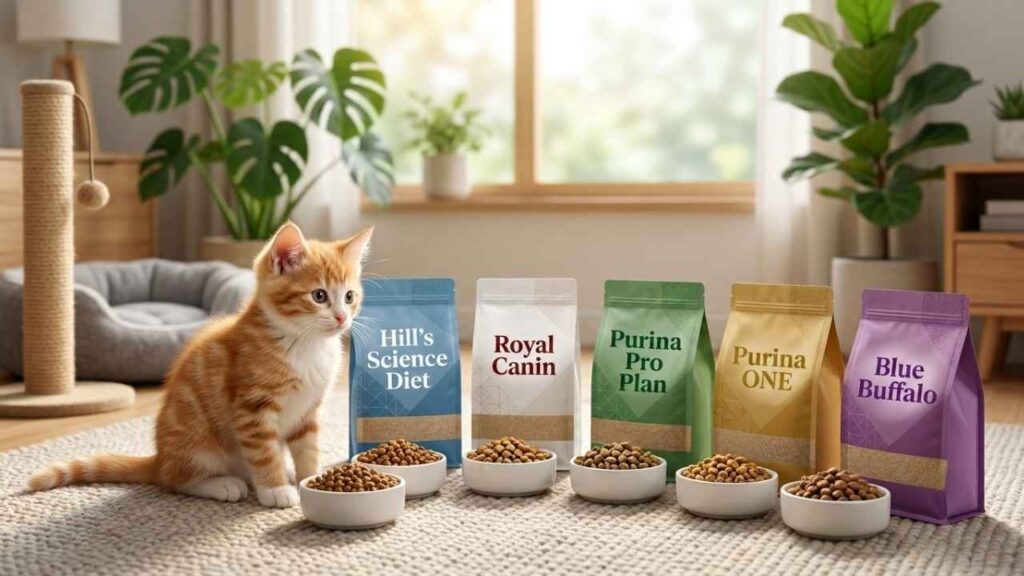
Choosing the right dry kitten food is about more than picking a popular brand. The best food should provide complete and balanced nutrition, use high-quality ingredients, and support healthy growth during your kitten’s first year. We selected the following products based on ingredient quality, protein content, AAFCO compliance, brand reputation, customer reviews, and overall value. These dry kitten foods are excellent choices for indoor kittens that need balanced nutrition and steady growth.
1. Hill’s Science Diet Kitten Dry Cat Food
Best for: Overall nutrition and healthy development
Hill’s Science Diet Kitten is one of the most trusted choices recommended by many veterinarians. It is made with real chicken as the first ingredient and provides high-quality protein to support lean muscle growth. The formula also contains fish oil, which is a natural source of DHA to promote healthy brain and eye development.
Key Ingredients
- Chicken
- Chicken meal
- Brown rice
- Fish oil
- Flaxseed
Pros
- High-quality animal protein
- Supports brain and eye development with DHA
- Easy-to-digest ingredients
- No artificial colors or flavors
- Meets AAFCO nutritional standards
Cons
- More expensive than some budget brands
- Contains grains, which may not suit every preference
Why We Recommend It
This formula provides complete and balanced nutrition for growing indoor kittens. Its digestible ingredients, balanced minerals, and trusted reputation make it one of the best all-around choices.
2. Royal Canin Kitten Dry Cat Food
Best for: Small kibble and digestive health
Royal Canin Kitten Dry Cat Food is specially designed for kittens between 4 and 12 months of age. Its small kibble size is easy to chew, and the formula includes highly digestible proteins, prebiotics, and antioxidants to support digestion and the immune system.
Key Ingredients
- Chicken by-product meal
- Chicken fat
- Brewers rice
- Fish oil
- Prebiotics
Pros
- Small kibble for young kittens
- Supports digestive health
- Helps strengthen the immune system
- Includes DHA for brain development
Cons
- Uses by-product meal
- Higher price than many competitors
Why We Recommend It
This food is an excellent choice for indoor kittens with sensitive stomachs or those transitioning from wet food to dry kibble.
3. Purina Pro Plan Kitten Chicken & Rice Formula
Best for: High-protein nutrition
Purina Pro Plan combines real chicken with essential nutrients to support healthy growth. It contains DHA from fish oil, antioxidants for immune support, and live probiotics to help maintain digestive health.
Key Ingredients
- Chicken
- Rice
- Poultry by-product meal
- Fish oil
- Probiotics
Pros
- High animal protein
- Supports digestive and immune health
- Includes DHA and taurine
- Excellent value for money
Cons
- Contains some by-product ingredients
- Includes grains
Why We Recommend It
Its balanced nutrition and digestive support make it a reliable option for healthy indoor kittens.
4. Purina ONE Healthy Kitten Formula
Best for: Budget-friendly nutrition
Purina ONE Healthy Kitten Formula delivers high-quality nutrition at an affordable price. It features real chicken as the first ingredient and contains DHA, vitamins, and minerals to support healthy growth.
Key Ingredients
- Chicken
- Rice flour
- Chicken by-product meal
- Fish oil
Pros
- Affordable
- High protein
- Supports strong muscles
- Contains DHA and taurine
Cons
- Includes by-product meal
- Contains grains
Why We Recommend It
This is one of the best budget-friendly dry kitten foods without sacrificing essential nutrition.
5. IAMS ProActive Health Healthy Kitten
Best for: Everyday feeding
IAMS Healthy Kitten provides complete and balanced nutrition with real chicken and a blend of antioxidants to support the immune system. It also contains omega fatty acids for healthy skin and a shiny coat.
Key Ingredients
- Chicken
- Chicken by-product meal
- Fish oil
- Beet pulp
Pros
- Rich in protein
- Supports healthy digestion
- Good value
- Small kibble size
Cons
- Contains grains
- Uses by-product ingredients
Why We Recommend It
This formula offers reliable daily nutrition for growing indoor kittens at a reasonable price.
Quick Comparison Table
| Product | Best For | Main Protein | Grain-Free | DHA | Overall Rating |
| Hill’s Science Diet Kitten | Overall nutrition | Chicken | No | Yes | 5/5 |
| Royal Canin Kitten | Digestive health | Chicken | No | Yes | 4.9/5 |
| Purina Pro Plan Kitten | High protein | Chicken | No | Yes | 4.8/5 |
| Purina ONE Healthy Kitten | Budget option | Chicken | No | Yes | 4.7/5 |
| IAMS ProActive Health Kitten | Everyday feeding | Chicken | No | Yes | 4.6/5 |
These dry kitten foods provide complete and balanced nutrition for indoor kittens. They contain essential nutrients such as high-quality animal protein, taurine, DHA, omega-3 fatty acids, vitamins, and minerals that support healthy growth, strong muscles, brain development, and a healthy immune system. The best choice for your kitten will depend on your budget, your kitten’s preferences, and any recommendations from your veterinarian.
Personal Observation
While researching leading veterinary resources and trusted pet nutrition guides, one common recommendation appeared repeatedly: choosing a kitten food with real animal protein as the first ingredient is one of the best ways to support healthy growth.
Best Dry Kitten Food by Need
Every kitten is different. Some need a high-protein diet to support active growth, while others may have a sensitive stomach or require a more affordable option. Choosing food based on your kitten’s specific needs can help improve digestion, maintain a healthy weight, and support long-term health. The following recommendations make it easier to find the best dry kitten food for your indoor kitten.
| Need | Recommended Food | Why It Stands Out |
| Best Overall | Hill’s Science Diet Kitten | Complete and balanced nutrition with high-quality protein, DHA, and balanced minerals. |
| Best Budget | Purina ONE Healthy Kitten Formula | Affordable, high in protein, and provides essential nutrients for healthy growth. |
| Best Premium | Royal Canin Kitten | Specially designed for growing kittens with digestive support and small kibble. |
| Best High-Protein | Purina Pro Plan Kitten Chicken & Rice | Rich in animal protein, DHA, taurine, and probiotics for healthy development. |
| Best for Sensitive Stomachs | Royal Canin Kitten | Highly digestible ingredients and prebiotics help support digestive health. |
| Best for Strong Muscle Growth | Hill’s Science Diet Kitten | Real chicken and quality protein help build lean muscles. |
| Best for Brain Development | Hill’s Science Diet Kitten | Fish oil provides DHA to support brain and vision development. |
| Best for Healthy Skin and Coat | IAMS ProActive Health Healthy Kitten | Contains omega-3 and omega-6 fatty acids for healthy skin and a shiny coat. |
| Best Small Kibble | Royal Canin Kitten | Small kibble size makes chewing easier for young kittens. |
| Best Everyday Value | IAMS ProActive Health Healthy Kitten | Offers balanced nutrition at a reasonable price for daily feeding. |
Best for Overall Nutrition
If you want one product that performs well in every category, Hill’s Science Diet Kitten is an excellent choice. It contains real chicken, DHA from fish oil, high-quality protein, and balanced minerals that support healthy bones, muscles, and brain development. It also meets AAFCO standards for complete and balanced nutrition.
Best Budget Choice
Purina ONE Healthy Kitten Formula is ideal for pet owners looking for quality nutrition at a lower price. It provides real chicken as the first ingredient, along with taurine, DHA, vitamins, and minerals that support healthy growth without stretching your budget.
Best Premium Formula
Royal Canin Kitten is a premium dry kitten food made specifically for growing kittens. It contains highly digestible proteins, prebiotics, antioxidants, and carefully balanced nutrients that support digestive health and immune function.
Best for High Protein
Growing kittens need plenty of animal protein to build lean muscles. Purina Pro Plan Kitten delivers a high-protein formula made with real chicken and includes probiotics, DHA, and taurine for complete nutritional support.
Best for Sensitive Digestion
Some indoor kittens have delicate digestive systems, especially during the transition from their mother’s milk to solid food. Foods that contain prebiotics, highly digestible proteins, and natural fiber can help reduce digestive upset. Royal Canin Kitten is one of the best options for kittens with sensitive stomachs.
Best for Healthy Skin and Coat
A healthy coat starts with proper nutrition. IAMS ProActive Health Healthy Kitten contains omega-3 and omega-6 fatty acids, which help keep your kitten’s skin healthy and coat soft, smooth, and shiny.
Which Food Should You Choose?
The best dry kitten food depends on your kitten’s age, activity level, health, and nutritional needs. Look for products that contain real meat as the first ingredient, provide complete and balanced nutrition, include important nutrients like taurine, DHA, and calcium, and avoid unnecessary fillers and artificial additives.
No matter which option you choose, always provide fresh drinking water and follow the feeding guidelines on the package. Pairing high-quality nutrition with regular veterinary checkups will help your indoor kitten grow into a healthy and happy adult cat.
Our Recommendation
If you’re buying dry kitten food for the first time, Hill’s Science Diet Kitten is an excellent choice because it offers balanced nutrition, high-quality protein, DHA, and trusted ingredient quality. If you’re looking for a more affordable option, Purina ONE Healthy Kitten Formula provides excellent value without sacrificing essential nutrition.
Dry Food vs Wet Food for Indoor Kittens
Many new pet owners wonder whether dry food or wet food is the better choice for their indoor kitten. The truth is that both have their own benefits. The best option depends on your kitten’s age, health, eating habits, and your feeding routine. Many veterinarians recommend feeding a combination of both to provide balanced nutrition and extra moisture.
Dry kitten food is convenient, easy to store, and usually costs less than wet food. It also stays fresh longer after serving and encourages chewing because of its crunchy texture. High-quality dry kitten food contains complete and balanced nutrition, including animal protein, taurine, DHA, vitamins, and minerals that support healthy growth. However, because dry food contains very little moisture, indoor kittens should always have access to fresh, clean water.
Wet kitten food contains much more moisture, which helps support hydration and urinary tract health. It is also softer and easier for very young kittens to eat. Many kittens enjoy its taste and texture, making it a good option for picky eaters. However, wet food is generally more expensive, must be refrigerated after opening, and should not be left out for long periods.
Dry Food vs Wet Food Comparison
| Feature | Dry Kitten Food | Wet Kitten Food |
| Moisture Content | Low | High |
| Protein Quality | High in quality brands | High in quality brands |
| Cost | More affordable | Usually more expensive |
| Storage | Easy to store | Requires refrigeration after opening |
| Shelf Life After Serving | Can stay out longer | Should be removed after a few hours |
| Dental Benefits | Crunchy texture may help reduce plaque buildup | Does not provide the same chewing action |
| Hydration | Requires plenty of fresh water | Helps increase daily water intake |
| Convenience | Very convenient for daily feeding | Requires more preparation and cleanup |
| Best For | Daily feeding and healthy growth | Extra hydration and picky eaters |
Is Dry Food Enough for Indoor Kittens?
Yes, a high-quality dry kitten food can provide everything a healthy indoor kitten needs, as long as it meets AAFCO standards for complete and balanced nutrition. It should contain real animal protein, healthy fats, DHA, taurine, calcium, and other essential nutrients. Fresh drinking water should always be available because dry food contains very little moisture.
Can You Feed Both Dry and Wet Food?
Yes. Many pet owners use a mixed feeding approach. Dry food can be available during the day, while wet food can be served once or twice daily. This combination provides the convenience of dry food and the added moisture of wet food. It can also make meals more enjoyable for kittens and encourage healthy eating habits.
Which Option Is Best?
For most indoor kittens, the best choice is a high-quality dry kitten food made with real meat and complete, balanced nutrition. If your kitten needs extra hydration or simply enjoys wet food, adding a small amount of wet food to the diet can provide additional benefits. Whatever feeding method you choose, focus on quality ingredients, proper portion sizes, and a regular feeding schedule to support healthy growth and long-term well-being.
Common Mistakes New Kitten Owners Make
- Buying adult cat food instead of kitten food.
- Choosing food based only on price.
- Ignoring the ingredient list.
- Overfeeding treats.
- Changing food too quickly.
- Not providing enough fresh water.
Ingredients to Look for in the Best Dry Kitten Food
The ingredient list tells you a lot about the quality of a kitten food. High-quality ingredients provide the nutrients your kitten needs for healthy growth, while low-quality fillers add little nutritional value. When choosing the best dry kitten food for indoor kittens, always read the label carefully and look for foods that provide complete and balanced nutrition.
Real Animal Protein
Real meat should always be the first ingredient. Chicken, turkey, salmon, or other animal proteins provide the essential amino acids kittens need to build lean muscles and support healthy growth.
Good protein sources include:
- Chicken
- Turkey
- Salmon
- Whitefish
- Chicken meal
- Turkey meal
High-quality animal protein helps support healthy muscles, strong bones, and steady growth during your kitten’s first year.
DHA for Brain and Eye Development
DHA is an omega-3 fatty acid that plays an important role in brain and vision development. It is commonly sourced from fish oil and is especially important during the first year of life.
Look for ingredients such as:
- Fish oil
- Salmon oil
- Marine oils
Taurine
Taurine is one of the most important nutrients for cats. Since cats cannot produce enough taurine naturally, it must be included in their diet.
Taurine supports:
- Healthy heart function
- Good eyesight
- Nervous system development
- Overall growth
A quality dry kitten food should always include added taurine.
Healthy Fats
Healthy fats provide energy and help your kitten absorb fat-soluble vitamins. They also support healthy skin and a soft, shiny coat.
Look for ingredients like:
- Chicken fat
- Fish oil
- Flaxseed
- Salmon oil
These ingredients provide beneficial omega-3 and omega-6 fatty acids.
Calcium and Phosphorus
Growing kittens need balanced minerals to build strong bones and teeth. Calcium and phosphorus work together to support healthy skeletal development throughout the first year.
Foods formulated for kittens contain the proper balance of these minerals to meet AAFCO nutritional guidelines.
Vitamins and Minerals
A complete kitten food should contain essential vitamins and minerals that support the immune system and overall health.
Important nutrients include:
- Vitamin A
- Vitamin D
- Vitamin E
- Zinc
- Iron
- Selenium
These nutrients help support healthy vision, strong immunity, healthy skin, and normal growth.
Probiotics and Prebiotics
A healthy digestive system allows kittens to absorb nutrients more efficiently. Many premium dry kitten foods include probiotics and prebiotics to support digestive health.
Benefits include:
- Better digestion
- Improved nutrient absorption
- Healthier gut bacteria
- Stronger immune system
- Firmer stools
Natural Fiber
Natural fiber supports healthy digestion and can also help reduce hairballs as your kitten grows.
Common fiber sources include:
- Pumpkin
- Beet pulp
- Brown rice
- Oatmeal
These ingredients help maintain regular digestion without adding unnecessary fillers.
Antioxidants
Antioxidants help strengthen the immune system and protect growing cells from damage. They are especially helpful during the early months when kittens are developing their natural defenses.
Common antioxidant-rich ingredients include:
- Blueberries
- Cranberries
- Vitamin E
- Vitamin C
Ingredients to Avoid
Not every ingredient found in kitten food provides good nutrition. Some products contain inexpensive fillers or artificial additives that offer little benefit.
Try to avoid foods with excessive amounts of:
- Artificial colors
- Artificial flavors
- Artificial preservatives
- Large amounts of corn
- Large amounts of wheat
- Large amounts of soy
- Excess sugar
These ingredients may reduce the overall quality of the food and provide fewer nutrients than recipes made with real animal protein.
Quick Checklist Before You Buy
Before choosing a dry kitten food, make sure it:
- Meets AAFCO standards for complete and balanced nutrition.
- Lists real chicken, turkey, or salmon as the first ingredient.
- Contains high-quality animal protein.
- Includes DHA for brain development.
- Provides added taurine for heart and eye health.
- Contains calcium and phosphorus for strong bones.
- Includes omega-3 and omega-6 fatty acids.
- Supports digestive health with probiotics or prebiotics.
- Contains no unnecessary artificial colors or preservatives.
Choosing a dry kitten food with these high-quality ingredients gives your indoor kitten the nutrients needed for healthy growth, strong muscles, a healthy immune system, and a long, active life.
Trust Signals
Example:
Every product in this guide was selected based on ingredient quality, nutritional value, AAFCO compliance, customer feedback, and brand reputation. No product was included simply because it is popular.
Feeding Guide for Indoor Kittens
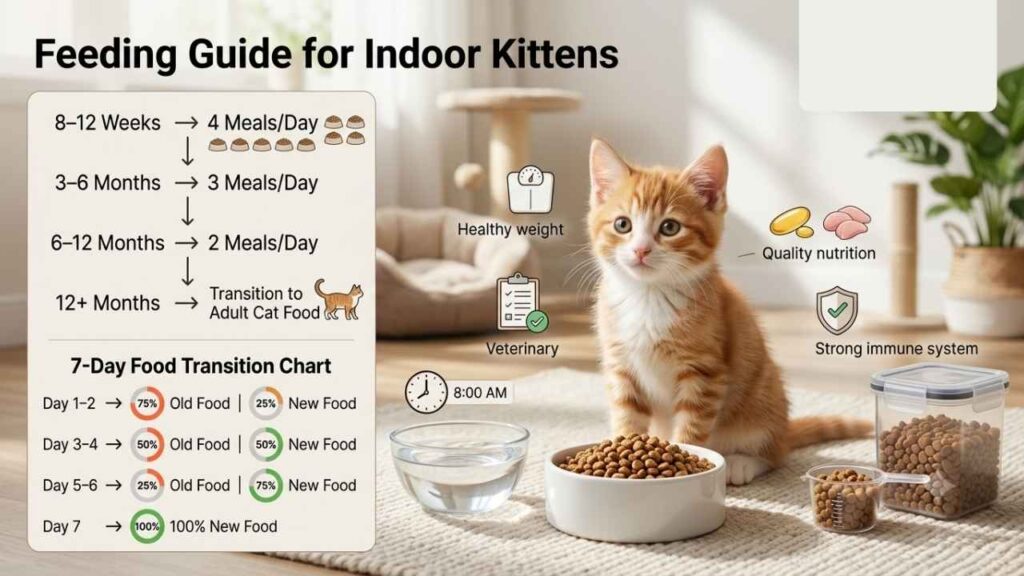
Feeding your kitten the right amount of food is just as important as choosing a high-quality diet. Growing kittens need more calories and nutrients than adult cats because their bodies develop quickly during the first year. A regular feeding schedule helps support healthy growth, steady energy levels, and good digestion.
The amount of dry kitten food your kitten needs depends on age, weight, activity level, and the calorie content of the food. Always follow the feeding guide provided by the manufacturer and adjust portions based on your veterinarian’s advice.
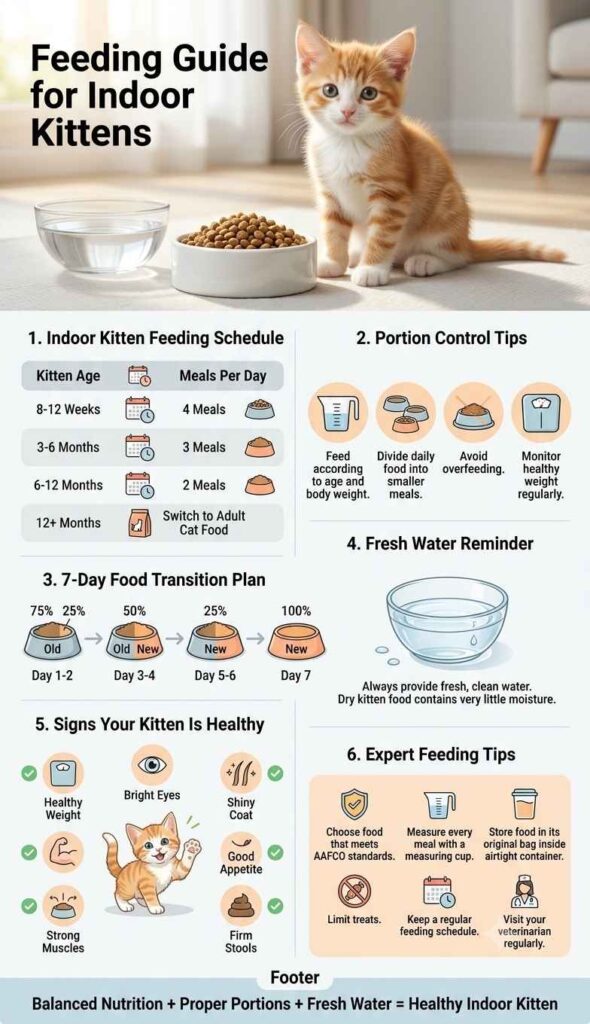
Indoor Kitten Feeding Schedule
| Kitten Age | Meals Per Day | General Feeding Guide |
| 8–12 weeks | 4 meals | Small portions throughout the day to support rapid growth. |
| 3–6 months | 3 meals | Increase portion sizes as your kitten becomes more active. |
| 6–12 months | 2 meals | Feed morning and evening while monitoring healthy weight. |
| 12+ months | Switch to adult cat food | Gradually transition to an adult cat formula. |
How Much Dry Food Should You Feed?
There is no single portion that works for every kitten. Different brands contain different calorie levels, and every kitten grows at its own pace.
As a general rule:
- Feed according to your kitten’s age and body weight.
- Divide the daily amount into several small meals.
- Avoid overfeeding, even if your kitten seems hungry all the time.
- Monitor body condition instead of feeding unlimited amounts.
A healthy indoor kitten should gain weight steadily without becoming overweight.
Always Provide Fresh Water
Dry kitten food contains very little moisture. Fresh, clean drinking water should always be available throughout the day. Proper hydration supports healthy digestion, kidney function, and overall health.
Wash your kitten’s water bowl daily and refill it with fresh water to encourage regular drinking.
Avoid Free Feeding
Many owners leave food in the bowl all day, but this can lead to overeating, especially for indoor kittens with lower activity levels.
Instead:
- Feed measured portions.
- Follow a consistent schedule.
- Remove uneaten food after mealtime if necessary.
- Monitor your kitten’s appetite and body weight.
A routine helps your kitten develop healthy eating habits from an early age.
Introduce New Food Slowly
If you decide to change your kitten’s dry food, make the transition gradually. A sudden change can upset your kitten’s digestive system and lead to diarrhea or vomiting.
Use this simple 7-day transition plan:
| Day | Old Food | New Food |
| 1–2 | 75% | 25% |
| 3–4 | 50% | 50% |
| 5–6 | 25% | 75% |
| 7 | 0% | 100% |
This gradual change allows your kitten’s digestive system to adjust comfortably.
Signs Your Kitten Is Eating the Right Amount
A well-fed indoor kitten will usually show these signs:
- Steady and healthy weight gain.
- High energy during playtime.
- Bright, clear eyes.
- A soft and shiny coat.
- Firm, well-formed stools.
- A healthy appetite without overeating.
If your kitten is losing weight, becoming overweight, or refusing food, consult your veterinarian to rule out any health concerns.
Feeding Tips for Healthy Growth
Follow these simple tips to keep your indoor kitten healthy:
- Choose a dry kitten food that meets AAFCO standards.
- Feed measured portions instead of guessing.
- Stick to a regular feeding schedule.
- Limit treats so they do not replace balanced meals.
- Store dry food in a cool, dry place to maintain freshness.
- Schedule regular veterinary checkups to monitor growth and nutrition.
Providing the right amount of complete and balanced nutrition every day helps your indoor kitten build strong muscles, healthy bones, a strong immune system, and healthy eating habits that can last into adulthood.
Small Practical Tips
Example:
Store dry kitten food in its original bag inside an airtight container. This helps preserve freshness and protects important nutrients.
Example:
Always measure your kitten’s food with a measuring cup instead of estimating the amount. This helps prevent overfeeding.
Frequently Asked Questions
What is the best dry kitten food for indoor kittens?
The best dry kitten food for indoor kittens is one that provides complete and balanced nutrition and meets AAFCO standards. It should contain real animal protein as the first ingredient, along with essential nutrients like DHA, taurine, calcium, phosphorus, and omega-3 and omega-6 fatty acids. Popular choices include Hill’s Science Diet Kitten, Royal Canin Kitten, and Purina Pro Plan Kitten.
Is dry food enough for indoor kittens?
Yes. A high-quality dry kitten food can provide all the nutrients a healthy indoor kitten needs. However, because dry food contains very little moisture, your kitten should always have access to fresh, clean drinking water. Some owners also include wet food in the diet to increase moisture intake.
At what age can kittens eat dry food?
Most kittens can begin eating softened dry food at around 4 to 5 weeks of age while they are being weaned. By 8 weeks, most kittens are able to eat dry kitten food on its own. Choose a formula made specifically for kittens to ensure they receive the right nutrition.
How much dry food should I feed my indoor kitten?
The correct amount depends on your kitten’s age, weight, activity level, and the calorie content of the food. Follow the feeding guide on the package and adjust portions as your kitten grows. If you are unsure, ask your veterinarian for personalized feeding advice.
Should indoor kittens eat grain-free food?
Not necessarily. Most healthy indoor kittens do well on foods that include wholesome grains such as brown rice or oatmeal. Grain-free food is usually only needed if a veterinarian recommends it because of a specific food allergy or sensitivity.
Why is taurine important for kittens?
Taurine is an essential amino acid that supports healthy heart function, vision, brain development, and the nervous system. Since cats cannot produce enough taurine on their own, it must be included in their daily diet.
What ingredients should I avoid in dry kitten food?
Choose foods that contain real meat and avoid products with excessive fillers or artificial additives. It is best to limit foods that contain large amounts of corn, wheat, soy, artificial colors, artificial flavors, and artificial preservatives.
When should I switch my kitten to adult cat food?
Most kittens can transition to adult cat food at around 12 months of age. Large-breed cats may need to stay on kitten food a little longer. Make the transition gradually over 7 to 10 days to help prevent digestive upset.
Can indoor kittens eat adult cat food?
Adult cat food is not recommended for growing kittens. Kittens need higher levels of protein, healthy fats, vitamins, and minerals to support rapid growth and development. Feeding a kitten-specific formula helps ensure they receive complete and balanced nutrition during their first year.
How do I know if my kitten is eating the right food?
A healthy kitten will show steady weight gain, good energy levels, bright eyes, a soft and shiny coat, and firm stools. A healthy appetite and normal growth are also signs that your kitten is getting the nutrients it needs. If you notice weight loss, poor growth, or ongoing digestive problems, consult your veterinarian.
Final Verdict
Choosing the best dry kitten food for indoor kittens is one of the most important steps you can take to support your kitten’s long-term health. A high-quality formula made with real animal protein and complete and balanced nutrition provides the building blocks for strong muscles, healthy bones, brain development, and a strong immune system. Look for foods that meet AAFCO standards and contain essential nutrients like DHA, taurine, calcium, phosphorus, and omega-3 fatty acids.
Based on ingredient quality, nutritional value, and overall performance, Hill’s Science Diet Kitten is our top overall recommendation for most indoor kittens. Royal Canin Kitten is an excellent premium option for digestive support, while Purina ONE Healthy Kitten Formula offers great nutrition at a budget-friendly price.
No matter which brand you choose, feed the correct portion, provide fresh drinking water every day, and schedule regular veterinary checkups. With proper nutrition and consistent care, your indoor kitten can grow into a healthy, active, and happy adult cat.