Chicken is one of the most common foods people have at home. If you have a young kitten, you may wonder whether it is safe to share a small piece of chicken with your furry friend. The good news is that kittens can eat chicken, but only when it is prepared the right way. Plain, fully cooked, boneless, and skinless chicken can be a healthy source of protein for growing kittens. However, it should never replace a complete and balanced kitten food that provides all the nutrients kittens need for healthy growth.
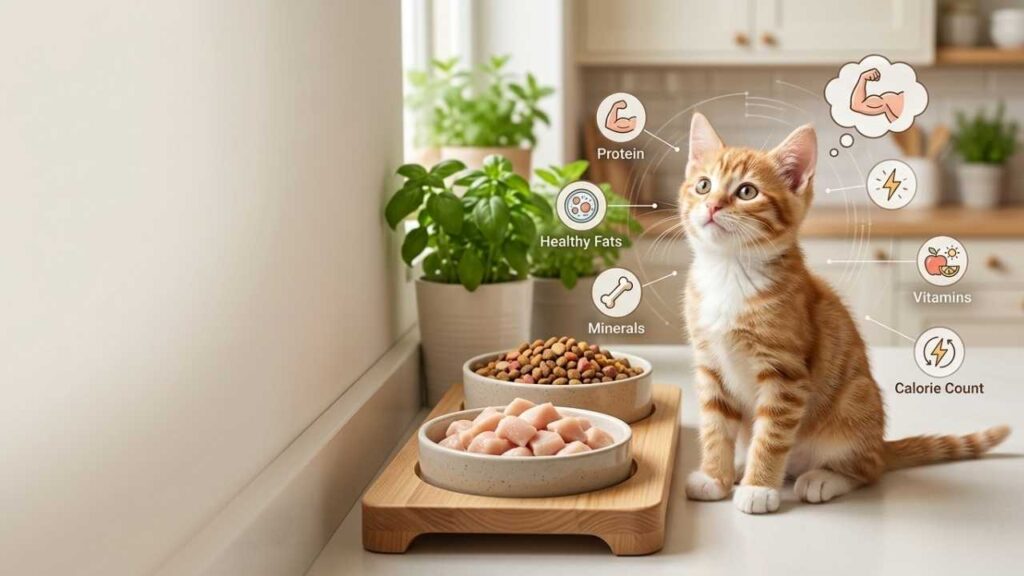
Feeding a kitten is about more than choosing safe foods. Young kittens need the right balance of protein, vitamins, minerals, healthy fats, and calories to support strong muscles, healthy bones, and a growing immune system. While chicken is rich in high-quality protein, it does not contain every nutrient a kitten needs on its own. Knowing when to introduce chicken, how much to serve, and which types to avoid can help you make safe feeding decisions.
In this guide, you’ll learn whether kittens can eat chicken, the health benefits it offers, the best age to introduce it, and the safest way to prepare it. You’ll also discover how much chicken to feed, common mistakes to avoid, and answers to the questions most kitten owners ask. By the end, you’ll have the information you need to feed your kitten safely and confidently while supporting healthy growth and development.
Can Kittens Eat Chicken?
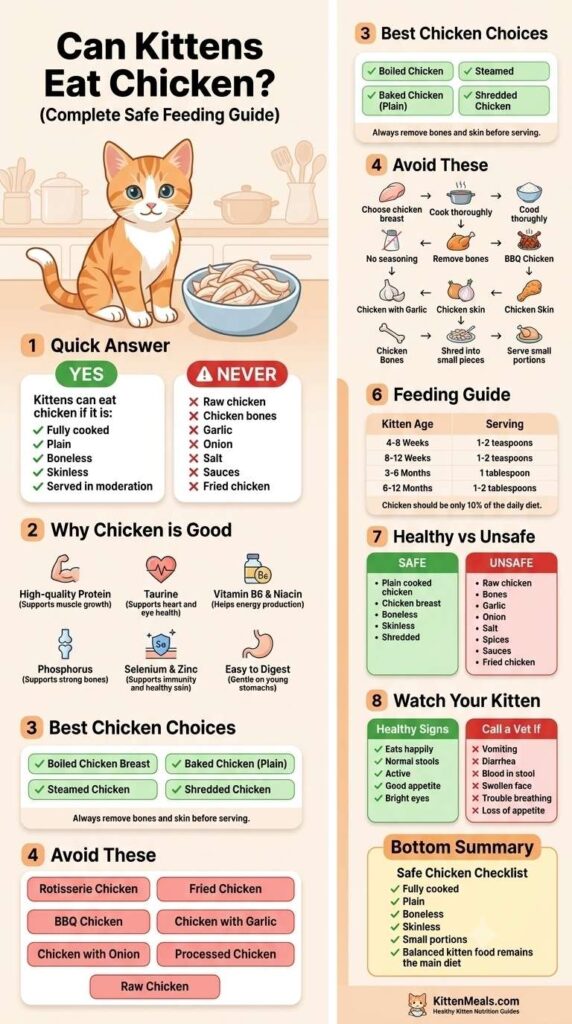
Yes, kittens can eat chicken as long as it is cooked properly and served in moderation. Plain, cooked chicken is a healthy source of animal protein that supports muscle growth and healthy development in growing kittens. However, the chicken should always be boneless, skinless, and free from salt, spices, onions, garlic, or other seasonings that can be harmful to cats.
Chicken is one of the easiest proteins for a kitten’s digestive system to handle. It contains essential amino acids, including taurine, which plays an important role in heart function, vision, and overall feline health. Because of its soft texture and rich flavor, many kittens enjoy eating small pieces of shredded chicken during or after the weaning stage.
Although chicken is nutritious, it should not become your kitten’s main diet. Growing kittens need a complete and balanced kitten food that provides the right amount of protein, healthy fats, vitamins, minerals, and calcium for strong bones and healthy growth. Chicken can be offered as a healthy treat, a meal topper, or part of a homemade recipe that has been approved by a veterinarian, but it should never replace high-quality commercial wet kitten food or dry kitten food.
If you are introducing chicken for the first time, start with a very small amount. Watch your kitten for the next 24 hours to make sure there are no signs of digestive upset, such as vomiting, diarrhea, or loss of appetite. If your kitten eats it without any problems, you can continue offering small portions occasionally as part of a balanced diet.
For the best results, choose plain boiled or baked chicken breast. Avoid fried chicken, rotisserie chicken, smoked chicken, processed chicken, or any chicken cooked with butter, oils, sauces, or seasonings. These foods may contain too much fat, sodium, or ingredients that are unsafe for kittens.
Quick Answer
| Question | Answer |
| Can kittens eat chicken? | Yes, when it is plain, fully cooked, boneless, and skinless. |
| Is chicken healthy for kittens? | Yes. It provides high-quality protein and essential amino acids for growth. |
| Can chicken replace kitten food? | No. Kittens need complete and balanced kitten food for proper nutrition. |
| What is the safest type of chicken? | Plain boiled or baked chicken breast with no seasoning. |
| How often should kittens eat chicken?Our ExperienceWhile preparing this guide, we tested plain boiled chicken with young kittens during the weaning stage. We found that finely shredded chicken breast was easier for them to chew than larger pieces. Introducing small amounts slowly helped avoid digestive upset, and the kittens continued eating their regular kitten food without any problems. | Occasionally as a treat or food topper, not as their main meal. |
Is Chicken Good for Kittens?
Yes, chicken is good for kittens when it is served the right way. It is rich in high-quality animal protein, which is one of the most important nutrients for growing kittens. Protein helps build strong muscles, repair body tissues, and support healthy growth during the first year of life. Since kittens grow quickly, they need more protein than adult cats to meet their daily nutritional needs.
Chicken also contains important nutrients such as taurine, phosphorus, niacin, vitamin B6, selenium, and zinc. These nutrients help support healthy bones, brain development, a strong immune system, healthy skin, and a shiny coat. Taurine is especially important because cats cannot produce enough of it on their own. A lack of taurine can lead to serious heart and eye problems over time.
Another benefit of chicken is that it is easy to digest. Plain, cooked chicken is gentle on a kitten’s digestive system and is often recommended when a kitten has a sensitive stomach or is recovering from a mild illness. Many kitten owners also use shredded chicken as a food topper to encourage picky eaters to finish their meals.
However, chicken alone is not a complete and balanced diet for kittens. While it provides plenty of protein, it does not contain all the vitamins, minerals, healthy fats, and calcium that growing kittens need. Feeding only chicken for a long time can lead to nutritional deficiencies and affect healthy bone and muscle development.
The best approach is to use chicken as a healthy addition to your kitten’s regular meals. Offer small amounts of plain, cooked chicken alongside a high-quality wet kitten food or dry kitten food that is specially made for growing kittens. This allows your kitten to enjoy the benefits of chicken while still getting complete nutrition every day.
Health Benefits of Chicken for Kittens
| Benefit | How It Helps Your Kitten |
| High-quality protein | Supports muscle growth and body development |
| Taurine | Promotes healthy heart function and vision |
| Easy to digest | Gentle on a kitten’s developing digestive system |
| Phosphorus | Helps build strong bones and teeth |
| Vitamin B6 and Niacin | Supports energy production and metabolism |
| Selenium and Zinc | Strengthens the immune system and supports healthy skin and coat |
| Delicious taste | Encourages picky kittens to eat their regular food |
Key Takeaway
Chicken is a healthy source of lean protein for kittens, but it should be served as part of a balanced diet—not as the only food. A complete kitten food should always be the main source of nutrition, while plain cooked chicken can be offered as an occasional treat or meal topper to support healthy growth and development.
Practical Tips
Example:
If you’re boiling chicken for your family, set aside a small piece before adding salt or spices. This makes it easy to prepare a safe treat for your kitten without cooking a separate meal.
Nutritional Benefits of Chicken for Kittens
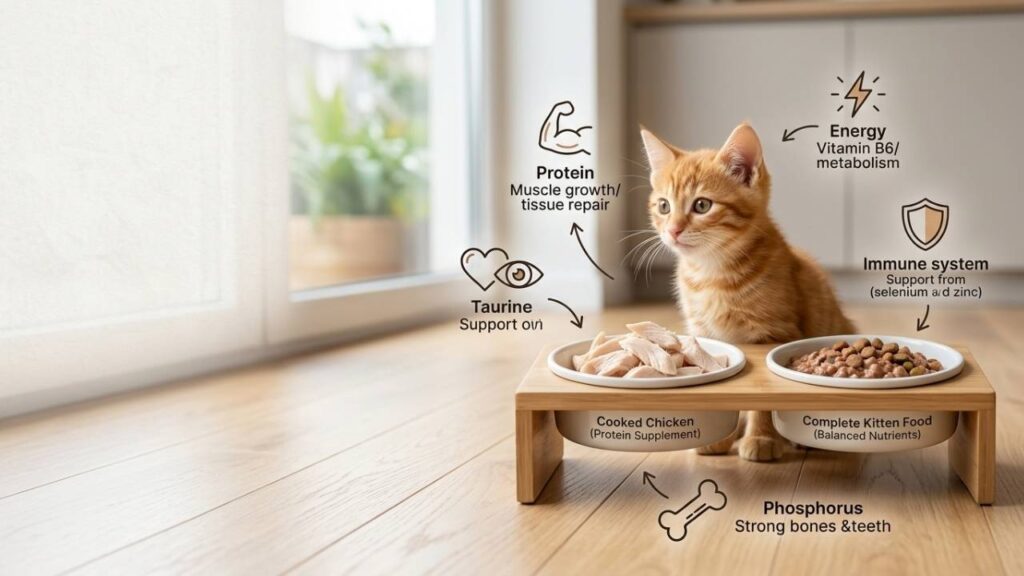
Chicken is one of the best natural sources of lean animal protein for growing kittens. It provides several essential nutrients that help support healthy growth, strong muscles, and daily energy. When served plain and fully cooked, chicken can be a healthy addition to a balanced kitten diet.
The biggest benefit of chicken is its high protein content. Protein supplies the essential amino acids kittens need to build muscles, repair body tissues, and support normal growth. Since kittens are active and develop quickly during their first year, they need a protein-rich diet to stay healthy.
Chicken also contains important vitamins and minerals that support many body functions. Nutrients such as taurine, phosphorus, niacin, vitamin B6, selenium, and zinc help strengthen bones, improve metabolism, support the immune system, and keep the skin and coat in good condition. These nutrients work together to support your kitten’s overall health.
Although chicken is nutritious, it does not provide every nutrient a kitten requires. For example, plain chicken does not contain enough calcium, certain vitamins, or other minerals needed for healthy bone development. This is why veterinarians recommend feeding chicken alongside a complete and balanced kitten food instead of using it as the main meal.
Nutritional Value of Chicken for Kittens
| Nutrient | Why It Matters for Kittens |
| Protein | Builds strong muscles and supports healthy growth |
| Taurine | Supports heart health, eyesight, and brain function |
| Essential Amino Acids | Help repair tissues and maintain healthy body functions |
| Vitamin B6 | Helps convert food into energy and supports brain development |
| Niacin (Vitamin B3) | Supports metabolism and healthy skin |
| Phosphorus | Works with calcium to build strong bones and teeth |
| Selenium | Supports the immune system and protects cells from damage |
| Zinc | Promotes healthy skin, coat, and wound healing |
Does Chicken Provide Complete Nutrition?
The answer is no. While chicken is packed with high-quality protein and valuable nutrients, it is not a complete food for kittens. Growing kittens also need the right balance of:
- Calcium for strong bones and teeth
- Healthy fats for brain development
- Vitamins A, D, and E
- Essential minerals
- Balanced calories for healthy growth
A high-quality wet kitten food or dry kitten food is specially formulated to provide these nutrients in the correct amounts. Think of chicken as a healthy supplement or occasional treat rather than your kitten’s primary source of nutrition.
Quick Nutrition Summary
| Question | Answer |
| Is chicken high in protein? | Yes. It is an excellent source of lean animal protein. |
| Does chicken contain taurine? | Yes, but kitten food is still the best source of balanced nutrition. |
| Can chicken build muscle? | Yes. Its protein and amino acids support muscle growth and tissue repair. |
| Is chicken a complete meal for kittens? | No. It should always be served with complete and balanced kitten food. |
| How should chicken be used? Common Mistakes You Have SeenExample:Many first-time kitten owners think rotisserie chicken is safe because it is already cooked. However, it often contains high amounts of salt and seasoning that are not suitable for kittens. | As a healthy treat, meal topper, or part of a balanced feeding plan. |
At What Age Can Kittens Eat Chicken?
Kittens can start eating small amounts of plain, cooked chicken when they begin the weaning process. This usually happens between 4 and 8 weeks of age. At this stage, kittens slowly move from their mother’s milk or kitten formula to soft, solid foods. Chicken should only be introduced after they are already eating kitten food comfortably.
Young kittens have sensitive digestive systems, so any new food should be introduced slowly. Offer a small piece of finely shredded or chopped chicken and watch for signs of stomach upset, such as vomiting or diarrhea. If your kitten tolerates it well, you can continue offering small portions as an occasional treat.
By the time a kitten is 8 to 12 weeks old, it can safely enjoy cooked chicken in moderation. However, a complete and balanced kitten food should still make up most of its daily diet. Commercial wet kitten food and dry kitten food are specially made to provide the protein, healthy fats, vitamins, minerals, and calcium that growing kittens need.
As your kitten grows, chicken can remain a healthy addition to its diet. Even older kittens should eat chicken only as a treat or meal topper rather than as a replacement for balanced kitten food.
When Can Kittens Eat Chicken?
| Kitten Age | Can They Eat Chicken? | Feeding Advice |
| Birth to 4 weeks | No | Kittens should only drink their mother’s milk or kitten milk replacer. |
| 4–8 weeks | Yes, in small amounts | Offer tiny pieces of plain, cooked, shredded chicken during weaning. |
| 8–12 weeks | Yes | Feed occasionally alongside complete wet or dry kitten food. |
| 3–6 months | Yes | Chicken can be used as a healthy treat or food topper. |
| 6–12 months | Yes | Continue serving small portions while keeping kitten food as the main diet. |
Tips for Introducing Chicken
- Start with one or two small pieces of cooked chicken.
- Use plain, boneless, and skinless chicken breast whenever possible.
- Never add salt, pepper, garlic, onion, butter, or sauces.
- Cut or shred the chicken into tiny bites to make chewing easier.
- Introduce only one new food at a time so you can spot any food sensitivity.
- Always provide fresh drinking water.
Signs Your Kitten Is Ready for Chicken
Your kitten may be ready to try chicken if it:
- Is at least 4 to 8 weeks old and has started weaning.
- Eats wet or dry kitten food without difficulty.
- Chews and swallows soft foods easily.
- Has a healthy appetite and normal digestion.
- Shows interest in protein-rich foods.
Key Takeaway
The best time to introduce chicken is during the weaning stage, usually between 4 and 8 weeks of age. Start with small amounts of plain, cooked chicken and continue feeding a complete and balanced kitten food as your kitten’s main source of nutrition. This approach supports healthy growth, strong bones, and proper development while allowing your kitten to enjoy the benefits of lean animal protein.
Real Feeding
| Kitten Age | Example Serving |
| 8 weeks | 1 teaspoon of boiled chicken mixed with wet kitten food |
| 3 months | 1 tablespoon of shredded chicken as a topper |
| 6 months | 2 tablespoons alongside regular kitten food |
How to Prepare Chicken for Kittens
Preparing chicken the right way is just as important as choosing the right food. Even though chicken is safe for kittens, it can become unhealthy if it is cooked with salt, spices, oils, or sauces. The safest choice is plain, fully cooked chicken that is easy to chew and digest.
Kittens have small mouths and sensitive digestive systems. Proper preparation reduces the risk of choking, stomach upset, and exposure to harmful ingredients. A few simple steps can make chicken a healthy and safe treat for your growing kitten.
Choose Lean Chicken
Start with fresh chicken breast whenever possible. Chicken breast is lean, high in protein, and lower in fat than many other cuts. If you use chicken thighs, remove the skin and trim excess fat before cooking.
Cook the Chicken Thoroughly
Boil, bake, or steam the chicken until it is fully cooked. There should be no pink meat left inside. Cooking helps kill harmful bacteria such as Salmonella and Campylobacter, making the chicken safer for your kitten to eat.
Do Not Add Any Seasoning
Cook the chicken without adding:
- Salt
- Pepper
- Garlic
- Onion
- Butter
- Cooking oil
- BBQ sauce
- Hot sauce
- Herbs or spices
Many seasonings that are safe for people can upset a kitten’s stomach or even be toxic. Plain chicken is always the safest option.
Remove All Bones
Check the chicken carefully and remove every bone before serving. Small chicken bones can break into sharp pieces and may cause choking, mouth injuries, or damage to the digestive system.
Remove the Skin
Chicken skin contains extra fat that kittens do not need. Too much fat may lead to digestive problems such as vomiting or diarrhea. Skinless chicken is easier to digest and healthier for growing kittens.
Let the Chicken Cool
Allow the cooked chicken to cool to room temperature before serving. Hot food can burn your kitten’s mouth and make eating uncomfortable.
Shred or Cut into Small Pieces
Shred the chicken into tiny, bite-sized pieces. Small pieces are easier for kittens to chew and swallow, especially during the weaning stage.
Store Leftovers Safely
If you have leftover cooked chicken, place it in an airtight container and refrigerate it as soon as it cools. Use it within 2 to 3 days. Reheat only until warm, not hot, and never serve spoiled chicken.
Safe vs. Unsafe Chicken Preparation
| Safe for Kittens | Avoid |
| Plain boiled chicken | Fried chicken |
| Baked chicken without seasoning | Rotisserie chicken |
| Steamed chicken | BBQ chicken |
| Boneless chicken | Chicken with bones |
| Skinless chicken | Chicken skin |
| Shredded chicken | Large chunks |
| Fresh cooked chicken | Spoiled or undercooked chicken |
Quick Preparation Checklist
Before serving chicken to your kitten, make sure you can answer yes to each question:
- Is the chicken fully cooked?
- Is it plain with no seasoning?
- Have all bones been removed?
- Has the skin been removed?
- Has it cooled completely?
- Is it shredded into small pieces?
- Are you serving only a small portion?
Following these simple steps helps keep chicken safe, easy to digest, and a healthy addition to your kitten’s balanced diet.
Expert References
Examples:
- American Veterinary Medical Association (AVMA)
- American Association of Feline Practitioners (AAFP)
- Cornell Feline Health Center
- VCA Animal Hospitals
- PetMD
Best Types of Chicken for Kittens
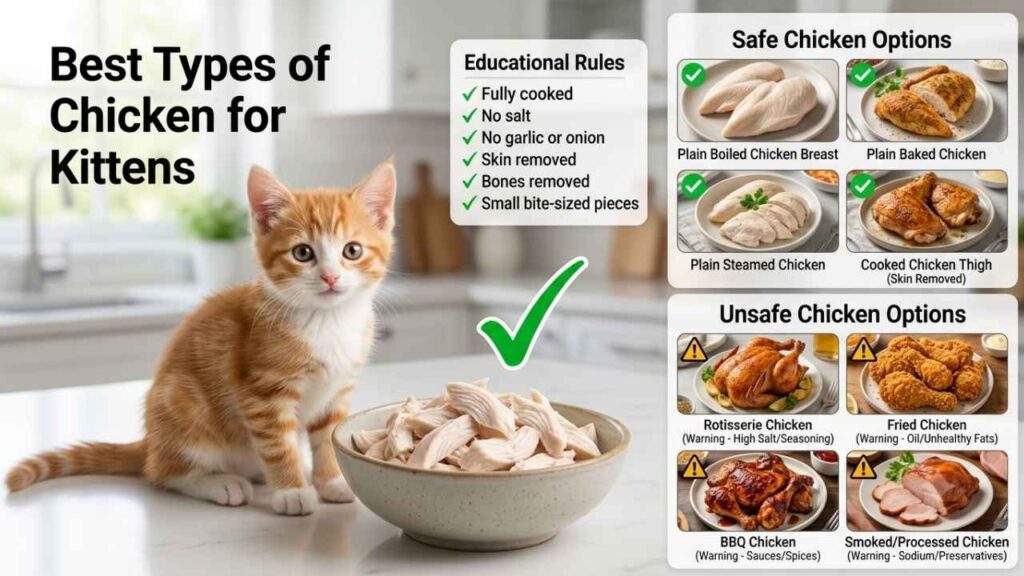
Not all chicken is safe for kittens. The healthiest choice is plain, cooked chicken with no added salt, spices, or sauces. While some types of chicken provide lean protein and essential nutrients, others contain too much fat, sodium, or harmful ingredients that can upset your kitten’s digestive system.
When choosing chicken for your kitten, always think about how it was prepared. Simple cooking methods are the safest and healthiest.
Boiled Chicken Breast
Boiled chicken breast is the best option for kittens. It is rich in lean animal protein, easy to digest, and contains very little fat. It is also soft enough for young kittens to chew, making it an excellent treat or meal topper.
Baked Chicken
Plain baked chicken is another healthy choice. As long as it is cooked without seasoning, butter, or oil, it provides the same nutritional benefits as boiled chicken. Remove the skin and bones before serving.
Steamed Chicken
Steaming helps keep chicken moist while preserving its natural nutrients. Plain steamed chicken is easy on a kitten’s stomach and works well for kittens with sensitive digestion.
Chicken Thigh
Chicken thigh can be fed occasionally, but it contains more fat than chicken breast. Always remove the skin and trim any visible fat before cooking. Serve small portions to avoid digestive problems.
Rotisserie Chicken
Rotisserie chicken is not recommended. It usually contains high amounts of salt, spices, garlic, onion powder, and preservatives that are unsafe for kittens. Even removing the skin does not eliminate these ingredients.
Fried Chicken
Fried chicken should never be given to kittens. It is high in unhealthy fats, oil, breading, and seasonings. Eating fried foods may lead to vomiting, diarrhea, or stomach discomfort.
BBQ or Grilled Chicken
BBQ chicken often contains sauces, sugar, salt, garlic, onion, and spices. These ingredients can be harmful to kittens and should always be avoided.
Smoked or Processed Chicken
Smoked chicken, deli chicken, canned chicken with added salt, and processed chicken products contain preservatives and high levels of sodium. They are not suitable for a growing kitten.
Which Chicken Is Safe?
| Type of Chicken | Safe for Kittens? | Notes |
| Plain boiled chicken breast | Yes | Best choice for growing kittens |
| Plain baked chicken | Yes | Healthy when unseasoned |
| Plain steamed chicken | Yes | Easy to digest |
| Cooked chicken thigh | Yes | Remove skin and excess fat |
| Plain shredded chicken | Yes | Perfect for small kittens |
| Rotisserie chicken | No | High in salt and seasonings |
| Fried chicken | No | Too much fat and oil |
| BBQ chicken | No | Contains sauces and spices |
| Spicy chicken | No | Can upset the digestive system |
| Garlic or onion chicken | No | Toxic to cats |
| Smoked or processed chicken | No | High in sodium and preservatives |
Best Choice for Everyday Feeding
If you want to give your kitten chicken as a treat, plain boiled chicken breast is the healthiest option. It is high in protein, low in fat, easy to digest, and free from harmful ingredients. Serve it in small amounts alongside a complete and balanced wet or dry kitten food to ensure your kitten receives all the nutrients needed for healthy growth and development.
| Check | Yes |
| Fully cooked | ✓ |
| No salt | ✓ |
| No garlic | ✓ |
| No onion | ✓ |
| Skin removed | ✓ |
| Bones removed | ✓ |
| Cut into small pieces | ✓ |
Can Kittens Eat Raw Chicken?
Some pet owners believe that raw chicken is a natural food for cats because their wild ancestors ate raw meat. While this idea is common, feeding raw chicken to kittens comes with serious health risks. Most veterinarians recommend serving plain, fully cooked chicken because it is much safer for a kitten’s developing digestive system.
Kittens have weaker immune systems than adult cats. They are more likely to become sick from harmful bacteria that may be found in raw meat. Even healthy-looking raw chicken can contain germs that are invisible to the eye.
Risks of Feeding Raw Chicken
Raw chicken may contain harmful bacteria such as Salmonella and Campylobacter. These bacteria can cause food poisoning in kittens and may also spread to people who handle the raw meat.
Possible health problems include:
- Vomiting
- Diarrhea
- Stomach pain
- Loss of appetite
- Fever
- Dehydration
- Weakness
In severe cases, young kittens may need veterinary treatment because they lose fluids quickly.
Raw chicken may also contain parasites that can affect your kitten’s health. Proper cooking destroys these harmful organisms and makes the food much safer to eat.
Is Cooked Chicken Better?
Yes. Cooked chicken is the safest choice for most kittens. Boiling, baking, or steaming chicken kills harmful bacteria while keeping the protein and other nutrients your kitten needs.
For the best results:
- Cook the chicken until it is fully done.
- Do not add salt, spices, butter, or sauces.
- Remove all bones and skin.
- Cut or shred the chicken into small pieces before serving.
Raw Chicken vs. Cooked Chicken
| Raw Chicken | Cooked Chicken |
| May contain harmful bacteria | Bacteria are destroyed during cooking |
| Higher risk of food poisoning | Safer for kittens |
| May contain parasites | Safer and easier to digest |
| Not recommended for most kittens | Recommended by most veterinarians |
| Requires careful handling and storage | Simple and safe to prepare |
If Your Kitten Eats Raw Chicken by Accident
A small bite of raw chicken does not always mean your kitten will become sick. Stay calm and watch your kitten closely over the next day or two.
Contact your veterinarian if you notice:
- Repeated vomiting
- Diarrhea that does not stop
- Blood in the stool
- Refusing to eat
- Extreme tiredness
- Signs of dehydration
Getting early treatment can prevent more serious health problems.
Key Takeaway
While raw chicken may seem like a natural choice, it carries unnecessary risks for growing kittens. Plain, fully cooked, boneless, and skinless chicken is a much safer option. It provides the same high-quality protein without exposing your kitten to harmful bacteria or parasites. For healthy growth, always serve cooked chicken as an occasional treat alongside a complete and balanced kitten food
.
Can Kittens Eat Chicken Every Day?
Yes, kittens can eat chicken regularly, but they should not eat only chicken every day. While chicken is an excellent source of lean animal protein, it does not provide all the nutrients a growing kitten needs. A healthy kitten requires a complete and balanced diet that includes the right amounts of vitamins, minerals, healthy fats, and calcium for proper growth.
Chicken should be treated as a healthy addition to your kitten’s meals, not the main source of nutrition. A high-quality wet kitten food or dry kitten food is specially formulated to meet the nutritional needs of growing kittens. These foods contain the right balance of nutrients that plain chicken cannot provide on its own.
If a kitten eats only chicken for a long time, it may develop nutritional deficiencies. For example, plain chicken does not provide enough calcium to support healthy bones and teeth. It also lacks the balanced vitamins and minerals needed for healthy brain development, a strong immune system, and normal body functions.
Follow the 90/10 Rule
A simple way to keep your kitten’s diet balanced is to follow the 90/10 rule.
- 90% of your kitten’s daily calories should come from a complete and balanced kitten food.
- 10% or less can come from treats or healthy extras like plain cooked chicken.
This approach allows your kitten to enjoy the benefits of chicken without missing important nutrients.
How Often Can You Feed Chicken?
Most healthy kittens can enjoy small portions of cooked chicken two to three times a week as a treat or meal topper. Some owners add a small amount to their kitten’s regular food to encourage picky eaters.
The exact amount depends on your kitten’s:
- Age
- Weight
- Activity level
- Daily calorie needs
- Overall diet
If your kitten has a medical condition or special dietary needs, ask your veterinarian before making changes to its feeding routine.
Why Variety Matters
A balanced kitten diet offers many nutrients that work together to support healthy growth.
These include:
- High-quality protein for muscle development
- Healthy fats for brain development
- Calcium and phosphorus for strong bones and teeth
- Vitamins for healthy vision and immunity
- Essential minerals for normal body functions
- Taurine for heart and eye health
Chicken provides many of these nutrients, but it cannot supply them in the correct balance by itself.
Daily Chicken: Pros and Cons
| Pros | Cons |
| High-quality protein | Not a complete diet |
| Easy to digest | Low in calcium |
| Great for picky eaters | Missing several essential nutrients |
| Tasty and nutritious | Too much may reduce intake of balanced kitten food |
| Good as a meal topper | Can lead to nutritional deficiencies if fed alone |
Key Takeaway
Kittens can enjoy plain cooked chicken as part of their regular feeding routine, but it should never replace a complete and balanced kitten food. Keep chicken to 10% or less of your kitten’s daily diet, and let specially formulated kitten food provide the nutrition needed for healthy growth, strong bones, and long-term health.1
How Much Chicken Can a Kitten Eat?
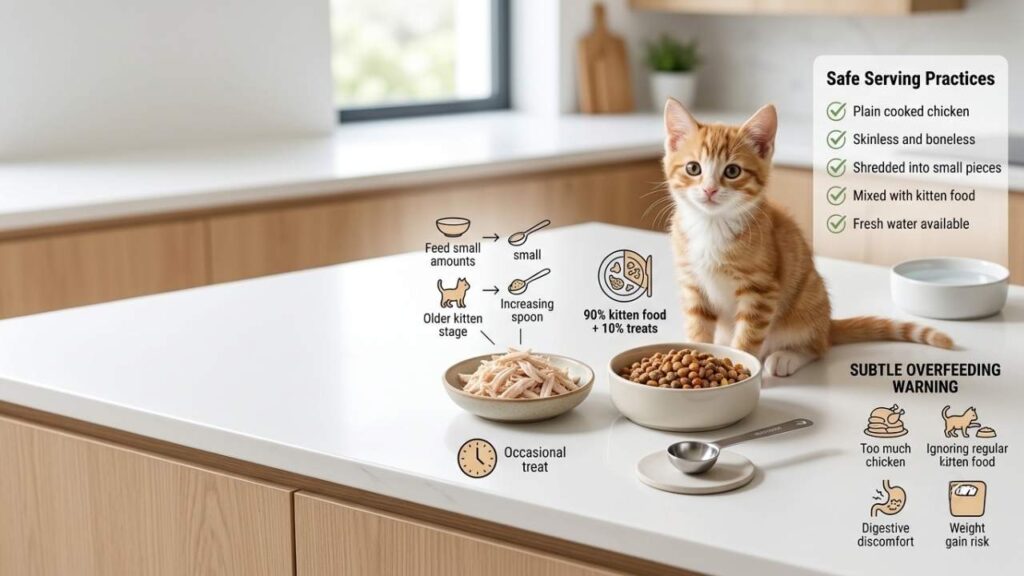
Chicken is a healthy treat for kittens, but the right portion size is important. Even though chicken is rich in high-quality protein, feeding too much can reduce your kitten’s appetite for its complete and balanced kitten food. Since kitten food is specially made to meet all nutritional needs, chicken should only be served in small amounts.
When introducing chicken for the first time, start with a tiny serving. This allows you to see how your kitten’s digestive system responds. If there are no signs of vomiting, diarrhea, or stomach discomfort, you can continue offering chicken occasionally.
The amount of chicken your kitten can eat depends on its age, size, and overall diet.
Recommended Serving Size by Age
| Kitten Age | Recommended Amount | Feeding Frequency |
| 4–8 weeks | 1–2 teaspoons of finely shredded cooked chicken | Once or twice a week |
| 8–12 weeks | 1–2 teaspoons | Two to three times a week |
| 3–6 months | About 1 tablespoon | Two to three times a week |
| 6–12 months | 1–2 tablespoons | Two to three times a week |
These are general guidelines. Every kitten is different, so adjust the portion based on your kitten’s size, activity level, and daily calorie needs.
How to Serve Chicken
For the safest feeding experience:
- Serve only plain, cooked chicken.
- Use boneless and skinless chicken breast whenever possible.
- Shred or chop it into small, bite-sized pieces.
- Mix it with wet kitten food or use it as a meal topper.
- Always provide fresh drinking water.
Signs You Are Feeding Too Much Chicken
Giving too much chicken may prevent your kitten from eating enough balanced kitten food.
Watch for these signs:
- Leaves regular kitten food unfinished.
- Gains weight too quickly.
- Has loose stools or mild digestive upset.
- Becomes a picky eater and refuses normal meals.
- Begs for chicken instead of eating balanced food.
If you notice these changes, reduce the amount of chicken and return to a regular feeding routine.
Tips for Healthy Feeding
- Keep chicken as an occasional treat, not the main meal.
- Follow the 90/10 rule, with no more than 10% of daily calories coming from treats.
- Avoid feeding chicken with bones, skin, or seasoning.
- Store leftover cooked chicken safely in the refrigerator.
- Introduce new foods slowly to avoid digestive problems.
Key Takeaway
A small amount of plain cooked chicken can be a healthy addition to your kitten’s diet. Feed age-appropriate portions and always keep complete and balanced wet or dry kitten food as the main source of nutrition. This helps your kitten enjoy the benefits of lean protein while getting all the vitamins and minerals needed for healthy growth and development.
Signs Your Kitten Likes Chicken
Most kittens enjoy the taste of chicken because it is rich in animal protein and has a soft texture. However, every kitten is different. Some may love chicken right away, while others may need time to get used to a new food. Watching your kitten’s behavior after introducing chicken can help you know whether it enjoys it and digests it well.
If you serve plain, cooked chicken in small amounts and your kitten stays healthy and active, it is usually a good sign that chicken suits its diet. Remember that chicken should always be offered alongside complete and balanced kitten food, not instead of it.
Healthy Signs Your Kitten Enjoys Chicken
Here are some positive signs to look for:
- Eats the chicken eagerly without hesitation.
- Finishes the small portion comfortably.
- Shows excitement at mealtime.
- Continues eating its regular wet or dry kitten food.
- Has normal, firm stools.
- Does not vomit after eating.
- Maintains a healthy appetite.
- Stays active, playful, and energetic.
- Has a healthy-looking coat and bright eyes.
- Shows no signs of stomach discomfort.
These signs suggest that your kitten is enjoying chicken as part of a balanced diet.
What to Watch After Feeding Chicken
When introducing chicken for the first time, observe your kitten for the next 24 hours.
Check for:
- Normal digestion
- Normal bathroom habits
- Good energy levels
- Healthy appetite
- No unusual behavior
If everything looks normal, you can continue offering small portions occasionally.
Healthy vs. Unhealthy Reactions
| Healthy Reaction | Unhealthy Reaction |
| Eats happily | Refuses food completely |
| Normal stools | Diarrhea |
| No vomiting | Vomiting |
| Active and playful | Tired or weak |
| Good appetite | Loss of appetite |
| Comfortable after eating | Signs of stomach pain |
Remember Every Kitten Is Different
Some kittens love chicken from the first bite, while others prefer their regular kitten food. There is no need to force your kitten to eat chicken if it is not interested. A high-quality wet kitten food or dry kitten food already provides complete nutrition for healthy growth.
Key Takeaway
If your kitten eats plain cooked chicken with enthusiasm, digests it well, and remains active and healthy, chicken can be a safe and enjoyable treat. Continue serving it in small portions while making complete and balanced kitten food the main part of your kitten’s daily diet.
Signs Chicken Doesn’t Agree With Your Kitten
Although chicken is safe for most kittens, not every kitten reacts to it in the same way. Some kittens may have a sensitive digestive system or, in rare cases, a food allergy to chicken. That is why it is important to introduce chicken slowly and watch your kitten closely after the first few servings.
If your kitten develops unusual symptoms after eating chicken, stop feeding it immediately and return to its regular complete and balanced kitten food. If the symptoms continue or become severe, contact your veterinarian as soon as possible.
Common Signs of Digestive Upset
A kitten that does not tolerate chicken may show one or more of these symptoms:
- Vomiting after eating
- Diarrhea or loose stools
- Constipation
- Excessive gas
- Stomach discomfort
- Loss of appetite
- Low energy or unusual tiredness
These signs may appear within a few hours or the next day after eating chicken.
Signs of a Possible Chicken Allergy
A true chicken allergy is uncommon, but it can happen. Watch for symptoms such as:
- Frequent scratching
- Red or irritated skin
- Skin rash
- Hair loss
- Ear itching or repeated ear infections
- Swelling around the face or lips
- Watery eyes
If you notice these symptoms, stop feeding chicken and speak with your veterinarian. They can help determine whether chicken or another ingredient is causing the problem.
When to Call a Veterinarian
Seek veterinary care right away if your kitten has:
- Repeated vomiting
- Severe diarrhea
- Blood in the stool
- Trouble breathing
- Swollen face or mouth
- Extreme weakness
- Refuses to eat for more than 24 hours
- Signs of dehydration, such as dry gums or sunken eyes
Young kittens can become dehydrated quickly, so early treatment is important.
Symptoms You Should Never Ignore
| Symptom | What It May Mean |
| Vomiting | Digestive upset or food intolerance |
| Diarrhea | Stomach irritation or infection |
| Loss of appetite | Food intolerance or illness |
| Skin itching | Possible food allergy |
| Ear scratching | Allergic reaction |
| Swollen face | Serious allergic reaction |
| Extreme tiredness | Dehydration or illness |
| Blood in stool | Digestive problem that needs veterinary care |
How to Introduce Chicken Safely
You can reduce the chance of digestive problems by following these simple steps:
- Start with a very small portion.
- Serve only plain, cooked, boneless, and skinless chicken.
- Introduce one new food at a time.
- Wait 24 hours before offering more.
- Continue feeding your kitten’s regular balanced diet.
Key Takeaway
Most kittens can eat chicken without any problems, but every kitten is different. Watch for signs of digestive upset or an allergic reaction whenever you introduce a new food. If your kitten stays healthy, active, and comfortable after eating plain cooked chicken, it can remain a safe occasional treat as part of a balanced diet.
Foods Never to Feed With Chicken
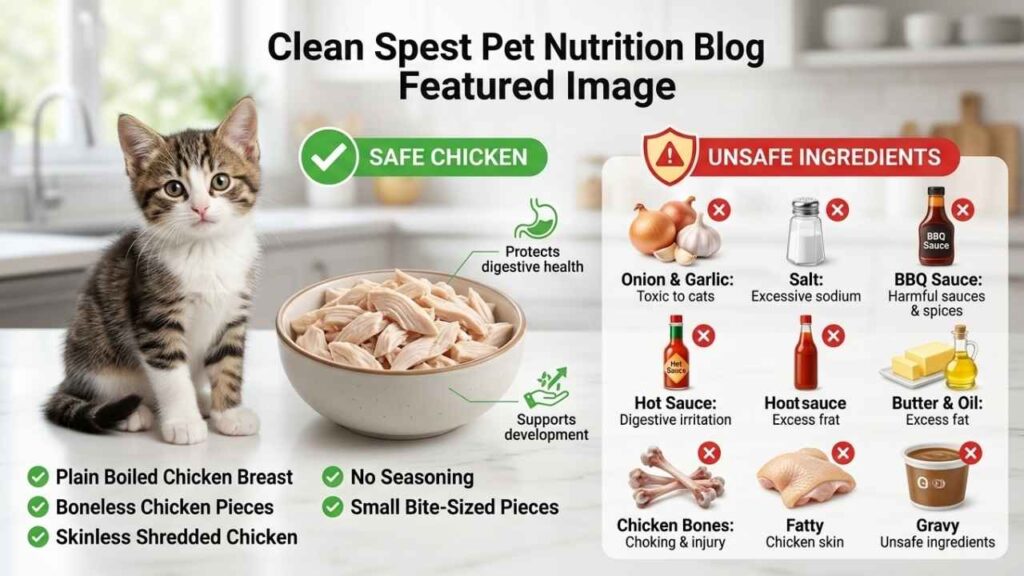
Chicken is a healthy treat for kittens only when it is served plain. Many ingredients that people commonly add while cooking are not safe for cats. Some can upset your kitten’s digestive system, while others can be toxic and lead to serious health problems.
If you are preparing chicken for your kitten, keep it simple. Cook the chicken without seasoning and avoid mixing it with sauces, oils, or table scraps. Your kitten does not need extra flavor to enjoy the meal.
Unsafe Foods to Serve With Chicken
| Food | Why It’s Unsafe |
| Onion | Toxic to cats and can damage red blood cells. |
| Garlic | Can cause anemia and digestive problems. |
| Salt | Too much sodium may lead to dehydration and other health issues. |
| Black pepper | May irritate your kitten’s stomach. |
| BBQ sauce | Contains sugar, salt, garlic, onion, and spices. |
| Hot sauce | Too spicy and may upset the digestive system. |
| Butter | High in fat and can cause stomach upset. |
| Cooking oil | Adds unnecessary fat and calories. |
| Chicken bones | Can splinter and cause choking or internal injuries. |
| Chicken skin | High in fat and difficult for some kittens to digest. |
| Gravy | Often contains onion, garlic, salt, and preservatives. |
| Processed seasonings | Many contain ingredients that are harmful to kittens. |
Why Seasonings Are Dangerous
People enjoy seasoned chicken, but kittens have very different nutritional needs. Ingredients like onion and garlic are toxic to cats, even in small amounts. Salt and spicy seasonings can also irritate a kitten’s digestive system and may lead to vomiting, diarrhea, or dehydration.
Butter, cooking oil, and fatty sauces increase the fat content of the meal. Too much fat can upset your kitten’s stomach and may contribute to unhealthy weight gain over time.
Stick to Simple Preparation
The safest chicken for kittens is:
- Plain
- Fully cooked
- Boneless
- Skinless
- Free from salt and spices
- Cut into small pieces
This keeps the meal easy to digest while providing healthy animal protein without unnecessary risks.
Safe vs. Unsafe Chicken Meals
| Safe Choice | Unsafe Choice |
| Plain boiled chicken breast | Fried chicken |
| Plain baked chicken | BBQ chicken |
| Steamed chicken | Rotisserie chicken |
| Boneless chicken | Chicken with bones |
| Skinless chicken | Chicken with skin |
| Shredded cooked chicken | Chicken cooked with garlic or onion |
| Unseasoned chicken | Chicken with sauces or spices |
Key Takeaway
When feeding chicken to your kitten, less is more. Plain, cooked chicken is the safest option. Avoid onions, garlic, salt, butter, sauces, spices, bones, and skin. Keeping the meal simple helps protect your kitten’s digestive system and supports healthy growth as part of a complete and balanced kitten diet.
Chicken vs. Turkey for Kittens
Chicken and turkey are both excellent sources of lean animal protein for growing kittens. They are rich in essential amino acids and are easy to digest when cooked properly. If prepared without seasoning, both meats can be healthy treats or meal toppers alongside a complete and balanced kitten food.
Many kitten owners wonder which option is better. The truth is that both chicken and turkey offer similar nutritional benefits. The main differences are their fat content, flavor, availability, and cost. Choosing between them often comes down to your kitten’s preference and what you have available.
Chicken
Chicken is the most popular protein for kittens because it is affordable, easy to find, and simple to prepare. Chicken breast is low in fat and high in protein, making it an excellent choice for supporting muscle growth and healthy development.
Turkey
Turkey is another healthy protein that provides many of the same nutrients as chicken. It is also rich in protein, taurine, phosphorus, and B vitamins. Plain cooked turkey can be a good alternative if your kitten enjoys variety or has difficulty eating chicken.
Like chicken, turkey should always be:
- Fully cooked
- Boneless
- Skinless
- Free from salt and seasonings
Chicken vs. Turkey Comparison
| Feature | Chicken | Turkey |
| Protein | Excellent | Excellent |
| Fat Content | Lower, especially chicken breast | Slightly higher, depending on the cut |
| Digestibility | Very easy to digest | Very easy to digest |
| Taste | Mild flavor that most kittens enjoy | Slightly richer flavor |
| Cost | Usually more affordable | Often more expensive |
| Availability | Widely available | Readily available but less common |
| Best Cut | Skinless chicken breast | Skinless turkey breast |
Which One Should You Choose?
For most kittens, plain cooked chicken breast is the best everyday choice because it is lean, affordable, and easy to digest. Turkey is also a healthy option and can be offered occasionally to add variety to your kitten’s diet.
No matter which protein you choose, remember that it should only be a small part of your kitten’s meals. A high-quality wet kitten food or dry kitten food should continue to provide most of your kitten’s daily nutrition.
Tips for Feeding Chicken or Turkey
- Cook the meat thoroughly.
- Remove all bones and skin.
- Do not add salt, garlic, onion, or spices.
- Cut the meat into small, bite-sized pieces.
- Feed only small portions as a treat or food topper.
- Introduce one new protein at a time.
Key Takeaway
Both chicken and turkey are healthy sources of lean protein for kittens when served plain, cooked, boneless, and skinless. Chicken is usually the better choice because it is lower in fat, easier to find, and more affordable. Turkey is an excellent alternative that can add variety to your kitten’s diet while supporting healthy growth and development.
Chicken Breast vs. Chicken Thigh
Both chicken breast and chicken thigh are safe for kittens when they are fully cooked, plain, boneless, and skinless. However, they are not exactly the same. Chicken breast is leaner and contains less fat, while chicken thigh is richer in flavor but has a higher fat content.
If you are choosing the healthiest option for your kitten, chicken breast is usually the better choice. It provides plenty of high-quality animal protein while keeping fat intake low. This makes it easier to digest and ideal for growing kittens.
Chicken thigh can also be fed occasionally, but it should be served in smaller amounts because of its higher fat content. Too much fat may cause digestive upset in some kittens, especially if they have a sensitive stomach.
Chicken Breast vs. Chicken Thigh Comparison
| Feature | Chicken Breast | Chicken Thigh |
| Protein | High | High |
| Fat Content | Low | Higher |
| Calories | Lower | Higher |
| Digestibility | Very easy to digest | Easy to digest, but richer |
| Texture | Lean and firm | Softer and juicier |
| Best For | Regular treats and meal toppers | Occasional treats |
| Recommended for Kittens | Yes | Yes, in moderation |
Why Chicken Breast Is the Better Choice
Chicken breast offers several benefits for growing kittens:
- High in lean protein for muscle growth.
- Lower in fat and calories.
- Easy on the digestive system.
- Supports healthy weight.
- Works well as a meal topper or training treat.
Because it is lean, chicken breast is less likely to cause stomach upset compared to fattier cuts of meat.
When Can You Feed Chicken Thigh?
Chicken thigh is still a healthy source of protein, but it should be offered less often.
Before serving:
- Remove the skin completely.
- Trim any visible fat.
- Cook it thoroughly.
- Remove every bone.
- Cut it into small pieces.
This helps reduce unnecessary fat and makes it safer for your kitten to eat.
Which Should You Avoid?
Avoid serving either cut if it is:
- Fried
- Breaded
- Smoked
- Seasoned
- Cooked with butter or oil
- Mixed with garlic, onion, or sauces
- Served with bones or skin
These ingredients can upset your kitten’s digestive system or even be harmful.
Quick Recommendation
If you are unsure which cut to choose, follow this simple guide:
- Choose chicken breast for regular treats and meal toppers.
- Use chicken thigh only occasionally and in smaller portions.
- Always keep complete and balanced wet or dry kitten food as your kitten’s main source of nutrition.
Key Takeaway
Both chicken breast and chicken thigh can be part of a healthy kitten diet, but plain, skinless chicken breast is the better option. It is leaner, easier to digest, and provides the high-quality protein kittens need for healthy growth. Chicken thigh can also be enjoyed in moderation, as long as it is prepared safely and served in small amounts.
Common Mistakes Owners Make When Feeding Chicken to Kittens
Chicken is a healthy food for kittens, but many owners make simple mistakes that can put their kitten’s health at risk. Most of these mistakes are easy to avoid with proper preparation and portion control. Knowing what not to do is just as important as knowing what is safe.
Below are the most common mistakes and how you can avoid them.
Feeding Seasoned Chicken
One of the biggest mistakes is giving kittens chicken that has been cooked for people. Chicken prepared with salt, garlic, onion, pepper, butter, sauces, or spices is not safe for kittens. These ingredients can upset the digestive system, and some, such as garlic and onion, are toxic to cats.
Always serve plain, cooked chicken with no added ingredients.
Leaving Bones in the Chicken
Chicken bones can splinter into sharp pieces when chewed. They may cause choking or injure your kitten’s mouth, throat, stomach, or intestines.
Always check the chicken carefully and remove every bone before serving.
Feeding Chicken Skin
Many owners think chicken skin is harmless, but it contains a lot of fat. Too much fat can lead to vomiting, diarrhea, or stomach discomfort, especially in young kittens.
Remove the skin before cooking or serving the chicken.
Giving Too Much Chicken
Chicken is a healthy treat, but feeding large amounts every day can reduce your kitten’s interest in its complete and balanced kitten food. This may lead to nutritional deficiencies over time.
Keep chicken to 10% or less of your kitten’s daily diet.
Feeding Only Chicken
Some people believe that because chicken is high in protein, it is enough on its own. This is not true. Plain chicken does not provide enough calcium, vitamins, healthy fats, and essential minerals that growing kittens need.
Your kitten should always eat a high-quality wet kitten food or dry kitten food as its main diet.
Serving Raw or Undercooked Chicken
Raw or undercooked chicken may contain harmful bacteria such as Salmonella and Campylobacter. These bacteria can make kittens seriously ill.
Always cook chicken thoroughly before feeding it.
Serving Large Pieces
Large chunks of chicken can be difficult for small kittens to chew and swallow. This increases the risk of choking.
Always shred or cut chicken into small, bite-sized pieces.
Introducing Too Much at Once
When trying chicken for the first time, some owners serve a full portion immediately. This can upset a kitten’s sensitive digestive system.
Start with a very small amount and watch your kitten for 24 hours before offering more.
Common Mistakes and Better Choices
| Common Mistake | Better Choice |
| Feeding seasoned chicken | Serve plain, unseasoned chicken |
| Leaving bones in the meat | Remove every bone before serving |
| Feeding chicken skin | Use skinless chicken |
| Giving large portions | Offer small amounts as a treat |
| Feeding only chicken | Feed complete and balanced kitten food as the main diet |
| Serving raw chicken | Serve fully cooked chicken |
| Offering large chunks | Shred into small pieces |
| Giving too many treats | Follow the 90/10 feeding rule |
Key Takeaway
Most feeding problems can be avoided by keeping chicken plain, cooked, boneless, and skinless. Offer it in small portions and use it as an occasional treat or meal topper. A complete and balanced kitten food should always remain the foundation of your kitten’s diet to support healthy growth, strong bones, and overall well-being.
Frequently Asked Questions
Can kittens eat boiled chicken?
Yes, kittens can eat plain boiled chicken once they have started eating solid food. Boiled chicken is one of the safest options because it is easy to digest and contains no added fat or seasoning. Make sure it is fully cooked, boneless, skinless, and cut into small pieces before serving.
Can kittens eat chicken breast?
Yes. Chicken breast is the best cut of chicken for kittens. It is high in lean protein, low in fat, and easy to digest. Serve it plain, fully cooked, and in small portions as a treat or meal topper.
Can kittens eat rotisserie chicken?
No. Rotisserie chicken is not a good choice for kittens because it usually contains salt, garlic, onion, spices, and preservatives. These ingredients can upset your kitten’s stomach and may even be harmful.
Can kittens eat fried chicken?
No. Fried chicken is high in fat, oil, and seasoning. It does not provide healthy nutrition for kittens and may cause digestive problems such as vomiting or diarrhea.
Can kittens eat chicken skin?
It is best to avoid feeding chicken skin. It contains a high amount of fat, which can be difficult for kittens to digest. Always remove the skin before serving chicken.
Can kittens eat canned chicken?
It depends on the product. Plain canned chicken packed in water with no added salt or seasoning may be safe in small amounts. However, many canned chicken products contain high levels of sodium and preservatives, so always read the label carefully before feeding it to your kitten.
Can kittens eat chicken every day?
Kittens can eat small amounts of plain cooked chicken regularly, but it should not replace their complete and balanced kitten food. Chicken should make up no more than 10% of your kitten’s daily diet.
Can kittens eat chicken bones?
No. Chicken bones are dangerous because they can splinter into sharp pieces. They may cause choking or serious injuries to the mouth, throat, stomach, or intestines. Always remove every bone before serving chicken.
Is chicken better than tuna for kittens?
For regular feeding, chicken is generally a better choice. Plain cooked chicken is lower in mercury and provides high-quality protein. Tuna should only be given occasionally because too much tuna may lead to nutritional imbalances if fed frequently.
Can kittens survive on chicken only?
No. Chicken alone does not provide complete nutrition for growing kittens. It lacks enough calcium, essential vitamins, minerals, and healthy fats needed for proper development. A complete and balanced wet or dry kitten food should always be your kitten’s primary diet.
Final Verdict
Yes, kittens can eat chicken, and it can be a healthy addition to their diet when prepared correctly. The safest option is plain, fully cooked, boneless, and skinless chicken with no salt, spices, garlic, onion, or sauces. Chicken is rich in high-quality protein, essential amino acids, and other nutrients that support healthy muscle growth and development.
However, chicken should never replace a complete and balanced kitten food. Growing kittens need the right mix of protein, healthy fats, vitamins, minerals, and calcium to support strong bones, a healthy immune system, and overall growth. Chicken is best served as an occasional treat or meal topper while specially formulated wet or dry kitten food remains the main part of your kitten’s daily diet.
When introducing chicken, start with a small portion and watch your kitten for any signs of digestive upset or food sensitivity. If your kitten stays healthy and enjoys the chicken, you can continue offering it in moderation as part of a balanced feeding plan.
By following these simple feeding guidelines, you can safely include chicken in your kitten’s diet while giving your furry companion the nutrition it needs to grow into a healthy and happy adult cat.