
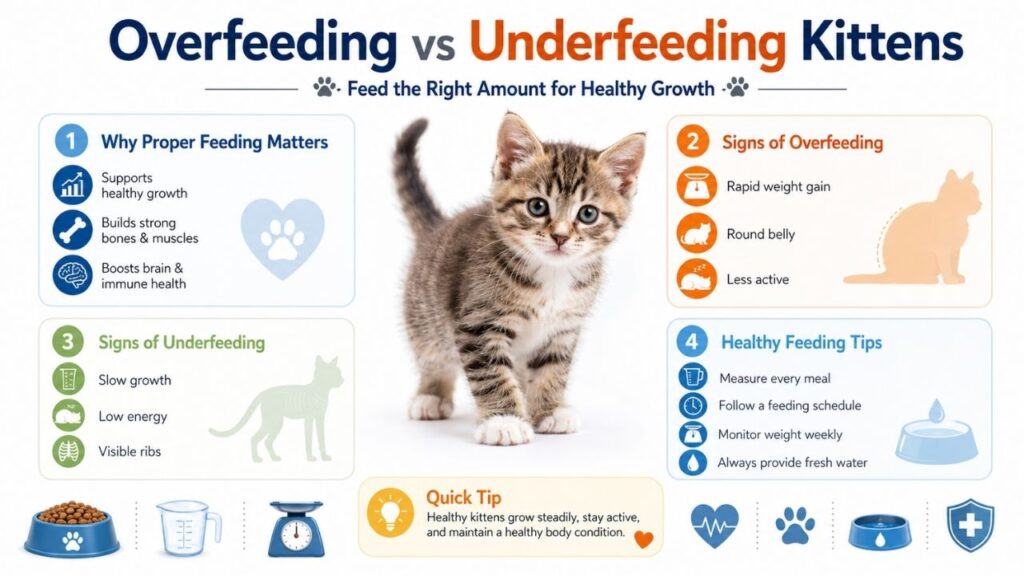
Raising a healthy kitten starts with giving the right amount of food every day. Many new cat owners worry about whether they are feeding too much or too little. Both overfeeding and underfeeding can affect a kitten’s growth, energy, and overall health. Kittens grow very fast during their first year, so they need balanced nutrition and the right portion sizes to support their developing bones, muscles, brain, and immune system. Learning how much your kitten should eat can help prevent common feeding mistakes and support healthy development.
Overfeeding can lead to unhealthy weight gain and increase the risk of obesity later in life. On the other hand, underfeeding may leave a kitten without enough nutrients to grow properly. An underfed kitten may have low energy, slow growth, poor muscle development, and a weaker immune system. The good news is that most feeding problems can be avoided by following a proper kitten feeding schedule, choosing high-quality kitten food, and checking your kitten’s weight and body condition regularly.
This guide explains the difference between overfeeding and underfeeding kittens in a simple and practical way. You will learn the common signs to watch for, the health risks of each problem, and how to find the right balance for your kitten’s age and needs. By the end of this article, you will have the knowledge to make better feeding decisions and help your kitten grow into a healthy, active adult cat.
Why Proper Nutrition Is Critical for Growing Kittens
Proper nutrition is the foundation of a kitten’s health. During the first year of life, kittens grow faster than adult cats. Their bodies need the right balance of protein, healthy fats, vitamins, minerals, taurine, DHA, and calories to support healthy development. Feeding a complete and balanced kitten diet helps build strong bones, lean muscles, a healthy brain, and a strong immune system. It also gives kittens the energy they need to play, learn, and explore their surroundings.
Every stage of kitten growth has different nutritional needs. Young kittens need small, frequent meals because their stomachs are small and their metabolism is fast. As they grow, their portion sizes and feeding schedule change. Feeding too much or too little can affect healthy weight, body condition, and overall development. Following a proper kitten feeding guide and choosing age-appropriate wet food, dry food, or a combination of both can help meet your kitten’s changing nutritional needs.
Good nutrition also supports healthy digestion and keeps your kitten’s skin and coat in good condition. A balanced diet provides essential nutrients that help maintain a healthy digestive system, improve nutrient absorption, and support steady growth. Fresh water should always be available to keep your kitten hydrated, especially if it eats mostly dry food.
Example:
Imagine bringing home your first kitten. It follows you into the kitchen and meows whenever you prepare food. Many first-time owners think this always means their kitten is hungry. In reality, kittens often seek attention, comfort, or play just as much as they seek food.
Regular weight monitoring is just as important as choosing the right food. A healthy kitten should gain weight steadily without becoming overweight or underweight. Watching your kitten’s body condition, checking its growth, and adjusting food portions when needed can help prevent common feeding problems. If you notice unusual weight changes, poor appetite, low energy, or slow growth, consult a veterinarian for advice. Proper nutrition during the first year gives your kitten the best chance to grow into a healthy, active adult cat.
Overfeeding vs Underfeeding Kittens at a Glance
Both overfeeding and underfeeding can affect a kitten’s health, but they cause different problems. Overfeeding happens when a kitten eats more calories than its growing body needs. Underfeeding happens when a kitten does not get enough food or essential nutrients to support healthy growth. While many owners think a chubby kitten is a healthy kitten, extra weight can lead to health problems. At the same time, a kitten that does not eat enough may struggle to grow and develop properly.
The goal is to provide the right amount of complete and balanced kitten food based on your kitten’s age, weight, activity level, and growth stage. Monitoring your kitten’s healthy weight, body condition, and energy level is more helpful than feeding based only on begging or finishing every meal. A regular kitten feeding schedule and proper portion sizes can help prevent both overfeeding and underfeeding.
Overfeeding vs Underfeeding Kittens Comparison
| Factor | Overfeeding Kittens | Underfeeding Kittens |
| Food Intake | Eats more food than needed | Eats less food than needed |
| Body Weight | Gains weight too quickly | Gains little or no weight |
| Body Condition | Excess body fat and a round shape | Thin body with visible ribs and spine |
| Energy Level | May become less active and tire easily | Often weak, tired, and less playful |
| Growth | Unhealthy fat gain | Slow or delayed growth |
| Muscle Development | Fat may hide muscle tone | Poor muscle development |
| Immune System | Extra weight may affect overall health | Weak immune system due to poor nutrition |
| Digestion | May experience vomiting or loose stools from overeating | May not get enough nutrients for healthy digestion |
| Long-Term Risks | Obesity, joint problems, and other weight-related diseases | Malnutrition, vitamin deficiencies, and stunted growth |
| Best Solution | Reduce portion sizes and follow a feeding guide | Increase food gradually with veterinary guidance if needed |
Understanding these differences helps you make better feeding decisions. A healthy kitten should have steady weight gain, a good appetite, bright eyes, a shiny coat, and plenty of energy for daily play. Weigh your kitten regularly, use feeding recommendations as a guide, and adjust food portions as your kitten grows. If you are unsure whether your kitten is getting the right amount of food, ask your veterinarian for personalized advice based on its age, weight, and overall health.
Signs You Are Overfeeding Your Kitten
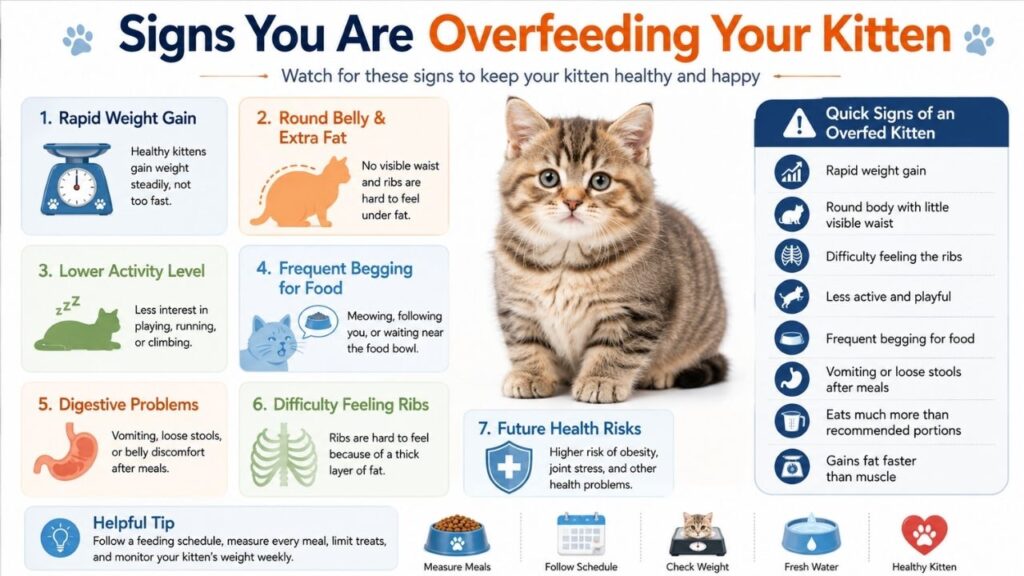
Overfeeding is one of the most common feeding mistakes new kitten owners make. Because kittens grow quickly and often seem hungry, it is easy to offer extra meals or too many treats. However, eating more calories than needed can lead to unhealthy weight gain and increase the risk of kitten obesity. Paying attention to your kitten’s body condition, weight, and daily activity is the best way to know if you are feeding the right amount.
Rapid Weight Gain
Healthy kittens should gain weight steadily as they grow. If your kitten gains weight much faster than expected, it may be eating more food than its body needs. Regular weight checks can help you notice changes early and adjust kitten portion sizes before excess weight becomes a problem.
Round Belly and Extra Body Fat
A kitten with a healthy weight should have a slight waist when viewed from above. If the body looks very round or you cannot easily feel the ribs under a thin layer of fat, your kitten may be overfed. Monitoring your kitten’s Body Condition Score (BCS) can help you decide whether its weight is healthy.
Lower Activity Level
Kittens are naturally active and playful. If your kitten becomes less interested in running, climbing, or playing, extra body weight may be making movement more difficult. Reduced activity can also lead to more weight gain because fewer calories are burned during the day.
Frequent Begging for Food
Some kittens ask for food even when they are not truly hungry. They may meow, follow you into the kitchen, or wait near the food bowl. Feeding every time your kitten begs can create unhealthy eating habits. Instead, follow a regular kitten feeding schedule and offer meals at the same times each day.
Example:
Many American families leave dry food in the bowl all day because they believe kittens stop eating when they are full. While some kittens do, others continue eating simply because food is always available.
Digestive Problems
Eating too much food at one time can upset a kitten’s digestive system. Overfed kittens may experience vomiting after meals, loose stools, or stomach discomfort. Dividing the daily food into smaller meals can improve digestion and reduce these problems.
Difficulty Feeling the Ribs
One simple way to check your kitten’s weight is by gently feeling its ribs. You should be able to feel the ribs with light pressure, but they should not stick out. If the ribs are difficult to feel because of a thick layer of fat, your kitten may be carrying excess weight.
Increased Risk of Future Health Problems
Overfeeding during kittenhood can affect long-term health. Extra body fat increases the risk of obesity, joint stress, reduced mobility, and other weight-related health problems as your kitten grows into an adult cat. Feeding a complete and balanced diet, measuring each meal, and limiting treats can help maintain a healthy kitten weight throughout every stage of growth.
Quick Signs of an Overfed Kitten
- Rapid weight gain
- Round body with little visible waist
- Difficulty feeling the ribs
- Less active and playful
- Frequent begging for food
- Vomiting or loose stools after meals
- Eats much more than recommended portion sizes
- Gains fat faster than muscle as it grows
Recognizing these signs early allows you to adjust your kitten’s food portions before excess weight affects its health. If you notice rapid weight gain or are unsure about the right amount of food, consult a veterinarian for guidance based on your kitten’s age, weight, and activity level.
Signs Your Kitten Is Underfed
Underfeeding is just as harmful as overfeeding. A growing kitten needs enough protein, healthy fats, vitamins, minerals, and calories every day to support healthy growth and development. When a kitten does not get enough food or essential nutrients, its body cannot grow properly. Over time, this can lead to malnutrition, poor muscle development, and a weaker immune system. Knowing the early signs of underfeeding can help you take action before serious health problems develop.
Slow or Poor Weight Gain
Healthy kittens should gain weight every week during their first months of life. If your kitten’s weight stays the same or increases very slowly, it may not be getting enough nutrition. Regular weight checks are one of the easiest ways to monitor healthy growth and adjust kitten portion sizes when needed.
Visible Ribs, Spine, or Hip Bones
A healthy kitten should have a lean body, but its bones should not be clearly visible. If you can easily see the ribs, backbone, or hip bones, your kitten may be underweight. This is a common sign that it needs more calories or a better-balanced kitten diet.
Low Energy and Less Playfulness
Kittens are naturally curious and full of energy. An underfed kitten may seem tired, weak, or uninterested in playing. Without enough calories, the body cannot produce the energy needed for normal daily activities and healthy development.
Poor Muscle Development
Protein is essential for building strong muscles. When a kitten does not eat enough high-quality food, it may lose muscle mass or fail to develop lean muscles as it grows. The body may appear thin instead of strong and healthy.
Dull Coat and Poor Skin Health
Good nutrition supports healthy skin and a soft, shiny coat. A kitten that is not getting enough essential nutrients may develop dry skin, a rough coat, or excessive shedding. These changes often appear along with other signs of poor nutrition.
Constant Hunger
An underfed kitten may act hungry soon after finishing a meal. It may cry often, search for food around the house, or eat very quickly whenever food is available. While some kittens naturally have a strong appetite, constant hunger combined with poor weight gain may indicate that the current feeding plan is not meeting its nutritional needs.
Example:
Kittens adopted from animal shelters sometimes eat very quickly during the first few weeks. This behavior is often part of adjusting to a new home and does not always mean they need larger meals.
Weak Immune System
Kittens need balanced nutrition to build a strong immune system. Underfeeding can make it harder for the body to fight infections and recover from illness. A kitten that gets sick often or takes longer to recover may benefit from a veterinary evaluation and a review of its feeding plan.
Delayed Growth and Development
Proper nutrition supports healthy bone growth, brain development, and overall body function. Long-term underfeeding can slow normal development and prevent a kitten from reaching a healthy adult size. Feeding a complete and balanced kitten food at the right times helps support steady growth during every stage of life.
Quick Signs of an Underfed Kitten
- Slow or no weight gain
- Visible ribs, spine, or hip bones
- Low energy and reduced playfulness
- Poor muscle development
- Dry skin and a dull coat
- Constant hunger after meals
- Frequent illness due to a weak immune system
- Delayed growth compared to other kittens of the same age
If you notice one or more of these signs, review your kitten feeding schedule and the quality of your kitten food. Weigh your kitten regularly and monitor its body condition. If your kitten continues to lose weight, refuses food, or shows signs of weakness, contact a veterinarian as soon as possible. Early treatment and proper nutrition can help your kitten return to healthy growth.
Health Risks of Overfeeding
Overfeeding may seem harmless, especially when a kitten always appears hungry. However, eating too many calories over time can affect both short-term and long-term health. A kitten needs a complete and balanced diet, but the amount of food should match its age, weight, and activity level. Feeding more than the recommended portion sizes can lead to unhealthy weight gain and increase the risk of several health problems.
Obesity
The biggest risk of overfeeding is kitten obesity. Extra body fat places stress on the growing body and makes it harder for a kitten to stay active. An overweight kitten is also more likely to become an overweight adult cat, making weight management more difficult later in life.
Joint and Bone Problems
A kitten’s bones and joints are still developing. Carrying extra body weight can put additional pressure on the joints, reducing comfort and mobility. As your kitten grows, this added stress may increase the risk of joint problems and make physical activity more difficult.
Digestive Issues
Eating large meals or too much food at once can upset a kitten’s digestive system. Overfed kittens may experience vomiting, diarrhea, bloating, or stomach discomfort. Feeding smaller meals throughout the day often supports better digestion and helps the body absorb nutrients more effectively.
Lower Activity Level
Healthy kittens love to run, climb, and play. Extra weight can reduce their energy and make movement less enjoyable. A less active kitten burns fewer calories, which can create a cycle of continued weight gain.
Increased Risk of Diabetes
Although diabetes is more common in adult cats, carrying excess body fat from an early age may increase the risk of developing metabolic diseases later in life. Maintaining a healthy kitten weight through proper nutrition is one of the best ways to support lifelong health.
Heart and Respiratory Stress
Excess weight can make the heart and lungs work harder than normal. While serious heart problems are uncommon in young kittens, maintaining a healthy body condition helps reduce unnecessary strain on the cardiovascular system as your cat grows.
Poor Body Condition
A healthy kitten should have lean muscles and a visible waist. Overfeeding often causes fat to build up instead of supporting healthy muscle development. Regularly checking your kitten’s Body Condition Score (BCS) can help you recognize unhealthy weight gain before it becomes a bigger problem.
Reduced Quality of Life
An overweight kitten may become less playful, less curious, and less willing to exercise. This can affect both physical health and mental well-being. Keeping your kitten active and feeding measured meals supports a healthier and happier lifestyle.
Health Risks of Overfeeding at a Glance
| Health Risk | How It Affects Your Kitten |
| Obesity | Causes unhealthy weight gain and increases future health risks |
| Joint Problems | Places extra stress on growing bones and joints |
| Digestive Issues | May lead to vomiting, diarrhea, or stomach discomfort |
| Low Activity | Reduces playfulness and daily exercise |
| Diabetes Risk | May increase the risk of metabolic disease later in life |
| Heart and Lung Stress | Extra weight can make the cardiovascular system work harder |
| Poor Body Condition | Excess fat reduces healthy muscle definition |
| Lower Quality of Life | Limits movement and overall well-being |
Preventing these health risks is simple. Feed your kitten according to its age and weight, measure every meal, avoid giving too many treats, and follow a consistent kitten feeding schedule. Regular weight checks and routine visits to a veterinarian can help ensure your kitten stays healthy throughout every stage of growth.
Health Risks of Underfeeding
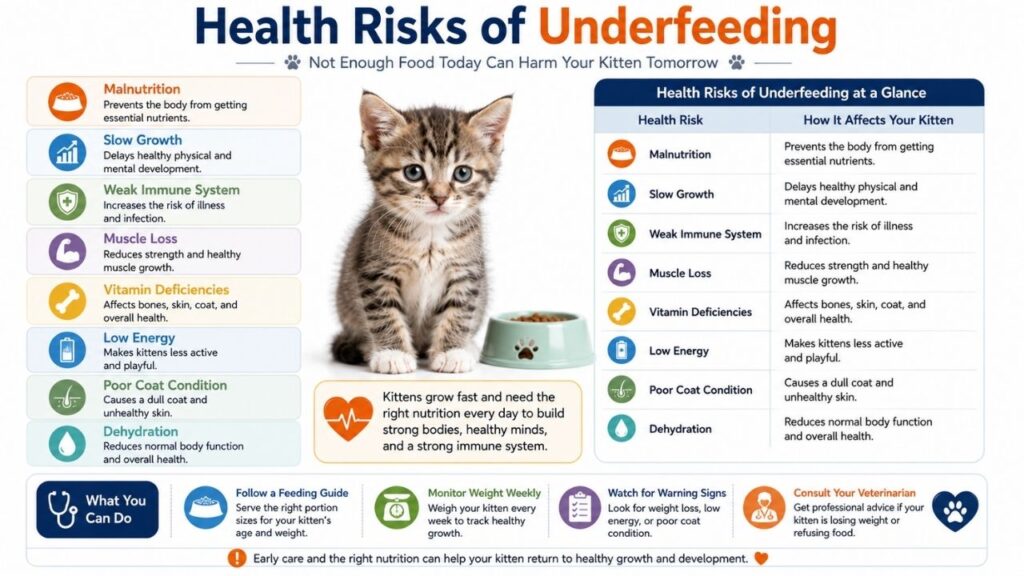
Underfeeding can have serious effects on a kitten’s health because growing bodies need a steady supply of nutrients every day. During the first year of life, kittens require enough protein, healthy fats, vitamins, minerals, taurine, and calories to support healthy growth. When they do not receive enough food or essential nutrients, their bodies begin to use stored energy and muscle for survival. This can slow development and increase the risk of long-term health problems.
Malnutrition
The most common result of underfeeding is malnutrition. A kitten that does not eat enough cannot get the nutrients needed for healthy bones, muscles, organs, and brain development. Over time, malnutrition can affect every part of the body and make it harder for the kitten to grow normally.
Slow Growth and Delayed Development
Healthy kittens should grow steadily during their first year. Underfeeding can slow this process and prevent a kitten from reaching a healthy size. Bone growth, muscle development, and brain function may all be affected when the body does not receive enough nutrition.
Weak Immune System
A balanced diet helps build a strong immune system that protects kittens from illness. Underfed kittens are more likely to get infections and may take longer to recover when they become sick. Good nutrition plays an important role in keeping the body’s natural defenses strong.
Muscle Loss
When a kitten does not get enough calories or protein, the body may begin breaking down muscle tissue for energy. This leads to poor muscle development, weakness, and reduced strength. A healthy kitten should develop lean muscles as it grows, not lose them.
Vitamin and Mineral Deficiencies
A lack of essential vitamins and minerals can affect many body functions. Nutrient deficiencies may lead to weak bones, poor vision, unhealthy skin, a dull coat, and slower healing. Feeding a complete and balanced kitten food helps provide the nutrients needed for healthy development.
Low Energy and Weakness
Food gives kittens the energy they need to play, learn, and explore. An underfed kitten may sleep more than usual, avoid playing, or seem tired throughout the day. Low energy is often one of the earliest signs that a kitten is not getting enough nutrition.
Poor Skin and Coat Health
A healthy diet supports soft skin and a shiny coat. Without enough healthy fats, protein, and other nutrients, the coat may become dry, rough, or thin. Skin problems may also develop if nutritional needs are not met.
Dehydration
Some underfed kittens also drink less water or eat too little wet food, increasing the risk of dehydration. Fresh water should always be available, and kittens should be encouraged to stay hydrated, especially during warm weather or illness.
Health Risks of Underfeeding at a Glance
| Health Risk | How It Affects Your Kitten |
| Malnutrition | Prevents the body from getting essential nutrients |
| Slow Growth | Delays healthy physical and mental development |
| Weak Immune System | Increases the risk of illness and infection |
| Muscle Loss | Reduces strength and healthy muscle growth |
| Vitamin Deficiencies | Affects bones, skin, coat, and overall health |
| Low Energy | Makes kittens less active and playful |
| Poor Coat Condition | Causes a dull coat and unhealthy skin |
| Dehydration | Reduces normal body function and overall health |
Most of these health problems can be prevented by following a proper kitten feeding guide, serving the correct portion sizes, and monitoring your kitten’s healthy weight every week. If your kitten is losing weight, refusing food, or showing signs of weakness, contact a veterinarian as soon as possible. Early care and the right nutrition can help your kitten return to healthy growth and development.
How Much Should a Kitten Eat?
There is no single feeding amount that is right for every kitten. The correct kitten portion size depends on age, body weight, activity level, and the type of food you choose. Growing kittens need more calories than adult cats because their bodies are developing quickly. Feeding the right amount of complete and balanced kitten food helps support healthy growth without increasing the risk of overfeeding or underfeeding.
Most veterinarians recommend feeding kittens several small meals throughout the day instead of one or two large meals. Young kittens have small stomachs and a fast metabolism, so they need frequent feeding to maintain their energy levels. As your kitten grows, you can gradually reduce the number of meals while increasing the portion size.
Kitten Feeding Guide by Age
| Kitten Age | Meals Per Day | Feeding Recommendation |
| 0–4 weeks | Formula every 2–4 hours | Mother’s milk or kitten milk replacer only |
| 4–8 weeks | 4–6 meals | Begin weaning with soft wet kitten food or moistened dry food |
| 2–3 months | 4 meals | Feed complete and balanced kitten food in small portions |
| 3–6 months | 3 meals | Increase portions as your kitten grows and stays active |
| 6–12 months | 2–3 meals | Adjust portions based on weight, activity level, and body condition |
Example:
Even kittens of the same age can have different calorie needs. An active kitten that spends hours running and climbing may need slightly more food than a kitten that sleeps more throughout the day.
Factors That Affect How Much Your Kitten Should Eat
Every kitten is different. Several factors influence daily food requirements.
- Age: Younger kittens need more frequent meals than older kittens.
- Body Weight: Larger kittens usually need more calories than smaller kittens.
- Activity Level: Very active kittens burn more energy and may require slightly more food.
- Type of Food: Wet food and dry food have different calorie levels, so portion sizes are not the same.
- Health Condition: Kittens recovering from illness or with special medical needs may require a different feeding plan recommended by a veterinarian.
Tips for Feeding the Right Amount
Following a few simple habits can help your kitten maintain a healthy weight and receive the nutrients needed for proper growth.
- Measure each meal instead of guessing.
- Follow the feeding guide on the kitten food package as a starting point.
- Adjust portion sizes based on your kitten’s weight and body condition.
- Divide the daily food into several small meals.
- Limit treats so they do not replace balanced meals.
- Keep fresh water available at all times.
Remember that feeding charts are general guidelines. Some kittens naturally need a little more food, while others need less. The best way to know if you are feeding the right amount is to monitor your kitten’s growth, energy level, and body condition. If your kitten is gaining weight too quickly, losing weight, or not growing as expected, consult a veterinarian for personalized feeding advice.
How to Tell if Your Kitten Is at a Healthy Weight
Keeping your kitten at a healthy weight is one of the best ways to support lifelong health. A healthy kitten should grow steadily, stay active, and develop strong muscles without carrying excess body fat. Instead of looking only at the number on the scale, pay attention to your kitten’s body condition, energy level, and overall appearance. Regular weight checks can help you spot small changes before they become serious problems.
Check Your Kitten’s Body Condition
One of the easiest ways to assess your kitten’s weight is by using the Body Condition Score (BCS). Gently place your hands along your kitten’s sides. You should be able to feel the ribs with light pressure, but they should not be sticking out. When viewed from above, your kitten should have a slight waist behind the ribs. A very round body may be a sign of overfeeding, while visible ribs and hip bones may indicate underfeeding.
Monitor Weight Regularly
Weigh your kitten at the same time every week using a digital scale if possible. Healthy kittens usually gain weight consistently during their first year. Sudden weight gain or weight loss can be an early sign that your kitten’s feeding schedule or portion sizes need adjustment.
Watch Energy and Activity Levels
A healthy kitten is usually playful, curious, and active. It enjoys running, climbing, and exploring its environment. If your kitten becomes unusually tired, weak, or inactive, poor nutrition or an unhealthy body weight may be affecting its health.
Look at Muscle Development
Healthy growth is about more than just gaining weight. Your kitten should develop lean muscles as it grows. If the body feels soft with excess fat, overfeeding may be the cause. If the muscles seem poorly developed and the bones are easy to see, your kitten may not be getting enough nutrients.
Check the Coat and Skin
A balanced kitten diet supports healthy skin and a shiny coat. Soft fur, healthy skin, and bright eyes are often signs that your kitten is receiving proper nutrition. A dull coat, dry skin, or excessive shedding may suggest nutritional deficiencies or another health issue.
Monitor Eating Habits
Healthy kittens usually eat well and follow a regular routine. A sudden increase or decrease in appetite should not be ignored. Eating much more or much less than usual may indicate that your kitten’s nutritional needs have changed or that an underlying health problem is developing.
Signs of a Healthy Weight
| Healthy Signs | Signs That Need Attention |
| Steady weight gain | Rapid weight gain or weight loss |
| Ribs can be felt with light pressure | Ribs are difficult to feel or clearly visible |
| Slight waist behind the ribs | Round body or very thin body |
| Strong muscles | Poor muscle development |
| Active and playful | Low energy or weakness |
| Shiny coat and healthy skin | Dull coat or dry skin |
| Regular appetite | Sudden change in eating habits |
Simple Tip
Take one photo of your kitten every month from the side and from above. Comparing photos over time makes it easier to notice gradual weight changes
Every kitten grows at its own pace, but steady growth is the goal. Continue feeding a complete and balanced kitten food, monitor your kitten’s healthy weight, and adjust food portions as it grows. If you notice ongoing weight changes, poor growth, or changes in body condition, schedule a visit with a veterinarian. Early guidance can help keep your kitten healthy during every stage of development.
Common Feeding Mistakes New Kitten Owners Make
Many new kitten owners want to give their pets the best possible care, but small feeding mistakes can affect a kitten’s growth and health. Feeding too much, too little, or choosing the wrong type of food can lead to weight problems and nutritional deficiencies. Understanding these common mistakes can help you create a healthier kitten feeding routine and support steady growth.
Feeding Too Much Food
One of the most common mistakes is giving larger portion sizes than a kitten actually needs. Many owners think a kitten should eat whenever it seems hungry. While kittens do have a healthy appetite, constantly offering extra food can lead to overfeeding and unhealthy weight gain. Measure each meal instead of estimating the amount.
Feeding Too Little Food
Some owners worry about overfeeding and accidentally serve too little food. This can prevent a kitten from getting enough calories, protein, vitamins, and minerals needed for healthy growth. A growing kitten needs balanced nutrition every day to build strong muscles, bones, and a healthy immune system.
Giving Adult Cat Food Too Early
Kittens have different nutritional needs than adult cats. Adult cat food does not provide the higher levels of nutrients required during the growth stage. Always choose a complete and balanced kitten food until your kitten reaches adulthood or your veterinarian recommends switching to adult food.
Example:
Many first-time kitten owners buy adult cat food because they already have an older cat at home. However, growing kittens need higher levels of protein and calories than adult cats.
Free Feeding Without Monitoring
Leaving food in the bowl all day, also known as free feeding, may work for some kittens, but it can make it difficult to track how much they eat. It also increases the risk of overeating in some cats. A regular kitten feeding schedule makes it easier to monitor appetite and maintain a healthy weight.
Offering Too Many Treats
Treats should only make up a small part of your kitten’s daily diet. Giving too many treats adds extra calories and may reduce your kitten’s interest in eating balanced meals. Choose healthy treats and offer them in moderation.
Changing Food Too Quickly
A sudden change in food can upset your kitten’s digestive system. If you need to switch to a new kitten food, introduce it gradually over several days by mixing the new food with the current food. This helps reduce the risk of stomach upset and diarrhea.
Ignoring Weight and Body Condition
Some owners only watch how much food goes into the bowl and forget to monitor their kitten’s growth. Regularly checking your kitten’s Body Condition Score (BCS) and weight helps you know whether the current feeding plan is working.
Not Providing Fresh Water
Good nutrition includes proper hydration. Fresh, clean water should always be available, especially for kittens that eat mostly dry food. Water supports healthy digestion, body temperature, and overall health.
Common Feeding Mistakes at a Glance
| Feeding Mistake | Possible Result |
| Overfeeding | Unhealthy weight gain and obesity |
| Underfeeding | Slow growth and malnutrition |
| Feeding adult cat food | Nutritional deficiencies |
| Free feeding without monitoring | Difficulty controlling food intake |
| Too many treats | Extra calories and poor eating habits |
| Sudden food changes | Digestive upset and diarrhea |
| Ignoring weight checks | Missed signs of overfeeding or underfeeding |
| Not providing enough water | Increased risk of dehydration |
Avoiding these common mistakes is the first step toward raising a healthy kitten. Feed age-appropriate food, measure each meal, monitor your kitten’s growth, and adjust portion sizes as needed. If you are unsure about the best feeding plan, ask a veterinarian for guidance based on your kitten’s age, weight, and activity level.
Tips to Prevent Overfeeding and Underfeeding
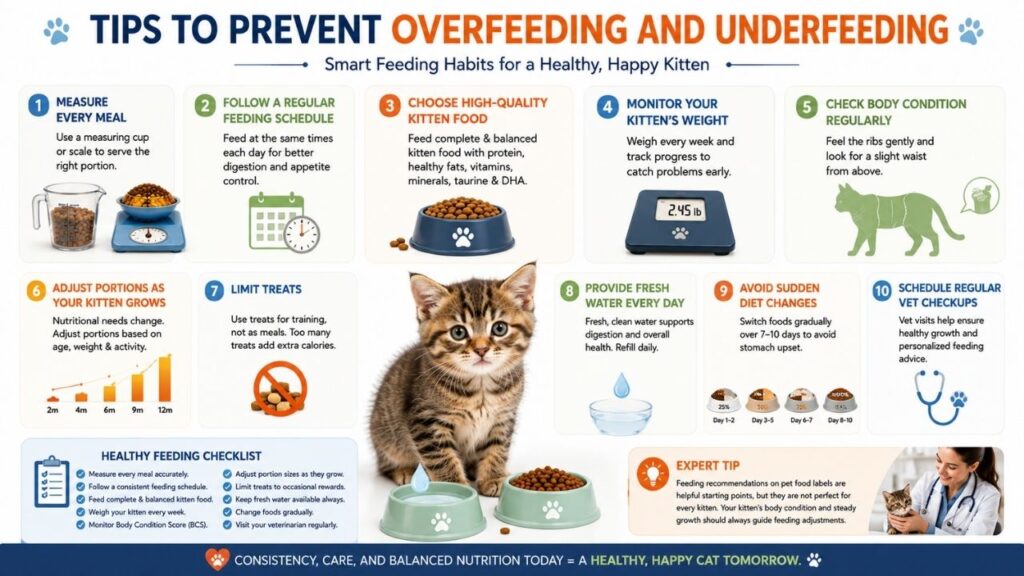
Keeping your kitten at a healthy weight is easier when you follow a consistent feeding routine. Small daily habits can make a big difference in your kitten’s growth, energy, and overall health. By serving the right portion sizes, choosing a complete and balanced kitten food, and monitoring your kitten’s progress, you can reduce the risk of both overfeeding and underfeeding.
Measure Every Meal
Avoid guessing how much food to give your kitten. Use a measuring cup or kitchen scale to serve accurate portions. Following the recommended serving size helps your kitten receive enough nutrients without consuming too many calories.
Follow a Regular Feeding Schedule
Kittens do best with meals at the same times each day. A consistent kitten feeding schedule supports healthy digestion and makes it easier to monitor your kitten’s appetite. Younger kittens usually need more frequent meals, while older kittens can gradually transition to fewer meals.
Choose High-Quality Kitten Food
Always feed a complete and balanced kitten food that is specially made for growing kittens. These foods contain the right balance of protein, healthy fats, taurine, DHA, vitamins, and minerals needed for healthy brain development, strong bones, and lean muscles.
Monitor Your Kitten’s Weight
Weigh your kitten every week and keep a record of its progress. Healthy kittens should gain weight steadily as they grow. Regular weight checks help you notice early signs of overfeeding or underfeeding and allow you to adjust food portions before problems become serious.
Check Body Condition Regularly
In addition to weighing your kitten, check its Body Condition Score (BCS). You should be able to feel the ribs with gentle pressure, and your kitten should have a slight waist when viewed from above. This simple habit helps you maintain a healthy body condition throughout every stage of growth.
Adjust Portions as Your Kitten Grows
Your kitten’s nutritional needs change quickly during the first year. As your kitten becomes larger and more active, its calorie requirements also change. Review feeding recommendations regularly and increase or decrease portion sizes based on your kitten’s age, weight, and activity level.
Limit Treats
Treats can be useful for training, but they should not replace balanced meals. Too many treats add unnecessary calories and may reduce your kitten’s appetite for nutritious food. Offer treats in moderation and choose options that are made for kittens whenever possible.
Provide Fresh Water Every Day
Fresh, clean water is essential for healthy digestion, nutrient absorption, and overall body function. Refill your kitten’s water bowl daily and encourage regular drinking, especially if your kitten eats mostly dry food.
Avoid Sudden Diet Changes
If you need to change your kitten’s food, do it gradually over 7 to 10 days. Mix small amounts of the new food with the current food and slowly increase the new food each day. This helps protect your kitten’s digestive system and reduces the risk of stomach upset.
Schedule Regular Veterinary Checkups
Routine visits to a veterinarian help ensure your kitten is growing as expected. Your veterinarian can assess your kitten’s weight, body condition, and overall health, and provide personalized feeding advice based on its individual needs.
Healthy Feeding Checklist
- Measure every meal accurately.
- Follow a consistent kitten feeding schedule.
- Feed complete and balanced kitten food.
- Weigh your kitten every week.
- Monitor Body Condition Score (BCS).
- Adjust portion sizes as your kitten grows.
- Limit treats to occasional rewards.
- Keep fresh water available at all times.
- Change foods gradually.
- Visit your veterinarian for regular health checks.
Following these simple feeding habits can help your kitten maintain a healthy weight, develop strong muscles and bones, and receive the nutrition needed for lifelong health. Consistency, careful monitoring, and balanced nutrition are the keys to raising a happy and healthy adult cat.
Expert Tip
Feeding recommendations on pet food labels are helpful starting points, but they are not perfect for every kitten. Your kitten’s body condition and steady growth should always guide feeding adjustments.
When to Contact a Veterinarian
Most feeding problems can be corrected by adjusting your kitten’s feeding schedule and portion sizes. However, some signs may indicate an underlying health problem that requires professional care. If your kitten continues to lose weight, refuses food, or shows changes in behavior, do not wait too long to seek help. Early diagnosis and treatment can prevent minor issues from becoming serious health concerns.
A veterinarian can examine your kitten, check its Body Condition Score (BCS), evaluate its growth, and recommend the right complete and balanced diet based on its age, weight, and health. Regular veterinary checkups are also important because kittens grow quickly, and their nutritional needs change during the first year of life.
Your Kitten Is Losing Weight
Healthy kittens should gain weight steadily as they grow. If your kitten is losing weight or not gaining weight for several weeks, it may not be eating enough or could have an underlying medical condition. A veterinarian can determine the cause and recommend the best feeding plan.
Your Kitten Refuses to Eat
A kitten that refuses food for more than 24 hours should be examined by a veterinarian. Young kittens have limited energy reserves, and going without food for too long can quickly become dangerous. Loss of appetite may be linked to illness, stress, dental problems, or digestive issues.
Vomiting or Diarrhea Continues
Occasional stomach upset may happen after a sudden food change, but frequent vomiting or diarrhea is not normal. These symptoms can lead to dehydration and poor nutrient absorption. Your veterinarian can identify the cause and recommend the appropriate treatment.
Extreme Weight Gain
Rapid weight gain may be a sign of overfeeding or another health issue. If your kitten becomes overweight despite following feeding recommendations, your veterinarian can review its diet, activity level, and overall health to help maintain a healthy kitten weight.
Low Energy and Weakness
A healthy kitten is usually active and playful. If your kitten seems unusually tired, weak, or uninterested in playing for more than a day or two, it should be evaluated. Poor nutrition, illness, or dehydration may be contributing to the problem.
Poor Growth or Delayed Development
If your kitten appears much smaller than others of the same age or is not reaching normal growth milestones, a veterinary examination is recommended. Proper nutrition is essential for healthy bone growth, muscle development, and brain function during the first year.
Signs You Should Not Ignore
Contact your veterinarian if your kitten has any of the following signs:
- Ongoing weight loss
- No weight gain during the growth stage
- Refuses food for more than 24 hours
- Frequent vomiting or diarrhea
- Constant weakness or low energy
- Visible ribs and severe weight loss
- Rapid or excessive weight gain
- Difficulty eating or swallowing
- Signs of dehydration
- Poor growth or delayed development
Regular Checkups Support Healthy Growth
Even if your kitten appears healthy, routine veterinary visits are important. Regular checkups allow your veterinarian to monitor weight, growth, nutrition, and overall health. They can also recommend changes to your kitten’s diet as it grows and help prevent feeding-related problems before they become serious.
If you are ever unsure whether your kitten is getting enough food or gaining weight at a healthy rate, it is always better to ask a veterinarian. Professional guidance, combined with a balanced diet and regular monitoring, will help your kitten grow into a healthy, active adult cat.
Simple Tip
Weigh your kitten once a week and write the weight in your phone or notebook. Small changes are easier to notice when you track them regularly.
Frequently Asked Questions
Can kittens overeat?
Yes. Kittens can overeat, especially if food is always available or meals are larger than recommended. Overeating can lead to rapid weight gain, excess body fat, and an increased risk of obesity later in life. Feeding measured portion sizes and following a regular kitten feeding schedule can help prevent overfeeding.
Is it normal for my kitten to always seem hungry?
It can be. Growing kittens have a fast metabolism and need more calories than adult cats. They may seem hungry because they are growing quickly. However, constant hunger along with poor weight gain may be a sign that your kitten is not getting enough food or nutrients. If you are concerned, consult a veterinarian for personalized advice.
How often should I weigh my kitten?
It is a good idea to weigh your kitten once a week during its first year. Regular weight checks help you monitor healthy growth and identify early signs of overfeeding or underfeeding. Keeping a simple record of your kitten’s weight can also help your veterinarian evaluate its progress.
Should I free-feed my kitten?
Free feeding may work for some kittens, but it is not the best choice for every pet. Leaving food available all day can make it difficult to monitor how much your kitten eats and may increase the risk of overeating. Scheduled meals are usually a better option because they help control food intake and establish healthy eating habits.
Can underfeeding stunt a kitten’s growth?
Yes. Underfeeding can slow growth and prevent a kitten from getting enough protein, vitamins, minerals, and calories needed for healthy development. Long-term underfeeding may lead to malnutrition, poor muscle development, and a weak immune system.
How do I know if my kitten is getting enough food?
A kitten that is getting enough food should gain weight steadily, stay active, and have a healthy Body Condition Score (BCS). You should be able to feel the ribs with light pressure without seeing them clearly. A shiny coat, bright eyes, and regular appetite are also signs of good nutrition.
What type of food is best for growing kittens?
Choose a complete and balanced kitten food that is specially formulated for growth. These foods provide the right balance of protein, healthy fats, taurine, DHA, vitamins, and minerals needed for healthy brain development, strong bones, and lean muscles. You can feed wet food, dry food, or a combination of both, depending on your kitten’s needs and your veterinarian’s recommendation.
When should I switch my kitten to adult cat food?
Most kittens can transition to adult cat food at around 12 months of age. Larger breeds may continue growing for a longer period and could benefit from kitten food for additional months. Your veterinarian can recommend the best time to make the switch based on your kitten’s breed, size, and overall health.
Conclusion
Finding the right balance between overfeeding and underfeeding is one of the most important parts of caring for a growing kitten. Both problems can affect your kitten’s health, growth, and quality of life. Feeding the correct portion sizes, choosing a complete and balanced kitten diet, and following a consistent kitten feeding schedule will help your kitten develop strong bones, healthy muscles, and a strong immune system.
Monitor your kitten’s weight, body condition, appetite, and activity level as it grows. Small changes in these areas can help you identify feeding problems early. Regular veterinary checkups, proper nutrition, and fresh water every day are the foundation of a healthy life. By giving your kitten the right amount of food and the care it needs, you can support healthy growth and help it become a happy, active adult cat.

One Response