
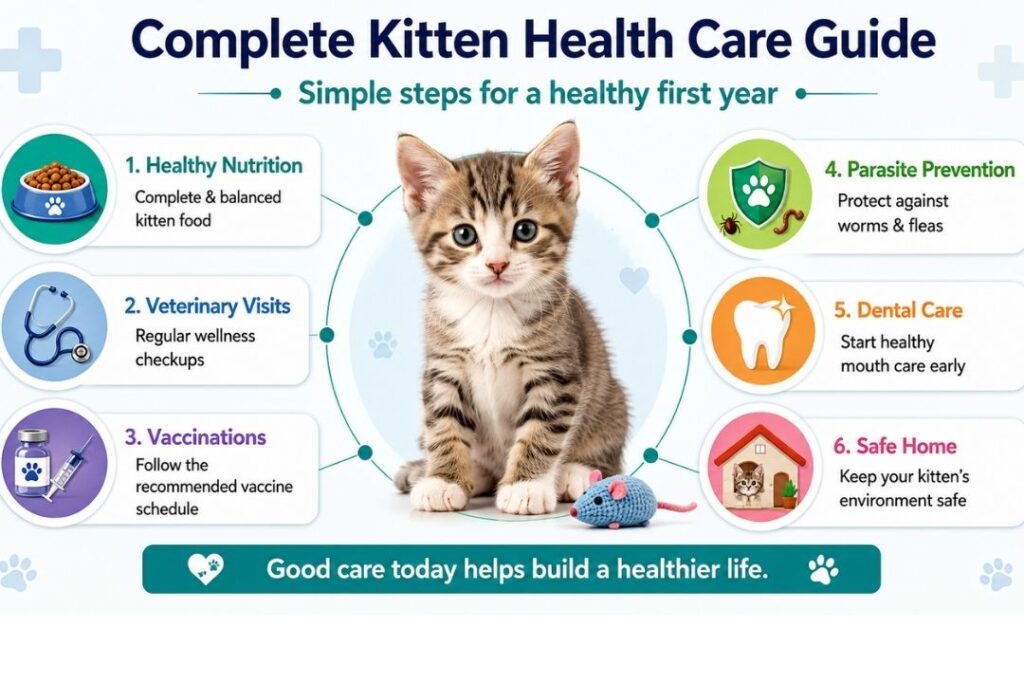
Bringing a new kitten home is exciting, but it also comes with a lot of responsibility. Kittens grow quickly during their first year, and good health care helps support their growth, immunity, and overall well-being. A healthy diet, regular veterinary visits, vaccinations, parasite prevention, dental care, and a safe home all play an important role in raising a healthy kitten.
This complete kitten health care guide will help you understand the basic care your kitten needs from the first days at home through the first year. You will learn when to visit a veterinarian, which preventive care kittens may need, how to support healthy nutrition, and how to spot common signs that something may be wrong.
Every kitten is different, so your veterinarian should guide you on vaccines, parasite treatments, feeding needs, and other medical care. With regular care and attention, you can give your kitten a healthy start and help build good habits that can last throughout its life.
Schedule Your Kitten’s First Veterinary Visit
A kitten’s first veterinary visit is one of the most important steps in a good kitten health care plan. Ideally, schedule the appointment within the first week after bringing your kitten home. A veterinarian can check your kitten’s overall health, look for signs of illness or congenital problems, and create a preventive care plan. This visit also gives you a chance to ask questions about nutrition, vaccines, parasite prevention, behavior, and future care.
During the wellness exam, the veterinarian will usually check your kitten’s eyes, ears, mouth, teeth, skin, coat, heart, lungs, abdomen, and overall body condition. They may also check your kitten’s weight and growth. A physical examination can help identify concerns such as a heart murmur, hernia, cleft palate, dental abnormalities, or other health problems that may not be easy for a new kitten owner to notice.
What Happens During the First Vet Visit?
Your veterinarian will ask about your kitten’s history, daily routine, diet, appetite, water intake, stool, urination, and behavior. Bring any adoption, shelter, breeder, or previous veterinary records you have. These records can help the veterinary team understand which vaccines, tests, or parasite treatments your kitten has already received. Your veterinarian may also recommend a fecal test to look for intestinal parasites, which are common in kittens.
The first appointment is also a good time to discuss a kitten vaccination schedule and parasite prevention plan. Young kittens often need several veterinary visits during their first months because they may require vaccine boosters and follow-up parasite care. Merck Veterinary Manual notes that kittens commonly need veterinary visits every 3 to 4 weeks until about 6 months of age, although the exact schedule depends on the kitten’s individual needs.
How to Prepare Your Kitten for the Vet
A veterinary visit can feel stressful for a kitten. Start getting your kitten comfortable with the carrier before the appointment. Leave the carrier open in a familiar area and place soft bedding, a toy, or treats inside. This can help your kitten see the carrier as a safe place instead of something associated only with trips to the veterinarian. AAHA also recommends allowing cats to become familiar with their carrier and using calm, gentle handling to reduce stress during veterinary visits.
Before leaving home, write down any questions or changes you have noticed. Tell your veterinarian about changes in appetite, energy, stool, urination, or behavior. If your kitten is not eating, has diarrhea, is sneezing, or seems unusually quiet or sick, contact the veterinary team promptly rather than waiting for a routine appointment.
Regular veterinary care during kittenhood helps establish a strong foundation for lifelong health. Your veterinarian can adjust the kitten health care plan as your cat grows and can recommend the right vaccines, parasite prevention, nutrition, dental care, spay or neuter timing, and other preventive services for your kitten.
Before the appointment, it can help to write down a few simple questions. For example, you may want to ask how much your kitten should eat, whether a fecal test is needed, when the next vaccine is due, and which flea prevention is safe for its age and weight. Having these questions ready can make a first vet visit much more useful.
Follow a Kitten Vaccination Schedule
Vaccinations are an important part of kitten health care. They help prepare a kitten’s immune system to fight certain serious and contagious diseases. Kittens are especially vulnerable during their early months, so they usually need a series of vaccines rather than one visit. Your veterinarian can create a kitten vaccination schedule based on your kitten’s age, health, lifestyle, and previous vaccine history.
Which Vaccines Do Kittens Need?
The FVRCP vaccine is one of the main vaccines given to kittens. It helps protect against feline panleukopenia, feline herpesvirus, and feline calicivirus. These infections can cause serious illness, especially in young cats. Cornell University College of Veterinary Medicine notes that the first FVRCP vaccine is generally given at about 6 to 8 weeks of age, followed by additional doses every 3 to 4 weeks until the kitten is around 16 to 20 weeks old. The exact schedule can vary based on the vaccine used and your veterinarian’s recommendations.
Rabies vaccination is also an important part of kitten preventive care. Rabies is a serious and almost always fatal disease after symptoms develop. Rabies vaccination requirements can also vary by state and local law in the United States. Your veterinarian can tell you when your kitten should receive the rabies vaccine and when future booster shots are due.
Feline leukemia virus, commonly called FeLV, is another important vaccine to discuss during kittenhood. The American Animal Hospital Association and American Association of Feline Practitioners consider FeLV a core vaccine for kittens and young cats under 1 year of age because young cats have a higher risk of developing progressive infection after exposure. Your veterinarian can assess your kitten’s exposure risk and recommend the appropriate FeLV testing and vaccination plan.
Typical Kitten Vaccine Timeline
| Kitten Age | Common Health Care Focus |
| 6–8 weeks | First FVRCP vaccine may be given |
| 9–12 weeks | Follow-up FVRCP dose and other recommended vaccines |
| 12–16+ weeks | Continue the kitten vaccine series as advised |
| Around 16–20 weeks | Complete the initial FVRCP series when recommended |
| After kitten series | Follow your veterinarian’s booster plan |
This table is a general guide, not a fixed vaccination schedule for every kitten. Vaccine type, previous vaccination history, health status, exposure risk, and state requirements can affect the timing. The AAHA vaccination guidelines recommend repeating the FVRCP series every 3 to 4 weeks in kittens until at least 16 weeks of age, with specific recommendations depending on the vaccine and circumstances.
Even indoor kittens should not automatically be considered protected from infectious diseases. A kitten’s lifestyle can change as it grows, and exposure can happen through other cats, veterinary visits, boarding, or other situations. Talk with your veterinarian about which vaccines your kitten needs and keep a record of every vaccination. Staying on schedule gives your kitten a stronger foundation for long-term health.
Vaccine schedules can look confusing when you see several different dates on a kitten’s medical record. That is normal. Kittens usually receive vaccines in a series because their immune protection develops over time. Instead of trying to memorize every date, keep the vaccination record and ask your veterinarian when the next dose is due.
Prevent Fleas, Ticks and Intestinal Parasites
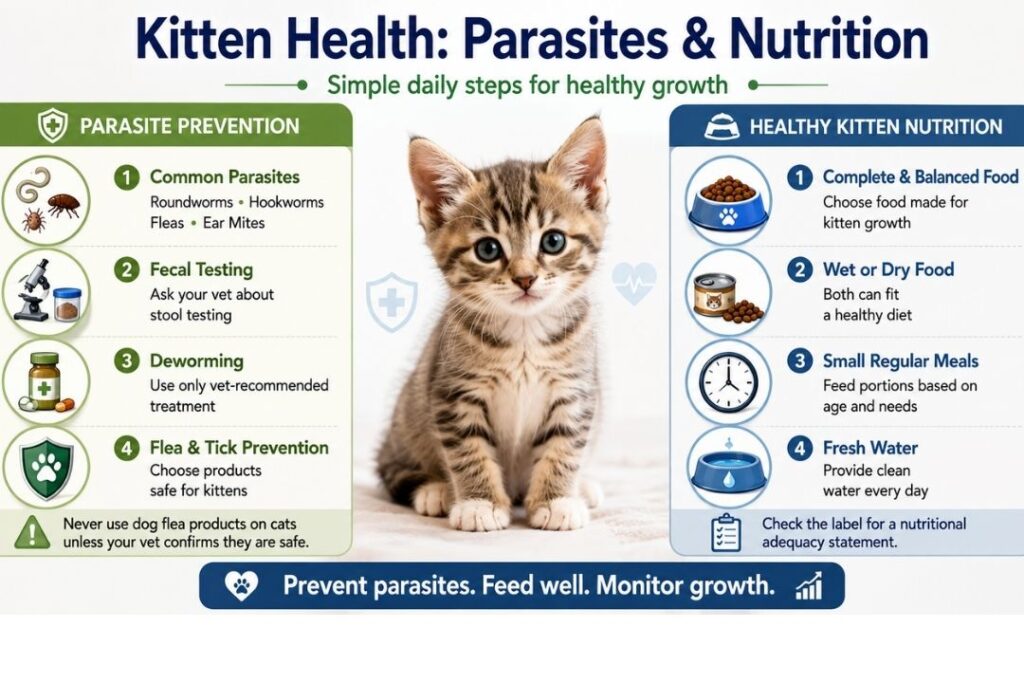
Parasite prevention is an important part of kitten health care. Kittens can develop parasites even when they live indoors. Common problems include intestinal worms, fleas, ticks, and ear mites. Some parasites can cause diarrhea, vomiting, poor growth, weight loss, skin irritation, or weakness. Early prevention can help protect your kitten and support healthy growth.
Common Parasites in Kittens
Intestinal parasites are common in young cats. Roundworms and hookworms are two common types of intestinal worms found in kittens. Tapeworms and Giardia can also affect cats. Some kittens become infected before adoption, while others can pick up parasites from contaminated environments or infected animals.
Fleas are another common concern. A flea infestation can cause itching and skin irritation. Heavy flea infestations can be especially dangerous for young kittens because blood loss may contribute to anemia. Ear mites can also cause intense itching, head shaking, and dark debris inside the ears.
Fecal Testing and Deworming
Your veterinarian may recommend a fecal test during your kitten’s early veterinary visits. This test checks a stool sample for certain intestinal parasites. Because some parasites may not be detected in every sample, your veterinarian may recommend repeat testing based on your kitten’s age, symptoms, history, and risk of exposure.
Deworming is also common during kittenhood. Your veterinarian can recommend a deworming plan based on your kitten’s age and parasite risk. Do not give your kitten a human dewormer or another parasite medicine without veterinary guidance. Some products can be unsafe for cats, and the correct treatment depends on the type of parasite.
Flea and Tick Prevention
Ask your veterinarian about a safe flea and tick prevention product for your kitten. The product should be appropriate for your kitten’s age and weight. Never use a dog flea product on a cat unless a veterinarian specifically confirms that it is safe. Certain ingredients found in some dog products can be toxic to cats.
Regular parasite prevention is easier than dealing with a large infestation later. Check your kitten’s coat and skin during grooming, especially if your kitten spends time outdoors or lives with other animals. Keep bedding and sleeping areas clean, and follow the treatment schedule recommended by your veterinarian.
A complete kitten health care plan should include regular parasite screening and prevention. The Cornell Feline Health Center notes that gastrointestinal parasites can cause problems such as vomiting, diarrhea, dehydration, anemia, and poor overall health. Some feline parasites can also pose a risk to people, making good hygiene and proper prevention important for the whole household. (vet.cornell.edu)
One thing that can surprise new kitten owners is that an indoor kitten can still have parasites. A kitten may look active and healthy while carrying intestinal worms. This is one reason early veterinary testing and preventive care matter, even if your kitten never goes outside.
Feed a Complete and Balanced Kitten Diet
Good nutrition gives a kitten the energy and nutrients needed for healthy growth. Kittens grow rapidly during their first year, so their nutritional needs are different from those of adult cats. A healthy kitten diet should provide enough protein, fat, vitamins, minerals, and calories to support growing bones, muscles, organs, and the immune system.
Choose Food Made for Kittens
Choose a commercial kitten food that is complete and balanced for growth. Look for a nutritional adequacy statement on the package that shows the food is formulated to meet the nutritional needs of growing kittens. In the United States, many pet food labels refer to standards established by the Association of American Feed Control Officials (AAFCO).
Both wet kitten food and dry kitten food can be part of a healthy diet when the food is nutritionally complete and appropriate for your kitten’s life stage. Wet food can also provide additional water, while dry food can be convenient to measure and store. The most important factor is the overall nutritional quality of the diet rather than choosing one type simply because it is wet or dry.
How Often Should a Kitten Eat?
Young kittens have small stomachs and high energy needs, so they often do better with several small meals throughout the day. As kittens grow, their feeding routine can gradually change. Follow the feeding directions on the food label and adjust portions with your veterinarian based on your kitten’s age, weight, growth, activity level, and body condition.
Always provide clean, fresh water. Avoid making sudden changes to your kitten’s food because an abrupt diet change may cause digestive upset. If you need to switch foods, gradually introduce the new food over several days unless your veterinarian recommends a different approach.
Monitor Your Kitten’s Growth and Weight
Regular weight checks can help you notice changes early. A healthy kitten should continue to grow and maintain a good body condition. Rapid weight loss, poor appetite, repeated vomiting, persistent diarrhea, or poor growth should be discussed with a veterinarian.
Avoid giving kittens homemade diets, raw foods, supplements, or treats as a replacement for a complete kitten diet without professional guidance. Some homemade diets may lack important nutrients, while certain human foods can be unsafe for cats.
The Cornell Feline Health Center recommends feeding kittens a nutritionally complete diet appropriate for their life stage and advises cat owners to check the food label for an appropriate nutritional adequacy statement. Your veterinarian can also help you choose a kitten food and feeding plan that fits your kitten’s individual needs. (vet.cornell.edu)
Maintain Dental Health From Kittenhood
Dental care should become part of your kitten’s health routine from an early age. Kittens first develop their baby teeth, and their permanent teeth gradually replace them as they grow. Getting your kitten used to gentle mouth handling while young can make dental care easier later in life.
Start a Simple Dental Care Routine
Begin by gently touching your kitten’s lips and teeth for a few seconds. Give praise and a small reward so the experience stays positive. Once your kitten becomes comfortable, you can slowly introduce a toothbrush and toothpaste made specifically for cats. Never use human toothpaste because some ingredients may be unsafe for cats.
Regular toothbrushing can help reduce plaque buildup and support healthy gums. Your veterinarian can show you the correct brushing technique and recommend products that are appropriate for your kitten. Dental treats or other dental products may also be useful, but they should not replace professional advice or routine dental care.
Watch for Signs of Dental Problems
Check your kitten’s mouth regularly when you can do so safely. Healthy gums should not look severely swollen or bleed easily. Contact your veterinarian if you notice persistent bad breath, red or swollen gums, excessive drooling, difficulty chewing, pawing at the mouth, or a change in appetite.
Some kittens may also experience discomfort while their permanent teeth are developing. Your veterinarian can check the mouth during routine wellness exams and make sure the teeth and gums are developing normally.
Starting dental care during kittenhood helps your cat become comfortable with regular mouth handling. Combined with veterinary dental examinations and good nutrition, this simple habit can support better oral health throughout your cat’s life.
Do not expect your kitten to accept a toothbrush immediately. Start by letting your kitten become comfortable with gentle touches around the mouth. A few seconds at a time is enough in the beginning. The goal is to build a routine rather than force a long brushing session on the first day.
Spay or Neuter at the Appropriate Time
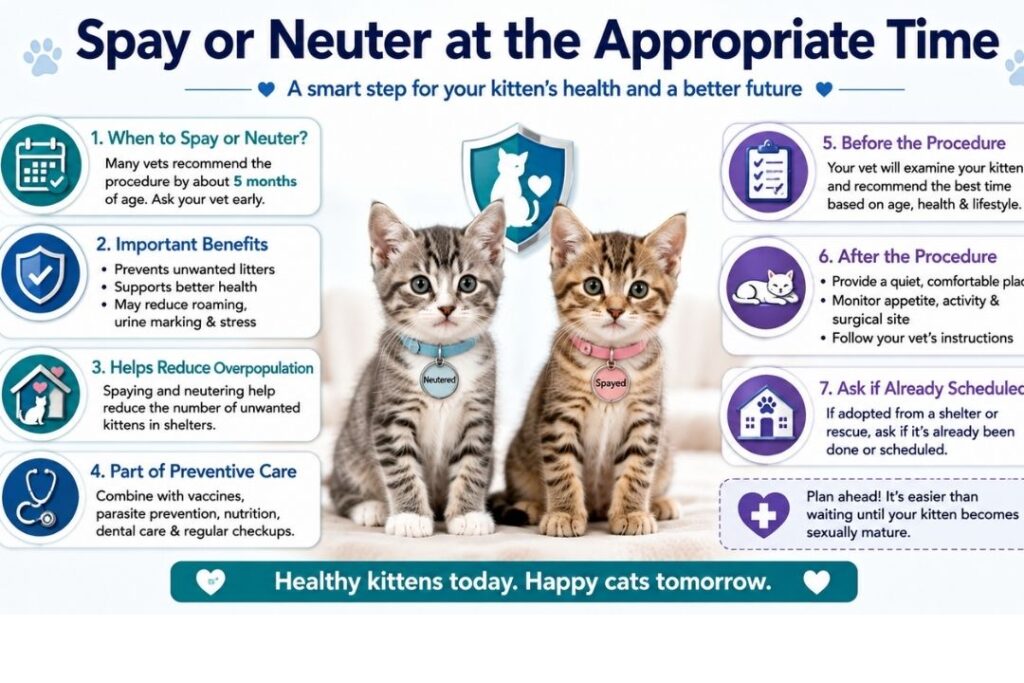
Spaying or neutering is an important part of preventive kitten care. Spaying is the surgical procedure for female cats, while neutering usually refers to the surgical procedure for male cats. These procedures prevent unwanted litters and can provide important reproductive health benefits.
When Should a Kitten Be Spayed or Neutered?
The right time depends on your kitten’s age, health, size, lifestyle, and your veterinarian’s recommendation. Many veterinarians recommend spaying or neutering kittens by about five months of age. The American Animal Hospital Association notes that cats can become reproductively active at a young age, so discussing the procedure early can help you plan ahead.
Do not wait until your kitten becomes sexually mature before asking about the procedure. Talk with your veterinarian during one of the early wellness visits. They can examine your kitten and recommend an appropriate time based on individual health needs.
Benefits of Spaying and Neutering
Spaying prevents pregnancy and eliminates the risk of certain reproductive conditions. Neutering prevents a male cat from fathering kittens and may reduce behaviors linked to mating, such as roaming and urine marking. These procedures also help reduce the number of unwanted kittens that enter shelters and rescue organizations.
Your veterinarian will explain what to expect before and after surgery. After the procedure, your kitten may need a quiet place to rest and should be monitored for changes in appetite, activity, the surgical site, or other unusual signs. Follow the veterinary team’s instructions carefully and contact them if you have concerns.
Spaying or neutering should be considered alongside other preventive care, including vaccinations, parasite prevention, nutrition, dental care, and regular wellness exams. Together, these steps can give your kitten a strong foundation for a healthy adult life.
If you adopted your kitten from a shelter or rescue, ask whether the procedure has already been scheduled or completed. If you adopted from another source, bring the question up during an early veterinary visit. Planning ahead is easier than waiting until your kitten is old enough to become reproductively active.
Grooming, Nails and Litter Box Care
Regular grooming and good litter box habits are simple parts of kitten health care. They also give you a chance to notice changes in your kitten’s skin, coat, paws, and bathroom habits. Start these routines when your kitten is young so they become a normal part of daily life.
Groom Your Kitten Regularly
Brush your kitten gently and choose a brush that suits its coat type. Regular brushing can remove loose hair, keep the coat clean, and help you notice fleas, skin irritation, lumps, or unusual changes. Long-haired kittens may need more frequent brushing to reduce tangles and mats.
You can also gently check your kitten’s ears, paws, and eyes during grooming. Avoid putting cotton swabs or cleaning products deep inside the ears. If you notice unusual discharge, a strong odor, redness, swelling, or frequent scratching, ask your veterinarian for advice.
Keep Your Kitten’s Nails Trimmed
Kitten nails can become sharp and may scratch people or get caught in fabrics. Get your kitten comfortable with having its paws handled before trimming the nails. Use cat-specific nail clippers and remove only the sharp tip. Cutting too far can damage the quick and cause pain and bleeding.
Provide a scratching post or scratching pad in an easy-to-reach area. Scratching is a normal cat behavior and helps kittens stretch, exercise, and maintain their claws.
Maintain a Clean Litter Box
A clean litter box can encourage good bathroom habits. Place the box in a quiet and easy-to-access location. Scoop waste regularly and keep the area clean. If you have more than one cat, providing multiple litter boxes can help reduce competition and stress.
Pay attention to changes in your kitten’s urine or stool. Diarrhea, constipation, frequent trips to the litter box, straining, blood in the urine or stool, or suddenly avoiding the litter box can indicate a health problem. Contact your veterinarian if you notice unusual bathroom behavior.
Good grooming, nail care, and litter box hygiene help keep your kitten comfortable while giving you an easy way to monitor its everyday health.
Grooming does not have to become a long daily routine. A few minutes of gentle brushing and handling can be enough to help your kitten get used to being touched. This is especially helpful when you need to trim nails, check the ears, examine the paws, or visit the veterinarian later.
“It doesn’t have to become a long daily routine.”
Support Healthy Behavior and Socialization
Healthy kitten care is not only about food and veterinary visits. Kittens also need safe experiences, regular play, and positive interaction with people. Good socialization can help a kitten become more confident and comfortable as it grows. Early experiences can also help reduce fear and stress around normal household activities.
Give Your Kitten Safe Social Experiences
Allow your kitten to experience different people, sounds, surfaces, and daily activities at a comfortable pace. Keep new experiences calm and positive. Never force a frightened kitten to interact. Give your kitten a safe place where it can retreat when it feels overwhelmed.
If your kitten will live with other pets, introduce them slowly. Keep early interactions supervised and give each animal its own food, water, resting areas, and litter resources. This can help reduce competition and stress.
Provide Daily Play and Enrichment
Kittens have lots of energy and need regular opportunities to play. Interactive toys can encourage natural behaviors such as chasing, pouncing, and stalking. Short play sessions throughout the day can provide both physical exercise and mental stimulation.
Provide scratching posts, safe climbing areas, hiding spaces, and age-appropriate toys. Rotate toys from time to time to keep your kitten interested. Avoid toys with small parts, loose strings, or other pieces that your kitten could swallow.
Help Your Kitten Get Comfortable With a Carrier
Carrier training is another useful part of kitten socialization. Leave the carrier open in a familiar area and place comfortable bedding or a favorite toy inside. Let your kitten explore it without pressure. You can gradually practice closing the door for short periods before taking your kitten on a short trip.
Positive training can make future veterinary visits less stressful. It also teaches your kitten that handling, transportation, and everyday experiences can be safe.
A healthy environment should give your kitten opportunities to play, explore, rest, scratch, and interact safely. Consistent routines and positive reinforcement can support good behavior while helping your kitten develop into a confident adult cat.
Socialization can be as simple as allowing your kitten to hear normal household sounds, meet calm visitors, explore different safe surfaces, or become comfortable with gentle handling. You do not need to create a complicated training program. Short, positive experiences can be enough.
Know the Signs of a Sick Kitten
Kittens can become sick quickly, so it is important to notice changes in their normal behavior. A kitten that suddenly stops eating, becomes very weak, or develops repeated vomiting or diarrhea may need prompt veterinary attention. Knowing the common warning signs can help you act before a health problem becomes more serious.
Common Signs of Illness in Kittens
Pay attention to changes in your kitten’s appetite, energy, breathing, bathroom habits, and appearance. Contact your veterinarian if you notice signs such as:
- Loss of appetite or refusing food
- Repeated vomiting
- Persistent diarrhea
- Unusual tiredness or weakness
- Difficulty breathing
- Frequent sneezing with nasal discharge
- Eye discharge or swollen eyes
- Pale, white, or unusual-looking gums
- Sudden weight loss or poor growth
- Bloated or painful abdomen
- Difficulty urinating or repeated straining
- Blood in urine or stool
- Severe itching or skin irritation
- Seizures, collapse, or loss of coordination
One unusual symptom does not always mean your kitten has a serious disease. However, young kittens have developing immune systems and limited energy reserves, so changes should not be ignored.
When Should You Call a Veterinarian?
If your kitten appears very sick, has trouble breathing, collapses, has seizures, cannot urinate, or becomes extremely weak, contact a veterinarian or emergency veterinary clinic immediately. For less urgent concerns, call your regular veterinary practice and explain the symptoms. The veterinary team can tell you whether your kitten needs an examination and how quickly it should be seen.
Do not give your kitten human medicines unless a veterinarian specifically tells you to do so. Many medications that are safe for people can be dangerous or even toxic to cats.
It can also help to monitor your kitten’s normal routine. Pay attention to how much your kitten eats and drinks, how often it uses the litter box, and how active it normally is. A sudden change from that normal pattern can provide an early warning that something is wrong.
Regular wellness exams, vaccinations, parasite prevention, proper nutrition, and good home care can reduce many health risks. Still, preventive care does not replace veterinary treatment when a kitten becomes sick. If you are worried about your kitten’s health, it is safer to contact a veterinary professional rather than trying to diagnose the problem yourself.
It is normal to worry when your kitten behaves differently from usual. The important thing is to notice changes rather than panic over every small difference. If your kitten is normally playful but suddenly becomes very weak, stops eating, or develops repeated vomiting or diarrhea, that change deserves attention.
Keep Your Home Safe for a Growing Kitten
Kittens are naturally curious. They explore by climbing, chewing, scratching, and playing with almost anything they can reach. Kitten-proofing your home can reduce the risk of injuries, poisoning, and other accidents. Walk through each room from your kitten’s point of view and look for anything that could be dangerous.
Remove Common Household Hazards
Keep medicines, cleaning products, pesticides, and chemicals in closed cabinets that your kitten cannot access. Many common household products can be harmful if swallowed. Keep small objects such as rubber bands, plastic pieces, coins, and loose strings out of reach because kittens may chew or swallow them.
Electrical cords can also attract curious kittens. Secure loose cords and keep them away from areas where your kitten plays. Check windows and doors to make sure your kitten cannot escape. If you have a balcony, use appropriate safety measures to prevent falls.
Be Careful With Plants and Foods
Some plants can be toxic to cats. Before bringing a plant into your home, check whether it is safe for cats. Lilies are especially dangerous and can cause severe poisoning in cats. If you think your kitten has eaten a potentially toxic plant, contact a veterinarian or animal poison service immediately.
Keep human foods out of reach as well. Foods such as chocolate, onions, garlic, grapes, raisins, and products containing xylitol can be dangerous to pets. Your veterinarian can provide a more complete list of foods and substances to avoid.
Create a Safe Kitten Area
Give your kitten a quiet area with food, fresh water, a clean litter box, comfortable bedding, and safe toys. Keep the litter box away from food and water bowls. Provide hiding places where your kitten can rest when it wants privacy.
As your kitten grows, regularly check the home for new hazards. A safe environment is an important part of preventive care and allows your kitten to explore, play, and grow with fewer risks.
Think about the places your kitten can reach, not just the places you normally use. A curious kitten may climb behind a television, chew a phone charger, squeeze under furniture, or investigate an open window. Before giving your kitten free access to the house, check these areas carefully.
Kitten Health Care Checklist
A simple kitten health care checklist can help you stay organized during your kitten’s first year. Young kittens need more than good food and playtime. They also need regular veterinary care, vaccinations, parasite prevention, dental care, proper grooming, and a safe home environment.
Use this checklist to keep track of the most important parts of your kitten’s daily and preventive care:
- Schedule the first veterinary examination.
- Keep your kitten’s vaccination records up to date.
- Follow the recommended kitten vaccination schedule.
- Ask your veterinarian about deworming and fecal testing.
- Use age- and weight-appropriate flea and parasite prevention.
- Feed a complete and balanced kitten diet.
- Provide clean, fresh water every day.
- Monitor your kitten’s weight, appetite, and growth.
- Begin gentle dental care and regular mouth checks.
- Trim nails and brush the coat when needed.
- Keep the litter box clean and monitor bathroom habits.
- Provide daily play, exercise, scratching, and mental enrichment.
- Give your kitten safe opportunities for socialization.
- Discuss microchipping with your veterinarian.
- Ask about the appropriate time for spaying or neutering.
- Kitten-proof your home and remove common household hazards.
- Keep your veterinarian’s contact information easily available.
- Learn the warning signs that may require veterinary attention.
You do not need to complete everything at once. Build these habits gradually as your kitten grows. Keeping a record of veterinary visits, vaccines, parasite treatments, weight changes, and other important health information can also make future appointments easier. A consistent routine helps you notice changes early and gives your kitten a healthier start.
You do not need to handle every part of kitten care in one day. Start with the basics and build a routine. Keep your kitten’s veterinary records in one place, save the next appointment date, and check food and parasite products before using them.
Frequently Asked Questions About Kitten Health
How often should a kitten see a veterinarian?
Young kittens usually need several veterinary visits during their first months. These visits allow the veterinarian to monitor growth, give recommended vaccines, check for parasites, and discuss nutrition and preventive care. The exact schedule depends on your kitten’s age, health, vaccination history, and individual needs.
What vaccines does a kitten need?
Common kitten vaccines include FVRCP, rabies, and feline leukemia virus (FeLV) vaccination when recommended. FVRCP helps protect against feline panleukopenia, feline herpesvirus, and feline calicivirus. Your veterinarian can create a vaccine schedule based on your kitten’s age and risk of exposure.
Do indoor kittens need vaccines and parasite prevention?
Yes. Living indoors can reduce some exposure risks, but it does not remove them completely. Parasites can enter the home through other animals, people, or contaminated environments. Your veterinarian can recommend vaccines and parasite prevention based on your kitten’s lifestyle and risk factors.
How often should kittens be dewormed?
There is no single deworming schedule that works for every kitten. Young kittens commonly receive parasite treatment during their early veterinary visits, but the timing depends on age, parasite risk, previous treatment, and test results. Your veterinarian can recommend the right deworming plan for your kitten.
What should a healthy kitten look like?
A healthy kitten generally has a good appetite, steady growth, normal energy, clear eyes, a healthy-looking coat, and normal urine and stool. Kittens should also be alert and interested in their surroundings. A sudden change in appetite, energy, weight, breathing, or bathroom habits should be discussed with a veterinarian.
When should I call a veterinarian about my kitten?
Contact your veterinarian if your kitten stops eating, has repeated vomiting or diarrhea, loses weight, becomes unusually weak, has breathing problems, develops eye or nasal discharge, or shows other concerning changes. Severe difficulty breathing, collapse, seizures, or an inability to urinate requires urgent veterinary attention.
What is the most important part of kitten health care?
There is no single step that keeps a kitten healthy. Good kitten care combines regular veterinary examinations, recommended vaccinations, parasite prevention, complete and balanced nutrition, dental care, safe socialization, proper grooming, and a safe home. Consistent preventive care gives your kitten the best foundation for healthy growth and long-term well-being.
Every kitten has different needs. Use this guide as a starting point, but work with your veterinarian for medical decisions, vaccine schedules, parasite treatments, nutrition changes, and any signs of illness.
Do indoor kittens need vaccines?
Yes. Being indoors reduces some risks, but it does not remove them completely. Your kitten may still encounter other animals, visit a veterinary clinic, or have changes in its lifestyle later. Ask your veterinarian which vaccines are appropriate for your kitten.


One Response