Bringing a new kitten home is exciting, but knowing what to feed it can feel confusing. Kittens grow very fast during their first year, and their bodies need the right balance of protein, healthy fats, vitamins, and minerals to stay healthy. Feeding too little or giving the wrong food can affect their growth, while overfeeding may lead to weight problems later in life. Following a proper feeding plan helps your kitten develop strong bones, healthy muscles, a sharp mind, and a strong immune system.
This complete kitten feeding guide by age will show you exactly what to feed your kitten from birth to 12 months. You will learn how often to feed your kitten, how much food it needs at each stage, and when to switch from milk to wet food and dry food. The guide also explains portion sizes, hydration, common feeding mistakes, and the right time to transition to adult cat food. Whether you have a newborn kitten or a playful six-month-old, this guide will help you make informed feeding choices with confidence.
Every kitten is different, but a healthy feeding routine is the foundation of lifelong health. By understanding your kitten’s changing nutritional needs month by month, you can support steady growth and healthy development. Use this guide as a trusted resource to build a feeding schedule that keeps your kitten active, happy, and ready for a healthy future.
If you’re a first-time kitten owner, it’s normal to have questions about feeding. Many new pet parents in the United States wonder if they are giving too much food or not enough. Learning the basics early can help your kitten grow into a healthy adult cat.
Why Kittens Need Special Nutrition
Kittens have very different nutritional needs than adult cats. During their first year, they grow quickly and develop strong bones, muscles, teeth, and organs. Their brain and immune system are also developing every day. Because of this rapid growth, kittens need a diet that is rich in high-quality protein, healthy fats, vitamins, and essential minerals. Feeding a complete and balanced kitten food helps provide the nutrients needed for healthy development and long-term wellness.
A growing kitten needs more calories than an adult cat because it uses a lot of energy for playing, learning, and building new body tissues. A high-protein kitten diet supports lean muscle growth, while healthy fats provide energy and help with brain development. Nutrients such as DHA, taurine, calcium, and phosphorus are especially important during this stage. DHA supports healthy brain and eye development, taurine helps maintain heart and vision health, and calcium and phosphorus work together to build strong bones and teeth.
Kittens should eat food that meets the nutritional standards for growth established by the Association of American Feed Control Officials (AAFCO). These foods are specially made to provide the right balance of nutrients for growing cats. Feeding adult cat food too early may not give your kitten enough protein, fat, or other essential nutrients needed for healthy growth.
Good nutrition also supports a strong immune system and healthy digestion. A balanced kitten diet can help maintain a shiny coat, healthy skin, steady weight gain, and firm stools. Fresh, clean water is just as important as food because proper hydration supports digestion, nutrient absorption, and overall health. Wet kitten food can also increase daily moisture intake, especially for kittens that drink less water.
Every stage of kitten growth has different nutritional needs. A newborn kitten depends on its mother’s milk or a kitten milk replacer for complete nutrition. As the kitten begins weaning, soft wet food is introduced before gradually moving to wet and dry kitten food. Following a kitten feeding guide by age ensures your pet receives the right food, the right portion size, and the right feeding schedule throughout its first 12 months of life.
Vet Tip:
Regular growth checks during your kitten’s first year help ensure it is getting the right amount of nutrition.
Kitten Growth Stages (0–12 Months)
Your kitten goes through several growth stages during its first year. Each stage brings new nutritional needs, changes in feeding frequency, and different food textures. Understanding these stages helps you create the right kitten feeding schedule and support healthy growth from birth to adulthood.
| Age | Growth Stage | Main Food | Feeding Focus |
| 0–4 Weeks | Newborn | Mother’s milk or Kitten Milk Replacer (KMR) | Frequent feeding and healthy weight gain |
| 4–8 Weeks | Weaning | Wet food mixed with KMR | Gradually introduce solid food |
| 2–4 Months | Growing Kitten | Wet and dry kitten food | High-protein diet for rapid growth |
| 4–6 Months | Active Growth | Complete and balanced kitten food | Muscle development and stronger bones |
Growth Stages
Example
Every kitten grows at its own pace. Some may become more active earlier, while others develop more slowly. Focus on steady growth instead of comparing your kitten with others.
Birth to 4 Weeks: Newborn Stage
During the first four weeks, kittens rely completely on their mother’s milk. It provides the nutrients and antibodies they need for healthy growth and a strong immune system. If the mother is not available, a kitten milk replacer (KMR) is the safest alternative. Never feed cow’s milk because it can upset a kitten’s stomach and does not provide the right nutrition.
4 to 8 Weeks: Weaning Stage
Around four weeks of age, kittens begin the weaning process. They become curious about food and start eating a soft mixture of wet kitten food and kitten milk replacer. As they grow, the amount of milk decreases while solid food increases. By the end of this stage, most kittens can eat wet food and small amounts of dry kitten food made for kittens.
2 to 4 Months: Rapid Growth Stage
This is one of the fastest growth periods in a kitten’s life. Kittens need a complete and balanced kitten diet that is rich in high-quality protein, healthy fats, DHA, taurine, calcium, and phosphorus. They also need several small meals throughout the day because their stomachs are still small, but their energy needs are high.
4 to 6 Months: Active Development Stage
Between four and six months, kittens become more active and playful. They continue building muscle, strengthening their bones, and developing healthy teeth. A nutritious kitten food with the right calorie level helps support their active lifestyle. Continue feeding food that meets AAFCO growth standards and provide fresh water at all times.
6 to 12 Months: Young Cat Stage
Growth begins to slow during this stage, but kittens still need kitten food until they reach about 12 months of age. Their feeding schedule usually changes from four meals a day to two or three meals, depending on their age, activity level, and body condition. Keep monitoring your kitten’s weight, appetite, and overall health. Around the first birthday, most kittens are ready for a gradual transition to adult cat food, although some large breeds, such as Maine Coons, may need kitten food for a longer period.
Understanding these kitten growth stages makes it easier to choose the right food, adjust portion sizes, and follow a healthy feeding routine. In the next section, you’ll find a complete kitten feeding chart by age (0–12 months) that shows exactly what to feed your kitten and how often to feed it at each stage.
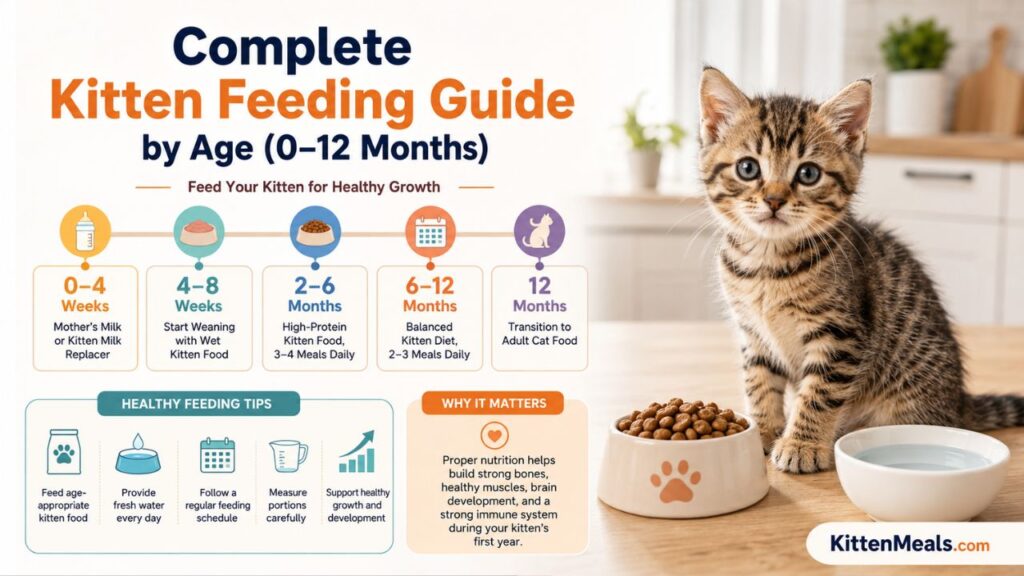
Complete Kitten Feeding Chart by Age (0–12 Months)
A kitten’s feeding needs change quickly during its first year. As your kitten grows, the type of food, meal frequency, and portion size should change to match its development. The feeding chart below provides a simple month-by-month guide to help you build a healthy kitten feeding schedule. Always check the feeding recommendations on your kitten food package, as calorie content can vary by brand and recipe.
| Kitten Age | Main Food | Meals Per Day | Feeding Notes |
| 0–2 Weeks | Mother’s milk or Kitten Milk Replacer (KMR) | Every 2–3 hours | Bottle-feed orphaned kittens and monitor daily weight gain. |
| 2–4 Weeks | Mother’s milk or KMR | Every 3–4 hours | Continue milk feeding and prepare for weaning. |
| 4–5 Weeks | Wet kitten food mixed with KMR | 5 small meals | Introduce soft food slowly and allow kittens to explore eating. |
| 5–8 Weeks | Wet kitten food with small amounts of dry kitten food | 4–5 meals | Reduce milk gradually as solid food intake increases. |
| 2–3 Months | Wet and dry kitten food | 4 meals | Feed a complete and balanced kitten diet rich in protein and healthy fats. |
| 3–6 Months | Wet and dry kitten food | 3 meals | Increase portions as your kitten grows and stays active. |
| 6–9 Months | Complete kitten food | 2–3 meals | Support steady growth while maintaining a healthy body weight. |
| 9–12 Months | Complete kitten food | 2 meals | Continue feeding kitten food until about 12 months of age before switching to adult cat food. |
Feeding Chart
Good to Know: Feeding times do not have to be exact every day, but keeping meals close to the same time helps build a healthy routine.
Feeding Guide for Each Growth Stage
0–4 Weeks: Milk Is the Only Food
Newborn kittens depend entirely on their mother’s milk because it provides complete nutrition and important antibodies that help build a strong immune system. If the mother is unavailable, use a veterinarian-recommended Kitten Milk Replacer (KMR). Feed small amounts every few hours and never give cow’s milk, as it can cause digestive problems and diarrhea.
4–8 Weeks: Start the Weaning Process
At around four weeks, kittens begin learning to eat solid food. Mix wet kitten food with kitten milk replacer to create a soft gruel. Offer small meals several times a day while allowing the kitten to continue nursing if possible. As the weeks pass, reduce the amount of milk and increase the amount of solid food.
2–6 Months: Rapid Growth Requires More Nutrition
This is the fastest growth stage. Kittens need high-quality kitten food that contains plenty of protein, healthy fats, DHA, taurine, calcium, and phosphorus. Feed three to four small meals throughout the day because kittens burn energy quickly and need regular nutrition to support healthy muscle, bone, and brain development.
6–12 Months: Maintain Healthy Growth
As your kitten approaches adulthood, its growth rate slows, but its nutritional needs remain higher than those of an adult cat. Continue feeding complete and balanced kitten food until around 12 months of age. Most kittens do well with two or three meals each day. Keep fresh water available at all times and monitor your kitten’s body condition to prevent overfeeding or underfeeding.
Tips for Following a Healthy Kitten Feeding Schedule
- Feed your kitten at the same times every day to build a healthy routine.
- Choose kitten food that meets AAFCO nutritional standards for growth.
- Measure food portions instead of guessing to avoid overfeeding.
- Keep fresh, clean water available throughout the day.
- Introduce new foods gradually over 7–10 days to avoid stomach upset.
- Monitor your kitten’s weight and adjust portions as it grows.
- Ask your veterinarian for feeding advice if your kitten is underweight, overweight, or has special health needs.
Following a kitten feeding chart by age makes it easier to provide the right food at the right time. A consistent feeding routine supports healthy growth, proper digestion, strong immunity, and a smooth transition to adulthood.
Newborn Kitten Feeding Guide (0–4 Weeks)
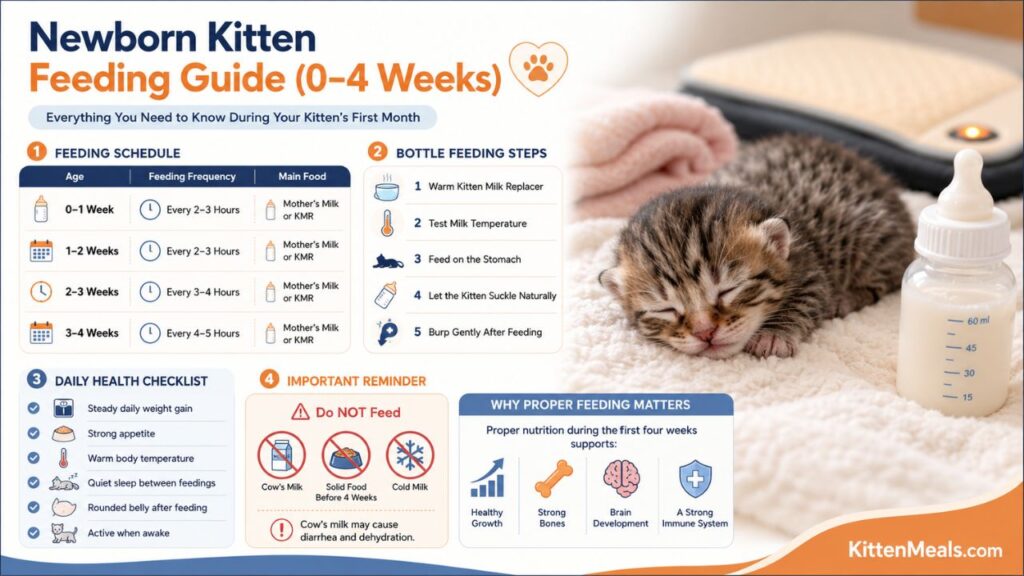
The first four weeks of a kitten’s life are the most important for healthy growth and survival. During this stage, newborn kittens cannot eat solid food. Their digestive system is still developing, and they depend completely on their mother’s milk for nutrition. Mother’s milk provides the right balance of protein, fat, vitamins, minerals, and antibodies that help build a strong immune system and protect against illness.
If the mother cat is not available or cannot produce enough milk, feed the kitten a high-quality Kitten Milk Replacer (KMR). KMR is specially made to match the nutritional needs of newborn kittens. Never give cow’s milk because it lacks essential nutrients and can cause diarrhea, dehydration, and stomach problems.
Feeding Schedule for Newborn Kittens
Newborn kittens have very small stomachs, so they need small meals throughout the day and night.
| Kitten Age | Feeding Frequency | Main Food |
| 0–1 Week | Every 2–3 hours | Mother’s milk or Kitten Milk Replacer |
| 1–2 Weeks | Every 2–3 hours | Mother’s milk or Kitten Milk Replacer |
| 2–3 Weeks | Every 3–4 hours | Mother’s milk or Kitten Milk Replacer |
| 3–4 Weeks | Every 4–5 hours | Mother’s milk or Kitten Milk Replacer |
If you are bottle-feeding an orphaned kitten, follow the feeding instructions provided with the kitten milk replacer. Avoid overfeeding because it can lead to bloating and digestive discomfort.
Newborn Kitten Guide
If you rescue a newborn kitten without its mother, contact a veterinarian or local animal shelter as soon as possible. The first few days are critical for survival.
How to Bottle-Feed a Newborn Kitten
Bottle-feeding should be done carefully to keep the kitten safe and comfortable.
- Warm the kitten milk replacer according to the product instructions.
- Test the milk temperature on your wrist. It should feel warm, not hot.
- Hold the kitten on its stomach, never on its back.
- Let the kitten suckle at its own pace.
- Do not squeeze the bottle forcefully because milk can enter the lungs.
- Feed until the kitten is satisfied, then gently burp it if needed.
Using the correct feeding position helps reduce the risk of choking and aspiration.
Keep Newborn Kittens Warm
Young kittens cannot control their body temperature. A cold kitten should never be fed because it cannot digest food properly. Warm the kitten first using a heating pad set on low or a warm blanket. The sleeping area should be warm, dry, and comfortable, while still allowing space for the kitten to move away from the heat if needed.
Monitor Weight Every Day
Healthy kittens should gain weight every day. Daily weight checks are one of the best ways to know whether a kitten is getting enough nutrition. Use a digital kitchen scale and weigh the kitten at the same time each day.
Healthy signs include:
- Steady daily weight gain
- Strong appetite
- Quiet sleeping between feedings
- Warm body temperature
- Smooth, rounded belly after feeding
- Active movement when awake
Poor weight gain, constant crying, weakness, or refusal to eat may be signs of illness or inadequate nutrition. Contact a veterinarian as soon as possible if you notice these symptoms.
Fresh Water and Solid Food
Newborn kittens do not need drinking water or solid food during the first four weeks because they receive all the hydration and nutrition they need from their mother’s milk or kitten milk replacer. Around four weeks of age, you can begin the weaning process by introducing a soft mixture of wet kitten food and KMR while gradually reducing milk feedings.
Giving newborn kittens the right nutrition during these first weeks lays the foundation for healthy growth, strong bones, proper brain development, and a healthy immune system. A consistent feeding schedule and close monitoring will help your kitten get the best possible start in life.
Weaning Kittens (4–8 Weeks)
Weaning is the process of changing a kitten’s diet from milk to solid food. Most kittens begin weaning at around 4 weeks of age and finish by 8 weeks. During this time, they slowly eat less milk and more kitten food. A gradual transition helps their digestive system adjust and reduces the risk of stomach upset.
The best first food for a weaning kitten is a soft mixture of wet kitten food and Kitten Milk Replacer (KMR). This mixture, often called a kitten gruel, is easy to eat and provides the nutrients growing kittens need. As your kitten becomes more comfortable eating, gradually reduce the amount of KMR and offer more wet kitten food. By the end of the weaning stage, most kittens can eat wet food on its own and begin trying dry kitten food.
Weaning Schedule by Age
| Kitten Age | Food | Meals Per Day | What to Do |
| 4 Weeks | Wet kitten food mixed with KMR | 5 small meals | Let the kitten explore soft food while continuing milk feedings. |
| 5 Weeks | Thicker wet food mixture | 5 meals | Reduce the amount of KMR and increase solid food. |
| 6 Weeks | Wet kitten food with small amounts of dry kitten food | 4–5 meals | Encourage chewing and drinking fresh water. |
| 7 Weeks | Wet and dry kitten food | 4 meals | Most kittens eat mainly solid food. |
| 8 Weeks | Complete and balanced kitten food | 4 meals | Weaning is usually complete. |
Weaning
Many kittens make a mess during their first attempts at eating solid food. This is completely normal and part of the learning process.
How to Start Weaning
Introducing solid food should be simple and stress-free.
- Mix wet kitten food with warm KMR until it has a soft, porridge-like texture.
- Place a small amount on a shallow plate.
- Allow the kitten to smell, lick, and taste the food at its own pace.
- Do not force the kitten to eat.
- Offer fresh food at every meal and remove leftovers after about 30 minutes.
- Keep clean drinking water available at all times.
Some kittens learn quickly, while others need several days before they eat confidently. Patience is important during this stage.
Choosing the Right Food
Always choose a complete and balanced kitten food that meets AAFCO nutritional standards for growth. Kitten food contains higher levels of protein, healthy fats, DHA, taurine, calcium, and phosphorus than adult cat food. These nutrients support healthy brain development, strong bones, muscle growth, and a healthy immune system.
Avoid feeding homemade meals or adult cat food during weaning because they may not provide the nutrients growing kittens need.
Signs Your Kitten Is Weaning Successfully
A kitten is usually progressing well if it:
- Eats wet kitten food without hesitation.
- Shows interest in dry kitten food.
- Drinks fresh water regularly.
- Gains weight every week.
- Has good energy and enjoys playing.
- Produces normal, firm stools.
If your kitten refuses food for more than a day, develops diarrhea, vomits repeatedly, or loses weight, contact your veterinarian for advice.
Common Weaning Mistakes to Avoid
Many feeding problems happen because owners introduce solid food too quickly. Avoid these common mistakes:
- Switching from milk to solid food overnight.
- Feeding cow’s milk instead of Kitten Milk Replacer.
- Offering dry food before the kitten is ready.
- Giving large meals instead of several small meals.
- Leaving wet food out for long periods.
- Changing food brands too often during weaning.
By the end of the eighth week, most kittens are fully weaned and ready to eat a nutritious diet of wet kitten food, dry kitten food, or a combination of both. A smooth weaning process prepares your kitten for the next stage of rapid growth, where proper nutrition becomes even more important for building a healthy body and strong immune system.
Feeding Kittens (2–6 Months)
From 2 to 6 months of age, kittens experience their fastest period of growth. Their bones become stronger, muscles develop quickly, and their brain continues to mature. During this stage, kittens are very active and burn a lot of energy through running, climbing, and playing. They need a complete and balanced kitten diet that provides enough calories, high-quality protein, healthy fats, vitamins, and minerals to support healthy development.
A growing kitten should eat food specially made for kittens instead of adult cat food. Quality kitten food contains the right amount of protein, DHA, taurine, calcium, phosphorus, omega-3 fatty acids, and essential vitamins. These nutrients help build lean muscle, support healthy bones and teeth, improve brain development, and strengthen the immune system.
Indoor kittens usually burn fewer calories than kittens that spend time outdoors. Watch your kitten’s body condition and adjust portions if needed.
Feeding Schedule for Kittens (2–6 Months)
As your kitten grows, its stomach becomes larger, but it still needs several small meals each day.
| Kitten Age | Meals Per Day | Main Food |
| 2–3 Months | 4 meals | Wet and dry kitten food |
| 3–4 Months | 3–4 meals | Complete and balanced kitten food |
| 4–5 Months | 3 meals | Wet food, dry food, or a combination |
| 5–6 Months | 3 meals | High-quality kitten food |
As your kitten becomes more confident, it may spend more time running, climbing cat trees, and playing with interactive toys. These activities increase energy needs.
Feed meals at the same time each day to create a healthy feeding routine. A regular schedule also supports better digestion and helps prevent overeating.
As your kitten becomes more confident, it may spend more time running, climbing cat trees, and playing with interactive toys. These activities increase energy needs.
How Much Should a Growing Kitten Eat?
The amount of food your kitten needs depends on several factors, including:
- Age
- Body weight
- Activity level
- Breed
- Calorie content of the food
Highly active kittens usually need more calories than less active kittens. Large breeds, such as Maine Coons, may also require more food because they grow for a longer period than most cats.
Instead of guessing portion sizes, use the feeding guide printed on the kitten food package as a starting point. Monitor your kitten’s body condition and adjust portions if your veterinarian recommends changes.
Wet Food, Dry Food, or Both?
Many pet owners ask whether they should feed wet food or dry food during this stage. The answer is that both can be part of a healthy kitten diet.
Wet kitten food offers several benefits:
- Provides extra moisture for better hydration.
- Soft texture is easy to chew.
- Often more appealing to picky eaters.
- Supports healthy urinary function.
Dry kitten food also has advantages:
- Convenient to serve and store.
- Can stay fresh longer in the bowl.
- Encourages chewing.
- Usually costs less than canned food.
Many veterinarians recommend feeding a combination of wet and dry kitten food to provide variety and balanced nutrition.
Important Nutrients During Rapid Growth
Growing kittens need more than just calories. Every meal should provide essential nutrients that support healthy development.
| Nutrient | Why It Matters |
| High-quality Protein | Builds muscles and supports healthy growth |
| Healthy Fats | Provide energy and support brain development |
| DHA | Helps brain and vision development |
| Taurine | Supports heart health and healthy eyesight |
| Calcium | Builds strong bones and teeth |
| Phosphorus | Works with calcium for healthy bone growth |
| Omega-3 Fatty Acids | Support healthy skin and a shiny coat |
| Vitamins and Minerals | Strengthen the immune system and overall health |
Keep Fresh Water Available
Even if your kitten eats wet food every day, it still needs access to fresh, clean water. Proper hydration supports digestion, nutrient absorption, healthy kidneys, and overall well-being. Wash the water bowl daily and refill it with clean water to encourage regular drinking.
Signs Your Kitten Is Eating the Right Amount
A healthy feeding routine should produce steady growth without making your kitten overweight.
Look for these positive signs:
- Healthy and consistent weight gain
- Lean but well-developed muscles
- Bright eyes and a shiny coat
- Plenty of energy for play
- Good appetite
- Firm, well-formed stools
- Healthy body condition without excess fat
If your kitten loses weight, refuses food, develops digestive problems, or gains weight too quickly, review its feeding schedule and consult your veterinarian.
Providing proper nutrition during the 2–6 month growth stage helps build a strong foundation for adulthood. High-quality kitten food, correct portion sizes, regular meal times, and fresh water will support healthy growth and keep your kitten active, happy, and full of energy.
Feeding Kittens (6–12 Months)
Between 6 and 12 months of age, your kitten begins to look more like an adult cat, but it is still growing. While the growth rate slows compared to the first few months, your kitten continues to develop stronger muscles, bones, joints, and internal organs. This is why kittens should continue eating complete and balanced kitten food until they are about 12 months old. The extra protein, healthy fats, and essential nutrients in kitten food continue to support healthy development during this stage.
Your kitten also becomes more active and independent during these months. Running, climbing, jumping, and playing burn a lot of energy every day. Feeding the right amount of high-quality kitten food helps maintain a healthy body weight while providing enough calories to support an active lifestyle. Avoid switching to adult cat food too early because it may not provide enough nutrients for a growing kitten.
Feeding Schedule for Kittens (6–12 Months)
As your kitten grows, you can gradually reduce the number of meals each day while keeping portion sizes appropriate for its age and activity level.
| Kitten Age | Meals Per Day | Main Food |
| 6–8 Months | 3 meals | Complete and balanced kitten food |
| 8–10 Months | 2–3 meals | Wet food, dry food, or a combination |
| 10–12 Months | 2 meals | High-quality kitten food |
A consistent feeding routine helps maintain healthy digestion and prevents unnecessary snacking throughout the day.
Continue Feeding High-Quality Kitten Food
Your kitten’s diet should still contain nutrients that support healthy growth.
Choose kitten food that includes:
- High-quality animal protein for muscle development.
- Healthy fats for energy.
- DHA to support brain function.
- Taurine for healthy heart and vision.
- Calcium and phosphorus for strong bones and teeth.
- Vitamins and minerals for immune system support.
Look for kitten food that meets AAFCO nutritional standards for growth to ensure your pet receives complete nutrition.
Adjust Portion Sizes as Your Kitten Grows
Older kittens usually eat fewer meals, but each meal may contain slightly more food. The correct portion depends on several factors, including:
- Current body weight
- Breed
- Activity level
- Indoor or outdoor lifestyle
- Calorie content of the food
Avoid leaving large amounts of food in the bowl all day unless your veterinarian recommends free feeding. Measuring each meal helps prevent overfeeding and supports healthy weight management.
Monitor Your Kitten’s Body Condition
During this stage, it is important to monitor your kitten’s weight regularly. Healthy kittens should have a lean body with a visible waist when viewed from above. You should be able to feel the ribs easily without seeing them prominently.
Signs that your kitten is maintaining a healthy weight include:
- Steady growth
- Strong muscles
- Healthy appetite
- Shiny coat
- Bright eyes
- Plenty of energy
- Normal stools
If your kitten becomes overweight, reduce treats and review portion sizes. If it appears underweight or stops gaining weight, speak with your veterinarian to rule out any health problems.
Treats Should Be Given in Moderation
Treats can be useful for training and rewarding good behaviour, but they should not replace balanced meals. Too many treats can add unnecessary calories and reduce your kitten’s appetite for nutritious food.
Choose healthy cat treats and keep them to a small part of your kitten’s daily calorie intake. Avoid giving table scraps or foods that are unsafe for cats, such as chocolate, onions, garlic, grapes, raisins, alcohol, caffeine, or foods containing xylitol.
Prepare for the Transition to Adult Cat Food
Most kittens are ready to switch to adult cat food when they reach 12 months of age. However, some large breeds, including Maine Coons, continue growing for longer and may need kitten food until 15–18 months. Your veterinarian can recommend the best time to make the change.
When the time comes, transition slowly over 7 to 10 days by gradually mixing increasing amounts of adult cat food with the current kitten food. A slow transition helps reduce the risk of digestive upset and allows your kitten to adjust to its new diet comfortably.
Providing the right nutrition between 6 and 12 months completes your kitten’s growth journey. A balanced diet, proper feeding schedule, measured portions, fresh water, and regular weight checks will help your kitten develop into a healthy, active adult cat.
How Much Should You Feed a Kitten?
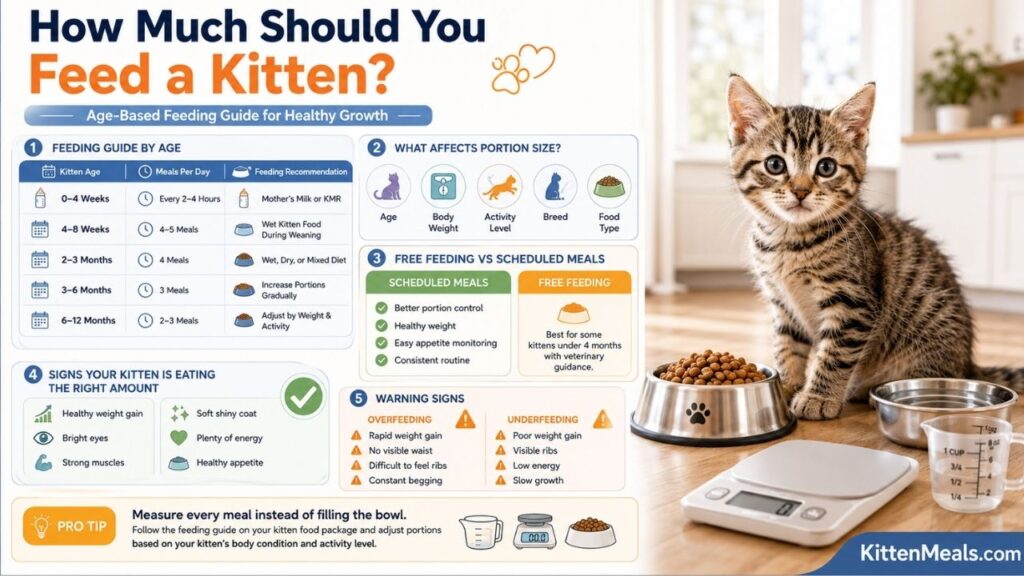
One of the most common questions new pet owners ask is, “How much should I feed my kitten?” The answer depends on your kitten’s age, body weight, activity level, breed, and the calorie content of its food. There is no single portion size that works for every kitten. A healthy feeding routine combines the right amount of food with the right meal schedule to support steady growth without causing overfeeding.
Instead of filling the food bowl whenever it is empty, measure each meal according to the feeding guide on your kitten food package. Since every brand has a different calorie content, feeding recommendations can vary. Regularly checking your kitten’s body condition and weight will help you decide whether the portion size needs to be adjusted.
General Feeding Guide by Age
The table below provides a simple feeding guide for healthy kittens. Use it as a starting point and adjust portions based on your veterinarian’s advice and the feeding instructions on your chosen kitten food.
| Kitten Age | Meals Per Day | Feeding Recommendation |
| 0–4 Weeks | Every 2–4 hours | Mother’s milk or Kitten Milk Replacer only |
| 4–8 Weeks | 4–5 meals | Small portions of wet kitten food during weaning |
| 2–3 Months | 4 meals | Wet food, dry food, or a combination |
| 3–6 Months | 3 meals | Increase portions gradually as your kitten grows |
| 6–12 Months | 2–3 meals | Adjust portions based on weight and activity level |
Instead of focusing only on the amount of food in the bowl, pay attention to your kitten’s body condition. A healthy weight is more important than finishing every meal.
Factors That Affect Portion Size
Several factors determine how much food your kitten needs each day.
Age
Younger kittens need frequent meals because they have small stomachs and high energy needs. As they grow older, they can eat fewer meals with slightly larger portions.
Body Weight
A heavier kitten usually needs more food than a smaller kitten of the same age. Regular weight checks help ensure your kitten is growing at a healthy rate.
Activity Level
Very active kittens burn more calories through running, climbing, and playing. They may require slightly larger portions than kittens with a less active lifestyle.
Breed
Some cat breeds grow larger than others. For example, Maine Coons continue growing for a longer time and often need kitten food beyond 12 months. Smaller breeds may reach adult size sooner.
Type of Food
Wet kitten food and dry kitten food have different calorie densities. Dry food usually contains more calories in a smaller serving, while wet food contains more moisture. If you feed both, balance the portions to avoid excess calories.
Should You Free Feed Your Kitten?
Many young kittens under four months of age can benefit from having frequent access to food because they need a lot of energy for growth. However, as kittens become older, scheduled meals are usually the better choice.
Scheduled feeding offers several benefits:
- Helps prevent overeating.
- Makes it easier to monitor appetite.
- Supports healthy weight management.
- Creates a consistent daily routine.
- Helps detect health problems early if your kitten suddenly stops eating.
Ask your veterinarian whether scheduled feeding or free feeding is the best option for your kitten.
Signs Your Kitten Is Eating the Right Amount
A healthy kitten should receive enough food to support steady growth without becoming overweight.
Positive signs include:
- Consistent weight gain
- Lean, healthy body condition
- Strong muscles
- Bright eyes
- Soft, shiny coat
- Plenty of energy
- Healthy appetite
- Firm, well-formed stools
Signs You May Be Feeding Too Much
Overfeeding is a common problem that can lead to obesity later in life.
Watch for these signs:
- Rapid weight gain
- Difficulty feeling the ribs
- Loss of a visible waist
- Constant begging despite regular meals
- Leftover food remaining in the bowl after every meal
Reduce portion sizes gradually if recommended by your veterinarian rather than making sudden changes.
Signs Your Kitten May Need More Food
Underfeeding can slow healthy growth and reduce energy levels.
Possible signs include:
- Poor weight gain
- Visible ribs or spine
- Low energy
- Constant hunger
- Slow growth
- Dull coat
If you notice these symptoms, review your kitten’s feeding schedule and consult your veterinarian to rule out nutritional deficiencies or health issues.
Feeding the right amount of food is one of the most important parts of raising a healthy kitten. By choosing a high-quality complete and balanced kitten food, measuring portions carefully, following an age-appropriate feeding schedule, and monitoring your kitten’s growth, you can support healthy development from birth through the first year of life.
Wet Food vs Dry Food for Kittens
Many new pet owners wonder whether wet kitten food or dry kitten food is the better choice. The truth is that both can be part of a healthy kitten diet. Each type of food offers different benefits, and many veterinarians recommend feeding a combination of both. This approach gives your kitten balanced nutrition while adding variety to its daily meals.
The most important factor is choosing a complete and balanced kitten food that meets AAFCO nutritional standards for growth. Whether you feed wet food, dry food, or both, your kitten should receive enough protein, healthy fats, vitamins, minerals, and essential nutrients to support healthy growth.
Wet Food vs Dry Food Comparison
| Wet Kitten Food | Dry Kitten Food |
| High moisture content helps keep kittens hydrated. | Lower moisture content but higher calorie density. |
| Soft texture is easy for young kittens to chew. | Crunchy texture encourages chewing. |
| Excellent choice during the weaning stage. | Easy to measure and store. |
| Often more appealing to picky eaters. | Usually more affordable than canned food. |
| Supports urinary tract health by increasing water intake. | Can stay fresh in the bowl longer. |
| Available in many flavours and textures. | Convenient for busy pet owners. |
Benefits of Wet Kitten Food
Wet kitten food contains a high amount of moisture, making it an excellent choice for growing kittens. Since some kittens do not drink enough water, wet food helps improve daily hydration and supports healthy kidney and urinary tract function.
Wet food is also easier to chew because of its soft texture. This makes it ideal for kittens between 4 and 8 weeks of age when they are learning to eat solid food during the weaning process.
Other benefits include:
- Helps maintain proper hydration.
- Soft and easy to digest.
- Highly palatable for most kittens.
- Supports healthy appetite during growth.
- Available in many protein sources, including chicken, turkey, salmon, and beef.
Benefits of Dry Kitten Food
Dry kitten food is another healthy option when it is made specifically for kittens. It contains concentrated nutrients and is easy to serve, measure, and store.
Because dry food contains less moisture than wet food, always provide fresh, clean water throughout the day.
Benefits of dry kitten food include:
- Convenient to feed and store.
- Long shelf life after opening.
- Easy to measure correct portion sizes.
- Provides balanced nutrition for growing kittens.
- Often costs less than wet food.
Is It Better to Feed Both?
For many kittens, the answer is yes. Feeding a combination of wet and dry kitten food allows your kitten to enjoy the benefits of both.
A mixed feeding routine can:
- Increase daily water intake.
- Provide different textures and flavours.
- Make meals more enjoyable.
- Help maintain balanced nutrition.
- Give flexibility in your feeding schedule.
For example, many pet owners serve wet kitten food in the morning and evening, with a measured portion of dry kitten food during the day. This routine works well for many healthy kittens while helping maintain consistent energy levels.
How to Switch Between Wet and Dry Food
If you decide to change your kitten’s diet, make the transition slowly. Sudden food changes can cause digestive upset, vomiting, or diarrhea.
Follow these simple steps:
- Mix a small amount of the new food with the current food.
- Increase the amount of new food gradually over 7–10 days.
- Watch for any signs of digestive problems.
- Continue providing fresh drinking water every day.
A slow transition gives your kitten’s digestive system time to adjust.
Which Food Is Best for Your Kitten?
There is no single answer because every kitten is different. Your choice depends on factors such as your kitten’s age, health, activity level, and personal preference. The best diet is one that provides complete and balanced nutrition, contains high-quality animal protein, and supplies essential nutrients such as DHA, taurine, calcium, phosphorus, healthy fats, vitamins, and minerals.
Whether you choose wet food, dry food, or a combination of both, follow the recommended feeding schedule, measure portions carefully, and monitor your kitten’s growth. A balanced diet during the first year helps build a healthy body, supports brain development, strengthens the immune system, and prepares your kitten for a healthy adult life.
Many American pet owners choose a mix of wet and dry food because it offers convenience while helping increase daily water intake.
Best Nutrients Every Kitten Needs
A kitten needs more than just enough food to grow. Every meal should provide the right balance of protein, healthy fats, vitamins, and minerals to support healthy development. During the first year of life, kittens grow quickly, develop stronger muscles and bones, and build a healthy immune system. Feeding a complete and balanced kitten food ensures your kitten receives all the essential nutrients needed for lifelong health.
The best kitten foods are specially formulated to meet AAFCO nutritional standards for growth. These diets contain the right amounts of nutrients that growing kittens cannot get from homemade meals or adult cat food alone.
Instead of only listing nutrients
Think of these nutrients as a team. Each one has a different job, and together they support healthy growth during your kitten’s first year.
Essential Nutrients for Growing Kittens
| Nutrient | Why It Is Important |
| High-Quality Protein | Supports muscle growth, tissue repair, and healthy development. |
| Healthy Fats | Provide energy and help absorb fat-soluble vitamins. |
| DHA | Supports healthy brain development and vision. |
| Taurine | Essential for heart function, eyesight, and nervous system health. |
| Calcium | Builds strong bones and healthy teeth. |
| Phosphorus | Works with calcium to strengthen bones and support growth. |
| Omega-3 Fatty Acids | Promote healthy skin, a shiny coat, and brain development. |
| Vitamin A | Supports healthy vision, skin, and immune function. |
| Vitamin D | Helps the body absorb calcium for healthy bones. |
| Vitamin E | Acts as an antioxidant and supports the immune system. |
| B Vitamins | Help convert food into energy and support healthy metabolism. |
| Zinc | Supports skin health, wound healing, and immune function. |
| Iron | Helps produce healthy red blood cells and transport oxygen. |
| Fresh Water | Supports digestion, hydration, and overall body function. |
High-Quality Protein Builds Strong Muscles
Protein is the most important nutrient in a kitten’s diet. Growing kittens need more protein than adult cats because they are constantly building new muscles, organs, and body tissues.
Look for kitten food that lists real animal protein such as:
- Chicken
- Turkey
- Salmon
- Tuna
- Beef
- Lamb
Animal-based protein also provides essential amino acids that kittens need for healthy growth.
Healthy Fats Provide Energy
Healthy fats are an important source of energy for active kittens. They also help the body absorb vitamins A, D, E, and K. Since kittens spend much of the day playing and exploring, they need enough healthy fat in their diet to support their active lifestyle.
Fat also contributes to:
- Healthy brain development
- Healthy skin
- Soft, shiny coat
- Normal body growth
DHA Supports Brain and Eye Development
Docosahexaenoic Acid (DHA) is an omega-3 fatty acid that plays a major role in brain and vision development. Kittens receive DHA from their mother’s milk during nursing, and quality kitten food continues to provide this important nutrient after weaning.
Adequate DHA supports:
- Learning ability
- Memory
- Vision
- Nervous system development
Taurine Is Essential for Cats
Unlike many other animals, cats cannot produce enough taurine on their own. This amino acid must come from their diet.
Taurine helps support:
- Healthy heart function
- Clear vision
- Brain development
- Healthy reproduction later in life
A taurine deficiency can lead to serious health problems, which is why complete kitten food always includes this essential nutrient.
Calcium and Phosphorus Strengthen Bones
Strong bones and healthy teeth depend on the correct balance of calcium and phosphorus. These minerals work together to support normal bone growth throughout the first year of life.
Too little or too much of either mineral can affect healthy development. Commercial kitten food is carefully balanced to provide the right amounts.
Vitamins and Minerals Support Overall Health
Vitamins and minerals help every part of your kitten’s body work properly. They support the immune system, improve metabolism, protect cells from damage, and help maintain healthy skin, eyes, and organs.
A balanced kitten diet provides these nutrients in the correct amounts without the need for additional supplements unless your veterinarian recommends them.
Fresh Water Is Just as Important
Nutrition is not only about food. Fresh, clean water should always be available. Water helps your kitten:
- Digest food properly.
- Absorb nutrients.
- Regulate body temperature.
- Support healthy kidneys.
- Prevent dehydration.
Even kittens that eat wet food every day still need access to fresh drinking water.
Choose Complete and Balanced Kitten Food
The easiest way to meet your kitten’s nutritional needs is to choose a complete and balanced kitten food made specifically for growth. These diets contain the right balance of protein, healthy fats, DHA, taurine, calcium, phosphorus, omega-3 fatty acids, vitamins, and minerals needed from birth through 12 months.
Providing these essential nutrients every day supports healthy weight gain, strong muscles, healthy bones, a shiny coat, proper brain development, and a strong immune system. Good nutrition during the first year gives your kitten the best possible start and helps build the foundation for a healthy adult life.
Fresh Water and Hydration
Fresh water is just as important as high-quality kitten food. While food provides the nutrients your kitten needs for growth, water supports every major function in the body. It helps with digestion, nutrient absorption, body temperature regulation, healthy circulation, and waste removal. Without enough water, even a healthy kitten can become dehydrated and develop serious health problems.
Many people believe kittens get all the water they need from food, but this is not true. Even if your kitten eats wet food every day, it should always have access to fresh, clean drinking water. Kittens that eat mostly dry food usually need to drink more water because dry kibble contains very little moisture.
During hot summer weather, your kitten may drink more water than usual. Check the water bowl several times a day and refill it with fresh water when needed.
Why Hydration Matters for Kittens
Proper hydration supports healthy growth and keeps your kitten active throughout the day.
Benefits of good hydration include:
- Supports healthy digestion.
- Helps absorb essential nutrients.
- Maintains healthy kidney function.
- Supports urinary tract health.
- Regulates body temperature.
- Helps carry oxygen and nutrients throughout the body.
- Keeps joints and tissues healthy.
A well-hydrated kitten is usually more energetic and better able to support its rapid growth.
How to Encourage Your Kitten to Drink More Water
Some kittens naturally drink plenty of water, while others need encouragement. These simple tips can help increase your kitten’s daily water intake.
- Keep a bowl of fresh, clean water available at all times.
- Wash the water bowl every day to prevent bacteria from building up.
- Refill the bowl with fresh water several times a day.
- Place water bowls in quiet, easy-to-reach locations.
- Feed wet kitten food as part of a balanced diet to increase moisture intake.
- Use a wide, shallow bowl if your kitten dislikes deep bowls.
- Some kittens prefer a pet water fountain because the moving water stays fresh and encourages drinking.
How Much Water Does a Kitten Need?
There is no exact amount of water that every kitten should drink each day. Water intake depends on several factors, including:
- Age
- Body weight
- Activity level
- Weather
- Type of food
- Overall health
Kittens eating mostly wet food usually drink less water because canned food contains a high percentage of moisture. Kittens eating mainly dry food often need to drink more water to stay properly hydrated.
Signs Your Kitten Is Well Hydrated
A healthy kitten usually shows these signs:
- Bright, clear eyes.
- Moist gums.
- Healthy energy levels.
- Soft, shiny coat.
- Good appetite.
- Normal urination.
- Healthy skin elasticity.
These signs suggest your kitten is getting enough fluids along with a balanced diet.
Signs of Dehydration
Dehydration can happen quickly, especially in young kittens. It may develop because of illness, diarrhea, vomiting, hot weather, or not drinking enough water.
Watch for these warning signs:
- Dry or sticky gums.
- Sunken eyes.
- Low energy or weakness.
- Loss of appetite.
- Panting or rapid breathing.
- Dry skin with reduced elasticity.
- Less frequent urination.
A dehydrated kitten needs prompt veterinary care because dehydration can become life-threatening if left untreated.
Common Hydration Mistakes to Avoid
Many new pet owners unknowingly make mistakes that reduce their kitten’s water intake.
Avoid these common problems:
- Leaving old water in the bowl for too long.
- Using dirty water bowls.
- Placing the water bowl next to the litter box.
- Assuming wet food alone provides enough water.
- Waiting until the bowl is empty before refilling it.
Make Hydration Part of Your Daily Routine
Keeping your kitten hydrated is one of the simplest ways to support healthy growth and overall well-being. Provide fresh water every day, feed a complete and balanced kitten diet, and monitor your kitten for signs of dehydration. Good hydration works together with proper nutrition to support healthy digestion, strong kidneys, a healthy urinary system, and an active, happy kitten throughout its first year of life.
Foods Kittens Should Never Eat
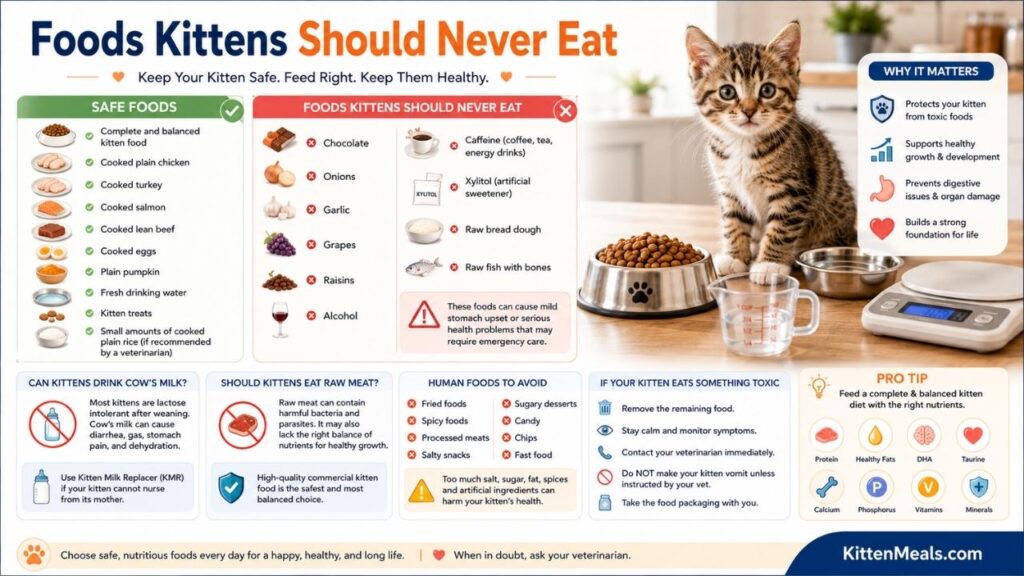
Feeding your kitten the right food is just as important as avoiding foods that can harm its health. A kitten’s digestive system is delicate, and many foods that are safe for humans can be toxic to cats. Some foods may cause mild stomach upset, while others can lead to serious health problems that require emergency veterinary care.
The safest choice is to feed a complete and balanced kitten food that meets AAFCO nutritional standards. If you want to offer treats or fresh foods, choose options that are safe for kittens and serve them in small amounts.
Safe Foods vs Foods to Avoid
| Safe Foods | Foods Kittens Should Never Eat |
| Complete and balanced kitten food | Chocolate |
| Cooked plain chicken | Onions |
| Cooked turkey | Garlic |
| Cooked salmon | Grapes |
| Cooked lean beef | Raisins |
| Cooked eggs | Alcohol |
| Plain pumpkin | Caffeine (coffee, tea, energy drinks) |
| Fresh drinking water | Xylitol (artificial sweetener) |
| Kitten treats | Raw bread dough |
| Small amounts of cooked plain rice (if recommended by a veterinarian) | Raw fish with bones |
Dangerous Foods for Kittens
Some foods are especially harmful and should never be included in your kitten’s diet.
Chocolate
Chocolate contains theobromine and caffeine, which are toxic to cats. Even a small amount can cause vomiting, restlessness, rapid heart rate, seizures, and, in severe cases, death.
Onions and Garlic
Onions, garlic, chives, and leeks belong to the allium family. These foods can damage a cat’s red blood cells and lead to anemia. They are harmful whether they are raw, cooked, powdered, or dried.
Grapes and Raisins
Although the exact cause is still not fully understood, grapes and raisins can cause sudden kidney failure in some cats. Never offer them as treats.
Alcohol
Alcohol affects cats much more quickly than humans. Even small amounts can damage the brain and nervous system and may lead to breathing problems, coma, or death.
Caffeine
Coffee, tea, energy drinks, and some soft drinks contain caffeine, which can overstimulate a kitten’s nervous system and heart. Symptoms may include restlessness, rapid heartbeat, tremors, and seizures.
Xylitol
Xylitol is an artificial sweetener found in sugar-free gum, candy, baked goods, and some peanut butter products. While it is more commonly linked to poisoning in dogs, it should also be kept completely away from kittens.
Family gatherings and holidays often include foods that are unsafe for cats. Remind children and guests not to share table food with your kitten.
Can Kittens Drink Cow’s Milk?
Many people believe kittens should drink cow’s milk, but this is a common myth. Most kittens lose the ability to digest lactose after weaning. Drinking cow’s milk can cause diarrhea, gas, stomach pain, and dehydration.
If a young kitten cannot nurse from its mother, use a Kitten Milk Replacer (KMR) instead. KMR is specially formulated to provide the nutrients newborn kittens need.
Should Kittens Eat Raw Meat?
Some pet owners choose raw diets, but raw meat can contain harmful bacteria such as Salmonella and E. coli. It may also contain parasites that can make kittens sick. In addition, homemade raw diets often lack the proper balance of nutrients needed for healthy growth.
For most pet owners, a high-quality commercial kitten food is the safest and most balanced option.
Human Foods to Avoid Sharing
Even if your kitten seems interested in your meal, avoid feeding table scraps. Many human foods contain excess salt, sugar, spices, butter, or oils that are not suitable for kittens.
Avoid feeding:
- Fried foods
- Spicy foods
- Processed meats
- Salty snacks
- Sugary desserts
- Candy
- Chips
- Fast food
- Foods containing artificial sweeteners
What to Do If Your Kitten Eats Something Toxic
If you believe your kitten has eaten a toxic food:
- Remove the remaining food immediately.
- Stay calm and monitor your kitten for symptoms.
- Contact your veterinarian as soon as possible.
- Do not try to make your kitten vomit unless your veterinarian specifically instructs you to do so.
- Take the food packaging with you if veterinary treatment is needed.
Quick action can make a big difference in preventing serious health complications.
Choose Safe, Nutritious Foods Every Day
The best way to keep your kitten healthy is to feed a complete and balanced kitten diet that provides the right amount of protein, healthy fats, DHA, taurine, calcium, phosphorus, vitamins, and minerals. Avoid toxic human foods, keep fresh water available at all times, and offer only safe treats in moderation. Making smart feeding choices during your kitten’s first year helps build the foundation for a long, healthy, and active life.
Common Kitten Feeding Mistakes
Even if you choose the best kitten food, small feeding mistakes can affect your kitten’s growth and overall health. During the first year, kittens need the right food, correct portion sizes, and a consistent feeding schedule. Avoiding common mistakes will help your kitten develop strong bones, healthy muscles, and a healthy digestive system.
Here are some of the most common kitten feeding mistakes and how to avoid them.
1. Feeding Adult Cat Food Too Early
Adult cat food is made for fully grown cats and does not provide the higher levels of protein, fat, calories, and essential nutrients that growing kittens need.
Continue feeding a complete and balanced kitten food until your kitten reaches about 12 months of age. Large breeds, such as Maine Coons, may need kitten food for a longer period.
2. Giving Cow’s Milk
Many people think kittens should drink cow’s milk, but this is one of the biggest feeding myths. Most kittens become lactose intolerant after weaning.
Cow’s milk can cause:
- Diarrhea
- Stomach upset
- Gas
- Dehydration
If a newborn kitten cannot nurse, use a Kitten Milk Replacer (KMR) instead.
3. Overfeeding Your Kitten
Because kittens grow quickly, some owners offer too much food. Overfeeding can lead to excessive weight gain and increase the risk of obesity later in life.
Signs of overfeeding include:
- Rapid weight gain
- Difficulty feeling the ribs
- Loss of a visible waist
- Low activity caused by excess weight
Measure every meal using the feeding guide on the food package instead of guessing portion sizes.
4. Underfeeding
Feeding too little food can slow healthy growth and lead to nutritional deficiencies.
Signs of underfeeding include:
- Poor weight gain
- Thin body condition
- Low energy
- Constant hunger
- Slow muscle development
Growing kittens need enough calories and nutrients every day to support healthy development.
5. Changing Food Too Quickly
A sudden change in diet can upset your kitten’s digestive system and cause vomiting or diarrhea.
Whenever you switch to a new kitten food:
- Mix the new food with the old food.
- Increase the new food gradually over 7–10 days.
- Watch for any digestive problems during the transition.
A slow food transition helps your kitten adjust comfortably.
6. Feeding Too Many Treats
Treats should only be a small part of your kitten’s diet. Giving too many treats can reduce your kitten’s appetite for nutritious meals and add unnecessary calories.
Choose healthy kitten treats and offer them occasionally rather than every day.
7. Not Providing Fresh Water
Some owners focus only on food and forget about hydration. Fresh, clean water should always be available, even if your kitten eats wet food.
Replace the water daily and clean the bowl regularly to encourage healthy drinking habits.
8. Feeding on an Irregular Schedule
Kittens thrive on routine. Feeding at different times every day can make it harder to monitor appetite and digestion.
Create a regular feeding schedule by serving meals at the same times each day. A consistent routine also helps reduce begging and supports healthy digestion.
9. Choosing Food Based Only on Price
The cheapest kitten food is not always the healthiest option. Some low-quality foods contain fewer animal proteins and more fillers.
When choosing kitten food, look for:
- High-quality animal protein as the first ingredient.
- Complete and balanced nutrition.
- AAFCO statement for growth.
- Essential nutrients such as DHA, taurine, calcium, and phosphorus.
Quality nutrition during the first year supports lifelong health.
10. Ignoring Your Kitten’s Weight and Growth
Every kitten grows at its own pace. Feeding the same amount for months without checking your kitten’s weight can lead to overfeeding or underfeeding.
Monitor your kitten by:
- Weighing it regularly.
- Watching its body condition.
- Adjusting portion sizes as it grows.
- Scheduling routine veterinary check-ups.
Regular monitoring helps ensure your kitten receives the right amount of nutrition throughout each growth stage.
Quick Checklist to Avoid Feeding Mistakes
Follow these simple habits to keep your kitten healthy:
- Feed age-appropriate kitten food.
- Measure every meal.
- Follow a consistent feeding schedule.
- Keep fresh water available at all times.
- Introduce new foods gradually.
- Avoid toxic human foods.
- Limit treats.
- Monitor your kitten’s weight and body condition.
- Visit your veterinarian for regular health checks.
Avoiding these common feeding mistakes will help your kitten enjoy healthy growth, strong bones, a healthy digestive system, and a balanced body weight. Good feeding habits established during the first year create the foundation for a healthy and active adult cat.
Many first-time kitten owners make one or two of these mistakes. The good news is that most feeding problems can be corrected early with small changes.
When to Transition to Adult Cat Food
Most kittens are ready to transition to adult cat food when they reach 12 months of age. By this time, their rapid growth has slowed, and their nutritional needs begin to change. Adult cat food contains a different balance of calories, protein, and fat that is designed to maintain a healthy adult cat rather than support rapid growth.
However, not every kitten matures at the same rate. Some large cat breeds, such as Maine Coons, continue growing until they are 15 to 18 months old. These cats often benefit from staying on kitten food for a longer period. Your veterinarian can recommend the best time to switch based on your kitten’s breed, body condition, and overall health.
Some kittens adjust to their new food within a few days, while others need more time. Be patient and avoid rushing the transition.
Signs Your Kitten Is Ready for Adult Cat Food
Most healthy kittens show several signs that they are ready to move to an adult diet.
These include:
- Around 12 months of age.
- Growth has slowed noticeably.
- Healthy body weight.
- Strong muscles and bones.
- Good overall health.
- Consistent eating habits.
If your kitten has a medical condition or special nutritional needs, always ask your veterinarian before changing its diet.
Spend a few minutes each week checking your kitten’s weight, coat, and activity level. Small changes are easier to notice when you monitor your kitten regularly.
Why You Should Not Switch Too Early
Changing to adult cat food before your kitten is fully grown can reduce the amount of nutrients it receives.
Kitten food contains higher levels of:
- High-quality protein
- Healthy fats
- Calories
- DHA
- Taurine
- Calcium
- Phosphorus
- Essential vitamins and minerals
These nutrients continue to support healthy muscle development, strong bones, brain function, and a healthy immune system during the first year of life.
How to Transition to Adult Cat Food
A sudden change in diet can upset your cat’s digestive system. The safest approach is to make the transition gradually over 7 to 10 days.
Use this simple transition schedule:
| Days | Kitten Food | Adult Cat Food |
| 1–2 | 75% | 25% |
| 3–4 | 50% | 50% |
| 5–6 | 25% | 75% |
| 7–10 | 0% | 100% |
If your cat develops vomiting, diarrhea, or refuses to eat, slow down the transition and speak with your veterinarian if the problem continues.
Choosing the Right Adult Cat Food
Not all adult cat foods offer the same quality. Look for a food that provides complete and balanced nutrition and is appropriate for your cat’s age, lifestyle, and activity level.
Choose an adult cat food that:
- Meets AAFCO nutritional standards for adult maintenance.
- Lists high-quality animal protein as the first ingredient.
- Contains healthy fats for energy.
- Includes essential vitamins and minerals.
- Does not rely heavily on artificial fillers.
Whether you choose wet food, dry food, or a combination, select a product that matches your cat’s individual needs.
Continue Monitoring Your Cat’s Weight
After switching to adult cat food, continue checking your cat’s weight and body condition regularly. Adult cats generally require fewer calories than growing kittens, so portion sizes may need to be adjusted.
A healthy adult cat should have:
- A visible waist when viewed from above.
- Ribs that can be felt easily without excess fat covering them.
- Strong muscles.
- Bright eyes.
- A shiny coat.
- Plenty of energy.
If your cat starts gaining or losing weight unexpectedly, review its feeding portions and consult your veterinarian.
Make the Transition Smooth
Moving from kitten food to adult cat food is an important milestone in your cat’s life. A slow transition, combined with high-quality nutrition, helps prevent digestive problems and allows your cat to adapt comfortably to its new diet.
By waiting until the right age, choosing a nutritious adult cat food, and introducing it gradually, you can support your cat’s long-term health and maintain a healthy weight for years to come.
Signs Your Kitten Is Getting the Right Nutrition
A healthy diet does more than satisfy your kitten’s hunger. It supports steady growth, strong muscles, healthy bones, a shiny coat, and an active lifestyle. When your kitten receives the right balance of high-quality protein, healthy fats, vitamins, minerals, DHA, taurine, calcium, and phosphorus, you will notice positive changes in its appearance, behaviour, and overall health.
Checking your kitten’s health regularly is one of the easiest ways to know whether its feeding schedule and portion sizes are meeting its nutritional needs. Along with feeding a complete and balanced kitten food, monitor your kitten’s weight, energy level, appetite, and body condition.
Healthy Signs to Look For
If your kitten is eating the right diet, you will usually notice these signs.
| Healthy Sign | What It Means |
| Steady weight gain | Your kitten is growing at a healthy rate. |
| Healthy body condition | Your kitten has a visible waist and you can feel the ribs without excess fat. |
| Bright, clear eyes | Good overall health and proper nutrition. |
| Soft, shiny coat | Healthy skin and adequate essential fatty acids. |
| Strong muscles | Enough high-quality protein to support growth. |
| Good appetite | Your kitten enjoys meals and eats regularly. |
| High energy levels | Proper calorie intake for daily activities and growth. |
| Firm, well-formed stools | Healthy digestion and balanced nutrition. |
| Healthy teeth and gums | Proper mineral intake and overall health. |
| Normal growth | Bones, muscles, and organs are developing properly. |
Your Kitten Maintains a Healthy Weight
Healthy kittens gain weight gradually as they grow. Regular weight checks help you make sure your kitten is developing normally.
A healthy kitten should:
- Gain weight consistently.
- Stay lean without looking too thin.
- Develop strong muscles.
- Remain active throughout the day.
Sudden weight loss or rapid weight gain may indicate that your kitten’s diet needs adjustment or that an underlying health problem is present.
Your Kitten Has Plenty of Energy
Growing kittens are naturally playful and curious. They enjoy running, climbing, chasing toys, and exploring their surroundings.
A well-fed kitten usually:
- Plays enthusiastically.
- Responds to sounds and movement.
- Learns new behaviours quickly.
- Sleeps well between play sessions.
Low energy or unusual tiredness may suggest poor nutrition or illness.
A Healthy Coat and Skin
Nutrition has a direct effect on your kitten’s skin and coat. Essential nutrients such as omega-3 fatty acids, protein, zinc, and vitamins help maintain healthy skin and soft, shiny fur.
A healthy coat should be:
- Soft
- Smooth
- Clean
- Shiny
- Free from excessive dandruff
A dull coat or excessive shedding may indicate nutritional deficiencies or other health concerns.
Healthy Digestion
A balanced kitten diet supports healthy digestion.
Signs of good digestive health include:
- Regular bowel movements.
- Firm, well-formed stools.
- No frequent vomiting.
- No ongoing diarrhea.
- Comfortable eating after meals.
If digestive problems continue for more than a day or two, consult your veterinarian.
Strong Appetite Without Constant Hunger
Healthy kittens enjoy their meals but should not seem hungry all the time. Feeding the correct portion sizes according to your kitten’s age and body weight helps maintain a healthy appetite.
If your kitten constantly begs for food or regularly leaves meals unfinished, review its feeding schedule and portion sizes.
Warning Signs of Poor Nutrition
A poor diet or incorrect feeding routine may cause health problems over time.
Watch for these warning signs:
- Poor or slow weight gain.
- Weight loss.
- Dull or rough coat.
- Dry skin.
- Low energy.
- Frequent digestive problems.
- Weak muscles.
- Poor appetite.
- Delayed growth.
- Frequent illness.
If you notice any of these symptoms, consult your veterinarian. Early treatment and dietary changes can help prevent more serious problems.
Monitor Growth Throughout the First Year
Your kitten’s nutritional needs change as it grows. Continue feeding complete and balanced kitten food until around 12 months of age, monitor body weight regularly, provide fresh drinking water every day, and schedule routine veterinary check-ups.
Healthy nutrition during the first year creates the foundation for a long, active, and healthy life. By paying attention to your kitten’s growth, body condition, and daily behaviour, you can feel confident that your feeding routine is providing the nutrition it needs to thrive.
Frequently Asked Questions
1. How much should a kitten eat per day?
The amount of food a kitten needs depends on its age, body weight, activity level, and the calorie content of its food. Young kittens need several small meals each day, while older kittens can eat fewer meals with larger portions. Always follow the feeding guide on your kitten food package and adjust portions based on your veterinarian’s advice.
2. How often should you feed a kitten?
The feeding schedule changes as your kitten grows.
- 0–4 weeks: Every 2–4 hours
- 4–8 weeks: 4–5 small meals per day
- 2–6 months: 3–4 meals per day
- 6–12 months: 2–3 meals per day
Feeding your kitten at the same times every day helps build a healthy routine.
3. Can kittens eat only dry food?
Yes, kittens can eat only dry kitten food if it is a complete and balanced diet made specifically for growing kittens. However, many veterinarians recommend including wet kitten food because it increases moisture intake and provides variety.
4. Can kittens eat only wet food?
Yes. Wet kitten food provides complete nutrition when it is formulated for kittens and meets AAFCO nutritional standards. Even if your kitten eats only wet food, always provide fresh, clean drinking water.
5. Can kittens drink cow’s milk?
No. Cow’s milk is not recommended for kittens after weaning because many kittens cannot digest lactose properly. It may cause diarrhea, stomach upset, and dehydration. Newborn kittens that cannot nurse should receive Kitten Milk Replacer (KMR) instead.
6. When should kittens start eating solid food?
Most kittens begin eating solid food at around 4 weeks of age. Start by mixing wet kitten food with Kitten Milk Replacer to create a soft gruel. By 8 weeks, most kittens are fully weaned and eating solid food.
7. When should kittens switch to adult cat food?
Most kittens should transition to adult cat food at around 12 months of age. Larger breeds, such as Maine Coons, may stay on kitten food until 15–18 months because they continue growing for longer.
8. Is it okay to leave food out all day?
Very young kittens may benefit from more frequent access to food because they grow quickly and have high energy needs. As kittens get older, scheduled meals are usually a better choice because they help prevent overeating and make it easier to monitor appetite and body weight.
9. What is the best food for a growing kitten?
The best choice is a complete and balanced kitten food that is rich in high-quality animal protein, healthy fats, DHA, taurine, calcium, phosphorus, vitamins, and minerals. Choose products that meet AAFCO nutritional standards for growth.
10. How can I tell if my kitten is getting enough food?
A well-fed kitten will usually:
- Gain weight steadily.
- Have a healthy body condition.
- Be active and playful.
- Have bright eyes and a shiny coat.
- Eat meals with a good appetite.
- Produce firm, well-formed stools.
If your kitten is losing weight, appears weak, or refuses to eat, contact your veterinarian.
11. Can I feed homemade food to my kitten?
Homemade diets can be difficult to balance correctly. Growing kittens need specific amounts of protein, fat, vitamins, and minerals. Unless a homemade diet has been formulated by a veterinary nutritionist, it may not provide complete nutrition. A high-quality commercial kitten food is usually the safest option.
12. What foods should kittens never eat?
Avoid feeding kittens foods that are toxic or unsafe, including:
- Chocolate
- Onions
- Garlic
- Grapes
- Raisins
- Alcohol
- Caffeine
- Xylitol
- Cow’s milk after weaning
- Raw bread dough
These foods can cause digestive problems or serious health complications.
Should I ask my veterinarian before changing my kitten’s diet?
Yes. If your kitten has allergies, digestive issues, or a medical condition, your veterinarian can recommend the best food and feeding plan.
Final Thoughts
Feeding your kitten the right food during its first year is one of the most important steps you can take to support lifelong health. A complete and balanced kitten diet, combined with the correct feeding schedule, proper portion sizes, and fresh drinking water, helps your kitten grow into a strong and healthy adult cat. Each stage of development, from birth through 12 months, has unique nutritional needs, so adjusting your kitten’s diet as it grows is essential.
Use this complete kitten feeding guide by age (0–12 months) as a practical reference throughout your kitten’s first year. Monitor your kitten’s weight, body condition, appetite, and energy levels, and make gradual changes when needed. Regular veterinary check-ups, high-quality kitten food, and consistent feeding habits will give your kitten the best possible start and lay the foundation for a long, healthy, and happy life.
Remember that every kitten is unique. What works well for one kitten may not be the best choice for another. By observing your kitten’s growth, following a consistent feeding routine, and working with your veterinarian when needed, you can confidently support a healthy start in life.