Many kitten owners like the idea of making food at home. Fresh ingredients can seem healthier than packaged food. Homemade meals also let you choose what goes into your kitten’s bowl. However, feeding a growing kitten is not as easy as cooking chicken or meat. Kittens need complete and balanced nutrition every day to grow strong and stay healthy.
A growing kitten needs the right mix of protein, healthy fats, vitamins, and minerals. These nutrients help build strong bones, muscles, a healthy brain, and a strong immune system. If homemade food is missing important nutrients, it can affect your kitten’s growth and overall health. Feeding table scraps or random homemade meals is not a safe choice.
This guide explains whether homemade kitten food is safe and when it may be a good option. You will learn about the benefits, possible risks, and the nutrients kittens need for healthy growth. We will also cover safe ingredients, foods to avoid, and why many veterinarians recommend complete and balanced kitten food for the first year of life.
Can Kittens Eat Homemade Food?
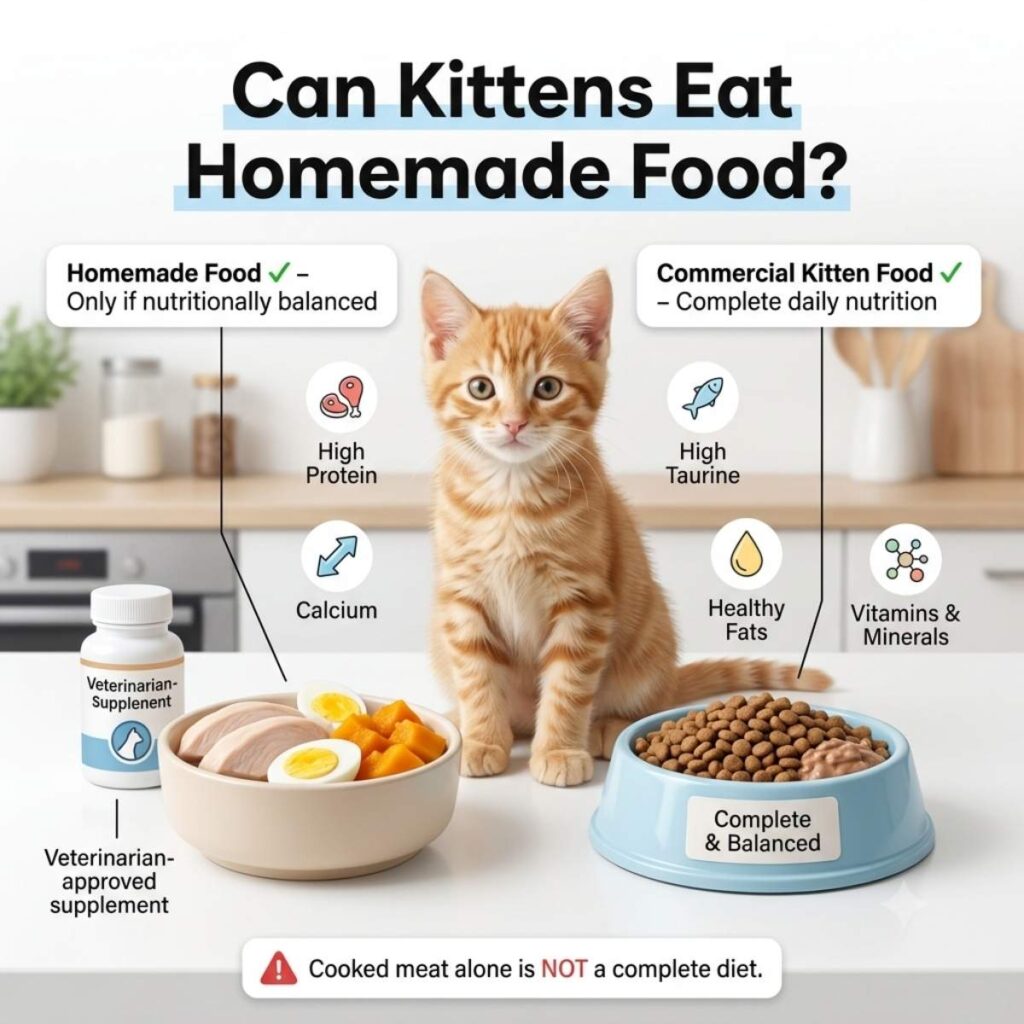
Yes, kittens can eat homemade food, but it must provide complete and balanced nutrition. Growing kittens have different needs than adult cats. During their first year, they need extra protein, healthy fats, vitamins, and minerals to support fast growth. A homemade diet that is not balanced can cause nutrient deficiencies and health problems.
Many people believe that cooked chicken or beef is enough for a kitten. This is a common mistake. Meat is an excellent source of protein, but it does not provide every nutrient a kitten needs. Kittens also need nutrients like taurine, calcium, phosphorus, and essential vitamins. These nutrients help build strong bones and muscles. They also support healthy vision, heart function, and a strong immune system.
Never feed your kitten leftovers from your own meals. Foods made for people often contain salt, spices, onions, garlic, or other seasonings. Some of these ingredients are harmful to cats. Others can be toxic, even in small amounts.
If you want to make homemade kitten food, use recipes that are designed for growing kittens. A balanced recipe often includes vitamin and mineral supplements. Without them, the diet may not meet your kitten’s nutritional needs. Many veterinarians recommend working with a veterinary nutritionist to create a safe homemade meal plan.
For most pet owners, high-quality commercial kitten food is the safest choice. Look for products that meet the nutritional standards set by the Association of American Feed Control Officials (AAFCO). These foods are made to provide complete and balanced nutrition. They support healthy growth and give kittens the nutrients they need every day.
What Nutrients Must Homemade Kitten Food Contain?
A homemade diet should give your kitten all the nutrients needed for healthy growth. Kittens grow very fast during their first year. Their bodies need more protein, healthy fats, vitamins, and minerals than adult cats. Missing even one important nutrient can affect bone growth, muscle development, brain function, or the immune system.
You should never prepare homemade kitten food by guessing the ingredients. Every meal should be complete and balanced. Many recipes found online do not provide enough taurine, calcium, or other essential nutrients. If you plan to feed homemade food regularly, it is best to work with a veterinary nutritionist. They can help create a meal plan that meets your kitten’s nutritional needs.
| Nutrient | Why It Matters |
| Animal Protein | Builds strong muscles, supports healthy growth, and provides energy for active kittens. |
| Healthy Fats | Give energy and support brain development, healthy skin, and a shiny coat. |
| Taurine | Supports heart health, healthy vision, brain function, and normal growth. Cats cannot make enough taurine on their own. |
| Calcium | Helps build strong bones and healthy teeth. |
| Phosphorus | Works with calcium to support strong bones and proper skeletal growth. |
| Vitamin A | Supports healthy eyesight, skin, growth, and the immune system. |
| Vitamin D | Helps the body absorb calcium and keeps bones strong. |
| Vitamin E | Protects body cells and supports a healthy immune system. |
| B Vitamins | Help turn food into energy and support the nervous system. |
| Iron | Helps make healthy red blood cells and carries oxygen throughout the body. |
| Zinc | Supports healthy skin, a shiny coat, wound healing, and immune health. |
| Copper | Helps with red blood cell production and normal body functions. |
| Omega-3 Fatty Acids | Support brain development, healthy vision, and skin health. |
| Fresh Water | Keeps kittens hydrated and supports digestion, circulation, and overall health. |
Commercial kitten food is made to provide these nutrients in the right amounts. That is why it is often the easiest and safest choice for growing kittens. If you prefer homemade food, do not rely on meat alone. A balanced recipe should include all the nutrients your kitten needs every day. Good nutrition during the first year helps build strong bones, healthy organs, a strong immune system, and supports a long, healthy life.
Benefits of Homemade Kitten Food
Homemade kitten food can be a good option when it is prepared the right way. It gives you more control over what your kitten eats and lets you use fresh ingredients. However, every meal must provide complete and balanced nutrition. If important nutrients are missing, a homemade diet can affect your kitten’s health and growth.
Here are some of the main benefits of homemade kitten food:
- You choose the ingredients. You know exactly what goes into every meal. This helps you avoid artificial colors, flavors, and preservatives if you prefer a more natural diet.
- Fresh ingredients. Homemade meals are usually made with fresh meat and other quality ingredients. Many pet owners feel more confident knowing the food is freshly prepared.
- High-quality animal protein. You can use protein sources like cooked chicken, turkey, or beef. These help support healthy muscle growth and provide energy for active kittens.
- Helpful for some food sensitivities. Some kittens cannot tolerate certain ingredients. With advice from a veterinary nutritionist, a homemade diet can be adjusted to meet your kitten’s specific needs.
- Flexible meal planning. Homemade food can be changed to match your kitten’s age, size, activity level, or health condition when recommended by a veterinarian.
- Fewer unnecessary fillers. A balanced homemade diet focuses on nutrient-rich ingredients instead of low-quality fillers that may be found in some inexpensive pet foods.
- Better understanding of nutrition. Preparing meals at home often helps owners learn more about kitten nutrition and the importance of feeding a complete and balanced diet.
Homemade kitten food is only a good choice when every meal includes the right balance of protein, healthy fats, taurine, calcium, vitamins, and minerals. Feeding only cooked meat or using random recipes from the internet is not enough. Growing kittens need complete nutrition every day. For most families, a high-quality commercial kitten food remains the safest and easiest way to support healthy growth unless a veterinarian recommends a homemade diet.
Risks of Homemade Kitten Food
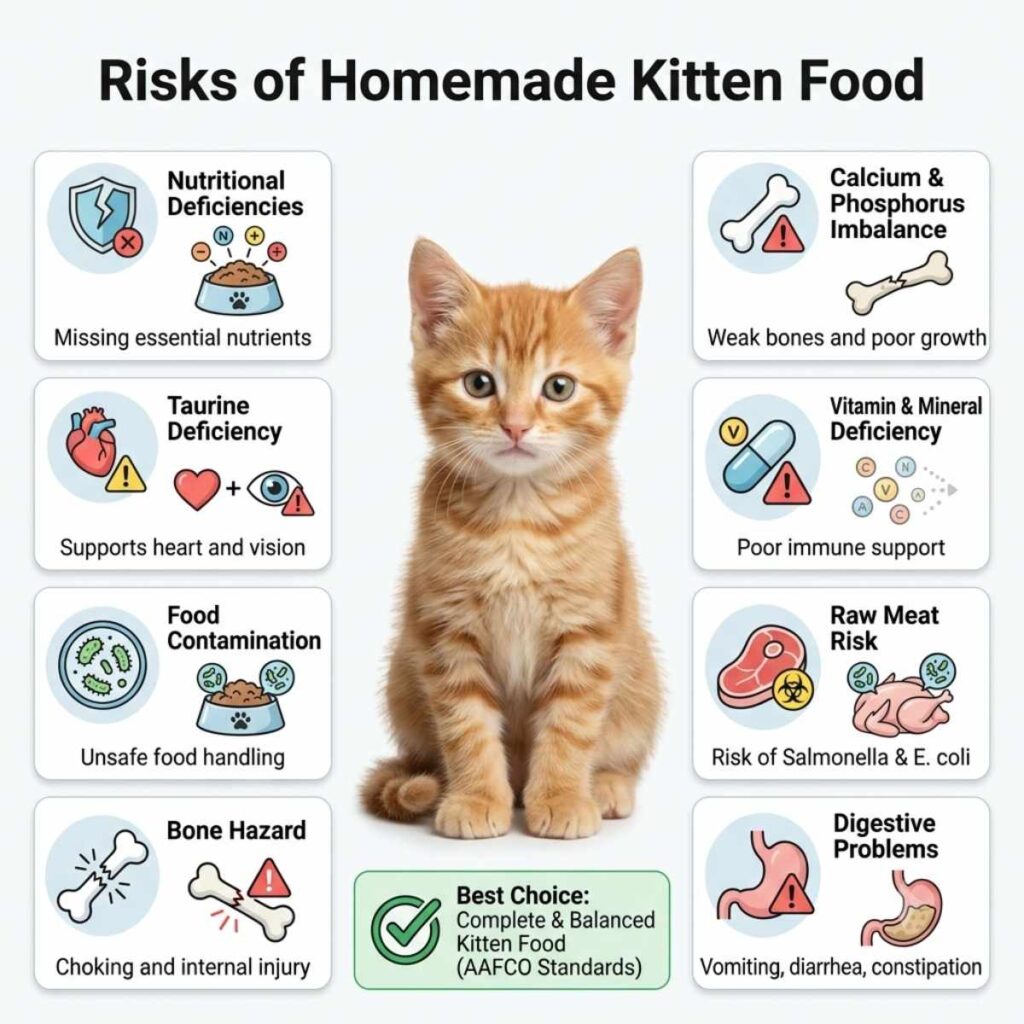
Homemade kitten food can be a healthy option, but it also has risks. Growing kittens need the right balance of nutrients every day. Even a small mistake in their diet can affect their growth and overall health. A meal may look healthy, but it can still be missing important nutrients.
Before you decide to feed homemade food, it is important to understand these risks. This is why many veterinarians recommend feeding a complete and balanced diet during a kitten’s first year.
Nutritional Deficiencies
The biggest risk of homemade kitten food is missing essential nutrients. Kittens need enough protein, healthy fats, vitamins, and minerals every day. If their diet is not balanced, they may grow slowly, lose energy, develop a dull coat, or face other health problems.
Incorrect Calcium and Phosphorus Balance
Calcium and phosphorus work together to build strong bones and teeth. Too much or too little of either nutrient can affect normal bone growth. Meat alone does not provide the right balance, so it should never be the only part of a homemade diet.
Taurine Deficiency
Taurine is an essential nutrient for cats. It supports healthy vision, heart function, brain development, and normal growth. Cats cannot produce enough taurine on their own. They must get it from their food. A lack of taurine can lead to serious health problems over time.
Vitamin and Mineral Deficiencies
Kittens also need vitamins and minerals such as vitamin A, vitamin D, vitamin E, iron, zinc, and B vitamins. These nutrients help support the immune system, healthy skin, energy production, and normal body functions. A deficiency may not show signs right away, but it can affect your kitten’s health in the future.
Food Contamination
Homemade food must be prepared and stored safely. Poor food handling can allow harmful bacteria to grow. Always use fresh ingredients, cook meat properly, and keep leftovers in the refrigerator. Clean bowls and kitchen tools after each use.
Risks of Feeding Raw Meat
Some people prefer raw diets, but they are not the safest choice for kittens. Raw meat can contain harmful bacteria such as Salmonella and E. coli. It may also carry parasites. Since kittens have developing immune systems, they are more likely to become sick from these infections.
Bone Hazards
Never feed cooked bones to your kitten. Cooked bones can break into sharp pieces. These pieces can cause choking or injure the mouth, throat, stomach, or intestines. Unless a veterinarian recommends a specially prepared product, bones should not be part of a homemade diet.
Poor Growth and Development
A kitten’s first year is the most important time for growth. A diet that lacks key nutrients can lead to weak bones, poor muscle development, slow growth, and other long-term health problems. Some of these problems cannot be corrected later.
Digestive Problems
Changing your kitten’s food too quickly can upset its stomach. Some ingredients may also be hard to digest. This can lead to vomiting, diarrhea, constipation, or a loss of appetite. Introduce new foods slowly and watch your kitten for any signs of digestive trouble.
Homemade kitten food can be safe when it is carefully planned and balanced. However, it should follow a recipe created for growing kittens, and many diets also need supplements. For most pet owners, a high-quality commercial kitten food that meets Association of American Feed Control Officials (AAFCO) nutritional standards is the safest and most reliable way to support healthy growth and development.
Is Raw Homemade Kitten Food Safe?
Raw homemade kitten food has become more popular because some pet owners believe it is more natural than cooked or commercial food. While this may sound like a good idea, raw diets also come with serious risks. For most growing kittens, these risks are greater than the possible benefits.
One of the biggest concerns is food safety. Raw meat can contain harmful bacteria such as Salmonella and Escherichia coli (E. coli). It may also contain parasites that can make kittens sick. Young kittens have developing immune systems, so they are more likely to become ill from these germs than healthy adult cats.
Another challenge is making sure the diet is complete and balanced. A raw homemade diet must provide the right amounts of protein, healthy fats, taurine, calcium, phosphorus, vitamins, and minerals. This is difficult to achieve without expert guidance. If important nutrients are missing, your kitten may develop problems with growth, bones, or organ function.
Some people believe raw diets improve digestion, coat quality, and overall health. However, there is very little scientific evidence to prove that raw food is healthier than a complete and balanced commercial kitten food. The risk of bacteria and nutritional imbalance is still a major concern for both kittens and the people who prepare raw meals.
Raw Homemade Kitten Food: Pros and Cons
| Pros | Cons |
| Uses fresh, natural ingredients | Higher risk of Salmonella and E. coli contamination |
| Gives you full control over the ingredients | May contain harmful parasites if not handled properly |
| Can be adjusted for special dietary needs with guidance from a veterinary nutritionist | Difficult to provide complete and balanced nutrition |
| Appeals to owners who prefer less processed food | Greater risk of taurine, calcium, vitamin, and mineral deficiencies |
| Requires careful preparation, safe storage, and good kitchen hygiene |
For most kittens, a high-quality commercial kitten food is the safest choice. These foods are made to provide complete and balanced nutrition for healthy growth. If you are thinking about feeding a raw homemade diet, talk to a veterinary nutritionist first. They can help you create a safe meal plan that meets your kitten’s nutritional needs while reducing the risk of foodborne illness and nutrient deficiencies.
Is Raw Homemade Kitten Food Safe?
Raw homemade kitten food is becoming more popular. Many pet owners believe it is a more natural choice than cooked or commercial food. However, raw diets also come with serious health risks. For most growing kittens, these risks are greater than the possible benefits.
The biggest concern is food safety. Raw meat can contain harmful bacteria like Salmonella and Escherichia coli (E. coli). It can also carry parasites. These germs can make kittens very sick. Young kittens are at a higher risk because their immune systems are still developing.
Another problem is nutrition. A raw homemade diet must provide the right balance of protein, healthy fats, taurine, calcium, phosphorus, vitamins, and minerals. This is not easy to do without expert help. If the diet is missing important nutrients, it can affect your kitten’s growth, bone strength, and overall health.
Some people believe raw food improves digestion, skin health, and coat quality. At this time, there is not enough scientific evidence to prove that raw diets are healthier than complete and balanced commercial kitten food. The risk of bacteria and nutrient deficiencies remains a major concern.
Raw Homemade Kitten Food: Pros and Cons
| Pros | Cons |
| Made with fresh ingredients | Higher risk of Salmonella and E. coli contamination |
| Gives you control over the ingredients | May contain harmful parasites |
| Can be adjusted for special dietary needs with guidance from a veterinary nutritionist | Difficult to provide complete and balanced nutrition |
| A good option for owners who prefer less processed food | Greater risk of taurine, calcium, vitamin, and mineral deficiencies |
| Requires careful preparation, safe storage, and proper kitchen hygiene |
For most kittens, a high-quality commercial kitten food is the safest option. These foods are carefully made to provide complete and balanced nutrition for healthy growth. If you want to feed your kitten a raw homemade diet, talk to a veterinary nutritionist first. They can help you create a safe meal plan that meets your kitten’s nutritional needs and lowers the risk of foodborne illness and nutrient deficiencies.
Foods That Are Safe for Homemade Kitten Meals
If you want to make homemade food for your kitten, choose fresh and safe ingredients. Growing kittens need high-quality animal protein along with the right balance of vitamins and minerals. Safe ingredients are a good start, but they do not make a complete and balanced diet on their own. Most homemade meal plans also need supplements. A veterinarian or veterinary nutritionist can help you create the right recipe.
Always cook meat thoroughly before serving it to your kitten unless your veterinarian gives different advice. Do not add salt, spices, butter, onions, garlic, or sauces. These ingredients are made for people and can be harmful to cats.
Safe Foods for Homemade Kitten Meals
| Safe Food | Why It Is Good for Kittens |
| Cooked Chicken | A lean source of high-quality protein that supports healthy muscle growth. |
| Cooked Turkey | Rich in protein and easy for many kittens to digest. |
| Lean Cooked Beef | Provides protein, iron, and other nutrients needed for healthy growth. |
| Chicken Liver (Small Amounts) | A natural source of vitamin A and iron. Feed only in small portions because too much vitamin A can be harmful. |
| Cooked Eggs | Rich in protein, healthy fats, and essential vitamins. Always serve fully cooked. |
| Cooked Salmon or Sardines (Occasionally) | Provide omega-3 fatty acids that support brain development, healthy skin, and a shiny coat. Remove all bones before serving. |
| Plain Pumpkin Puree | Contains fiber that may help support healthy digestion. Feed only small amounts. |
| Cooked White Rice | Can help during short-term digestive upset, but it should not replace protein-rich foods. |
| Unsalted Chicken Broth | Adds flavor and helps keep kittens hydrated. Make sure it does not contain onions, garlic, or added seasonings. |
| Fresh Water | Essential for hydration, digestion, and overall health. Always provide clean drinking water. |
These foods are safe to include in a homemade meal plan, but they are not enough by themselves. Growing kittens also need taurine, calcium, phosphorus, healthy fats, vitamins, and other essential nutrients in the right amounts. A diet that lacks these nutrients can affect bone growth, heart health, and overall development.
For most pet owners, a high-quality commercial kitten food is the easiest way to provide complete and balanced nutrition. If you prefer homemade meals, work with your veterinarian or a veterinary nutritionist to create a safe diet that supports your kitten’s healthy growth.
Foods Never to Feed Kittens
Not all human foods are safe for kittens. Some foods can upset their stomach, while others can cause serious health problems. Even a small amount of certain ingredients can be harmful. If you make homemade kitten food, it is important to know which foods to avoid.
Keep unsafe foods out of your kitten’s reach at all times. If you think your kitten has eaten something toxic, contact your veterinarian right away.
Foods to Avoid
| Food | Why It Is Dangerous |
| Onions | Can damage red blood cells and lead to anemia. |
| Garlic | Toxic to cats and can cause anemia, even in small amounts. |
| Chocolate | Contains substances that can affect the heart and nervous system. |
| Grapes | May cause serious kidney problems in some cats. |
| Raisins | Can be toxic and may damage the kidneys. |
| Alcohol | Even a small amount can be life-threatening. |
| Caffeine | Found in coffee, tea, and energy drinks. It can cause a fast heartbeat, tremors, and seizures. |
| Xylitol | An artificial sweetener that is dangerous for pets. |
| Cooked Bones | Can break into sharp pieces and cause choking or injuries to the mouth, throat, or digestive system. |
| Raw Dough | Can expand in the stomach and produce alcohol as it ferments, making it very dangerous. |
| Foods High in Salt | Too much salt can lead to dehydration and other health problems. |
Other Foods to Avoid
Do not feed your kitten these foods either:
- Spicy or heavily seasoned foods
- Fried or greasy foods
- Processed meats such as sausages, hot dogs, and deli meats
- Sugary snacks, candy, and desserts
- Moldy or spoiled food
- Dog food as a regular diet because it does not provide the nutrition kittens need
When preparing homemade kitten food, always use fresh and kitten-safe ingredients. Do not add salt, spices, sauces, or other seasonings made for human meals. Safe food choices are just as important as providing the right balance of protein, taurine, calcium, vitamins, and minerals.
Choosing safe ingredients helps protect your kitten from poisoning and digestive problems. However, safety alone is not enough. Every homemade meal should also provide complete and balanced nutrition to support healthy growth, strong bones, and overall development.
Can Homemade Food Replace Commercial Kitten Food?
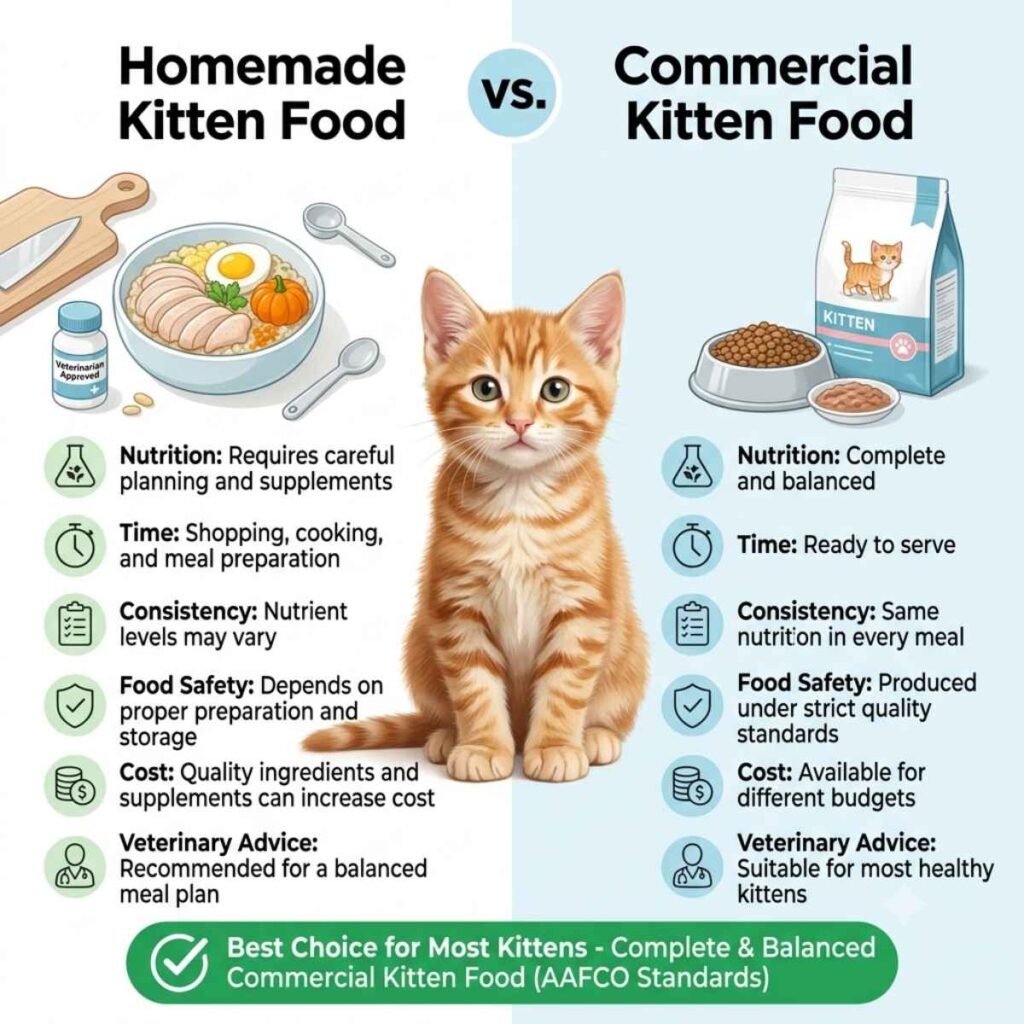
Yes, homemade food can replace commercial kitten food, but only when it provides complete and balanced nutrition. Feeding only cooked chicken, beef, or other meat is not enough for a growing kitten. Kittens need the right balance of protein, healthy fats, taurine, calcium, phosphorus, vitamins, and minerals every day.
Commercial kitten food is made to meet these nutritional needs. It is carefully formulated to support healthy growth during the first year of life. Every serving contains the nutrients kittens need for strong bones, healthy muscles, brain development, and a strong immune system.
Making the same balanced diet at home is much more difficult. Homemade meals often need carefully planned recipes and added vitamin and mineral supplements. As your kitten grows, its nutritional needs also change. Without the right balance, a homemade diet can lead to nutrient deficiencies and long-term health problems.
Homemade Kitten Food vs. Commercial Kitten Food
| Feature | Homemade Kitten Food | Commercial Kitten Food |
| Nutritional Balance | Must be carefully planned and often needs supplements. | Made to provide complete and balanced nutrition. |
| Convenience | Requires shopping, cooking, and meal preparation. | Ready to serve with little effort. |
| Consistency | Nutrient levels may vary from one recipe to another. | Provides consistent nutrition in every meal. |
| Food Safety | Depends on proper cooking, storage, and food handling. | Produced under strict quality and safety standards. |
| Cost | Can become expensive when using quality ingredients and supplements. | Available at different price ranges to fit most budgets. |
| Veterinary Guidance | Strongly recommended to create a balanced meal plan. | Usually not needed for healthy kittens when feeding a complete and balanced product. |
For most pet owners, a high-quality commercial kitten food is the safest and easiest choice. Look for products that meet the nutritional standards of the Association of American Feed Control Officials (AAFCO). These foods are designed to support healthy growth and help reduce the risk of nutrient deficiencies.
If you want to feed homemade food every day, speak with a veterinary nutritionist first. They can create a balanced meal plan that provides all the nutrients your kitten needs for healthy growth, strong bones, and lifelong health.
How to Make Homemade Kitten Food Safer
If you decide to feed your kitten homemade food, make safety your top priority. Growing kittens need complete and balanced nutrition every day. Even small mistakes in ingredients or preparation can affect their health. These simple tips can help you prepare homemade meals more safely.
1. Talk to Your Veterinarian First
Speak with your veterinarian before changing your kitten’s diet. They can check your kitten’s age, weight, and overall health. They can also tell you if a homemade diet is the right choice.
2. Use a Recipe Created by a Veterinary Nutritionist
Avoid using random recipes from the internet. A veterinary nutritionist can create a meal plan that includes the right amount of protein, healthy fats, taurine, calcium, vitamins, and minerals.
3. Use Supplements Only If Recommended
Many homemade diets need vitamin and mineral supplements. Food alone may not provide everything a growing kitten needs. Only use supplements recommended by your veterinarian, and always follow the correct amount.
4. Cook Meat Thoroughly
Cook chicken, turkey, beef, and other meats completely before serving. Proper cooking helps reduce the risk of harmful bacteria such as Salmonella and Escherichia coli (E. coli). Do not add salt, spices, onions, garlic, or sauces.
5. Measure Ingredients Carefully
Use the exact amount of each ingredient in the recipe. Measuring carefully helps keep the diet balanced. Adding too much or too little of an ingredient can change the nutritional value of the meal.
6. Follow Good Food Safety Practices
Wash your hands before and after preparing food. Clean bowls, utensils, and kitchen surfaces well. Store homemade food in the refrigerator and throw away leftovers that have been left out for too long.
7. Introduce New Foods Slowly
Do not change your kitten’s diet all at once. Mix the new food with the old food over several days. A slow transition helps prevent stomach problems such as vomiting or diarrhea.
8. Watch Your Kitten’s Growth
Keep an eye on your kitten’s weight, appetite, energy level, and coat condition. A healthy kitten should gain weight steadily, stay active, and have a soft, shiny coat.
9. Schedule Regular Veterinary Checkups
Regular checkups help make sure your kitten is growing well. Your veterinarian can check for signs of nutrient deficiencies and adjust the meal plan if needed.
Preparing homemade kitten food takes time and careful planning. Every meal should provide complete and balanced nutrition to support healthy growth. For most pet owners, a high-quality commercial kitten food is the easiest and safest option. If you prefer homemade meals, work closely with your veterinarian and a veterinary nutritionist to make sure your kitten gets all the nutrients needed for a healthy start in life.
Sample Homemade Kitten Meal (Occasional Example)
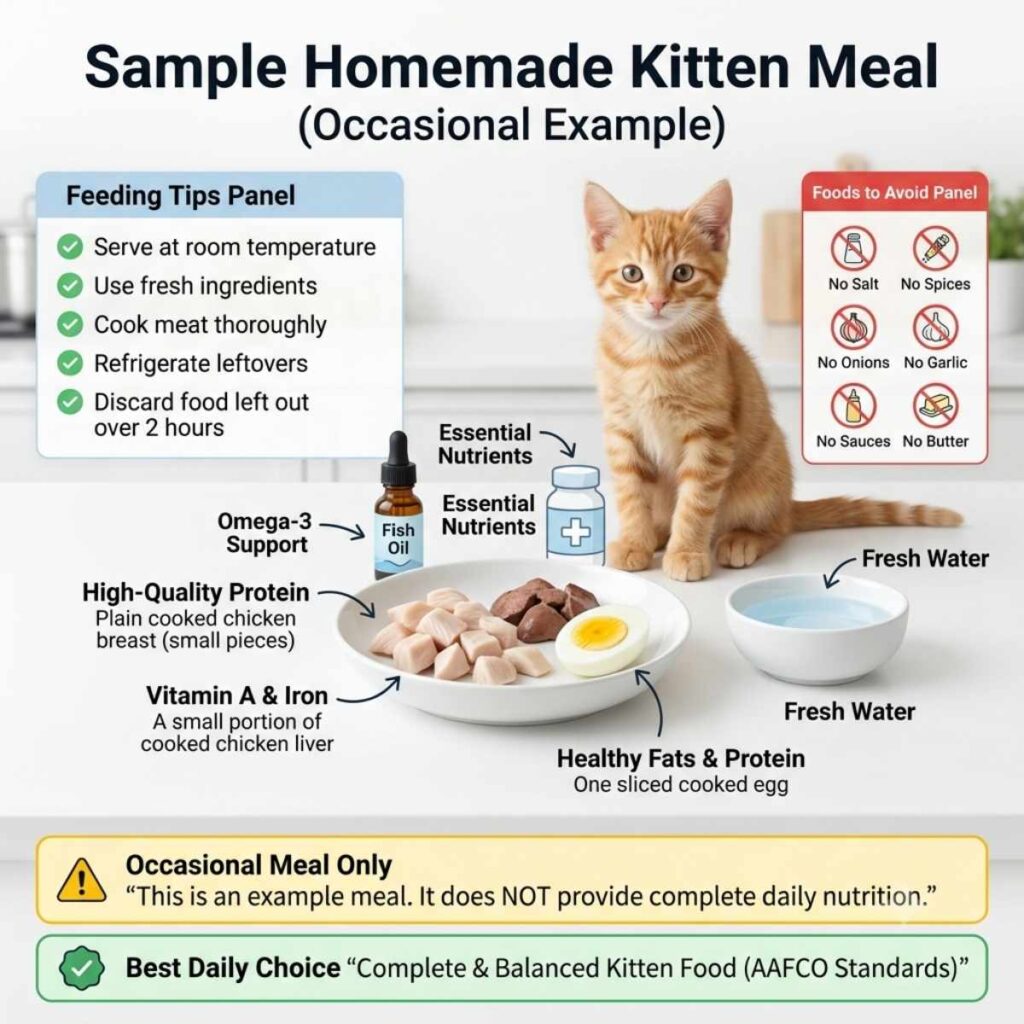
You can offer your kitten a simple homemade meal once in a while. However, it should not replace a complete and balanced daily diet. Growing kittens need the right amount of protein, healthy fats, taurine, calcium, vitamins, and minerals every day. A basic homemade recipe cannot provide all of these nutrients unless it is created by a veterinary nutritionist.
The example below uses safe ingredients, but it is not a complete meal plan for everyday feeding.
Sample Homemade Kitten Meal
| Ingredient | Why It Is Included |
| Cooked Chicken Breast | Provides high-quality protein to support healthy muscle growth. |
| Small Amount of Cooked Chicken Liver | Supplies vitamin A and iron. Feed only in small amounts. |
| Cooked Egg | Adds protein, healthy fats, and important nutrients. |
| A Few Drops of Fish Oil (only if recommended by your veterinarian) | Provides omega-3 fatty acids that support brain and eye development. |
| Veterinary-Approved Supplement | Helps provide nutrients that homemade ingredients may not supply in the right amounts. |
| Fresh Water | Keeps your kitten hydrated and supports overall health. |
Feeding Tips
- Let the food cool to room temperature before serving.
- Do not add salt, spices, butter, onions, garlic, or sauces.
- Always use fresh, high-quality ingredients.
- Store leftovers in the refrigerator and use them within 24 hours.
- Throw away any food that has been left at room temperature for more than two hours.
Important Note
This sample meal is only an example. It does not provide complete and balanced nutrition for a growing kitten. Feeding this recipe every day can lead to nutrient deficiencies and affect healthy growth.
If you want to feed homemade food regularly, work with your veterinarian or a veterinary nutritionist. They can create a meal plan that includes all the nutrients your kitten needs.
For most kittens, a high-quality commercial kitten food that meets Association of American Feed Control Officials (AAFCO) nutritional standards is still the safest and most reliable choice for daily nutrition. It provides complete and balanced nutrients to support healthy growth, strong bones, and overall development.
Signs Your Kitten May Not Be Getting Proper Nutrition
Good nutrition is important for every growing kitten. During the first year, kittens need the right balance of protein, healthy fats, vitamins, and minerals. These nutrients help build strong bones, healthy muscles, a strong immune system, and support normal growth. If your kitten does not get enough essential nutrients, you may notice changes in its health, behavior, or appearance.
Some signs of poor nutrition can appear quickly, while others develop over time. Paying attention to these early signs can help you get the right care before the problem becomes serious.
Common Signs of Poor Nutrition
- Slow growth – Your kitten is not growing or gaining weight as expected.
- Weight loss – Losing weight without a clear reason may mean your kitten is not getting enough calories or nutrients.
- Low energy – Healthy kittens are playful and active. If your kitten seems tired or weak most of the time, it could be a sign of poor nutrition.
- Poor coat condition – A dull, dry, or rough coat may mean your kitten is missing important nutrients.
- Loss of appetite – Eating much less than usual or refusing food should not be ignored.
- Digestive problems – Frequent vomiting, diarrhea, or constipation may suggest that the diet is not balanced or suitable.
- Weak bones or trouble walking – A lack of calcium, phosphorus, or vitamin D can affect bone growth and strength.
- Frequent illness – Poor nutrition can weaken the immune system and make kittens more likely to get sick.
- Delayed development – Nutrient deficiencies can slow both physical and mental development.
When to Contact a Veterinarian
Contact your veterinarian if your kitten:
- Stops eating for more than 24 hours.
- Loses weight or does not gain weight as it grows.
- Has ongoing vomiting or diarrhea.
- Seems weak, tired, or less active than normal.
- Has trouble walking or shows signs of pain.
- Has a dull coat that does not improve over time.
Getting help early can prevent small nutrition problems from becoming serious health issues. Regular veterinary checkups also help make sure your kitten is growing well and getting all the nutrients it needs.
Whether you feed homemade kitten food or commercial kitten food, the goal is the same. Your kitten should receive complete and balanced nutrition every day. A healthy diet supports strong bones, healthy muscles, a strong immune system, and helps your kitten grow into a healthy adult cat.
When Homemade Food May Be Appropriate
Homemade kitten food is not the right choice for every kitten. For most pet owners, a high-quality commercial kitten food is the easiest and safest way to provide complete and balanced nutrition. However, in some situations, a homemade diet may be a good option when it is carefully planned with the help of a veterinarian or a veterinary nutritionist.
A homemade diet should never be based on guesswork or random recipes from the internet. Every meal should provide the nutrients a growing kitten needs to stay healthy.
Homemade Food May Be a Good Choice If:
- Your kitten has food allergies or sensitivities. A veterinarian may recommend a homemade diet to avoid certain ingredients that cause allergic reactions.
- Your kitten has a medical condition. Some health problems require a special diet. A veterinary nutritionist can create a meal plan that meets your kitten’s needs.
- Your veterinarian recommends it. Homemade food may be part of a treatment or recovery plan for some kittens.
- You can prepare balanced meals every time. Homemade food takes careful planning, accurate measurements, and quality ingredients.
- You can provide the right supplements. Many homemade diets need added taurine, calcium, vitamins, and minerals to support healthy growth.
Homemade Food May Not Be the Best Choice If:
- You do not have enough time to prepare balanced meals every day.
- You plan to feed only cooked meat without the necessary supplements.
- You cannot follow a recipe created by a veterinary professional.
- Your kitten is healthy and already doing well on a complete and balanced commercial kitten food.
- You cannot regularly monitor your kitten’s weight, growth, and overall health.
Before changing your kitten’s diet, talk to your veterinarian. They can help you decide if homemade food is the right option. If needed, they may refer you to a veterinary nutritionist who can create a meal plan that provides complete and balanced nutrition.
For most healthy kittens, a commercial kitten food that meets the nutritional standards of the Association of American Feed Control Officials (AAFCO) is the safest and most practical choice. It provides consistent nutrition and helps your kitten get all the essential nutrients needed for healthy growth and development.
Frequently Asked Questions
Can kittens eat homemade chicken?
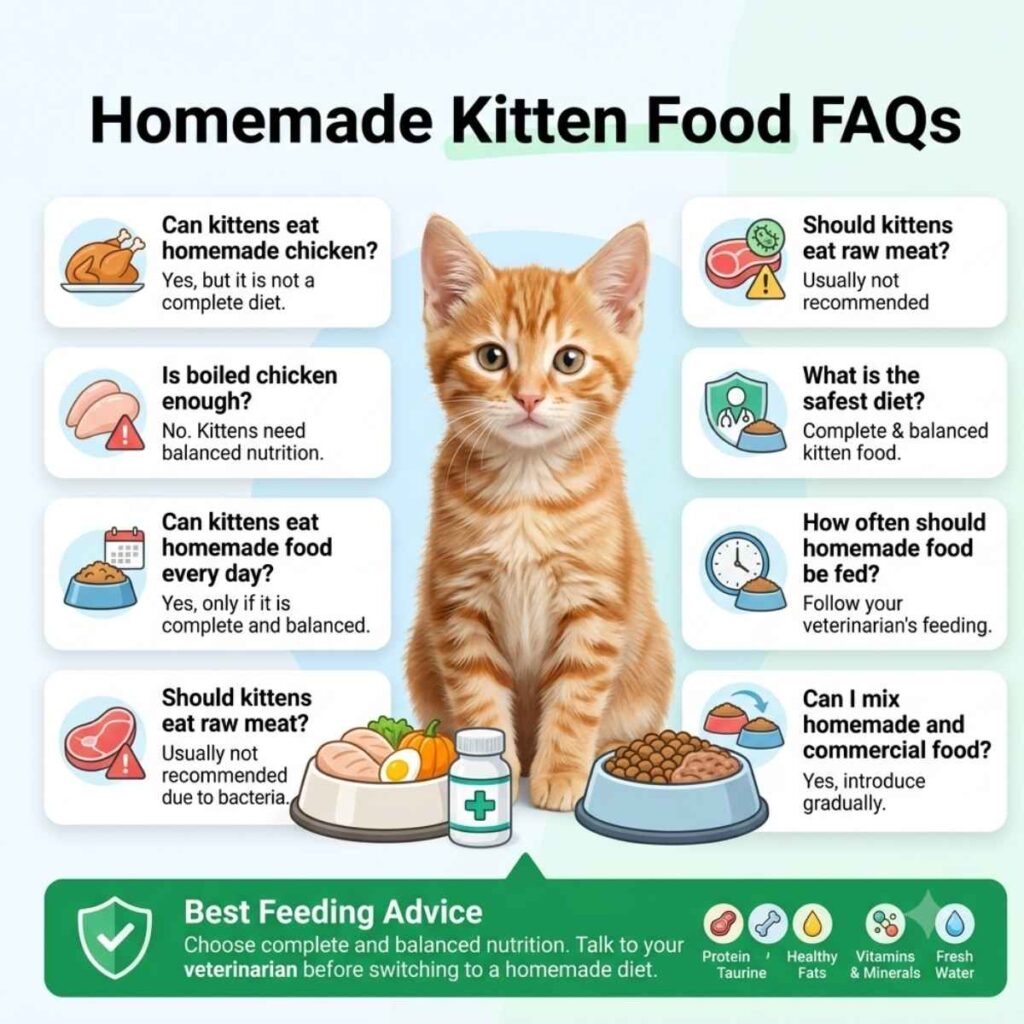
Yes, kittens can eat plain, cooked chicken in small amounts. Chicken is a great source of protein and helps support healthy muscle growth. However, chicken alone is not a complete diet. It does not provide enough taurine, calcium, vitamins, and other nutrients that growing kittens need every day.
Is boiled chicken enough for kittens?
No. Boiled chicken is healthy, but it cannot meet all of a kitten’s nutritional needs. Feeding only boiled chicken for a long time can cause nutrient deficiencies and affect normal growth. Kittens need a complete and balanced diet.
Can kittens eat homemade food every day?
Yes, but only if the meals are carefully planned to provide complete and balanced nutrition. A daily homemade diet should include the right amounts of protein, healthy fats, vitamins, minerals, and other essential nutrients. Random homemade recipes are not suitable for everyday feeding.
Should kittens eat raw meat?
Most veterinarians do not recommend feeding raw meat to kittens. Raw meat can contain harmful bacteria such as Salmonella and Escherichia coli (E. coli). It may also contain parasites that can make kittens sick. Cooked food is usually the safer option for young kittens.
What is the safest diet for kittens?
For most kittens, the safest choice is a high-quality commercial kitten food that meets the nutritional standards of the Association of American Feed Control Officials (AAFCO). These foods are made to support healthy growth, strong bones, brain development, and a healthy immune system.
How often should I feed homemade kitten food?
If your veterinarian approves a homemade diet, follow the feeding schedule they recommend. The amount of food depends on your kitten’s age, weight, and activity level. Young kittens usually need several small meals throughout the day.
Can I mix homemade food with commercial kitten food?
Yes. Many pet owners mix homemade food with commercial kitten food. This can add variety while helping your kitten receive complete and balanced nutrition. Introduce new foods slowly, and ask your veterinarian if you are unsure about the right balance.
Conclusion
Homemade kitten food can be a healthy choice when it is prepared correctly. Every meal should provide complete and balanced nutrition to support healthy growth. Growing kittens need enough protein, healthy fats, taurine, calcium, vitamins, and minerals every day. A diet that is missing these nutrients can lead to health problems over time.
For most pet owners, a high-quality commercial kitten food is the safest and easiest option. It is specially made to meet the nutritional needs of growing kittens and provides balanced nutrition in every meal.
If you want to feed homemade food regularly, work with your veterinarian or a veterinary nutritionist. They can create a meal plan that includes all the nutrients your kitten needs. With the right diet and proper care, you can help your kitten grow into a healthy, active adult cat.