
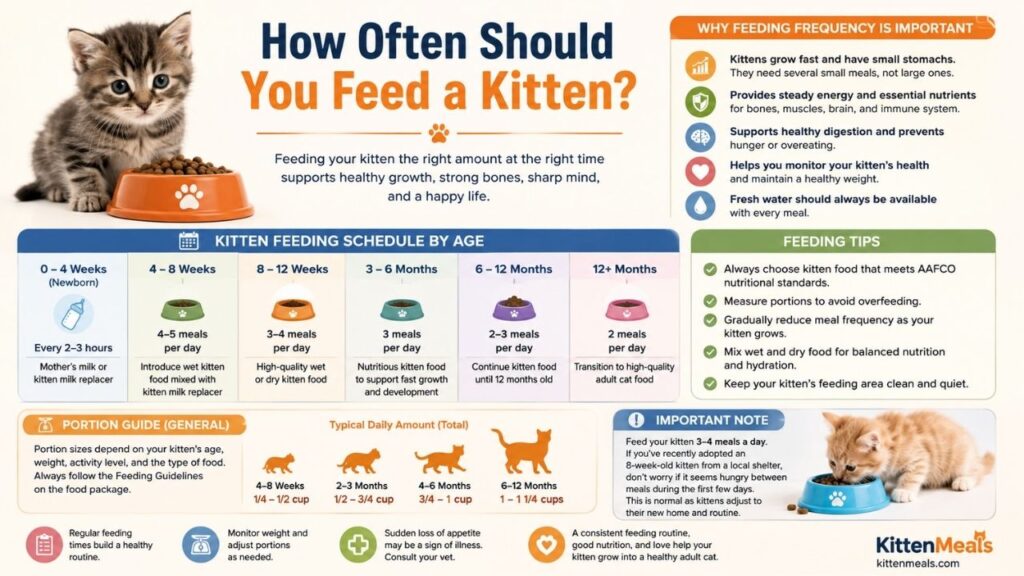
Bringing home a new kitten is exciting, but it also comes with many questions. One of the most common is, how often should you feed a kitten? The answer depends on your kitten’s age, growth stage, and nutritional needs. Unlike adult cats, kittens grow very quickly and need frequent meals to support healthy bones, muscles, and brain development. Feeding your kitten the right amount at the right time helps them stay active, maintain a healthy weight, and build a strong immune system.
A kitten has a small stomach but a fast metabolism. That means it cannot eat a large amount of food in one meal. Instead, it needs several small meals throughout the day. As your kitten grows, the number of daily meals gradually decreases, and portion sizes increase. Choosing a high-quality kitten food that meets AAFCO nutritional standards also plays an important role in providing the protein, healthy fats, vitamins, and minerals your kitten needs for healthy growth.
In this guide, you will learn exactly how often to feed a kitten from birth to 12 months of age. We will also share an easy kitten feeding schedule, feeding charts, portion tips, and advice on wet and dry kitten food. By the end of this article, you will know how to create a healthy feeding routine that helps your kitten grow into a happy and healthy adult cat.
Why Feeding Frequency Is Important for Kittens
Feeding your kitten at the right times is just as important as choosing the right food. During the first year of life, kittens grow much faster than adult cats. Their bodies need a steady supply of nutrients to support healthy bones, strong muscles, a healthy immune system, and proper brain development. Because a kitten has a small stomach and a fast metabolism, it cannot eat enough food in one large meal. Instead, it needs several small meals throughout the day to stay healthy and full of energy.
A balanced kitten feeding schedule helps your kitten get the right amount of protein, healthy fats, vitamins, and minerals every day. High-quality wet kitten food or dry kitten food that meets AAFCO nutritional standards provides essential nutrients such as taurine, DHA, calcium, and phosphorus. These nutrients support healthy eyesight, heart function, strong teeth, bone growth, and brain development. Feeding your kitten regularly also helps maintain stable energy levels and supports healthy digestion.
The number of meals your kitten needs changes as it grows. A newborn kitten depends on its mother’s milk or a kitten milk replacer every few hours. As kittens begin eating solid food, they still require frequent meals because their bodies burn calories quickly. Older kittens can gradually eat fewer meals, but they still need food made specifically for growing cats until they reach adulthood. Following a proper kitten feeding routine ensures your pet receives the nutrition needed at every stage of development.
Regular feeding times also make it easier to monitor your kitten’s health. A kitten that suddenly eats less or skips meals may be showing early signs of illness or stress. Measuring portions and feeding on a schedule helps you notice changes in appetite, avoid overfeeding, and maintain a healthy body weight. Fresh water should always be available alongside every meal to support proper hydration and overall health.
In short, feeding your kitten at the right frequency is one of the best ways to support healthy growth and long-term well-being. A consistent feeding schedule, nutritious kitten food, and regular veterinary checkups will give your kitten the strong start it needs for a happy and healthy life.
Feed your kitten 3–4 meals a day.
If you’ve recently adopted an 8-week-old kitten from a local shelter, don’t worry if it seems hungry between meals during the first few days. This is normal because many kittens are still adjusting to their new home and feeding routine.
Kitten Feeding Schedule by Age
The answer to how often should you feed a kitten depends mainly on its age. As kittens grow, their nutritional needs and meal frequency change. Younger kittens need small meals more often because they have tiny stomachs and burn energy quickly. Older kittens can eat larger portions and gradually move to fewer meals each day. Following a proper kitten feeding schedule helps support healthy growth, strong muscles, healthy bones, and a strong immune system.
During the first few weeks of life, a newborn kitten relies on its mother’s milk or a kitten milk replacer for complete nutrition. As the weaning process begins, kittens slowly transition to wet kitten food mixed with formula. By the time they are about 8 weeks old, most kittens can eat high-quality wet food, dry food, or a combination of both. Choosing food that meets AAFCO nutritional standards ensures your kitten receives enough protein, taurine, DHA, calcium, and other essential nutrients.
As your kitten grows, its feeding routine becomes easier to manage. Around 3 to 6 months of age, kittens still need several meals each day to support their rapid growth. By 6 to 12 months, most kittens can switch to two or three meals daily while continuing to eat food made specifically for kittens. Fresh, clean water should always be available, regardless of your kitten’s age.
The table below provides a simple feeding schedule that most healthy kittens can follow. Keep in mind that every kitten is different. Breed, activity level, body weight, and overall health may affect how much and how often your kitten should eat. If you are unsure, ask your veterinarian for personalized feeding advice.
| Kitten Age | Meals Per Day | Recommended Food |
| Birth to 4 weeks | Every 2–3 hours | Mother’s milk or kitten milk replacer |
| 4–8 weeks | 4–6 small meals | Wet kitten food mixed with formula during weaning |
| 8–12 weeks | 4 meals | High-quality wet food, dry food, or a mix of both |
| 3–6 months | 3 meals | Complete and balanced kitten food |
| 6–12 months | 2–3 meals | Wet or dry kitten food with fresh water |
| 12 months and older | 2 meals | Gradually transition to complete adult cat food |
Following this age-based kitten feeding chart helps prevent underfeeding and overfeeding while supporting healthy development. In the next sections, we will explain each growth stage in detail so you know exactly what to feed your kitten and how often at every age
Kittens need frequent meals. .
If this is your first kitten, you may wonder whether it is eating enough. Most new cat owners have the same concern, especially during the first few weeks.
Feeding Newborn Kittens (0–4 Weeks)
The first four weeks of a kitten’s life are the most important for healthy growth. During this stage, a newborn kitten depends completely on its mother’s milk for nutrition. Mother’s milk provides the right balance of protein, healthy fats, vitamins, minerals, and antibodies that help build a strong immune system. Newborn kittens have very small stomachs, so they need to eat every 2 to 3 hours, including during the night.
If the mother cat is not available or cannot nurse, feed the kitten a high-quality kitten milk replacer. Never give a newborn kitten cow’s milk because it does not contain the nutrients kittens need and can cause stomach upset and diarrhea. Always use a bottle or feeding syringe designed for kittens, and prepare the formula according to the manufacturer’s instructions.
A healthy newborn kitten should nurse or bottle-feed regularly and gain weight every day. Most kittens sleep between feedings because growing requires a lot of energy. During this stage, keeping kittens warm is just as important as feeding them. Very young kittens cannot control their body temperature, and a cold kitten may refuse to eat or have trouble digesting milk.
Here is a simple feeding guide for newborn kittens:
| Kitten Age | Feeding Frequency | Food |
| 0–1 week | Every 2–3 hours | Mother’s milk or kitten milk replacer |
| 1–2 weeks | Every 2–3 hours | Mother’s milk or kitten milk replacer |
| 2–3 weeks | Every 3 hours | Mother’s milk or kitten milk replacer |
| 3–4 weeks | Every 3–4 hours | Mother’s milk or kitten milk replacer |
Around 4 weeks of age, most kittens begin the weaning process. They become curious about food and may start licking soft, moist food mixed with kitten formula. This gradual transition from milk to wet kitten food helps prepare their digestive system for eating solid food over the next few weeks.
During the newborn stage, monitor your kitten’s appetite, weight, and activity level every day. A kitten that refuses to eat, cries constantly, loses weight, or seems weak should be examined by a veterinarian as soon as possible. Early care and a proper feeding routine give your kitten the best chance to grow into a healthy and active cat.
Practical Tips
Set reminders on your phone for feeding times during the first few weeks. A consistent routine makes life easier for both you and your kitten.
Feeding Kittens During Weaning (4–8 Weeks)
The weaning stage is an exciting milestone in your kitten’s development. Between 4 and 8 weeks of age, kittens slowly transition from milk to solid food. During this time, they still need plenty of nutrition to support rapid growth, but they begin eating less milk and more kitten food each week. This is also the best time to establish a healthy kitten feeding routine.
Start by offering a soft mixture of wet kitten food and kitten milk replacer. The food should have a smooth, porridge-like texture that is easy to lick and swallow. Place a small amount on a shallow plate and let your kitten explore it at its own pace. As your kitten becomes comfortable eating, gradually reduce the amount of formula and increase the amount of wet food until it is eating solid food on its own.
At this age, kittens should eat 4 to 6 small meals each day. Their stomachs are still small, and they need frequent meals to meet their high energy needs. Feeding several small portions throughout the day helps provide a steady supply of protein, healthy fats, DHA, taurine, calcium, and other nutrients that support healthy bones, muscles, and brain development. Always choose a complete and balanced kitten food that meets AAFCO nutritional standards.
Around 6 to 8 weeks, many kittens are ready to try dry kitten food. If needed, you can soften the kibble with warm water for a few minutes to make it easier to chew. Some owners prefer feeding a combination of wet and dry food because wet food supports hydration, while dry food is convenient and helps kittens get used to different textures. Fresh, clean water should always be available as your kitten begins eating more solid food.
Use these tips to make weaning easier:
- Feed 4–6 small meals every day.
- Introduce new foods gradually to avoid stomach upset.
- Serve food at room temperature to improve its smell and taste.
- Remove leftover wet food after about 30 minutes to keep it fresh.
- Wash food and water bowls daily.
- Make sure fresh water is available at all times.
- Watch your kitten’s weight and appetite as it adjusts to solid food.
Most healthy kittens are fully weaned by 8 weeks of age. At this point, they should be eating high-quality kitten food without needing milk replacer. Following a consistent feeding schedule during the weaning period helps your kitten develop healthy eating habits and provides the nutrition needed for strong, steady growth.
Personal Observation
Many first-time kitten owners notice that their kitten becomes much more playful after following a regular feeding schedule for several days.
Feeding Kittens Between 8 Weeks and 6 Months
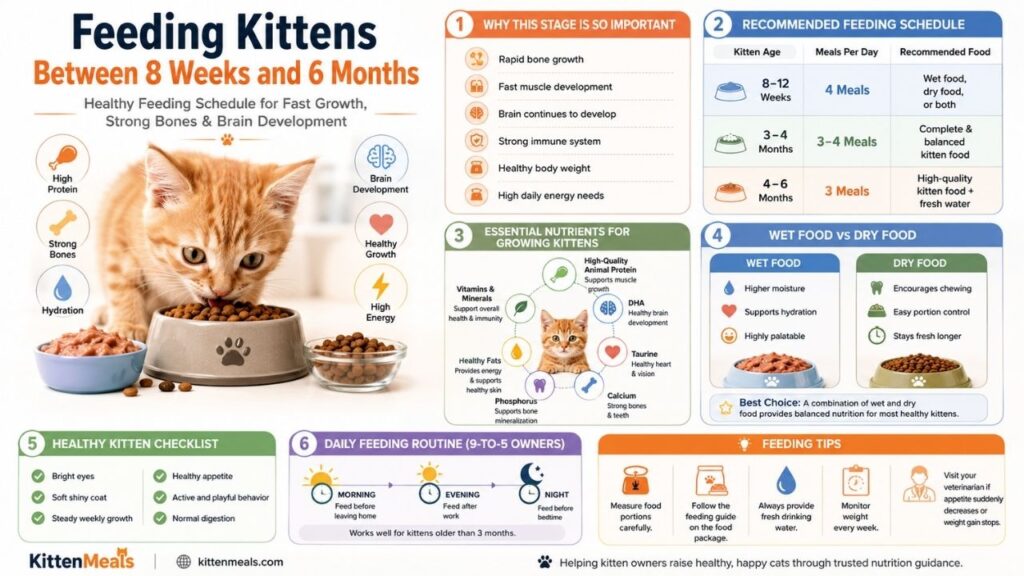
From 8 weeks to 6 months, kittens experience one of the fastest growth periods of their lives. Their bones become stronger, muscles develop quickly, and their brains continue to mature. Because of this rapid development, they need a balanced diet and a consistent kitten feeding schedule. Feeding the right amount at the right time helps your kitten stay active, maintain a healthy body weight, and build a strong immune system.
Most kittens in this age group should eat 3 to 4 meals each day. At 8 to 12 weeks, four small meals are ideal because kittens still have small stomachs and high energy needs. As they grow to 3 to 6 months, you can gradually reduce feeding to three meals a day, as long as they are eating enough calories and growing at a healthy rate.
Choose a complete and balanced kitten food that is specially made for growing cats and meets AAFCO nutritional standards. Whether you feed wet kitten food, dry kitten food, or a combination of both, the food should provide high-quality animal protein, healthy fats, taurine, DHA, calcium, phosphorus, vitamins, and minerals. These nutrients support healthy brain development, strong bones and teeth, healthy vision, and a shiny coat.
Many cat owners choose a mixed feeding approach because it offers the benefits of both food types. Wet food contains more moisture, which helps keep kittens hydrated, while dry food is easy to measure, stays fresh longer, and encourages chewing. No matter which option you choose, always measure portions according to your kitten’s age, body weight, and the feeding guide on the food package. Avoid overfeeding, as excess calories can lead to unhealthy weight gain.
Here is a simple feeding guide for this growth stage:
| Kitten Age | Meals Per Day | Recommended Food |
| 8–12 weeks | 4 meals | Wet food, dry food, or a combination of both |
| 3–4 months | 3–4 meals | Complete and balanced kitten food |
| 4–6 months | 3 meals | High-quality kitten food with fresh water |
As your kitten becomes more playful and active, monitor its appetite, body condition, and weight every week. Healthy kittens should have steady growth, bright eyes, a soft and shiny coat, and plenty of energy. If your kitten suddenly loses its appetite, has digestive problems, or is not gaining weight as expected, schedule a visit with your veterinarian. Regular checkups and a proper feeding routine help ensure your kitten continues to grow into a healthy adult cat.
Instead of generic
If you work a typical 9-to-5 job, feeding your kitten before leaving home, after work, and again before bedtime usually works well for kittens older than three months.
Feeding Older Kittens (6–12 Months)
Between 6 and 12 months of age, your kitten begins to look more like an adult cat, but it is still growing. During this stage, growth becomes slower, yet your kitten still needs a complete and balanced kitten diet. Feeding the right amount of food each day supports healthy muscles, strong bones, a healthy weight, and continued development until adulthood.
Most kittens in this age group do well with 2 to 3 meals a day. As your kitten’s stomach becomes larger, it can eat bigger portions at each meal. However, it is still important to avoid giving one large meal each day. Spreading food across two or three meals helps maintain steady energy levels, supports healthy digestion, and prevents overeating.
Continue feeding kitten food instead of adult cat food until your kitten reaches about 12 months of age. Kitten food contains higher levels of protein, healthy fats, taurine, DHA, calcium, and other essential nutrients needed during the final months of growth. Whether you choose wet kitten food, dry kitten food, or a combination of both, make sure it meets AAFCO nutritional standards for growth.
As your kitten becomes more active, its calorie needs may vary depending on its breed, body weight, and activity level. Indoor kittens often need fewer calories than highly active or outdoor kittens. Measure food portions carefully instead of filling the bowl whenever it is empty. Portion control helps prevent obesity and makes it easier to maintain a healthy body condition throughout adulthood.
The table below shows a simple feeding guide for older kittens.
| Kitten Age | Meals Per Day | Recommended Food |
| 6–9 months | 3 meals | Complete and balanced wet or dry kitten food |
| 9–12 months | 2–3 meals | High-quality kitten food with fresh water |
Keep fresh, clean water available at all times. Water is essential for healthy digestion, kidney function, and overall hydration. If your kitten mainly eats dry food, encourage water intake by placing water bowls in different areas of your home or offering wet food as part of its daily diet.
During this stage, continue to monitor your kitten’s body weight, appetite, and overall health. A healthy kitten should have a lean body, a shiny coat, bright eyes, and plenty of energy. If you notice rapid weight gain, weight loss, or changes in eating habits, consult your veterinarian. Regular health checkups and a consistent feeding routine will help your kitten stay healthy as it prepares to transition to adult cat food around its first birthday.
Millions adopt kittens in USA.
Whether you adopted your kitten from an animal shelter, rescue organization, or breeder, the first few weeks are the best time to establish healthy eating habits.
Kitten Feeding Chart
A kitten feeding chart is a simple way to understand how often your kitten should eat as it grows. Since kittens develop quickly during their first year, their meal frequency, portion sizes, and calorie needs change with age. Following an age-based feeding chart helps you provide the right nutrition without overfeeding or underfeeding your kitten.
Keep in mind that every kitten is different. Factors such as body weight, breed, activity level, and overall health can affect how much food your kitten needs. The chart below provides general feeding recommendations for healthy kittens. Always check the feeding guide on your kitten food packaging and ask your veterinarian if you need personalized advice.
Kitten Feeding Chart by Age
| Kitten Age | Average Weight* | Meals Per Day | Approximate Daily Calories** | Recommended Food |
| 0–4 weeks | 3.5–16 oz (100–450 g) | Every 2–3 hours | Formula as needed | Mother’s milk or kitten milk replacer |
| 4–8 weeks | 1–2 lb (0.45–0.9 kg) | 4–6 meals | 150–250 calories | Wet kitten food mixed with formula |
| 8–12 weeks | 2–3 lb (0.9–1.4 kg) | 4 meals | 200–250 calories | Wet food, dry food, or both |
| 3–6 months | 3–6 lb (1.4–2.7 kg) | 3 meals | 250–350 calories | Complete and balanced kitten food |
| 6–9 months | 6–8 lb (2.7–3.6 kg) | 2–3 meals | 300–400 calories | High-quality wet or dry kitten food |
| 9–12 months | 8–10 lb (3.6–4.5 kg) | 2 meals | 300–450 calories | Kitten food until transition to adult food |
*Average weight varies by breed and individual kitten.
**Calorie needs are approximate and depend on your kitten’s size, activity level, and the calorie content of the food.
Tips for Using the Feeding Chart
- Follow the recommended meal frequency for your kitten’s age.
- Measure food portions instead of guessing.
- Feed a complete and balanced kitten food that meets AAFCO nutritional standards.
- Adjust portions if your kitten is gaining weight too quickly or appears underweight.
- Provide fresh water at all times.
- Weigh your kitten every week during the first few months to track healthy growth.
- Avoid giving too many treats, as they should only make up a small part of your kitten’s daily calories.
- If your kitten has a medical condition or special dietary needs, follow your veterinarian’s feeding recommendations.
Using a feeding chart makes it easier to build a healthy kitten feeding routine and ensures your kitten receives the nutrients it needs at every stage of development. As your kitten approaches its first birthday, you can begin preparing for the gradual transition from kitten food to adult cat food under your veterinarian’s guidance.
Visit your veterinarian.
During your kitten’s first wellness visit, ask your veterinarian to review its feeding schedule and body weight. Small adjustments early can prevent feeding problems later.
Wet Food vs Dry Food: Which Feeding Schedule Works Best?
Many new cat owners wonder whether they should feed wet kitten food, dry kitten food, or a combination of both. The good news is that both options can support healthy growth when they are complete and balanced for kittens. The best choice depends on your kitten’s needs, your daily routine, and your veterinarian’s recommendations. No matter which type you choose, following a consistent kitten feeding schedule is the key to keeping your kitten healthy.
Wet kitten food contains a high amount of moisture, which helps support hydration and urinary tract health. It is also soft and easy to chew, making it an excellent choice for young kittens that are learning to eat solid food. Many kittens enjoy the smell and texture of wet food, which can encourage picky eaters to finish their meals.
Dry kitten food is convenient, easy to store, and can stay fresh in the bowl longer than wet food. It is simple to measure portions and works well for scheduled meals. High-quality dry food provides the protein, healthy fats, taurine, vitamins, and minerals that growing kittens need. Some owners soften dry food with warm water for younger kittens until they become comfortable chewing kibble.
Many veterinarians recommend combination feeding, which includes both wet and dry food. This approach allows kittens to enjoy the hydration benefits of wet food while becoming familiar with dry kibble. It also gives owners more flexibility when planning daily meals.
Wet Food vs Dry Food Comparison
| Wet Kitten Food | Dry Kitten Food |
| High moisture content supports hydration | Easy to store and serve |
| Soft texture is easy for young kittens to eat | Convenient for busy owners |
| Strong aroma encourages picky eaters | Easy to measure portions |
| Helps increase daily water intake | Longer shelf life after opening |
| Best served fresh and removed after 30–60 minutes | Can remain fresh in the bowl longer |
No matter which food you choose, make sure it is labeled as complete and balanced kitten food and meets AAFCO nutritional standards. Avoid feeding adult cat food during your kitten’s first year because it does not provide the higher levels of nutrients needed for healthy growth.
Sample Feeding Schedule for Combination Feeding
| Time | Meal |
| Morning | Wet kitten food |
| Midday | Dry kitten food |
| Evening | Wet kitten food |
| Fresh Water | Available all day |
If you choose to feed only wet food or only dry food, that’s also acceptable as long as the diet is nutritionally complete and your kitten is growing well. Measure portions carefully to avoid overfeeding, and always provide fresh, clean water. Monitoring your kitten’s body weight, energy level, and appetite will help you determine whether its feeding routine is meeting its nutritional needs.
Should You Free Feed or Schedule Meals?
One of the most common questions new cat owners ask is whether they should leave food out all day or feed their kitten at specific times. Both methods can work, but they have different advantages and disadvantages. Understanding the difference can help you choose the best kitten feeding routine for healthy growth and weight management.
What Is Free Feeding?
Free feeding means leaving dry kitten food available throughout the day so the kitten can eat whenever it wants. This method is sometimes used for very young kittens because they have high energy needs and may eat small amounts frequently.
Benefits of Free Feeding
- Convenient for owners with busy schedules
- Allows kittens to eat several small meals naturally
- May help very young kittens meet their calorie needs
Drawbacks of Free Feeding
- Harder to monitor how much your kitten eats
- Can lead to overeating and unhealthy weight gain
- Makes it difficult to notice changes in appetite, which can be an early sign of illness
- Wet food cannot safely be left out for long periods
What Is Scheduled Feeding?
Scheduled feeding means offering measured meals at specific times each day. Most veterinarians recommend this approach for kittens older than about 8 weeks because it provides better control over portions and eating habits.
Benefits of Scheduled Feeding
- Easier to control portion sizes
- Helps prevent overfeeding
- Makes it easier to monitor appetite and health
- Creates a consistent daily routine
- Supports healthy digestion and energy levels
Drawbacks of Scheduled Feeding
- Requires regular feeding times
- Less flexible for owners who are away from home for long periods
Which Method Is Best for Kittens?
For most healthy kittens, scheduled feeding is the better long-term option. Kittens between 8 weeks and 6 months usually do best with 3–4 measured meals a day, while kittens 6–12 months can often move to 2–3 meals daily. Measured meals make it easier to provide the right amount of protein, healthy fats, taurine, DHA, and other nutrients needed for healthy growth.
If you use free feeding, it is safest to leave out only a measured amount of dry kitten food rather than keeping the bowl constantly full. Check the bowl regularly and track how much food your kitten actually eats.
A Practical Compromise
Some owners use a mixed approach:
- Offer scheduled wet food meals in the morning and evening.
- Leave a small measured amount of dry food available between meals.
- Remove any uneaten wet food after about 30–60 minutes.
This method provides the hydration benefits of wet kitten food while giving your kitten access to a small amount of food between meals.
Whatever feeding method you choose, always provide fresh, clean water, monitor your kitten’s body weight and energy level, and adjust portions as your kitten grows. A consistent feeding routine is one of the best ways to support healthy development and prevent feeding-related problems later in life.
Should You Free Feed or Schedule Meals?
One of the most common questions new cat owners ask is whether they should leave food out all day or feed their kitten at specific times. Both methods can work, but they have different advantages and disadvantages. Understanding the difference can help you choose the best kitten feeding routine for healthy growth and weight management.
What Is Free Feeding?
Free feeding means leaving dry kitten food available throughout the day so the kitten can eat whenever it wants. This method is sometimes used for very young kittens because they have high energy needs and may eat small amounts frequently.
Benefits of Free Feeding
- Convenient for owners with busy schedules
- Allows kittens to eat several small meals naturally
- May help very young kittens meet their calorie needs
Drawbacks of Free Feeding
- Harder to monitor how much your kitten eats
- Can lead to overeating and unhealthy weight gain
- Makes it difficult to notice changes in appetite, which can be an early sign of illness
- Wet food cannot safely be left out for long periods
What Is Scheduled Feeding?
Scheduled feeding means offering measured meals at specific times each day. Most veterinarians recommend this approach for kittens older than about 8 weeks because it provides better control over portions and eating habits.
Benefits of Scheduled Feeding
- Easier to control portion sizes
- Helps prevent overfeeding
- Makes it easier to monitor appetite and health
- Creates a consistent daily routine
- Supports healthy digestion and energy levels
Drawbacks of Scheduled Feeding
- Requires regular feeding times
- Less flexible for owners who are away from home for long periods
Which Method Is Best for Kittens?
For most healthy kittens, scheduled feeding is the better long-term option. Kittens between 8 weeks and 6 months usually do best with 3–4 measured meals a day, while kittens 6–12 months can often move to 2–3 meals daily. Measured meals make it easier to provide the right amount of protein, healthy fats, taurine, DHA, and other nutrients needed for healthy growth.
If you use free feeding, it is safest to leave out only a measured amount of dry kitten food rather than keeping the bowl constantly full. Check the bowl regularly and track how much food your kitten actually eats.
A Practical Compromise
Some owners use a mixed approach:
- Offer scheduled wet food meals in the morning and evening.
- Leave a small measured amount of dry food available between meals.
- Remove any uneaten wet food after about 30–60 minutes.
This method provides the hydration benefits of wet kitten food while giving your kitten access to a small amount of food between meals.
Whatever feeding method you choose, always provide fresh, clean water, monitor your kitten’s body weight and energy level, and adjust portions as your kitten grows. A consistent feeding routine is one of the best ways to support healthy development and prevent feeding-related problems later in life.
Should You Free Feed or Schedule Meals?
One of the most common questions new cat owners ask is whether they should leave food out all day or feed their kitten at specific times. Both methods can work, but they have different advantages and disadvantages. Understanding the difference can help you choose the best kitten feeding routine for healthy growth and weight management.
What Is Free Feeding?
Free feeding means leaving dry kitten food available throughout the day so the kitten can eat whenever it wants. This method is sometimes used for very young kittens because they have high energy needs and may eat small amounts frequently.
Benefits of Free Feeding
- Convenient for owners with busy schedules
- Allows kittens to eat several small meals naturally
- May help very young kittens meet their calorie needs
Drawbacks of Free Feeding
- Harder to monitor how much your kitten eats
- Can lead to overeating and unhealthy weight gain
- Makes it difficult to notice changes in appetite, which can be an early sign of illness
- Wet food cannot safely be left out for long periods
What Is Scheduled Feeding?
Scheduled feeding means offering measured meals at specific times each day. Most veterinarians recommend this approach for kittens older than about 8 weeks because it provides better control over portions and eating habits.
Benefits of Scheduled Feeding
- Easier to control portion sizes
- Helps prevent overfeeding
- Makes it easier to monitor appetite and health
- Creates a consistent daily routine
- Supports healthy digestion and energy levels
Drawbacks of Scheduled Feeding
- Requires regular feeding times
- Less flexible for owners who are away from home for long periods
Which Method Is Best for Kittens?
For most healthy kittens, scheduled feeding is the better long-term option. Kittens between 8 weeks and 6 months usually do best with 3–4 measured meals a day, while kittens 6–12 months can often move to 2–3 meals daily. Measured meals make it easier to provide the right amount of protein, healthy fats, taurine, DHA, and other nutrients needed for healthy growth.
If you use free feeding, it is safest to leave out only a measured amount of dry kitten food rather than keeping the bowl constantly full. Check the bowl regularly and track how much food your kitten actually eats.
A Practical Compromise
Some owners use a mixed approach:
- Offer scheduled wet food meals in the morning and evening.
- Leave a small measured amount of dry food available between meals.
- Remove any uneaten wet food after about 30–60 minutes.
This method provides the hydration benefits of wet kitten food while giving your kitten access to a small amount of food between meals.
Whatever feeding method you choose, always provide fresh, clean water, monitor your kitten’s body weight and energy level, and adjust portions as your kitten grows. A consistent feeding routine is one of the best ways to support healthy development and prevent feeding-related problems later in life.
Small Warnings
Don’t panic if your kitten skips one meal after moving to a new home. Mild stress can temporarily reduce appetite. However, if it refuses food for more than 24 hours, contact your veterinarian.
Signs Your Kitten Is Eating the Right Amount
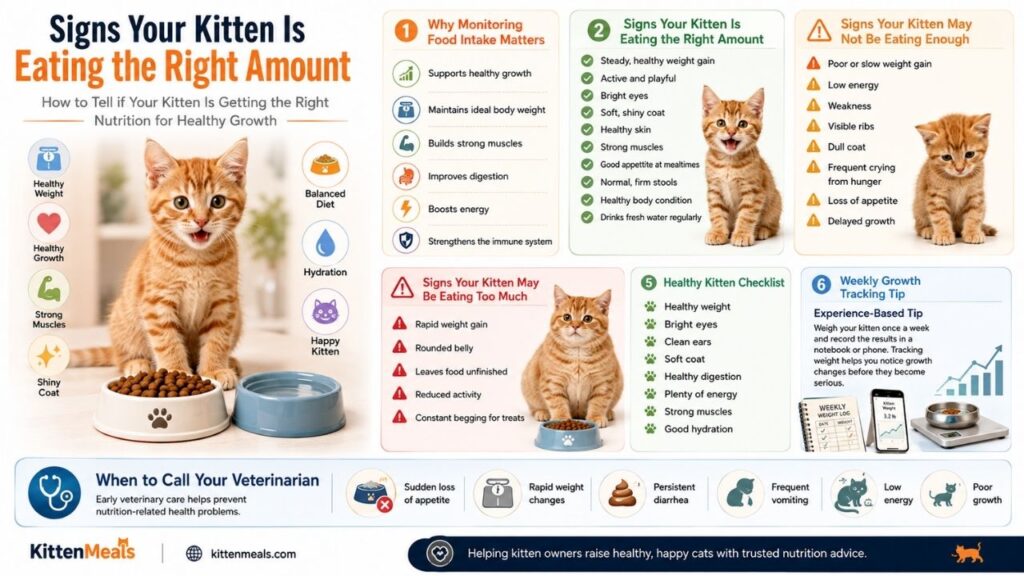
Knowing how often to feed a kitten is only part of the equation. It is equally important to make sure your kitten is eating the right amount of food. A healthy kitten should grow steadily, stay active, and maintain a healthy body condition. Watching for a few simple signs can help you determine whether your kitten’s feeding schedule and portion sizes are meeting its nutritional needs.
One of the clearest signs of proper nutrition is steady weight gain. During the first year, kittens should grow consistently without becoming overweight. Their bodies should appear lean but well-muscled, and you should be able to feel their ribs with gentle pressure without seeing them clearly. If your kitten is gaining weight too quickly or appears too thin, it may be time to adjust its food portions or feeding routine.
A kitten that receives enough protein, healthy fats, taurine, vitamins, and minerals will usually have plenty of energy. Healthy kittens enjoy playing, exploring, climbing, and interacting with people and other pets. They also have bright eyes, clean ears, healthy skin, and a soft, shiny coat. These are all signs that your kitten is getting the nutrients needed for healthy growth and development.
Healthy digestion is another good indicator that your kitten is eating the right amount. Your kitten should finish most meals with a healthy appetite but should not seem constantly hungry. Normal, well-formed stools and the absence of frequent vomiting or diarrhea suggest that your kitten’s digestive system is handling its food well. Always provide fresh water, especially if your kitten eats mostly dry kitten food, to support proper hydration.
Signs Your Kitten Is Getting the Right Amount of Food
- Steady and healthy weight gain
- Active and playful behavior
- Bright eyes and alert expression
- Soft, shiny coat
- Healthy skin and strong muscles
- Good appetite at mealtimes
- Normal, firm stools
- Healthy body condition without excess fat
- Drinks fresh water regularly
Signs Your Kitten May Not Be Eating Enough
- Poor or slow weight gain
- Low energy or weakness
- Visible ribs or prominent bones
- Dull or rough-looking coat
- Frequent crying because of hunger
- Loss of appetite
- Delayed growth compared to other kittens of the same age
Signs Your Kitten May Be Eating Too Much
- Rapid weight gain
- Rounded belly that does not improve after digestion
- Leaving food unfinished because of oversized portions
- Reduced activity due to excess weight
- Frequent begging for treats despite regular meals
If you notice any sudden changes in your kitten’s appetite, body weight, or behavior, consult your veterinarian. Regular health checkups, a balanced kitten diet, and a consistent feeding routine will help ensure your kitten receives the right nutrition at every stage of growth. Monitoring these signs each week allows you to make small adjustments before they become bigger health problems.
Experience-Based Tips
Keep a small notebook or use your phone to record your kitten’s weight each week. This simple habit helps you notice growth changes before they become serious.
Common Kitten Feeding Mistakes
Even with the best intentions, many new cat owners make feeding mistakes that can affect a kitten’s health and growth. During the first year of life, kittens need the right balance of protein, healthy fats, vitamins, minerals, and calories. Feeding too much, too little, or offering the wrong type of food can lead to nutritional problems, poor growth, or weight gain. Avoiding these common mistakes will help your kitten develop into a healthy adult cat.
1. Feeding Too Much Food
Overfeeding is one of the most common mistakes. Many owners think a growing kitten should eat as much as it wants all the time. While kittens need plenty of calories, too much food can lead to unhealthy weight gain and obesity later in life.
What to do instead:
- Follow an age-based kitten feeding schedule.
- Measure each meal instead of guessing.
- Adjust portions based on your kitten’s age, body weight, and activity level.
2. Feeding Too Little Food
Underfeeding can slow your kitten’s growth and reduce its energy levels. Growing kittens burn a lot of calories and need regular meals throughout the day.
What to do instead:
- Feed the recommended number of meals for your kitten’s age.
- Monitor your kitten’s weight every week.
- Increase portions if advised by your veterinarian.
3. Switching to Adult Cat Food Too Early
Kitten food is specially made to support healthy growth. It contains higher levels of protein, taurine, DHA, healthy fats, calcium, and phosphorus than adult cat food.
What to do instead:
- Continue feeding kitten food until about 12 months of age.
- Transition gradually to adult cat food over 7 to 10 days.
4. Giving Cow’s Milk
Many people believe kittens should drink cow’s milk, but this is a common myth. Most kittens cannot digest it properly, which may cause diarrhea, stomach upset, and dehydration.
What to do instead:
- Feed newborn kittens mother’s milk or a kitten milk replacer.
- After weaning, provide fresh water instead of milk.
5. Offering Too Many Treats
Treats can quickly add extra calories to your kitten’s diet. Feeding too many treats may reduce your kitten’s appetite for nutritious meals.
What to do instead:
- Keep treats to less than 10% of daily calorie intake.
- Choose treats made specifically for kittens.
6. Changing Food Too Quickly
A sudden change in diet can upset your kitten’s digestive system and cause vomiting or diarrhea.
What to do instead:
- Introduce new food gradually over 7 to 10 days.
- Mix increasing amounts of the new food with the old food each day.
7. Not Providing Fresh Water
Hydration is essential for healthy digestion, kidney function, and overall health. Kittens that eat mostly dry kitten food especially need easy access to clean drinking water.
What to do instead:
- Refill water bowls with fresh water every day.
- Wash food and water bowls regularly.
8. Ignoring Portion Sizes
Using a large scoop or filling the bowl without measuring can lead to inconsistent feeding.
What to do instead:
- Read the feeding guide on the kitten food package.
- Measure each serving with a measuring cup or kitchen scale.
9. Feeding Table Scraps
Human foods are often high in salt, fat, and seasonings that are not suitable for kittens. Some foods, such as onions, garlic, chocolate, grapes, and raisins, can even be toxic to cats.
What to do instead:
- Feed a complete and balanced AAFCO-approved kitten food.
- Avoid giving leftover human food.
Quick Checklist to Avoid Feeding Mistakes
- Feed meals according to your kitten’s age.
- Choose high-quality kitten food.
- Measure food portions carefully.
- Provide fresh, clean water every day.
- Limit treats and avoid table scraps.
- Introduce new foods slowly.
- Monitor your kitten’s weight and body condition.
- Visit your veterinarian for regular health checkups.
By avoiding these common feeding mistakes, you can build a healthy kitten feeding routine that supports steady growth, healthy digestion, and long-term well-being. Small changes in your daily routine can make a big difference in your kitten’s health throughout its first year of life.
Seasonal Advice (USA)
During hot summer months, kittens may drink more water than usual. In colder months, they may be less active and need slightly fewer calories.
Tips for Creating a Healthy Feeding Routine
A consistent kitten feeding routine is one of the best ways to support healthy growth and good eating habits. Kittens thrive on routine because they know when to expect their meals. Feeding at the same times every day also helps with digestion, makes portion control easier, and allows you to notice changes in your kitten’s appetite. A simple daily routine can reduce stress and help your kitten feel safe and comfortable in its new home.
Choose a high-quality kitten food that is complete and balanced for growth. Whether you feed wet kitten food, dry kitten food, or a combination of both, make sure it meets AAFCO nutritional standards. Follow the feeding guide on the package as a starting point, but adjust portions based on your kitten’s body weight, activity level, and advice from your veterinarian. Remember that every kitten is different, so its nutritional needs may vary.
Follow These Tips for a Healthy Feeding Routine
- Feed your kitten at the same times every day.
- Offer the recommended number of meals based on your kitten’s age.
- Measure food portions with a measuring cup instead of guessing.
- Choose a complete and balanced kitten food with high-quality protein, healthy fats, taurine, and DHA.
- Keep fresh, clean water available at all times.
- Wash food and water bowls daily to reduce bacteria.
- Remove leftover wet kitten food after about 30–60 minutes.
- Store dry kitten food in a sealed container to keep it fresh.
- Introduce any new food gradually over 7–10 days.
- Limit treats so they make up no more than 10% of your kitten’s daily calories.
Monitor Your Kitten’s Growth
A healthy feeding routine includes regular monitoring. Weigh your kitten every week during its first few months and keep track of its growth. Healthy kittens should gain weight steadily, stay active, and have bright eyes and a shiny coat. If your kitten suddenly loses interest in food, eats much less than usual, or gains too much weight, review its feeding schedule and contact your veterinarian if needed.
Create a Calm Feeding Environment
Where you feed your kitten is just as important as what you feed it. Place food and water bowls in a quiet, clean area away from loud noises, litter boxes, and heavy foot traffic. If you have more than one cat, provide separate feeding spaces to reduce competition and stress. A calm environment encourages healthy eating habits and helps kittens enjoy their meals.
Building a healthy feeding routine from the beginning makes caring for your kitten much easier. Regular meal times, balanced nutrition, proper portion control, and plenty of fresh water help support healthy growth during the first year of life. These simple habits will also make the transition to adult cat food smoother when your kitten reaches its first birthday.
Indoor vs Outdoor Advice
Indoor kittens usually burn fewer calories than kittens that spend supervised time outdoors. Their food portions may need slight adjustments as they grow.
When Should You Switch to Adult Cat Food?
Most kittens are ready to switch to adult cat food when they reach 12 months of age. By this time, their rapid growth has slowed, and their nutritional needs begin to change. While kitten food is rich in protein, healthy fats, taurine, DHA, calcium, and other nutrients needed for growth, adult cats require a different balance of nutrients to maintain a healthy weight and overall health.
It is important not to switch too early. Feeding adult cat food before your kitten is fully grown may prevent it from getting enough calories and essential nutrients during this critical stage of development. Continue feeding a complete and balanced kitten food that meets AAFCO nutritional standards until your kitten reaches about one year of age, unless your veterinarian recommends otherwise.
Some larger cat breeds, such as the Maine Coon, grow more slowly than other cats and may benefit from staying on kitten food for a longer period. Your veterinarian can help determine the right time to transition based on your kitten’s breed, body weight, and overall health.
How to Transition to Adult Cat Food
A gradual transition helps prevent digestive upset and allows your kitten to adjust to the new food. Avoid switching foods all at once.
Use this simple 7–10 day transition plan:
| Days | Kitten Food | Adult Cat Food |
| Days 1–2 | 75% | 25% |
| Days 3–4 | 50% | 50% |
| Days 5–7 | 25% | 75% |
| Days 8–10 | 0% | 100% |
During the transition, watch your cat for signs that it is adjusting well. A healthy transition usually includes:
- A normal appetite
- Healthy digestion
- Firm stools
- Good energy levels
- A healthy body weight
If you notice vomiting, diarrhea, loss of appetite, or other digestive problems, slow down the transition and consult your veterinarian if the symptoms continue.
Tips for Choosing Adult Cat Food
When selecting adult cat food, look for these features:
- Labeled as complete and balanced for adult cats
- Meets AAFCO nutritional standards
- Contains high-quality animal protein
- Includes essential vitamins and minerals
- Matches your cat’s age, lifestyle, and activity level
- Available as wet food, dry food, or a combination based on your cat’s preference
Switching to adult cat food at the right time is an important step in your cat’s life. A gradual transition, proper portion control, and a consistent feeding routine will help your young cat continue to thrive. Even after the transition, continue monitoring your cat’s body weight, appetite, and overall health, and schedule regular veterinary checkups to support a long and healthy life.
Popular USA Brands Naturally
Many veterinarians recommend choosing complete kitten foods from trusted brands such as Purina Pro Plan, Royal Canin, Hill’s Science Diet, or IAMS, as long as the food is appropriate for your kitten’s age.
Frequently Asked Questions
How often should an 8-week-old kitten eat?
An 8-week-old kitten should eat four small meals each day. At this age, kittens are fully weaned and need regular meals to support their rapid growth and high energy levels. You can feed wet kitten food, dry kitten food, or a combination of both, as long as the food is complete and balanced for kittens.
How often should a 3-month-old kitten eat?
A 3-month-old kitten should usually eat three to four meals per day. Frequent meals provide the protein, healthy fats, and essential nutrients needed for healthy bones, muscles, and brain development. Feed measured portions and keep fresh water available at all times.
Should kittens eat during the night?
Healthy kittens that are 8 weeks or older generally do not need to be fed during the night if they receive enough food during the day. However, newborn kittens that are nursing or drinking kitten milk replacer need to eat every 2–3 hours, including overnight.
Is wet food or dry food better for kittens?
Both wet kitten food and dry kitten food can support healthy growth when they meet AAFCO nutritional standards. Wet food helps increase water intake and is easier to chew, while dry food is convenient, easy to store, and simple to measure. Many veterinarians recommend feeding a combination of both.
Can kittens eat only dry food?
Yes, kittens can eat only dry kitten food if it is complete and balanced for growth. However, many owners include wet food in the diet because it provides extra moisture and variety. Always make sure your kitten has access to fresh, clean water, especially if it eats mostly dry food.
Should I leave food out all day for my kitten?
Leaving food out all day, also known as free feeding, may work for some very young kittens. However, most veterinarians recommend scheduled feeding with measured portions after 8 weeks of age. Scheduled meals help prevent overeating, support healthy digestion, and make it easier to monitor your kitten’s appetite.
How much food should my kitten eat each day?
The amount of food depends on your kitten’s age, body weight, activity level, and the calorie content of its food. Follow the feeding guide on the food package as a starting point and adjust portions based on your kitten’s growth. Your veterinarian can also recommend the right daily amount for your kitten.
Can I feed my kitten homemade food?
Homemade food can be difficult to balance correctly because kittens need precise amounts of protein, taurine, calcium, vitamins, and other nutrients. Unless the diet has been created by a qualified veterinary nutrition expert, it is safer to feed a commercial kitten food that is complete and balanced.
What happens if I overfeed my kitten?
Overfeeding can lead to rapid weight gain and increase the risk of obesity later in life. It may also make it harder to maintain a healthy body condition. Measuring food portions, following an age-based kitten feeding schedule, and limiting treats can help prevent overfeeding.
When should I contact a veterinarian about my kitten’s eating habits?
You should contact your veterinarian if your kitten refuses food for more than a day, loses weight, vomits frequently, has ongoing diarrhea, or shows sudden changes in appetite or behavior. Early treatment can prevent minor feeding problems from becoming serious health issues.
Conclusion
Knowing how often should you feed a kitten is one of the most important parts of raising a healthy and happy cat. The right feeding schedule changes as your kitten grows. Newborn kittens need frequent milk feedings every few hours, while older kittens gradually move to 2–3 meals a day before transitioning to adult feeding at around 12 months of age. Following an age-based feeding plan helps support healthy growth, strong bones, muscle development, and a healthy immune system.
Choose a complete and balanced kitten food that meets AAFCO nutritional standards, measure portions carefully, and always provide fresh, clean water. Whether you feed wet kitten food, dry kitten food, or a combination of both, consistency is the key to building healthy eating habits. Monitor your kitten’s weight, energy level, and overall health, and adjust its feeding routine as it grows.
Every kitten is unique, so use the feeding recommendations in this guide as a starting point and work with your veterinarian to create the best nutrition plan for your pet. With proper care, regular meals, and high-quality nutrition, your kitten will have the strong foundation it needs to grow into a healthy, active, and happy adult cat.