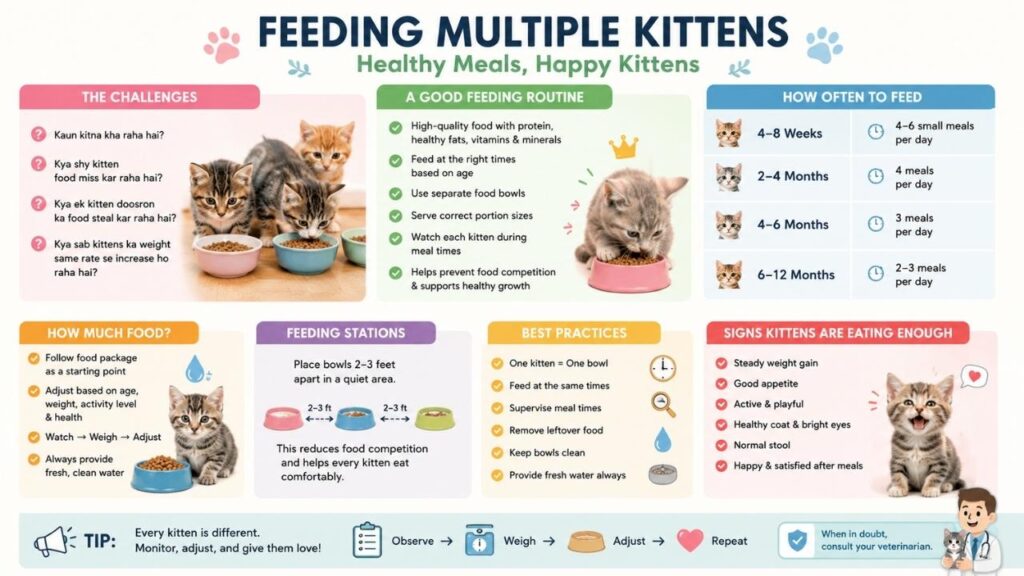
Feeding multiple kittens may seem easy at first, but it comes with a few unique challenges. Each kitten has different needs, even if they are from the same litter. Some may eat faster, while others may be shy or smaller than their siblings. Without a proper feeding routine, stronger kittens can eat more than they need, leaving others with less food. This can affect healthy growth and make it harder to track each kitten’s progress.
A well-planned feeding routine helps every kitten get the right amount of nutrition. Growing kittens need high-quality food that provides protein, healthy fats, vitamins, and minerals to support strong bones, muscles, and brain development. They also need meals at the right times based on their age. Using separate food bowls, serving the correct portion sizes, and watching each kitten during meal times can help prevent food competition and support healthy weight gain.
This guide explains everything you need to know about feeding multiple kittens. You will learn how much food each kitten needs, how often to feed them, how to set up feeding stations, and how to prevent food stealing. You will also discover common feeding mistakes, signs that your kittens are eating enough, and practical tips to help every kitten grow into a healthy and happy cat. Whether you are caring for two kittens, a large litter, or rescued kittens, this guide will help you feed them with confidence.
Imagine putting three bowls of food down and watching one kitten finish first, then walk straight over to the other bowls.
Kaun kitna kha raha hai?
Kya shy kitten food miss kar raha hai?
Kya ek kitten doosron ka food steal kar raha hai?
Kya sab kittens ka weight same rate se increase ho raha hai?
Why Feeding Multiple Kittens Is Different
Feeding multiple kittens is different from feeding just one kitten. Even when kittens come from the same litter, they do not always eat the same amount or grow at the same speed. One kitten may have a stronger appetite, while another may be smaller or less confident during meal times. If you do not watch them closely, some kittens may eat more than they need, while others may not get enough nutrition. This can affect healthy growth and make it difficult to notice early signs of health problems.
Growing kittens need a balanced diet that is rich in high-quality protein, healthy fats, taurine, DHA, vitamins, and minerals. These nutrients support brain development, strong muscles, healthy bones, and a shiny coat. During the first year of life, kittens grow quickly and burn a lot of energy. That is why they need specially formulated kitten food instead of adult cat food. Following a regular kitten feeding schedule also helps support healthy digestion and steady weight gain.
Food competition is one of the biggest challenges when feeding multiple kittens. Some kittens eat very fast and may try to take food from their littermates. Others may become nervous and stop eating if they feel crowded. Using separate food bowls and creating multiple feeding stations can help every kitten eat comfortably. This simple step also allows you to monitor each kitten’s appetite and make sure everyone is getting the right portion size.
Another challenge is that kittens may have different calorie needs based on their age, weight, activity level, and overall health. A larger or more active kitten often needs more food than a smaller sibling. Orphaned kittens, rescue kittens, or those recovering from illness may also require special feeding plans or kitten milk replacer during the early weeks. Checking each kitten’s body weight every week is one of the best ways to make sure they are growing at a healthy rate.
A consistent feeding routine is the key to raising healthy kittens. Feed them at the same times every day, provide fresh water at all times, and keep feeding areas clean. Watch for changes in appetite, energy levels, stool quality, and body condition. If one kitten is eating much less than the others, losing weight, or showing signs of illness, contact a veterinarian as soon as possible. Early attention can prevent small feeding problems from becoming serious health issues.
Scenario 1:
Three littermates hain. One kitten eats very quickly.
Scenario 2:
One kitten is smaller and waits until the others finish.
Scenario 3:
One kitten walks away after eating half its meal.
Nutritional Needs of Growing Kittens
Growing kittens need more nutrients than adult cats because their bodies develop very quickly during the first year of life. They need enough calories to support rapid growth, active play, and a strong immune system. Feeding a complete and balanced kitten food gives them the protein, healthy fats, vitamins, and minerals they need every day. Choosing food that meets the nutritional standards for kittens helps support healthy development from the first weeks of life until they become adults.
Protein is the most important nutrient in a kitten’s diet. It helps build strong muscles, repair body tissues, and support healthy growth. Healthy fats provide energy and help the brain and nervous system develop properly. Nutrients such as taurine, DHA, calcium, phosphorus, vitamin D, and essential minerals also play a key role in keeping the heart, eyes, bones, and teeth healthy. These nutrients should come from high-quality commercial kitten food that is specially made for growing cats.
As kittens grow, their nutritional needs change. Very young kittens depend on their mother’s milk or a kitten milk replacer. During the weaning stage, they slowly begin eating soft wet kitten food before moving to a combination of wet and dry kitten food. Following an age-based feeding plan helps ensure every kitten receives the right amount of nutrition at each stage of development.
| Kitten Age | Meals Per Day | Recommended Food |
| 0–4 weeks | Every 2–3 hours | Mother’s milk or kitten milk replacer |
| 4–8 weeks | 4–6 meals | Wet kitten food with gradual weaning |
| 2–4 months | 4 meals | Wet and dry kitten food |
| 4–6 months | 3 meals | High-quality kitten food |
| 6–12 months | 2–3 meals | Complete and balanced kitten food |
Hydration is also an important part of kitten nutrition. Wet kitten food contains more moisture and helps support healthy hydration, while dry kitten food is convenient and can help with portion control. Many veterinarians recommend feeding both wet and dry food to provide a balanced diet. Always place clean, fresh water in several easy-to-reach locations, especially when feeding multiple kittens.
When choosing kitten food, read the ingredient list carefully. Look for real animal protein, such as chicken, turkey, or salmon, as the first ingredient. Avoid foods that contain excessive fillers, artificial colors, or unnecessary additives. Well-known kitten food brands like Purina Pro Plan Kitten, Royal Canin Kitten, Hill’s Science Diet Kitten, Blue Buffalo Baby BLUE, and IAMS ProActive Health Kitten are formulated to provide complete nutrition for healthy growth.
Remember that every kitten is different. Breed, activity level, body weight, and overall health can affect daily calorie needs. Weigh each kitten every week and monitor their body condition, energy level, and appetite. If a kitten is not gaining weight, refuses food, or appears weak, consult a veterinarian to rule out any underlying health concerns. Proper nutrition during the first year builds the foundation for a healthy adult cat.
Protein supports muscle growth.
A growing kitten uses protein to build muscle and body tissue. That is why kitten food should provide enough high-quality animal protein instead of simply filling the bowl with calories.
| Nutrient | Why It Matters |
| Protein | Supports muscle and tissue growth |
| DHA | Supports brain and eye development |
| Taurine | Important for heart and eye health |
| Calcium & phosphorus | Support bones and teeth |
| Healthy fats | Provide energy and essential fatty acids |
How Much Food Does Each Kitten Need?
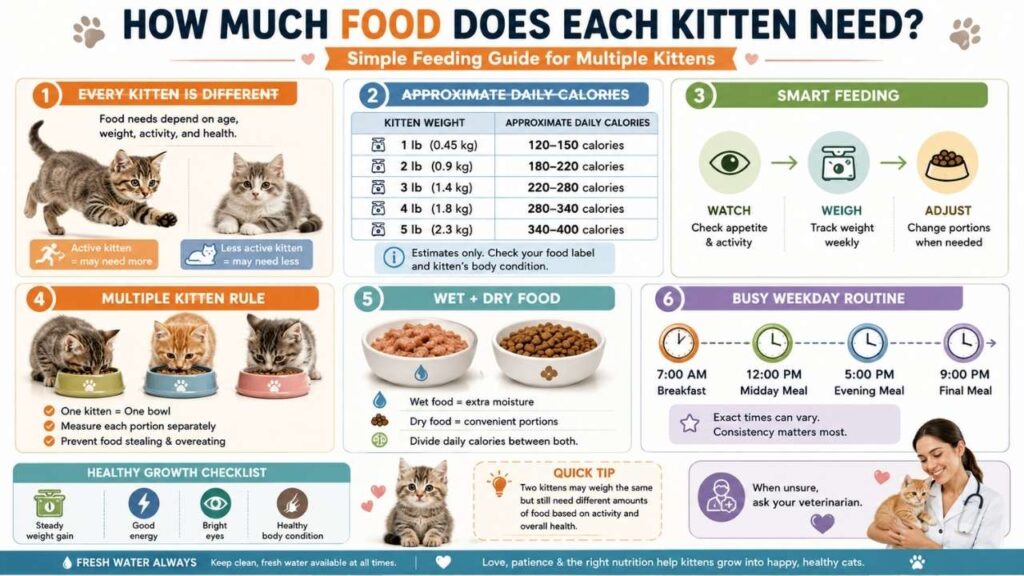
Knowing how much food each kitten needs is one of the most important parts of feeding multiple kittens. Every kitten has different calorie needs based on its age, body weight, activity level, and overall health. Even kittens from the same litter may not need the same amount of food. A larger or more active kitten usually needs more calories than a smaller or less active sibling. Feeding the right portion helps support healthy growth and prevents both overfeeding and underfeeding.
Young kittens grow very fast and need more calories for their size than adult cats. During the first year, their bodies use energy to build muscles, bones, organs, and a healthy immune system. Feeding high-quality kitten food that is rich in protein, healthy fats, taurine, DHA, vitamins, and minerals helps meet these nutritional needs. Instead of guessing portion sizes, always check the feeding guide on the kitten food package and adjust it based on your kitten’s weight and body condition.
The table below shows general daily calorie needs for healthy kittens. These values are estimates and may vary depending on your kitten’s breed, activity level, and the type of food you choose.
| Kitten Weight | Approximate Daily Calories |
| 1 pound (0.45 kg) | 120–150 calories |
| 2 pounds (0.9 kg) | 180–220 calories |
| 3 pounds (1.4 kg) | 220–280 calories |
| 4 pounds (1.8 kg) | 280–340 calories |
| 5 pounds (2.3 kg) | 340–400 calories |
If you are feeding wet and dry kitten food together, divide the daily calories between both meals. For example, you can offer wet food in the morning and evening while providing a measured amount of dry food during the day. This combination gives kittens extra moisture from wet food and the convenience of dry food while making portion control easier.
When feeding multiple kittens, avoid placing one large bowl of food for everyone to share. Instead, give each kitten its own food bowl and measure each portion separately. This allows you to see how much each kitten eats and helps prevent food stealing or overeating. It also makes it easier to notice if one kitten suddenly loses its appetite, which can be an early sign of illness.
Monitor your kittens every week by checking their weight, body condition, and energy level. Healthy kittens should gain weight steadily, have bright eyes, a soft coat, and stay active throughout the day. If one kitten is gaining weight too quickly, eating much more than the others, or falling behind in growth, adjust its portion size and seek advice from a veterinarian if needed. Regular monitoring is the best way to ensure every kitten receives the right amount of nutrition for healthy development.
Example:
Two kittens may weigh the same but still need slightly different amounts of food. One may spend the day running around the house, while another sleeps much more.
Ye sentence real-life feel deta hai.
Phir explain karein:
Watch → Weigh → Adjust
- Measure the food.
- Monitor the kitten’s weight.
- Watch body condition.
- Adjust only when needed.
USA household routine
A busy weekday routine
7:00 AM — Breakfast
12:00 PM — Midday meal
5:00 PM — Evening meal
9:00 PM — Final meal
You do not need to follow these exact times. The important part is keeping the routine consistent.
Best Feeding Schedule for Multiple Kittens
A consistent feeding schedule is one of the best ways to keep multiple kittens healthy. Young kittens have small stomachs, so they need several small meals throughout the day instead of one or two large meals. Feeding at the same times every day helps support healthy digestion, steady energy levels, and proper growth. It also makes it easier to monitor each kitten’s appetite and notice any changes early.
The number of meals your kittens need depends on their age. Younger kittens require more frequent feeding because they burn calories quickly. As they grow, you can slowly reduce the number of meals while increasing the portion size. Following an age-appropriate kitten feeding schedule ensures every kitten gets enough nutrition without overeating.
| Kitten Age | Meals Per Day | Suggested Feeding Times |
| 4–8 weeks | 4–6 meals | Every 4–5 hours |
| 2–4 months | 4 meals | Morning, midday, afternoon, evening |
| 4–6 months | 3 meals | Morning, afternoon, evening |
| 6–12 months | 2–3 meals | Morning and evening, with an optional midday meal |
For kittens between 2 and 4 months of age, a simple daily routine may look like this:
| Time | Meal |
| 7:00 AM | Wet kitten food |
| 12:00 PM | Dry kitten food |
| 4:00 PM | Wet kitten food |
| 8:00 PM | Dry or wet kitten food |
This schedule is only an example. You can adjust meal times to match your daily routine, but try to keep the timing consistent. Kittens quickly become familiar with regular feeding times, which helps reduce stress and food-related behavior problems.
When feeding multiple kittens, serve each kitten in its own bowl. Place the bowls a short distance apart so every kitten has enough space to eat comfortably. This reduces food competition and allows shy kittens to finish their meals without being pushed away by stronger littermates. Always supervise meal times until you are confident that every kitten is eating the correct portion.
Fresh water should be available at all times, even if your kittens eat mostly wet food. Place several water bowls around the feeding area so every kitten has easy access. Clean food and water bowls after each meal to reduce bacteria and keep the feeding area hygienic.
As your kittens grow, watch their body weight, appetite, and activity level. Some kittens may need slightly larger or smaller portions than their siblings. Adjust the amount of food when needed, but avoid changing the feeding schedule too often. A regular routine, balanced nutrition, and careful monitoring will help every kitten develop into a healthy and active adult cat.
Should Kittens Share Food Bowls?
Many new cat owners wonder if multiple kittens can eat from the same bowl. While kittens may naturally gather around one bowl, sharing food is not the best choice for their long-term health. Using separate food bowls makes it easier to manage portion sizes, reduce food competition, and ensure every kitten receives the nutrition it needs for healthy growth.
When several kittens eat from one bowl, it becomes difficult to know how much each kitten is eating. Stronger or more confident kittens often finish their food quickly and may push smaller or quieter littermates away. Over time, this can lead to uneven weight gain, poor nutrition, and slower development for some kittens. It can also make it harder to notice if one kitten has a poor appetite, which may be an early sign of illness.
Separate bowls also help keep meal times calm and organized. Each kitten can eat at its own pace without feeling rushed. This reduces stress and lowers the risk of food aggression or resource guarding as the kittens grow. A peaceful feeding environment encourages healthy eating habits and supports better digestion.
Benefits of Using Separate Food Bowls
- Makes portion control simple and accurate
- Helps every kitten receive the right amount of food
- Reduces food stealing and competition
- Allows you to monitor each kitten’s appetite
- Prevents stronger kittens from overeating
- Makes it easier to spot health or feeding problems early
Possible Problems with One Shared Bowl
- Uneven food intake among kittens
- Smaller kittens may not eat enough
- Faster eaters may consume extra calories
- Increased food aggression during meal times
- Difficult to track each kitten’s eating habits
- Higher chance of spreading germs through shared saliva
If you have a large litter, place each bowl a few feet apart or feed kittens in different areas of the room. This gives every kitten enough personal space during meals. In homes with very shy or timid kittens, feeding them in a separate quiet room may help them eat comfortably without distractions.
Keep all food bowls clean by washing them after every meal with warm water and mild dish soap. Clean bowls reduce the growth of bacteria and help protect your kittens from digestive problems. Stainless steel or ceramic bowls are usually better choices than plastic because they are easier to clean and less likely to hold bacteria.
Although kittens may occasionally eat from a sibling’s bowl, your goal should be to encourage individual feeding as part of a healthy daily routine. Combined with a balanced kitten diet, regular feeding schedule, fresh water, and weekly weight checks, separate bowls are one of the easiest ways to support healthy growth and ensure every kitten gets the nutrition it needs.
strong personal-style observation
If you cannot tell which kitten ate half a bowl and which kitten ate most of it, the bowl is doing a poor job of helping you monitor their nutrition.
One kitten → one bowl
Especially:
- shy kittens
- smaller kittens
- kittens with different appetites
- rescue kittens
Setting Up Multiple Feeding Stations
A well-planned feeding station makes meal times easier and less stressful when feeding multiple kittens. Instead of placing all the food in one area, create separate feeding spots where each kitten has enough space to eat comfortably. This simple setup helps prevent food competition, reduces stress, and ensures every kitten receives the right portion of high-quality kitten food.
Choose a quiet area of your home that is free from loud noises and heavy foot traffic. Kittens feel safer when they can eat without distractions. If you have a large litter, divide the feeding stations into different parts of the room or use separate rooms if needed. This gives shy kittens the chance to finish their meals without being interrupted by more confident siblings.
Place one food bowl and easy access to fresh water at each feeding station. Stainless steel or ceramic bowls are the best choice because they are durable, easy to clean, and less likely to hold bacteria. Wash food and water bowls after every meal to maintain good hygiene and reduce the risk of digestive problems.
Try to leave at least 2 to 3 feet (60 to 90 cm) between feeding bowls. This spacing gives kittens enough room to eat peacefully and lowers the chance of food stealing or aggressive behavior. If one kitten finishes early and tries to move to another bowl, gently redirect it to prevent overeating and ensure every kitten gets its own meal.
Tips for Creating the Best Feeding Stations
- Use one food bowl for each kitten.
- Place bowls 2 to 3 feet apart.
- Provide several bowls of fresh, clean water.
- Feed kittens at the same times every day.
- Keep the feeding area quiet and clean.
- Remove leftover wet food after 20 to 30 minutes.
- Store dry kitten food in a sealed container to keep it fresh.
- Clean bowls and feeding mats after every meal.
If you are caring for orphaned kittens or rescue kittens, monitor each feeding station closely. These kittens may have different nutritional needs and may require kitten milk replacer, softer food, or more frequent meals. Keeping a simple record of each kitten’s appetite and weekly weight can help you identify growth problems early and make feeding adjustments when needed.
A good feeding station does more than provide food. It creates a calm routine that supports healthy eating habits, proper digestion, and steady weight gain. Combined with a balanced diet, regular meal schedule, and routine veterinary checkups, an organized feeding setup gives every kitten the best chance to grow into a healthy and active adult cat.
actual home setup
Small apartment:
Three bowls on different sides of the kitchen.
Large home:
Two kittens in kitchen + one quieter kitten in another nearby area.
Very competitive litter:
Feed kittens individually for a short period.
Wet Food vs Dry Food for Multiple Kittens
Many cat owners ask whether wet food or dry food is better when feeding multiple kittens. The truth is that both have benefits. Most veterinarians recommend feeding a combination of wet and dry kitten food because it provides balanced nutrition while supporting healthy growth. The best choice depends on your kittens’ age, eating habits, and daily routine.
Wet kitten food contains a high amount of moisture, which helps keep kittens hydrated. It is also soft and easy to chew, making it an excellent option for kittens that are being weaned or have small teeth. Many kittens find wet food more appealing because of its smell and texture, which can encourage picky eaters to finish their meals.
Dry kitten food is convenient, easy to store, and usually costs less than wet food. It stays fresh longer after serving and makes portion control simple when feeding several kittens. Dry food also encourages chewing, although it should not replace regular dental care. Always choose a premium kitten formula that provides complete and balanced nutrition for growing cats.
The table below compares the main differences between wet and dry kitten food.
| Wet Kitten Food | Dry Kitten Food |
| High moisture content supports hydration | Lower moisture content |
| Soft texture for young kittens | Crunchy texture encourages chewing |
| Very tasty for most kittens | Easy to measure and store |
| Helps increase water intake | More budget-friendly for larger litters |
| Best for weaning kittens | Convenient for scheduled meals |
For most households with multiple kittens, a mixed feeding approach works well. You can serve wet kitten food in the morning and evening to provide extra moisture and important nutrients. During the day, offer measured portions of dry kitten food to help maintain a consistent feeding schedule. This method gives kittens the benefits of both food types while making meal planning easier.
No matter which type of food you choose, always buy kitten food that is specially formulated for growth. Look for products that contain real animal protein, healthy fats, taurine, DHA, vitamins, and essential minerals. Well-known brands such as Purina Pro Plan Kitten, Royal Canin Kitten, Hill’s Science Diet Kitten, Blue Buffalo Baby BLUE, and IAMS ProActive Health Kitten are designed to meet the nutritional needs of growing kittens.
When feeding multiple kittens, avoid leaving large amounts of food out all day. Measure each kitten’s portion and serve it in a separate bowl. This helps prevent overeating, allows you to monitor each kitten’s appetite, and reduces food competition. Remove leftover wet food after about 20 to 30 minutes to keep it fresh and prevent bacterial growth.
Fresh, clean water should always be available, especially if your kittens eat mostly dry food. Place several water bowls around the feeding area so every kitten can drink easily. A balanced diet, proper hydration, and a regular feeding routine will help your kittens grow into healthy, active, and happy adult cats.
balanced opinion
If you are feeding four kittens, dry food may be easier to measure and store. Wet food, however, can make hydration easier and is often more appealing to young kittens.
Then:
Best choice depends on:
- kitten’s age
- appetite
- hydration
- budget
- owner’s schedule
- veterinarian’s recommendation
Feeding Orphaned Kittens in a Litter
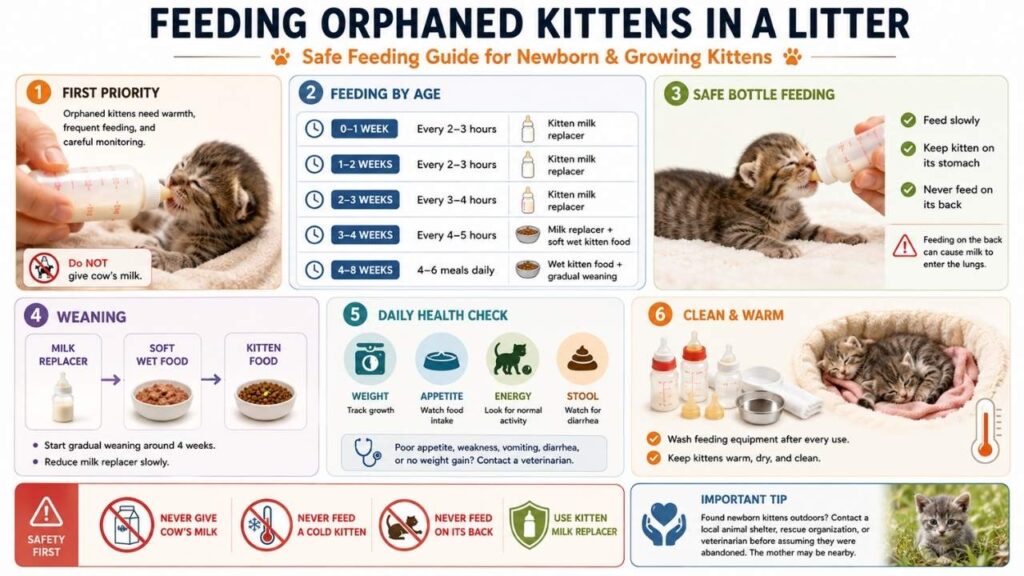
Feeding orphaned kittens requires extra care and attention because they do not have their mother’s milk to provide nutrition and protection during the first weeks of life. These kittens depend completely on their caregiver for food, warmth, and daily care. If you are raising an orphaned litter, following the correct feeding routine is essential for healthy growth and survival.
Newborn kittens should never be given cow’s milk because it does not provide the nutrients they need and can cause digestive problems such as diarrhea. Instead, use a high-quality kitten milk replacer that is specially made for newborn kittens. Kitten milk replacer contains the right balance of protein, fat, vitamins, and minerals to support healthy development until the kittens are ready for weaning.
Young orphaned kittens need frequent feedings because their stomachs are very small. They should be fed with a nursing bottle or feeding syringe designed for kittens. Feed them slowly while they are lying on their stomach, just as they would naturally nurse from their mother. Never feed a kitten while it is lying on its back because this can cause milk to enter the lungs and lead to aspiration pneumonia.
The table below shows a general feeding schedule for orphaned kittens.
| Kitten Age | Feeding Frequency | Food |
| 0–1 week | Every 2–3 hours | Kitten milk replacer |
| 1–2 weeks | Every 2–3 hours | Kitten milk replacer |
| 2–3 weeks | Every 3–4 hours | Kitten milk replacer |
| 3–4 weeks | Every 4–5 hours | Kitten milk replacer with soft wet kitten food |
| 4–8 weeks | 4–6 meals daily | Wet kitten food with gradual transition to dry food |
As the kittens reach about four weeks of age, you can begin the weaning process. Mix a small amount of wet kitten food with kitten milk replacer to create a soft, easy-to-eat meal. Gradually reduce the amount of milk replacer over the next few weeks until the kittens are eating wet kitten food on their own. After weaning, you can slowly introduce high-quality dry kitten food as part of a balanced diet.
When caring for an orphaned litter, monitor each kitten closely. Weigh every kitten at the same time each day or at least once a week. Healthy kittens should gain weight steadily and show a strong appetite, bright eyes, and good energy levels. If a kitten stops gaining weight, refuses to eat, becomes weak, or develops diarrhea or vomiting, contact a veterinarian immediately. Early treatment can prevent serious health problems.
Cleanliness is just as important as proper nutrition. Wash feeding bottles, nipples, bowls, and syringes after every use to reduce the risk of bacterial infections. Keep the feeding area warm, dry, and clean because newborn kittens cannot regulate their body temperature well during the first few weeks of life.
Raising orphaned kittens takes time and patience, but a consistent feeding schedule, proper kitten nutrition, regular weight checks, and veterinary care can give every kitten the best chance to grow into a healthy and thriving adult cat.
Do not give cow’s milk.
Never feed a cold kitten.
Never feed a kitten on its back.
Use kitten milk replacer.
If you have found a litter of newborn kittens outdoors, contact a local animal shelter, rescue organization, or veterinarian before assuming the kittens have been abandoned. The mother may simply be away looking for food.
Preventing Food Competition
Food competition is one of the most common challenges when feeding multiple kittens. Some kittens naturally eat faster or have stronger personalities than others. They may finish their own meal quickly and then move to another kitten’s bowl. Smaller or shy kittens may stop eating when they feel pressured, which can lead to poor nutrition and slow weight gain. Preventing food competition helps every kitten receive the right amount of food and supports healthy growth.
The easiest way to reduce food competition is to give each kitten its own food bowl. Measure the correct portion for each kitten and place the bowls several feet apart. This creates enough personal space for every kitten to eat comfortably. If you have a large litter, you can also use separate feeding areas or different rooms to prevent crowding during meal times.
Supervising your kittens while they eat is another important step. Watch each kitten until it finishes its meal. If one kitten tries to steal food from another bowl, gently move it back to its own feeding area. This simple habit helps establish good eating behavior and allows you to monitor each kitten’s appetite and food intake.
Tips to Prevent Food Competition
- Use one food bowl for each kitten.
- Measure each kitten’s food portion separately.
- Place bowls 2 to 3 feet apart.
- Feed all kittens at the same time.
- Supervise every meal until all kittens finish eating.
- Feed timid kittens in a quiet area if needed.
- Remove leftover food after meal time.
- Keep a regular feeding schedule every day.
If one kitten consistently eats much faster than the others, try using a slow feeder bowl. Slow feeders encourage kittens to eat at a gentler pace, giving their littermates enough time to finish their own meals. This can also help improve digestion and reduce the risk of overeating.
Some kittens have different nutritional needs because of their age, body weight, activity level, or health condition. A kitten recovering from illness or one that is smaller than its siblings may require extra calories or more frequent meals. In these cases, feeding that kitten separately ensures it receives the nutrition needed for healthy development without competition from the rest of the litter.
Pay attention to signs of food aggression, such as growling, hissing, pushing other kittens away, or guarding a food bowl. These behaviors should be corrected early by creating a calm feeding environment rather than punishing the kitten. Providing enough space, separate bowls, and consistent meal times usually solves most feeding problems.
A peaceful feeding routine benefits every kitten. It supports healthy weight gain, balanced nutrition, and better eating habits. Combined with high-quality kitten food, fresh water, regular weight checks, and routine veterinary care, preventing food competition helps every kitten grow into a healthy, confident, and active adult cat.
what to do
If one kitten steals food:
Move bowls farther apart.
If one kitten eats too fast:
Consider a slow feeder and supervised meals.
If one kitten is too shy:
Feed it separately.
If kittens fight around food:
Separate them during meals.
How to Monitor Each Kitten’s Growth
Monitoring each kitten’s growth is an important part of feeding multiple kittens. Even when all kittens eat the same food, they may not grow at the same rate. Regular weight checks and daily observation help you make sure every kitten is getting enough nutrition. They also help you identify health problems before they become serious.
The easiest way to monitor growth is to weigh each kitten regularly using a digital kitchen or pet scale. Try to weigh them at the same time each week and record the results in a notebook or spreadsheet. Healthy kittens should gain weight steadily as they grow. If one kitten stops gaining weight or begins to lose weight, it may not be eating enough or could have an underlying health issue that requires veterinary attention.
Body condition is just as important as body weight. A healthy kitten should have a smooth body shape with a small waist when viewed from above. You should be able to feel the ribs with gentle pressure, but they should not be clearly visible. A kitten that looks too thin may need more calories, while one that is gaining weight too quickly may need smaller portions or more activity.
Besides checking weight, watch your kittens during and after every meal. Healthy kittens usually have a good appetite, enjoy playing, and stay active throughout the day. They should also have bright eyes, a clean coat, and normal stools. Changes in eating habits or behavior often appear before obvious signs of illness.
Weekly Growth Checklist
- Check each kitten’s body weight.
- Monitor appetite during every meal.
- Look for steady and healthy weight gain.
- Observe energy levels and playfulness.
- Check the coat for softness and shine.
- Make sure the eyes are bright and clear.
- Watch for normal, well-formed stools.
- Ensure every kitten drinks fresh water.
- Record any changes in behavior or eating habits.
Keeping a simple growth record is very helpful, especially if you are caring for a large litter or rescue kittens. Write down each kitten’s weight, daily appetite, and any unusual changes. This information can help you adjust portion sizes and provide useful details if you need to visit a veterinarian.
Remember that every kitten develops at its own pace. Breed, genetics, activity level, and overall health can all affect growth. The goal is not for every kitten to weigh exactly the same, but for each kitten to show steady progress and maintain a healthy body condition. Consistent monitoring, a balanced kitten diet, and regular veterinary checkups are the best ways to support healthy growth during the first year of life.
real tracking system
Example:
| Kitten | Week 1 | Week 2 | Week 3 | Appetite |
| Kitten A | 1.8 lb | 2.0 lb | 2.2 lb | Good |
| Kitten B | 1.7 lb | 1.8 lb | 1.9 lb | Normal |
| Kitten C | 1.6 lb | 1.6 lb | 1.5 lb | Low |
The exact numbers are less important than the trend. A kitten that consistently fails to gain weight deserves closer attention.
Real owner mistakes
Feeding multiple kittens is rewarding, but even small mistakes can affect their health and development. Growing kittens need the right amount of high-quality nutrition at every stage of life. Avoiding common feeding mistakes helps support healthy weight gain, strong bones, a healthy immune system, and proper brain development.
One of the biggest mistakes is giving all kittens the same amount of food. Every kitten has different calorie needs based on its age, body weight, activity level, and overall health. A larger or more active kitten may need a bigger portion, while a smaller kitten may need less food but closer monitoring. Measuring each kitten’s food separately helps ensure they all receive the right nutrition.
Another common mistake is feeding adult cat food instead of kitten food. Adult cat food does not contain the higher levels of protein, healthy fats, taurine, DHA, vitamins, and minerals that growing kittens need. Always choose a complete and balanced kitten food that is specially formulated to support healthy growth during the first year.
Free-feeding can also create problems in homes with multiple kittens. Leaving food available all day makes it difficult to monitor how much each kitten eats. Some kittens may overeat, while others may not get enough food. Feeding measured portions at regular meal times is a better way to manage appetite and maintain healthy body weight.
Common Feeding Mistakes to Avoid
- Feeding all kittens the same portion size.
- Using one shared food bowl for the entire litter.
- Feeding adult cat food instead of kitten food.
- Giving too many treats or table scraps.
- Leaving wet food out for several hours.
- Not providing enough fresh, clean water.
- Changing foods too quickly without a gradual transition.
- Ignoring weekly weight checks.
- Feeding on an inconsistent schedule.
- Failing to notice changes in appetite or behavior.
Some owners also change kitten food too quickly. A sudden diet change can upset a kitten’s digestive system and lead to vomiting or diarrhea. If you need to switch to a new food, mix small amounts of the new food with the current food over 7 to 10 days. This gradual transition helps kittens adjust more comfortably.
Clean feeding equipment is another important part of kitten care. Dirty food bowls and water dishes can collect bacteria that may cause digestive problems. Wash bowls with warm water and mild dish soap after every meal, and refill water bowls with fresh, clean water every day.
Finally, never ignore changes in your kitten’s eating habits. A kitten that refuses food, loses weight, becomes less active, or has ongoing vomiting or diarrhea should be examined by a veterinarian. Early treatment can prevent minor feeding issues from developing into serious health problems.
By avoiding these common feeding mistakes and following a consistent feeding schedule, you can help every kitten receive balanced nutrition, maintain a healthy weight, and grow into a strong, active, and happy adult cat.
Best Foods for Multiple Kittens
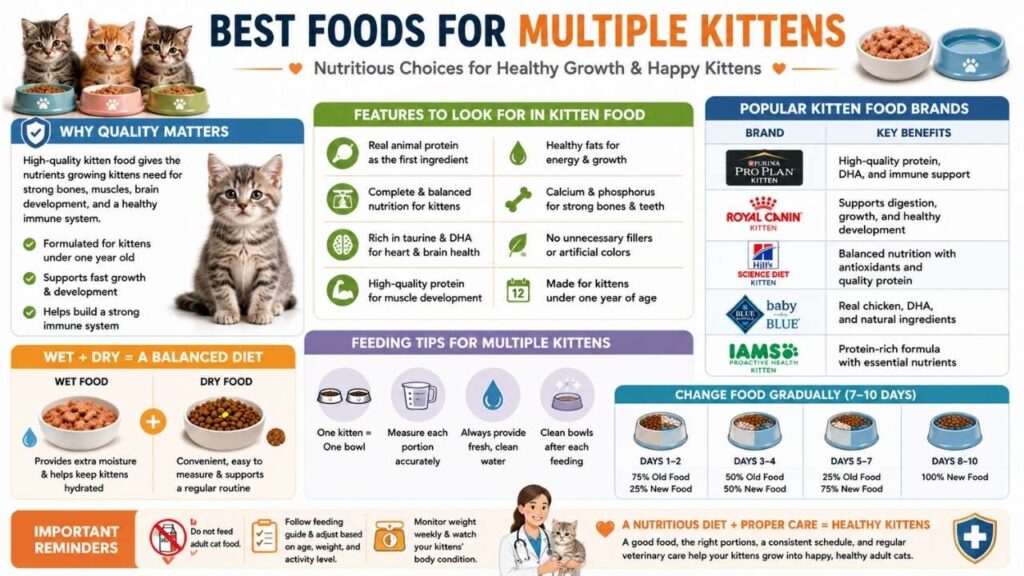
Choosing the right food is one of the most important decisions when feeding multiple kittens. A high-quality kitten food provides the nutrients growing kittens need for healthy bones, strong muscles, brain development, and a healthy immune system. Since kittens grow quickly during their first year, they need food that is specially formulated for their age rather than adult cat food.
When shopping for kitten food, look for products that list real animal protein, such as chicken, turkey, or salmon, as the first ingredient. Protein supports muscle growth and provides energy for active kittens. The food should also contain healthy fats, taurine, DHA, vitamins, calcium, phosphorus, and other essential minerals to support healthy development from weaning through adulthood.
Many veterinarians recommend feeding a combination of wet and dry kitten food. Wet food provides extra moisture, making it easier for kittens to stay hydrated, while dry food is convenient, easy to measure, and helps maintain a regular feeding routine. Offering both types of food gives kittens a balanced diet and helps them become comfortable with different textures.
Features to Look for in Kitten Food
- Real animal protein as the first ingredient
- Complete and balanced nutrition for kittens
- Rich in taurine and DHA for heart and brain health
- High-quality protein for muscle development
- Healthy fats for energy and growth
- Calcium and phosphorus for strong bones and teeth
- No unnecessary fillers or artificial colors
- Made for kittens under one year of age
The following kitten food brands are popular choices because they provide complete and balanced nutrition for growing kittens.
| Kitten Food Brand | Key Benefits |
| Purina Pro Plan Kitten | High-quality protein, DHA, and immune support |
| Royal Canin Kitten | Supports digestion, growth, and healthy development |
| Hill’s Science Diet Kitten | Balanced nutrition with antioxidants and quality protein |
| Blue Buffalo Baby BLUE | Real chicken, DHA, and natural ingredients |
| IAMS ProActive Health Kitten | Protein-rich formula with essential nutrients |
No matter which brand you choose, follow the feeding guide on the package and adjust portions based on each kitten’s age, body weight, and activity level. Remember that feeding recommendations are general guidelines. Some kittens may need slightly more or less food depending on their growth rate and overall health.
If you are feeding multiple kittens, serve each kitten in its own bowl. This helps you measure portions accurately and monitor how much each kitten eats. Always provide fresh, clean water alongside every meal and clean food bowls after each feeding to maintain good hygiene.
If you plan to change your kittens’ food, do so gradually over 7 to 10 days. Mix a small amount of the new food with the old food and slowly increase the new food each day. This gradual transition helps prevent digestive upset and allows kittens to adjust to the new diet comfortably.
A nutritious diet, proper portion sizes, and a consistent feeding schedule give every kitten the best chance to grow into a healthy adult cat. Combined with regular weight checks and routine veterinary care, choosing the right kitten food lays the foundation for a long, healthy, and active life.
Signs Your Kittens Are Eating Enough
One of the best ways to know if your feeding routine is working is to watch your kittens closely. Healthy kittens that receive the right amount of nutrition grow steadily, stay active, and have a healthy body condition. Since every kitten grows at a slightly different pace, it is important to monitor each one individually instead of comparing them with their littermates.
A kitten that is eating enough will usually have a good appetite and finish its meals without showing signs of constant hunger. Healthy kittens are playful, curious, and full of energy. They also sleep well between meals and wake up ready to eat and explore. Consistent weight gain is another strong sign that your kitten is getting enough calories and essential nutrients.
The quality of your kitten’s coat and overall appearance can also tell you a lot about its nutrition. A balanced kitten diet that includes high-quality protein, healthy fats, taurine, DHA, vitamins, and minerals helps maintain a soft, shiny coat, bright eyes, and healthy skin. Proper hydration from fresh water and wet kitten food also supports overall health.
Healthy Signs That Your Kittens Are Eating Enough
- Steady weight gain every week
- Good appetite at meal times
- Bright, clear eyes
- Soft, clean, and shiny coat
- Active and playful behavior
- Healthy body condition
- Normal, well-formed stools
- Good hydration and regular water intake
- Strong muscle development
- Calm and satisfied after meals
Besides watching physical appearance, pay attention to your kittens’ behavior. Healthy kittens are alert, curious, and enjoy interacting with people, toys, and their littermates. They should not seem weak, tired, or unusually quiet for long periods. A sudden drop in energy or appetite may be an early sign of illness and should not be ignored.
It is also important to monitor meal times. Every kitten should have the opportunity to eat its full portion without being pushed away by stronger siblings. Using separate food bowls and supervising meals makes it easier to see if one kitten is eating less than the others. If a kitten regularly leaves food behind or struggles to eat, check for possible health issues and consult a veterinarian if the problem continues.
Remember that healthy growth is not just about eating more food. It is about receiving the right balance of nutrients, following a consistent feeding schedule, staying hydrated, and maintaining a healthy body weight. Weekly weight checks and regular veterinary examinations are the best ways to confirm that your kittens are growing as they should.
If your kittens are gaining weight steadily, eating well, staying active, and showing the healthy signs listed above, you can feel confident that your feeding routine is meeting their nutritional needs and supporting their development into healthy adult cats.
When to Contact a Veterinarian
Most kittens grow well when they receive proper nutrition, a consistent feeding schedule, and a clean living environment. However, some feeding problems can be a sign of an underlying health condition. Knowing when to contact a veterinarian can help protect your kittens and prevent small issues from becoming serious.
If one kitten consistently eats less than the others or suddenly refuses food, do not ignore it. Young kittens can become weak very quickly if they do not eat enough. A poor appetite may be caused by illness, parasites, dental problems, infections, or digestive issues. Early treatment gives kittens the best chance to recover and continue growing normally.
Weight loss is another warning sign that requires attention. Healthy kittens should gain weight steadily during their first year. If a kitten stops gaining weight, loses weight, or appears much smaller than its littermates despite eating regularly, a veterinarian should examine it. Regular weekly weight checks make it easier to identify these problems early.
Contact a Veterinarian If Your Kitten Has Any of These Signs
- Refuses food for more than one meal
- Stops gaining weight or loses weight
- Vomits repeatedly after eating
- Has diarrhea that lasts more than 24 hours
- Shows signs of dehydration, such as dry gums or sunken eyes
- Appears weak, tired, or unusually sleepy
- Has difficulty chewing or swallowing food
- Has a swollen or painful abdomen
- Develops a dull coat or poor body condition
- Has trouble breathing or persistent coughing
Digestive problems should also be taken seriously. Occasional stomach upset may happen when changing foods, but frequent vomiting, ongoing diarrhea, or blood in the stool is not normal. These symptoms can quickly lead to dehydration, especially in young kittens. A veterinarian can identify the cause and recommend the proper treatment.
Watch your kittens’ behavior every day. Healthy kittens are active, playful, and curious. If a kitten becomes quiet, hides often, or avoids eating and drinking, it may not be feeling well. Changes in behavior are sometimes the first sign of illness, even before physical symptoms appear.
Routine veterinary visits are an important part of raising healthy kittens. Regular checkups allow your veterinarian to monitor growth, recommend the right diet, check body condition, provide vaccinations, treat parasites, and answer questions about feeding and nutrition. Preventive care is often the best way to keep kittens healthy throughout their first year.
If you are ever unsure whether a kitten is eating enough or growing normally, it is always safer to seek professional advice. Early diagnosis and treatment can prevent serious health problems and help every kitten develop into a healthy, strong, and happy adult cat.
Frequently Asked Questions
Can multiple kittens eat from the same bowl?
It is better to give each kitten its own food bowl. Separate bowls make it easier to control portion sizes, reduce food competition, and ensure every kitten gets enough nutrition. They also help you monitor each kitten’s appetite and notice any health problems early.
How often should multiple kittens eat?
The feeding schedule depends on the kittens’ age. Kittens between 4 and 8 weeks usually need 4 to 6 small meals each day. Kittens between 2 and 4 months should eat about 4 meals daily. Older kittens between 6 and 12 months can usually eat 2 to 3 meals a day. Feeding at the same times every day helps support healthy digestion and steady growth.
Should I feed kittens separately?
Yes. Feeding kittens separately is the best way to make sure each kitten receives the correct portion of food. It also prevents stronger kittens from eating more than their share and allows shy kittens to eat comfortably without stress.
Can one kitten eat more than another?
Yes. Every kitten has different nutritional needs. Factors such as body weight, age, activity level, breed, and overall health affect how much food a kitten needs. Some kittens naturally require more calories than their littermates. Monitor each kitten’s weight and body condition to adjust portions when needed.
How do I stop food aggression between kittens?
Use separate food bowls and place them several feet apart during meal times. Feed all kittens at the same time and supervise them until they finish eating. A calm feeding environment and a consistent routine usually reduce food competition and food aggression.
How much wet food does each kitten need?
The amount of wet food depends on your kitten’s age, weight, and the calorie content of the food. Always follow the feeding guidelines on the kitten food package and adjust portions based on your kitten’s growth and activity level. If you feed both wet and dry food, divide the daily calories between both meals.
Can kittens share water bowls?
Yes, kittens can safely share water bowls, but it is a good idea to provide several bowls of fresh, clean water around your home. This ensures every kitten has easy access to water and encourages proper hydration, especially in homes with larger litters.
Is free-feeding okay for kittens?
Free-feeding may work in some situations, but it is not the best choice for multiple kittens. Leaving food out all day makes it difficult to monitor how much each kitten eats. Scheduled meals with measured portions provide better portion control, reduce overeating, and help you identify changes in appetite more quickly.
Conclusion
Feeding multiple kittens takes planning, patience, and consistency, but the effort is well worth it. Every kitten deserves the right amount of high-quality nutrition to support healthy growth, strong muscles, healthy bones, and a strong immune system. By using separate food bowls, measuring portions carefully, following a regular feeding schedule, and providing fresh water every day, you can make sure each kitten gets the care it needs.
Remember that every kitten grows at its own pace. Monitor each kitten’s weight, appetite, energy level, and overall body condition every week. Choose complete and balanced kitten food, avoid common feeding mistakes, and create a calm feeding environment that reduces food competition. If you notice poor appetite, weight loss, or any signs of illness, contact a veterinarian as soon as possible.
With the right feeding routine and proper care, your kittens can develop into healthy, active, and happy adult cats. Following the tips in this guide will help you confidently manage meal times and give every kitten the best possible start in life.