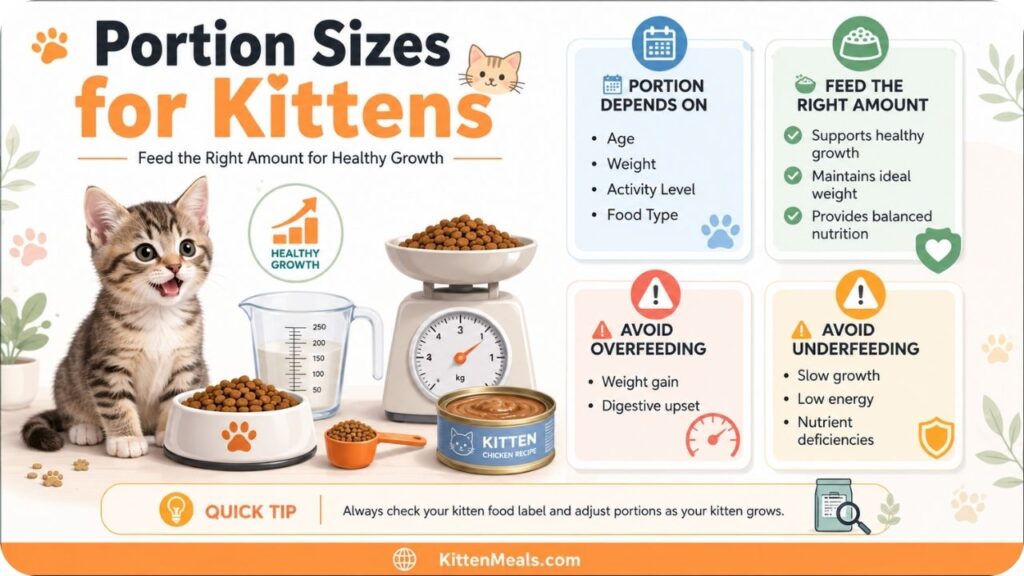
Feeding your kitten the right portion size is one of the most important parts of helping them grow into a healthy adult cat. During the first year of life, kittens grow quickly and need the right balance of nutrients, calories, and protein every day. Giving too much food can lead to unhealthy weight gain, while feeding too little may slow growth and affect their overall health. The right amount depends on several factors, including your kitten’s age, weight, activity level, and the type of food you choose.
Many new kitten owners wonder, “How much should my kitten eat?” The answer is not the same for every kitten. A young kitten that is only a few weeks old has different feeding needs than a six-month-old kitten. Wet food and dry food also have different calorie levels, so portion sizes can vary from one product to another. Learning how to measure meals correctly helps your kitten get the nutrition they need without overeating or missing important nutrients.
In this guide, you’ll learn everything you need to know about portion sizes for kittens. We’ll explain how much food kittens need at different ages, how to adjust portions based on weight, and how to measure meals accurately. You’ll also find helpful feeding charts, practical tips, and answers to common questions. By the end of this article, you’ll feel confident about feeding your kitten the right amount to support healthy growth and long-term well-being.
Why Portion Size Matters for Growing Kittens
Giving your kitten the right portion size is just as important as choosing high-quality kitten food. During the first year of life, kittens grow faster than adult cats. Their bodies need the right amount of protein, healthy fats, vitamins, minerals, and calories to support strong bones, muscles, organs, and brain development. Feeding the correct amount each day helps your kitten stay active, maintain a healthy weight, and build a strong immune system.
Many pet owners think giving extra food will help a kitten grow faster. In reality, overfeeding can lead to unhealthy weight gain, digestive problems, and obesity later in life. On the other hand, underfeeding may cause slow growth, low energy, poor muscle development, and nutrient deficiencies. Finding the right balance is the best way to support healthy growth and long-term well-being.
The correct kitten feeding portions depend on several factors. These include your kitten’s age, body weight, activity level, breed, and whether you feed wet food, dry food, or a combination of both. Since every food has a different calorie content, the serving size printed on the package may also vary. Reading the feeding guide on the label is a good starting point, but you should also monitor your kitten’s body condition and adjust portions as they grow.
Proper portion control also helps establish healthy eating habits. Instead of leaving food out all day, many veterinarians recommend feeding measured meals at regular times. This makes it easier to track your kitten’s daily food intake, notice changes in appetite, and prevent overeating. Using a measuring cup or kitchen scale can improve accuracy, especially when feeding dry kitten food.
As your kitten grows, their nutritional needs will change. Young kittens require frequent meals and higher calorie intake to support rapid development. As they get older, meal frequency and portion sizes should be adjusted based on their growth and activity level. Regular weight checks and routine visits to your veterinarian can help ensure your kitten is receiving the right amount of food at every stage of development.
Real-Life Scenario
Emily, a first-time kitten owner in Florida, thought giving extra food would help her kitten grow faster. At her first veterinary visit, she learned that balanced portion sizes are much healthier than simply filling the bowl. After switching to measured meals, her kitten maintained a healthy weight and stayed active.
What Determines the Right Portion Size?
There is no single portion size that works for every kitten. The right amount of food depends on several factors, including your kitten’s age, body weight, activity level, and the type of food they eat. Understanding these factors will help you create a healthy feeding routine that supports steady growth without overfeeding.
Age
A kitten’s age is one of the biggest factors in deciding how much food they need. Young kittens grow very quickly and burn a lot of energy, so they need more calories for their size than adult cats. Kittens under six months usually need three to four meals a day, while older kittens can gradually move to two or three meals. As your kitten grows, increase portion sizes based on their changing nutritional needs.
Weight
Your kitten’s body weight is another important guide for determining the correct kitten food portions. A larger kitten usually needs more food than a smaller kitten of the same age. Weigh your kitten regularly and compare their growth with your veterinarian’s recommendations. Healthy weight gain is a good sign that your kitten is getting enough calories and nutrients.
Activity Level
Active kittens spend more energy running, climbing, and playing throughout the day. These kittens often need slightly larger portions than kittens that are less active. If your kitten spends most of the day exploring and playing, they may require additional calories to support their energy needs and healthy muscle development.
Wet Food vs. Dry Food
The type of food you feed has a direct effect on portion sizes for kittens. Wet kitten food contains more moisture and usually has fewer calories per serving than dry food. Dry kitten food is more calorie-dense, so smaller portions often provide the same amount of energy. If you feed both wet and dry food, divide the daily calorie intake between the two instead of giving a full serving of each.
Breed and Growth Rate
Different cat breeds can grow at different rates. Larger breeds, such as Maine Coons, often continue growing longer than most other cats and may need adjusted feeding portions during their first year. Smaller breeds may reach their adult size sooner. Watching your kitten’s body condition is more helpful than following a fixed serving size for every breed.
Health Conditions
A kitten’s health also affects how much they should eat. Kittens recovering from illness, dealing with parasites, or experiencing slow growth may have different nutritional requirements. Some medical conditions can increase or decrease calorie needs. If your kitten has a health problem or is not gaining weight as expected, consult your veterinarian before changing their feeding schedule or portion sizes.
Food Quality and Calorie Content
Not all kitten foods provide the same number of calories. Premium kitten foods often contain higher-quality ingredients and more concentrated nutrition than lower-quality products. Always check the feeding guide and calorie information on the pet food label. Choosing a complete and balanced kitten food that meets AAFCO nutritional standards helps ensure your kitten receives the right nutrients for healthy growth.
By considering all of these factors together, you can provide the right daily food intake for your kitten. Regularly monitor your kitten’s weight, appetite, energy level, and body condition, and adjust portions as they continue to grow. A balanced feeding plan is one of the best ways to support a healthy, happy kitten.
Expert Tip
No two kittens have exactly the same nutritional needs. Even kittens from the same litter can require different portion sizes based on their weight and activity level.
Kitten Portion Size Chart by Age
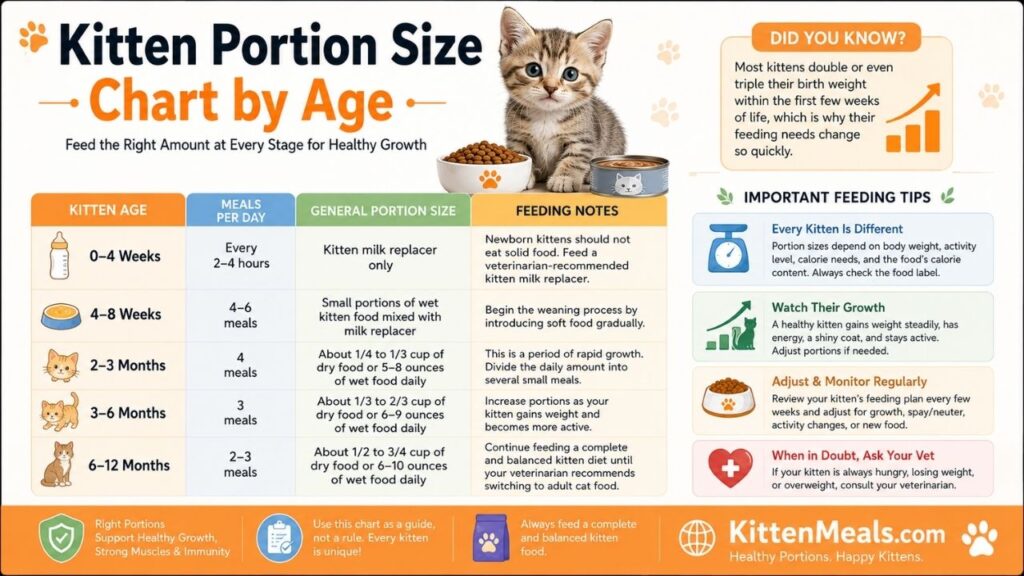
A kitten’s feeding needs change quickly during the first year of life. As they grow, they need different amounts of food and fewer meals each day. Feeding the right portion sizes for kittens at each stage supports healthy growth, strong muscles, brain development, and a healthy immune system.
The chart below provides general feeding guidelines based on age. Keep in mind that these are starting points. The exact amount of food depends on your kitten’s body weight, activity level, calorie needs, and the energy content of the kitten food. Always read the feeding instructions on the pet food label and adjust portions if needed.
| Kitten Age | Meals Per Day | General Portion Size | Feeding Notes |
| 0–4 Weeks | Every 2–4 hours | Kitten milk replacer only | Newborn kittens should not eat solid food. Feed a veterinarian-recommended kitten milk replacer. |
| 4–8 Weeks | 4–6 meals | Small portions of wet kitten food mixed with milk replacer | Begin the weaning process by introducing soft food gradually. |
| 2–3 Months | 4 meals | About 1/4 to 1/3 cup of dry food or 5–8 ounces of wet food daily | This is a period of rapid growth. Divide the daily amount into several small meals. |
| 3–6 Months | 3 meals | About 1/3 to 2/3 cup of dry food or 6–9 ounces of wet food daily | Increase portions as your kitten gains weight and becomes more active. |
| 6–12 Months | 2–3 meals | About 1/2 to 3/4 cup of dry food or 6–10 ounces of wet food daily | Continue feeding a complete and balanced kitten diet until your veterinarian recommends switching to adult cat food. |
These feeding amounts are only general estimates because every kitten food has a different calorie density. A premium dry food may require a smaller serving than another brand with fewer calories per cup. The same is true for canned kitten food, which can vary in calories from one recipe to another. Checking the product’s feeding guide is the best way to determine the correct serving size.
Watch your kitten’s growth instead of relying only on a chart. A healthy kitten should gain weight steadily, have plenty of energy, maintain a shiny coat, and stay active throughout the day. If your kitten seems constantly hungry, is losing weight, or is becoming overweight, adjust the kitten feeding portions gradually and seek advice from your veterinarian if you have concerns.
As your kitten grows, review their feeding plan every few weeks. Their calorie requirements increase during periods of rapid growth and may change after spaying or neutering, when activity levels change, or when switching to a new food. Regular monitoring helps ensure your kitten receives the right nutrition at every stage of development.
Did You Know?
Most kittens double or even triple their birth weight within the first few weeks of life, which is why their feeding needs change so quickly.
Portion Sizes by Kitten Weight
Your kitten’s body weight is one of the best ways to estimate how much food they need each day. Two kittens of the same age may require different portion sizes if one weighs more or is more active than the other. Using your kitten’s weight along with their age and activity level helps you provide the right amount of food for healthy growth.
The table below shows general daily feeding amounts based on weight. These guidelines are suitable for most healthy kittens eating a complete and balanced kitten food. Since every brand has a different calorie density, always compare these estimates with the feeding guide on the product label.
| Kitten Weight | Approximate Daily Dry Food | Approximate Daily Wet Food | Recommended Meals |
| 1 lb (0.45 kg) | 1/8–1/4 cup | 3–4 oz | 4–6 meals |
| 2 lbs (0.9 kg) | 1/4–1/3 cup | 4–5 oz | 4 meals |
| 3 lbs (1.4 kg) | 1/3–1/2 cup | 5–6 oz | 3–4 meals |
| 4 lbs (1.8 kg) | 1/2 cup | 6–7 oz | 3 meals |
| 5 lbs (2.3 kg) | 1/2–2/3 cup | 7–8 oz | 3 meals |
| 6 lbs (2.7 kg) | 2/3 cup | 8–9 oz | 2–3 meals |
| 7 lbs (3.2 kg) | 2/3–3/4 cup | 9–10 oz | 2–3 meals |
These serving sizes are general recommendations and should not replace the feeding instructions provided by the food manufacturer. Some high-quality kitten foods contain more calories and nutrients, so smaller portions may meet your kitten’s daily energy needs. Foods with lower calorie density may require larger servings to provide the same nutrition.
If you feed both wet food and dry food, do not give the full recommended amount of each. Instead, divide your kitten’s daily calorie intake between both foods. For example, if half of your kitten’s calories come from wet food, the remaining calories should come from dry food. This approach helps prevent overfeeding while giving your kitten the benefits of both food types.
Monitoring your kitten’s body condition is just as important as checking their weight. You should be able to feel your kitten’s ribs with gentle pressure, but they should not be clearly visible. Your kitten should have a slight waist when viewed from above and plenty of energy for playing and exploring. These signs usually indicate that your kitten is receiving the right daily food intake.
Weigh your kitten every one to two weeks during the first year. Regular weight checks make it easier to notice healthy growth or identify problems early. If your kitten is gaining weight too quickly, losing weight, or refusing food, adjust the portion size carefully and consult your veterinarian for personalized feeding advice. This simple habit can help keep your kitten healthy throughout every stage of development.
Wet Food Portion Sizes
Wet food is a popular choice for growing kittens because it is rich in moisture, easy to chew, and highly appealing to young cats. It helps support hydration, which is important since many kittens do not drink enough water on their own. High-quality wet kitten food also provides the protein, healthy fats, vitamins, and minerals needed for healthy growth and development.
The right wet food portion size depends on your kitten’s age, weight, activity level, and the calorie content of the food. Different brands contain different amounts of calories per can or pouch, so there is no single serving size that works for every kitten. Always check the feeding guide on the package and adjust the amount based on your kitten’s growth and body condition.
The table below provides general daily guidelines for healthy kittens.
| Kitten Age | Approximate Wet Food Per Day | Meals Per Day |
| 4–8 Weeks | 2–4 oz | 4–6 meals |
| 2–3 Months | 5–8 oz | 4 meals |
| 3–6 Months | 6–9 oz | 3 meals |
| 6–12 Months | 6–10 oz | 2–3 meals |
Divide the total daily amount into several small meals instead of serving it all at once. Young kittens have small stomachs and digest food more efficiently when they eat smaller portions throughout the day. This feeding routine also helps maintain steady energy levels and supports healthy digestion.
If you serve canned food, discard any leftovers that have been sitting at room temperature for more than one to two hours. Fresh food is safer for your kitten and reduces the risk of bacterial growth. Store unopened cans in a cool, dry place, and refrigerate opened cans in a sealed container. Before serving refrigerated food, allow it to reach room temperature or warm it slightly to improve its smell and taste.
Many pet owners choose a mixed feeding plan that includes both wet and dry food. Wet food provides extra moisture, while dry food can be convenient for scheduled meals. If you combine both, reduce the portion of each food so your kitten receives the correct number of daily calories instead of doubling the serving size.
Watch your kitten’s appetite, weight, and overall health as they grow. A healthy kitten should finish most meals, gain weight steadily, have a shiny coat, and remain playful and active. If your kitten frequently leaves food behind or seems hungry after every meal, review the feeding guide on the food label and speak with your veterinarian if adjustments are needed. Feeding the right portion sizes for kittens is one of the best ways to support healthy development during the first year of life.
Common Mistake
Many pet owners leave opened wet food at room temperature for too long. Discard leftovers after one to two hours to help reduce the risk of bacterial growth.
Dry Food Portion Sizes
Dry kitten food is a convenient and nutritious option for many pet owners. It is easy to store, stays fresh longer after opening, and contains the nutrients growing kittens need for healthy development. Most high-quality dry kitten food is rich in protein, healthy fats, vitamins, minerals, and taurine, making it a complete and balanced diet when it meets AAFCO nutritional standards.
One of the most important things to remember is that dry food is more calorie-dense than wet food. This means kittens usually need a smaller serving of dry food to get the same amount of energy. Guessing the amount can easily lead to overfeeding, so always measure each meal with a standard measuring cup or a kitchen scale.
The table below shows general daily serving guidelines for healthy kittens.
| Kitten Age | Approximate Dry Food Per Day | Meals Per Day |
| 4–8 Weeks | Introduce small amounts during weaning | 4–6 meals |
| 2–3 Months | 1/4–1/3 cup | 4 meals |
| 3–6 Months | 1/3–2/3 cup | 3 meals |
| 6–12 Months | 1/2–3/4 cup | 2–3 meals |
These amounts are only general estimates. The correct kitten feeding portions depend on your kitten’s weight, activity level, and the calorie content of the food. Some premium brands provide more calories per cup than others, so the recommended serving size may be smaller. Always compare your kitten’s needs with the feeding instructions on the product label.
To keep your kitten healthy, avoid filling the food bowl whenever it becomes empty. Instead, serve measured meals at regular times each day. Scheduled feeding helps you monitor your kitten’s daily food intake, prevents overeating, and makes it easier to notice changes in appetite that could indicate a health problem.
Fresh water should always be available when feeding dry food. Because dry kibble contains very little moisture, kittens need access to clean drinking water throughout the day to stay properly hydrated. Encourage drinking by cleaning the water bowl daily and placing it in a quiet, easy-to-reach location.
As your kitten grows, review their portion sizes every few weeks. Healthy kittens should gain weight steadily without becoming overweight. If your kitten starts gaining weight too quickly or leaves food in the bowl after most meals, reduce the serving slightly and continue monitoring their body condition. If you have concerns about your kitten’s growth or nutritional needs, consult your veterinarian for personalized feeding advice. Regular adjustments help ensure your kitten receives the right balance of nutrition during every stage of development.
Real-Life Tip
If everyone in your family feeds the kitten, place a measuring cup inside the food container. This simple habit helps prevent accidental double feeding.
Mixed Feeding (Wet + Dry)
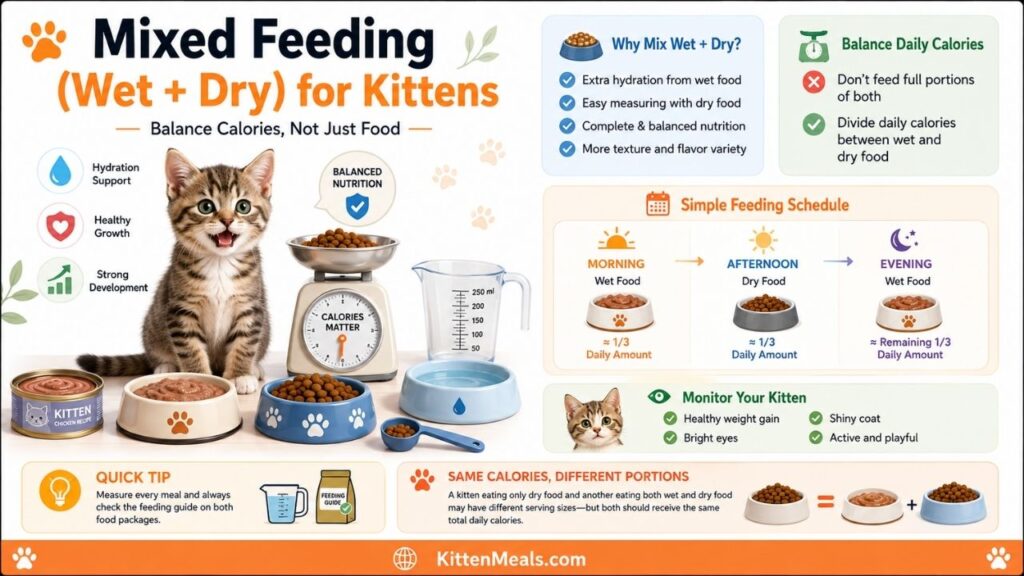
Many pet owners choose mixed feeding, which means giving both wet kitten food and dry kitten food each day. This approach combines the benefits of both food types. Wet food provides extra moisture to support hydration, while dry food is convenient to store, easy to measure, and can help maintain a consistent feeding routine. When planned correctly, mixed feeding can provide complete and balanced nutrition for a growing kitten.
The most important rule is to balance your kitten’s daily calorie intake. Do not feed the full recommended amount of wet food and the full recommended amount of dry food on the same day. Instead, divide the total daily calories between both foods. This helps prevent overfeeding while ensuring your kitten receives the right portion sizes for healthy growth.
Here is an example of a simple mixed feeding schedule for a healthy kitten.
| Time | Food Type | Portion |
| Morning | Wet kitten food | About one-third of the daily amount |
| Afternoon | Dry kitten food | About one-third of the daily amount |
| Evening | Wet kitten food | Remaining one-third of the daily amount |
This is only an example. You can adjust the schedule to fit your daily routine as long as your kitten receives the correct total amount of food for the day.
When combining wet and dry food, always read the feeding guides on both products. Each brand has a different calorie content, so serving sizes can vary. For example, if half of your kitten’s daily calories come from wet food, the remaining calories should come from dry food. Measuring each meal carefully helps maintain a healthy body weight and reduces the risk of obesity.
Mixed feeding also gives kittens different textures and flavors, which may encourage healthy eating habits. Some kittens enjoy the soft texture and strong aroma of wet food, while others like the crunchy texture of dry kibble. Offering both can make mealtime more enjoyable without sacrificing nutrition.
Watch your kitten’s body condition, energy level, appetite, and weight as they grow. A healthy kitten should have steady weight gain, bright eyes, a shiny coat, and plenty of energy for play. If your kitten gains weight too quickly or seems hungry after every meal, review the calorie content of both foods and adjust the portions gradually. Your veterinarian can also help you create a feeding plan that matches your kitten’s age, weight, and activity level.
A balanced mixed feeding plan is an excellent way to provide complete nutrition while keeping mealtimes interesting. By measuring every serving and monitoring your kitten’s growth, you can confidently provide the right portion sizes for kittens throughout their first year of life.
Mini Story
Imagine two kittens eating the same amount of food. One eats only dry food, while the other eats both wet and dry food. Their portion sizes may look different, but the goal is the same—providing the right number of daily calories.
Daily Calorie Needs for Kittens
A growing kitten needs enough calories every day to support healthy development. Calories provide the energy needed for running, playing, building muscle, developing strong bones, and supporting the immune system. Since kittens grow much faster than adult cats, their energy needs are higher in proportion to their body size.
The exact number of calories your kitten needs depends on several factors. These include age, body weight, activity level, breed, overall health, and the calorie content of the food. Very active kittens usually require more energy than kittens that spend most of their time resting. Likewise, larger breeds may need more calories during their longer growth period.
The table below provides general estimates for healthy kittens.
| Kitten Age | Estimated Daily Calories |
| 4–8 Weeks | 150–220 calories |
| 2–3 Months | 200–250 calories |
| 3–6 Months | 250–300 calories |
| 6–9 Months | 250–350 calories |
| 9–12 Months | 220–300 calories |
These calorie ranges are only general guidelines. Every kitten food has a different calorie density, so the amount of food needed to reach these calorie goals will vary by brand. For example, one cup of dry food may contain significantly more calories than another, while canned foods also differ in calorie content. Always read the nutrition label and feeding instructions before deciding on your kitten’s daily portion.
If you feed wet food and dry food together, calculate the total calories from both meals instead of treating them separately. For example, if your kitten needs around 250 calories per day, the combined calories from all wet and dry food servings should stay close to that amount. This helps prevent overfeeding while ensuring your kitten receives balanced nutrition.
It is also important to monitor your kitten’s growth rather than focusing only on calorie numbers. A healthy kitten should gain weight steadily, stay active, have a shiny coat, and maintain a healthy body condition. If your kitten becomes overweight, reduce the daily calorie intake slightly. If they are losing weight or seem constantly hungry, they may need more food or a higher-quality diet.
As your kitten grows, their calorie needs will change. During periods of rapid growth, they may need larger kitten feeding portions to support development. After spaying or neutering, some kittens become less active, and their calorie needs may decrease. Reviewing your kitten’s feeding plan every few weeks and discussing any concerns with your veterinarian can help ensure they receive the right amount of nutrition throughout their first year.
Veterinarian Insight
During routine wellness visits, many veterinarians evaluate a kitten’s body condition along with their weight before recommending any changes to daily calorie intake.
How to Check Your Kitten’s Body Condition at Home
Reason: Builds EEAT and answers another common search intent.
Signs Your Kitten Is Eating the Right Amount
Knowing the correct portion sizes for kittens is important, but watching your kitten’s overall health is just as valuable. Every kitten grows at a different pace, so the best way to know if you are feeding the right amount is to monitor their weight, body condition, energy level, and daily habits. A healthy kitten will show clear signs that they are getting enough nutrients and calories for proper growth.
If your kitten is eating the right amount of food, you will usually notice the following signs:
- Steady and healthy weight gain during the first year of life.
- Plenty of energy for playing, running, and exploring.
- A shiny, soft coat with healthy-looking skin.
- Bright, clear eyes and an alert attitude.
- Strong muscles and healthy body development.
- Normal, well-formed stools without frequent diarrhea or constipation.
- A healthy appetite at mealtime without acting constantly hungry.
- Good hydration with regular drinking and urination.
- Consistent growth that matches your veterinarian’s expectations.
A healthy body condition is another good indicator. You should be able to feel your kitten’s ribs with gentle pressure, but they should not be easy to see. When viewed from above, your kitten should have a slight waist behind the ribs rather than a round or bloated body. This shows that your kitten is receiving the right balance of protein, healthy fats, vitamins, minerals, and calories.
Your kitten should also finish most meals without eating too quickly or leaving large amounts of food behind. While appetite may vary slightly from day to day, a consistent eating pattern usually means your feeding schedule and kitten food portions are working well.
Regular weight checks are one of the easiest ways to monitor healthy growth. Weigh your kitten every one to two weeks using a digital scale and keep a simple record of their progress. Healthy kittens usually gain weight steadily during the first several months of life. If weight gain suddenly slows or stops, review the daily food intake and speak with your veterinarian if needed.
Remember that every kitten is unique. Age, breed, activity level, and the type of food all influence how much they should eat. Paying attention to these healthy signs and adjusting portions as your kitten grows will help ensure they receive the nutrition they need for a long, healthy, and active life.
Owner Observation
One of the easiest signs to notice is your kitten’s energy. Healthy kittens are usually curious, playful, and eager to explore their surroundings.
Signs You’re Feeding Too Much
Overfeeding is one of the most common mistakes new kitten owners make. Many people believe that giving extra food will help a kitten grow faster, but too many calories can lead to unhealthy weight gain and other health problems. Feeding the correct portion sizes for kittens is the best way to support steady growth while reducing the risk of obesity later in life.
A kitten that regularly eats more calories than it needs may begin to show several warning signs. Watching for these changes can help you adjust your kitten’s feeding plan before excess weight becomes a problem.
Common Signs of Overfeeding
- Rapid or excessive weight gain.
- A round or bloated belly that does not go away after meals.
- Difficulty feeling the ribs because of excess body fat.
- Less interest in playing or exercising.
- Leaving food in the bowl after eating too much.
- Frequent digestive upset, such as soft stools or diarrhea.
- Begging for treats even after finishing meals because of learned eating habits.
A healthy kitten should have a lean body with a slight waist when viewed from above. If your kitten starts looking noticeably round or gains weight much faster than expected, it may be time to reduce their daily food intake. Small adjustments are usually more effective than making large changes all at once.
Treats can also add more calories than many pet owners realize. While treats are useful for training and rewards, they should only make up a small part of your kitten’s daily calorie intake. Too many treats can quickly increase the total number of calories your kitten eats each day.
Free feeding can also contribute to overeating. Leaving a bowl of dry kitten food available all day makes it difficult to know how much your kitten is eating. Instead, offer measured meals at regular times using a measuring cup or kitchen scale. This makes it easier to monitor kitten feeding portions and maintain a healthy body weight.
If you think your kitten is eating too much, review the feeding guide on the food label and compare it with your kitten’s age, body weight, and activity level. Every food has a different calorie density, so serving sizes can vary between brands. If your kitten continues to gain weight despite portion adjustments, consult your veterinarian for personalized feeding advice.
Providing balanced nutrition and controlling portion sizes from an early age helps your kitten develop healthy eating habits that can last throughout adulthood.
Warning Box
A round belly immediately after a meal is normal. However, if your kitten always looks round and continues gaining weight quickly, it’s time to review portion sizes.
Signs Your Kitten Isn’t Eating Enough
Feeding too little can be just as harmful as overfeeding. Growing kittens need enough calories, protein, healthy fats, vitamins, and minerals to support their fast development. If a kitten does not receive the right portion sizes, they may not get the nutrients needed for healthy bones, muscles, brain development, and a strong immune system.
A kitten that is not eating enough often shows clear changes in its appearance, behavior, and growth. Recognizing these signs early can help prevent more serious health problems.
Common Signs of Underfeeding
- Slow or little weight gain.
- Visible ribs, spine, or hip bones.
- Low energy and less interest in playing.
- Constant hunger or searching for food.
- A dull or rough-looking coat.
- Weak muscles and poor body condition.
- Slow growth compared to other kittens of the same age.
- Frequent crying or meowing because of hunger.
- Delayed recovery after play or exercise.
Healthy kittens should gain weight regularly during their first year. If your kitten’s weight stays the same for several weeks or begins to decrease, it may be a sign that their daily food intake is too low. Weigh your kitten every one to two weeks and keep a record of their progress. Regular weight checks make it easier to spot growth problems early.
Poor appetite is another warning sign. A kitten that regularly leaves meals unfinished or refuses food may not simply be a picky eater. Stress, sudden changes in diet, parasites, dental problems, or illness can reduce appetite. If your kitten refuses food for more than a day or shows other signs of illness, contact your veterinarian as soon as possible.
Make sure you are feeding a complete and balanced kitten food that meets AAFCO nutritional standards. Adult cat food does not provide the higher levels of nutrients and calories that growing kittens need. Choosing the right food is just as important as serving the correct portion size.
If you believe your kitten is not eating enough, increase portions gradually rather than making large changes overnight. Continue monitoring their body weight, body condition, energy level, and appetite. If your kitten does not begin gaining weight or continues to eat poorly, your veterinarian can recommend a feeding plan that matches their age, weight, and overall health.
Providing the right kitten feeding portions every day helps ensure steady growth, healthy development, and a strong start in life.
When to Call Your Veterinarian
Contact your veterinarian if your kitten refuses food for more than 24 hours, loses weight, vomits repeatedly, or becomes unusually tired.
Tips for Measuring Portion Sizes Accurately
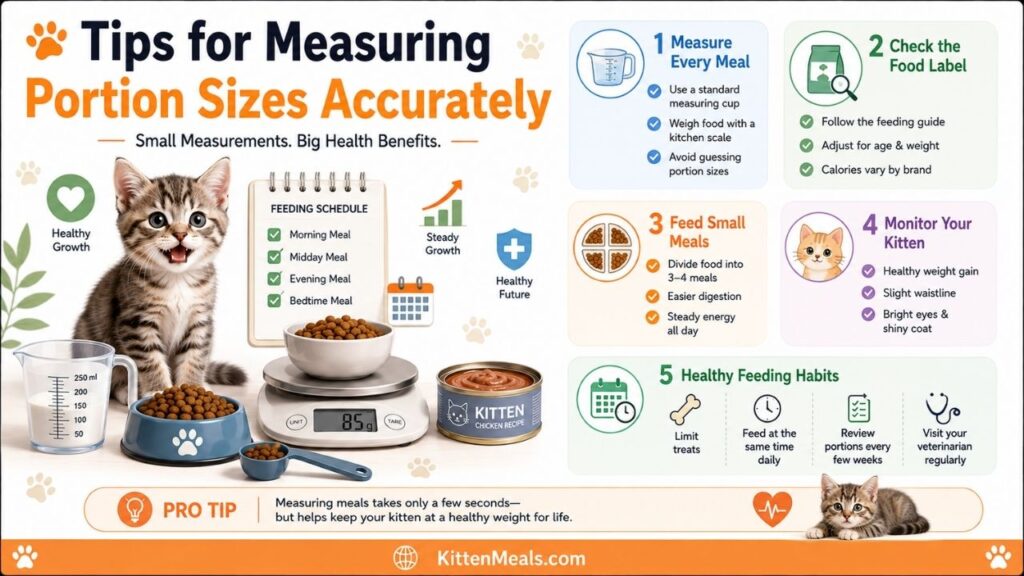
Measuring your kitten’s food correctly is one of the easiest ways to keep them healthy. Even a small difference in serving size can add extra calories over time. Guessing the amount or filling the food bowl without measuring may lead to overfeeding or underfeeding. Using the right tools and following a consistent feeding routine will help your kitten receive the proper portion sizes every day.
Use a Standard Measuring Cup
A standard measuring cup is the simplest way to measure dry kitten food. Avoid using coffee mugs, drinking cups, or random containers because they can hold different amounts of food. Measuring each serving helps you provide a consistent daily food intake.
Weigh Food with a Kitchen Scale
A digital kitchen scale gives the most accurate results, especially if your kitten eats a premium food with a high calorie density. Many pet food brands list serving sizes in grams, making a scale more accurate than measuring by volume.
Read the Feeding Guide
Every kitten food has a different nutritional value. One brand may contain more calories per cup than another, so the serving size can vary. Always check the feeding chart on the food package and adjust portions according to your kitten’s age, body weight, and activity level.
Divide Food into Small Meals
Young kittens have small stomachs and cannot eat large amounts at one time. Divide the total daily portion into three or four meals, depending on your kitten’s age. Smaller meals improve digestion and provide steady energy throughout the day.
Monitor Your Kitten’s Body Condition
Measuring food is important, but watching your kitten’s growth is equally important. Your kitten should have a healthy body shape with a slight waist and steady weight gain. If they begin gaining weight too quickly or appear too thin, adjust the portion size gradually.
Limit Treats
Treats should only be an occasional reward. Too many treats increase your kitten’s daily calorie intake and can upset the balance of their diet. If you give treats, reduce the amount of regular food slightly to avoid overfeeding.
Keep a Consistent Feeding Schedule
Feed your kitten at the same times every day. A regular schedule helps regulate appetite, supports healthy digestion, and makes it easier to notice changes in eating habits. Consistency also helps prevent begging between meals.
Review Portions as Your Kitten Grows
Your kitten’s nutritional needs change quickly during the first year. Review their feeding plan every few weeks and adjust the kitten feeding portions as they gain weight and become more active. Larger kittens generally need more food, while less active kittens may require smaller portions.
Visit Your Veterinarian Regularly
Routine veterinary checkups are an important part of managing your kitten’s nutrition. Your veterinarian can monitor growth, assess body condition, and recommend changes to portion sizes if needed. They can also help you choose a complete and balanced diet that supports healthy development.
By measuring every meal carefully and monitoring your kitten’s growth, you can provide the right balance of calories, protein, and essential nutrients. Accurate portion control not only supports healthy growth but also helps your kitten develop lifelong healthy eating habits.
Pro Tip
Measuring meals only takes a few extra seconds, but it can make a big difference in keeping your kitten at a healthy weight.
Common Portion Size Mistakes
Many kitten owners want to give their pets the best care, but small feeding mistakes can affect a kitten’s health and growth. Knowing these common mistakes can help you provide the right portion sizes for kittens and build healthy eating habits from an early age.
1. Guessing the Food Amount
One of the biggest mistakes is estimating how much food to give. Filling the bowl without measuring often leads to overfeeding or underfeeding. Always use a measuring cup or a digital kitchen scale to serve accurate kitten food portions.
2. Ignoring the Feeding Guide
Every kitten food has a different calorie content. Some foods are more energy-dense than others, so serving sizes are not the same for every brand. Read the feeding instructions on the package and adjust the amount based on your kitten’s age, body weight, and activity level.
3. Leaving Food Out All Day
Free feeding may seem convenient, but it makes it difficult to know how much your kitten is eating. Some kittens eat more than they need, increasing the risk of unhealthy weight gain. Offering measured meals at regular times is usually a better way to manage daily food intake.
4. Feeding Adult Cat Food Too Early
Growing kittens have different nutritional needs than adult cats. Adult cat food does not contain the higher levels of protein, healthy fats, vitamins, and minerals needed during the first year of life. Feed a complete and balanced kitten formula until your veterinarian recommends switching to adult cat food.
5. Giving Too Many Treats
Treats should only be a small part of your kitten’s diet. Feeding too many treats adds extra calories without providing balanced nutrition. If treats become a daily habit, they can increase the risk of overfeeding and unhealthy weight gain.
6. Not Adjusting Portions as Your Kitten Grows
Kittens grow quickly, and their nutritional needs change every few weeks. Continuing to feed the same amount for several months may result in portions that are too small or too large. Review your kitten’s feeding plan regularly and increase or decrease portions based on their growth.
7. Changing Foods Too Quickly
Switching to a new food without a gradual transition can upset your kitten’s digestive system. Mix small amounts of the new food with the current food over 7 to 10 days. This helps your kitten adjust while reducing the risk of stomach upset or diarrhea.
8. Not Monitoring Weight and Body Condition
Many owners only focus on the amount of food they serve and forget to monitor their kitten’s physical condition. Weigh your kitten regularly and check for healthy weight gain. A kitten with a slight waist, good muscle tone, and plenty of energy is usually receiving the right amount of nutrition.
9. Forgetting That Every Kitten Is Different
There is no perfect portion size for every kitten. Factors such as breed, metabolism, activity level, and overall health all affect how much food a kitten needs. Use feeding charts as a guide, but adjust portions based on your kitten’s individual needs and your veterinarian’s advice.
Avoiding these common mistakes will help your kitten maintain a healthy weight, receive balanced nutrition, and grow into a strong and active adult cat. Careful portion control, regular monitoring, and choosing high-quality kitten food are the keys to long-term health.
Reader Question
Ask yourself this question: “Am I measuring every meal, or am I estimating?” Small estimates can become large mistakes over time.
When to Adjust Portion Sizes
Your kitten’s food portions should not stay the same throughout the first year. As kittens grow, their bodies change quickly, and so do their nutritional needs. Adjusting portion sizes for kittens at the right time helps support healthy growth, maintain a healthy body weight, and prevent both overfeeding and underfeeding.
During Rapid Growth
Kittens grow the fastest during their first six months. During this stage, they need more calories, protein, and healthy fats to support bone growth, muscle development, and brain function. If your kitten is gaining weight steadily and always seems hungry after finishing meals, it may be time to increase their daily food portions slightly.
As Body Weight Changes
Healthy kittens should gain weight regularly during their first year. Weigh your kitten every one to two weeks and compare their progress with your veterinarian’s recommendations. As your kitten becomes heavier, they will usually need larger kitten feeding portions to meet their energy needs.
After Spaying or Neutering
Many kittens become slightly less active after being spayed or neutered. Their metabolism may also slow down, which means they often need fewer calories than before. Continue monitoring your kitten’s weight and body condition after the procedure, and reduce portion sizes if you notice unnecessary weight gain.
When Switching to a New Food
Different brands of kitten food contain different amounts of calories and nutrients. A premium food may require a smaller serving than another brand with lower calorie density. Whenever you switch foods, read the new feeding guide carefully and adjust the serving size instead of using the previous amount.
Changes in Activity Level
Active kittens that spend hours running, climbing, and playing often burn more energy than less active kittens. If your kitten becomes more active, they may need slightly larger portions. On the other hand, if they spend less time playing because of illness or lifestyle changes, smaller portions may help maintain a healthy weight.
During Illness or Recovery
A kitten recovering from surgery or illness may have different nutritional needs. Some kittens lose their appetite and eat less, while others require additional calories to recover. Follow your veterinarian’s advice before making significant changes to your kitten’s feeding schedule or portion sizes.
When Your Kitten Reaches Adulthood
Most kittens can begin transitioning to adult cat food at around 12 months of age, although some large breeds may continue growing for longer. As your kitten reaches adulthood, their growth slows, and they generally need fewer calories than before. Gradually switch to an adult diet over 7 to 10 days while adjusting portion sizes according to the new food’s feeding guide.
Watch Your Kitten’s Body Condition
The best time to adjust portions is whenever your kitten’s body condition changes. If they begin gaining weight too quickly, reduce the amount of food slightly. If they appear too thin, have low energy, or are not gaining weight as expected, increase portions gradually and monitor their progress.
Regular observation is the key to feeding your kitten correctly. Check their weight, appetite, energy level, coat quality, and overall health every few weeks. Small adjustments made at the right time will help ensure your kitten receives the proper nutrition for every stage of growth. If you are ever unsure about the right daily food intake, consult your veterinarian for personalized guidance.
Seasonal Tip (USA Audience)
Indoor kittens often stay active year-round. However, outdoor kittens may burn more energy during mild weather and become less active during extremely hot summers or cold winters.
Daily Kitten Feeding Checklist
Example checklist:
- Measure every meal.
- Provide fresh water daily.
- Follow the food label.
- Weigh your kitten every two weeks.
- Limit treats.
- Store food properly.
- Clean food and water bowls daily.
- Schedule regular veterinary checkups.
Frequently Asked Questions
How much food should a 2-month-old kitten eat?
A healthy 2-month-old kitten usually needs about 5 to 8 ounces of wet food or 1/4 to 1/3 cup of dry kitten food per day, divided into four small meals. The exact amount depends on your kitten’s body weight, activity level, and the calorie content of the food. Always follow the feeding guide on the product label and adjust portions as your kitten grows.
Can kittens overeat?
Yes. Some kittens will continue eating if food is always available, especially if they are free-fed. Overeating can lead to excessive weight gain and increase the risk of obesity later in life. Feeding measured meals at regular times helps prevent overfeeding and makes it easier to monitor your kitten’s daily food intake.
Should kittens always have food available?
Young kittens under four months often need frequent meals because they grow quickly and have small stomachs. However, leaving food out all day is not always the best choice. Scheduled meals with measured portion sizes for kittens help establish healthy eating habits and allow you to track how much your kitten eats each day.
Is wet food enough for kittens?
Yes, a high-quality wet kitten food can provide complete and balanced nutrition if it is specially formulated for kittens and meets AAFCO nutritional standards. Many owners also choose mixed feeding by combining wet and dry food to provide both hydration and convenience.
How much dry food should kittens eat?
Most healthy kittens need approximately 1/4 to 3/4 cup of dry kitten food per day, depending on their age, body weight, and activity level. Because dry food is more calorie-dense than wet food, always measure each serving with a measuring cup instead of estimating.
Should I measure every meal?
Yes. Measuring every meal helps ensure your kitten receives the correct number of calories each day. Using a measuring cup or digital kitchen scale prevents accidental overfeeding or underfeeding and supports healthy growth throughout the first year.
Can treats replace regular meals?
No. Treats should never replace a complete and balanced kitten diet. They do not provide all the nutrients a growing kitten needs. Treats should only be offered occasionally and should make up a small portion of your kitten’s daily calorie intake.
When should I reduce feeding frequency?
Most kittens need three to four meals a day until they are about six months old. After that, many can gradually transition to two or three meals daily. Around 12 months of age, when your kitten moves to adult cat food, many cats do well with two meals each day. Your veterinarian can recommend the best feeding schedule based on your kitten’s growth and health.
Final Thoughts
Feeding the right portion sizes for kittens is one of the best ways to support healthy growth during the first year of life. The ideal amount of food depends on your kitten’s age, weight, activity level, and the calorie content of their food. By serving measured meals, choosing a complete and balanced kitten diet, and adjusting portions as your kitten grows, you can help them develop strong bones, healthy muscles, and a healthy body weight.
Remember that every kitten is unique. Use feeding charts and food labels as helpful guides, but also pay attention to your kitten’s body condition, appetite, energy level, and steady weight gain. Regular checkups with your veterinarian can help you make the right feeding decisions and ensure your kitten receives the nutrition they need at every stage of development.
With consistent portion control, high-quality nutrition, and regular monitoring, your kitten will have the best possible start in life. A healthy feeding routine today can lead to a happy, active, and healthy adult cat for many years to come.
Final Recommendation
Feeding your kitten isn’t about giving the most food—it’s about giving the right amount. Small adjustments made as your kitten grows can have a lasting impact on their health for years to come.
Disclaimer
This guide provides general feeding recommendations for healthy kittens. Every kitten is unique, and nutritional needs can vary based on breed, health conditions, and lifestyle. For personalized feeding advice, consult your veterinarian.