
Bringing home a new kitten is exciting, but knowing how much to feed them can feel confusing. A kitten’s nutritional needs change quickly during the first year of life. What a newborn kitten needs is very different from what a six-month-old kitten should eat. Feeding the right food in the right amount helps support healthy growth, strong bones, brain development, and a healthy immune system. That’s why following a kitten feeding chart by age is one of the best ways to make sure your kitten gets the nutrition it needs at every stage.
Many new cat owners ask questions like, “How often should I feed my kitten?” or “How much food should my kitten eat each day?” The answer depends on your kitten’s age, weight, activity level, and the type of food you choose. Giving too little food can slow healthy growth, while overfeeding may lead to unhealthy weight gain. A simple feeding schedule makes it easier to provide balanced meals and build healthy eating habits from the start.
In this complete guide, you’ll find an easy-to-follow kitten feeding chart by age from birth to 12 months. You’ll also learn how often to feed your kitten, when to introduce solid food, how to choose between wet and dry kitten food, and when to switch to adult cat food. Whether you’re caring for a newborn kitten or an active young cat, this guide will help you make confident feeding decisions that support a happy and healthy life.
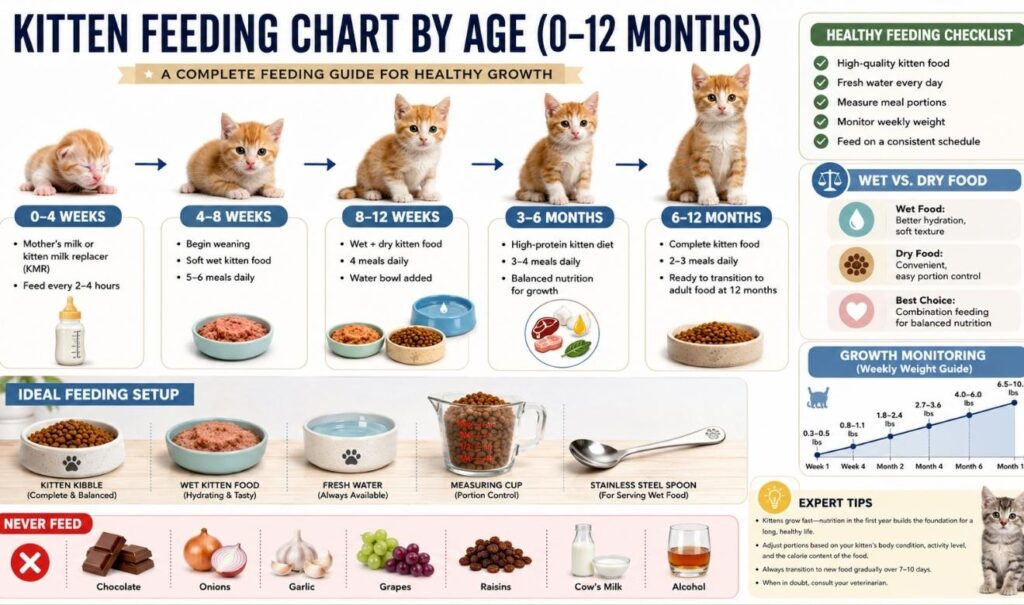
Kitten Feeding Chart by Age (Quick Reference Table)
A kitten’s feeding needs change quickly during the first year of life. During the first few weeks, kittens depend on their mother’s milk or a high-quality kitten milk replacer. As they grow, they need more calories, animal protein, healthy fats, vitamins, and minerals to support healthy growth and development. Feeding the right food at the right age helps build strong muscles, healthy bones, a strong immune system, and supports brain development.
The kitten feeding chart below provides a simple age-by-age guide for food type, meal frequency, portion recommendations, and important feeding tips. Keep in mind that every kitten is different. Your kitten’s breed, body weight, activity level, and the calorie content of its food can affect how much it should eat. Always choose a complete and balanced kitten food that meets AAFCO nutritional standards, and adjust portions based on your kitten’s body condition and your veterinarian’s advice.
| Kitten Age | Recommended Food | Meals Per Day | Portion Guide | Feeding Notes |
| 0–4 Weeks | Mother’s milk or kitten milk replacer (KMR) | Every 2–4 hours | Feed according to body weight and formula instructions | Never give cow’s milk. Bottle-feed orphaned kittens with kitten formula only. |
| 4–5 Weeks | Kitten milk replacer mixed with wet kitten food (gruel) | 5–6 small meals | Small amounts several times daily | Begin the weaning process. Introduce soft food slowly while continuing formula. |
| 6–8 Weeks | Wet kitten food with small amounts of dry kitten kibble | 4–5 meals | Follow feeding label and monitor appetite | Most kittens can eat solid food. Always provide fresh, clean water. |
| 2–3 Months | Complete and balanced wet or dry kitten food | 4 meals | Follow package guidelines based on weight | This is a rapid growth stage. High-quality animal protein and DHA are important. |
| 3–6 Months | Wet food, dry food, or a combination of both | 3–4 meals | Increase portions as your kitten grows | Support muscle growth, healthy bones, and energy needs with nutrient-rich kitten food. |
| 6–9 Months | Complete kitten diet | 2–3 meals | Adjust portions based on body condition and activity | Growth begins to slow, but kittens still need high-protein nutrition and fresh water. |
| 9–12 Months | Complete kitten food | 2 meals | Follow feeding recommendations and monitor weight | Prepare for a gradual transition to adult cat food at around 12 months unless your veterinarian recommends otherwise. |
Important Feeding Tips
- Feed a complete and balanced kitten food formulated for growth.
- Choose foods rich in animal protein, taurine, DHA, calcium, and essential vitamins and minerals.
- Keep fresh water available at all times to support hydration.
- Avoid sudden food changes because they can upset your kitten’s digestive system.
- Monitor your kitten’s weight, appetite, energy level, and body condition every week.
- Read the feeding guide on the food package, but adjust portions based on your kitten’s growth and activity level.
- If your kitten is not gaining weight, refuses food, or has ongoing digestive problems, contact your veterinarian for advice.
Many first-time kitten owners worry that their kitten is always hungry. In most cases, this is normal because young kittens grow very quickly and need frequent meals.
Why Kittens Need Different Nutrition Than Adult Cats
Kittens grow faster than adult cats. During the first year of life, their bodies develop quickly, including their muscles, bones, brain, eyes, and immune system. Because of this rapid growth, kittens need more calories and nutrients than adult cats. Feeding an adult cat diet too early may not provide enough nutrition to support healthy development.
A high-quality kitten food is specially made to meet these growing needs. It contains more animal protein, healthy fats, vitamins, and minerals than regular adult cat food. Many trusted kitten foods also follow AAFCO growth standards, which help ensure they provide complete and balanced nutrition for young cats.
Higher Energy Needs
Kittens are naturally active. They spend much of the day playing, exploring, climbing, and learning. All of this activity burns a lot of energy. A nutrient-rich diet with enough calories helps maintain healthy weight gain and supports daily growth without causing nutritional deficiencies.
More Protein for Muscle Growth
Protein is the most important nutrient for growing kittens. It helps build strong muscles, healthy organs, skin, and a shiny coat. Choose kitten food that lists real animal protein, such as chicken, turkey, salmon, or beef, as the first ingredient. High-protein kitten food also supports healthy body development during every growth stage.
Healthy Fats Support Brain and Eye Development
Healthy fats provide energy and help the brain and eyes develop properly. One important nutrient is DHA, an omega-3 fatty acid commonly found in fish oil. DHA supports learning, memory, and vision, especially during the first few months of life.
Strong Bones and Teeth
Growing kittens need the right balance of calcium, phosphorus, and vitamin D to develop strong bones and healthy teeth. These nutrients work together to support proper skeletal growth. Feeding too little or too much of these minerals can affect bone development, so it is important to choose a complete and balanced kitten diet instead of homemade meals without veterinary guidance.
Taurine Supports Heart and Eye Health
Taurine is an essential amino acid that cats cannot produce in sufficient amounts on their own. Kittens must get taurine from their food to support healthy vision, heart function, and normal growth. Quality commercial kitten foods include enough taurine to meet their daily needs.
A Strong Immune System
Young kittens are still developing their immune system. Vitamins such as vitamin E, along with essential minerals and antioxidants, help protect their bodies as they grow. Good nutrition also supports digestive health and helps kittens recover more quickly from minor illnesses or stress.
Better Digestion During Growth
A kitten’s digestive system is still developing. Feeding age-appropriate wet kitten food, dry kitten food, or a combination of both makes digestion easier and helps the body absorb nutrients more efficiently. Introduce new foods gradually over 7 to 10 days to reduce the risk of stomach upset.
Key Takeaway
Kittens are not simply smaller adult cats. Their bodies require more calories, high-quality animal protein, healthy fats, taurine, DHA, calcium, and other essential nutrients to support healthy growth. Feeding a complete and balanced kitten food throughout the first 12 months gives your kitten the best foundation for a healthy and active adult life.
My recommendation:
If you’re bringing home an 8-week-old kitten for the first time, start with the same food the breeder or shelter was using. Wait about a week before changing the diet. This simple step can help reduce digestive problems.
Feeding a Newborn Kitten (0–4 Weeks)
The first four weeks of a kitten’s life are the most important for healthy growth and survival. During this stage, newborn kittens cannot eat solid food. Their digestive system is still developing, and they depend completely on their mother’s milk or a high-quality kitten milk replacer (KMR) for nutrition. This early diet provides the calories, protein, healthy fats, vitamins, and minerals needed for proper growth, brain development, and a strong immune system.
If the mother cat is healthy and able to nurse, her milk is the best food for newborn kittens. It contains antibodies that help protect kittens from illness during the first few weeks of life. These natural antibodies support the immune system until the kitten is old enough to build its own defenses.
Feed Mother’s Milk Whenever Possible
Mother’s milk is the ideal source of nutrition for newborn kittens. It contains the right balance of nutrients for healthy development and is easy for kittens to digest. Nursing kittens should be allowed to feed whenever they are hungry, which is usually every two to four hours.
Healthy nursing kittens usually:
- Gain weight every day
- Sleep quietly after feeding
- Have warm bodies and pink gums
- Become more active as they grow
Regular weight checks are one of the best ways to make sure a kitten is getting enough milk.
Caring for Orphaned Kittens
If a kitten has been separated from its mother or the mother cannot produce enough milk, use a kitten milk replacer (KMR) that is specially made for kittens. These formulas provide complete and balanced nutrition designed for their early growth.
Never feed a newborn kitten:
- Cow’s milk
- Goat’s milk
- Plant-based milk
- Baby formula made for humans
These products do not contain the nutrients kittens need and can cause diarrhea, dehydration, and poor growth.
Bottle Feeding Tips
Bottle feeding requires patience and proper technique. Follow these tips to keep your kitten safe and healthy.
- Warm the kitten milk replacer according to the manufacturer’s instructions.
- Hold the kitten on its stomach, never on its back.
- Use a clean feeding bottle or nursing syringe designed for kittens.
- Allow the kitten to suck naturally without squeezing the bottle.
- Burp the kitten gently after each feeding if needed.
- Clean all feeding equipment after every use.
Young kittens cannot control their body temperature well, so keep them warm before and after feeding. A cold kitten should never be fed until it has been warmed safely.
Newborn Kitten Feeding Schedule
Newborn kittens have very small stomachs, so they need frequent meals throughout the day and night.
| Kitten Age | Food | Feeding Frequency |
| Birth to 1 Week | Mother’s milk or kitten milk replacer | Every 2–3 hours |
| 1–2 Weeks | Mother’s milk or kitten milk replacer | Every 2–3 hours |
| 2–3 Weeks | Mother’s milk or kitten milk replacer | Every 3–4 hours |
| 3–4 Weeks | Mother’s milk or kitten milk replacer | Every 4 hours |
Always follow the feeding instructions on the kitten milk replacer package and adjust the amount based on your kitten’s body weight and healthy weight gain.
Signs Your Newborn Kitten Is Feeding Well
A well-fed kitten will usually show these healthy signs:
- Gains weight every day
- Nurses or bottle-feeds eagerly
- Sleeps peacefully after meals
- Has a round but not swollen belly
- Stays warm and active
- Produces normal urine and stool
If a newborn kitten refuses to eat, cries constantly, loses weight, feels cold, or becomes weak, seek veterinary care as soon as possible. Young kittens can become dehydrated very quickly, and early treatment is important.
Preparing for Weaning
Around 4 weeks of age, most kittens begin showing interest in solid food. This is the start of the weaning process, where they slowly transition from milk to wet kitten food. During this period, continue offering kitten milk replacer while gradually introducing a soft mixture of wet kitten food and formula. A slow transition helps support healthy digestion and reduces stomach upset.
Common Mistakes From Experience
One mistake I often see new kitten owners make is filling the food bowl all day because they think kittens should eat whenever they want. In reality, measured meals make it much easier to monitor growth and prevent unnecessary weight gain.
Feeding Kittens During Weaning (4–8 Weeks)
The weaning process is one of the biggest milestones in a kitten’s development. Between 4 and 8 weeks of age, kittens gradually move from drinking milk to eating solid food. During this stage, they still need the nutrients found in kitten milk replacer, but they also begin learning how to chew and eat wet kitten food. A slow and gentle transition helps support healthy digestion and encourages good eating habits.
Most kittens are fully weaned by 8 weeks of age. At this point, they should be eating a complete and balanced kitten food that meets AAFCO nutritional standards. Their diet should provide high-quality animal protein, healthy fats, DHA, taurine, calcium, phosphorus, and other essential nutrients needed for healthy growth.
When Should You Start Weaning?
Most kittens begin showing signs that they are ready for solid food at around 4 weeks old. Every kitten develops at a different pace, so let your kitten progress naturally.
Common signs that a kitten is ready to begin weaning include:
- Shows interest in the mother’s food
- Starts chewing or licking soft food
- Has baby teeth coming in
- Becomes more active and curious
- Drinks less milk during feeding
If the kitten is still nursing, continue allowing access to the mother while introducing solid food gradually.
How to Introduce Solid Food
The easiest way to begin weaning is by making a soft food mixture, often called kitten gruel. This makes it easier for young kittens to chew and digest their first meals.
To prepare kitten gruel:
- Mix high-quality wet kitten food with warm kitten milk replacer.
- Stir until the mixture becomes soft and smooth.
- Place a small amount on a shallow plate.
- Allow the kitten to smell and taste the food.
- Feed small portions several times each day.
As your kitten becomes more comfortable eating, gradually reduce the amount of milk replacer and increase the amount of wet food.
Introducing Dry Kitten Food
Around 6 to 8 weeks, you can begin offering small amounts of dry kitten kibble. At first, soften the kibble with warm water or kitten milk replacer to make it easier to chew.
Once your kitten is eating comfortably, slowly reduce the added liquid until it can eat dry food on its own.
Many cat owners choose to feed a combination of wet kitten food and dry kitten food. This provides variety, supports hydration, and helps kittens adjust to different food textures.
Feeding Schedule During Weaning
As kittens grow, they can eat larger meals and do not need to feed as often.
| Kitten Age | Food Type | Meals Per Day |
| 4–5 Weeks | Kitten gruel and milk replacer | 5–6 small meals |
| 5–6 Weeks | Mostly wet kitten food with some formula | 4–5 meals |
| 6–8 Weeks | Wet kitten food with small amounts of dry kitten food | 4–5 meals |
Always provide fresh, clean water once kittens begin eating solid food. Good hydration supports healthy digestion and overall health.
Common Weaning Mistakes to Avoid
Many feeding problems happen because kittens are introduced to solid food too quickly. Avoid these common mistakes:
- Switching from milk to solid food overnight
- Feeding adult cat food instead of kitten food
- Giving cow’s milk after weaning
- Offering large pieces of dry kibble too early
- Overfeeding treats or human food
- Changing food brands suddenly without a gradual transition
A slow transition over several weeks helps reduce digestive upset and allows your kitten to adjust comfortably.
Signs Your Kitten Is Weaning Successfully
A kitten is progressing well through the weaning stage if it:
- Eats wet kitten food willingly
- Drinks fresh water regularly
- Gains weight each week
- Has normal, firm stools
- Stays playful and active
- Shows less interest in nursing
By 8 weeks of age, most kittens are fully weaned and ready to eat a complete and balanced diet of wet food, dry food, or a combination of both. This marks the beginning of the next growth stage, when proper meal portions and a consistent feeding schedule become even more important for healthy development.
Real-Life Scenarios
If you work a regular 9-to-5 job, you can feed your kitten before leaving for work, once after you return home, and split the remaining meals between the morning and evening.
Feeding an 8–12 Week Old Kitten
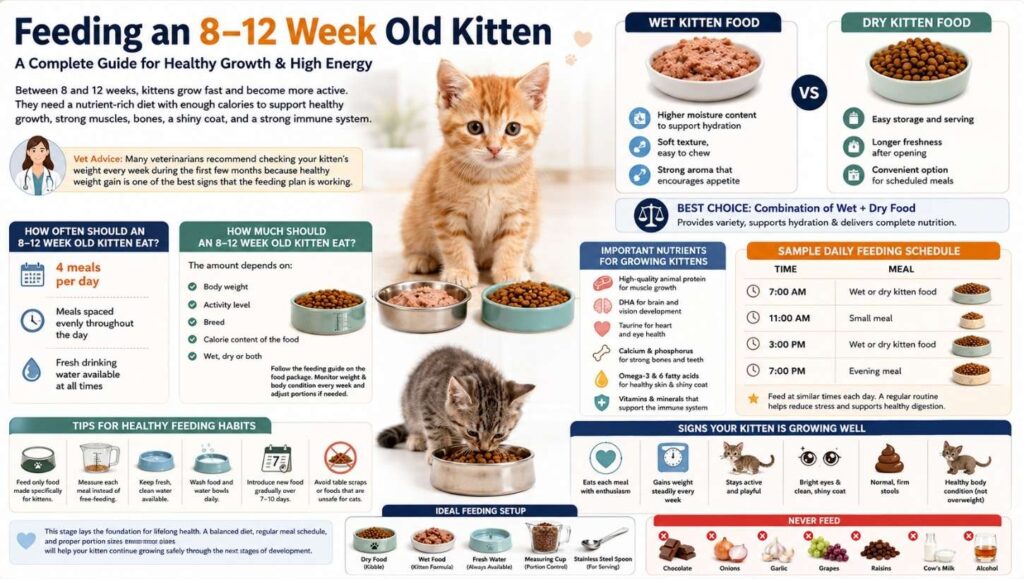
Between 8 and 12 weeks of age, kittens experience rapid growth and become much more active. They spend their days exploring, playing, climbing, and learning new skills. During this stage, they need a nutrient-rich diet that provides enough calories to support healthy growth and high energy levels. Feeding a complete and balanced kitten food helps build strong muscles, healthy bones, a healthy coat, and a strong immune system.
By this age, most kittens are fully weaned and no longer need kitten milk replacer. Their daily diet should include high-quality wet kitten food, dry kitten food, or a combination of both. Choose foods that meet AAFCO growth standards and contain plenty of animal protein, taurine, DHA, healthy fats, calcium, and phosphorus.
How Often Should an 8–12 Week Old Kitten Eat?
Young kittens have small stomachs but high energy needs. They cannot eat large meals at one time, so feeding several smaller meals throughout the day is the best approach.
A typical feeding schedule includes:
- 4 meals per day
- Meals spaced evenly throughout the day
- Fresh drinking water available at all times
Keeping a consistent routine helps your kitten develop healthy eating habits and supports proper digestion.
How Much Should an 8–12 Week Old Kitten Eat?
The exact amount of food depends on several factors, including:
- Body weight
- Activity level
- Breed
- Calorie content of the food
- Whether you feed wet food, dry food, or both
Instead of guessing, always follow the feeding guide printed on the kitten food package. Monitor your kitten’s weight and body condition every week and adjust portions if needed. Healthy kittens should gain weight steadily without becoming overweight.
Wet Food vs. Dry Food at This Age
Both wet and dry kitten food offer important benefits. Many veterinarians recommend feeding a combination of both.
Wet kitten food offers:
- Higher moisture content to support hydration
- Soft texture that is easy to chew
- Strong aroma that encourages healthy appetite
Dry kitten food provides:
- Easy storage and serving
- Longer freshness after opening
- Convenient option for scheduled meals
Combining wet and dry food gives your kitten variety while providing complete and balanced nutrition.
Important Nutrients for Growing Kittens
At this stage, your kitten needs more than just calories. Every meal should provide essential nutrients that support healthy development.
Look for kitten food that contains:
- High-quality animal protein for muscle growth
- DHA for brain and vision development
- Taurine for heart and eye health
- Calcium and phosphorus for strong bones and teeth
- Omega-3 and omega-6 fatty acids for healthy skin and a shiny coat
- Vitamins and minerals that support the immune system
These nutrients work together to help your kitten grow into a healthy adult cat.
Sample Daily Feeding Schedule
The exact times can vary depending on your routine, but consistency is important.
| Time | Meal |
| 7:00 AM | Wet or dry kitten food |
| 11:00 AM | Small meal |
| 3:00 PM | Wet or dry kitten food |
| 7:00 PM | Evening meal |
Try to feed your kitten at similar times each day. A regular routine helps reduce stress and supports healthy digestion.
Tips for Healthy Feeding Habits
Follow these simple tips to keep your kitten healthy:
- Feed only food made specifically for kittens.
- Measure each meal instead of free-feeding all day.
- Keep fresh, clean water available at all times.
- Wash food and water bowls daily.
- Introduce any new food gradually over 7 to 10 days.
- Avoid feeding table scraps or foods that are unsafe for cats.
Signs Your Kitten Is Growing Well
A healthy 8–12 week old kitten should:
- Eat each meal with enthusiasm
- Gain weight steadily every week
- Stay active and playful
- Have bright eyes and a clean, shiny coat
- Produce normal, firm stools
- Maintain a healthy body condition without excessive weight gain
This stage lays the foundation for lifelong health. A balanced diet, regular meal schedule, and proper portion sizes will help your kitten continue growing safely through the next stages of development.
Vet Advice Naturally
Many veterinarians recommend checking your kitten’s weight every week during the first few months because healthy weight gain is one of the best signs that the feeding plan is working.
Feeding Kittens From 3–6 Months
From 3 to 6 months of age, kittens continue to grow quickly, but their eating habits become more regular. During this stage, they develop stronger muscles, larger bones, and better coordination. They are also very playful and burn a lot of energy every day. A complete and balanced kitten diet is essential to support this active growth period.
Although kittens no longer need to eat as often as they did at 8 weeks, they still require more calories and nutrients than adult cats. Continue feeding a high-quality kitten food that meets AAFCO growth standards and provides plenty of animal protein, taurine, DHA, healthy fats, calcium, and phosphorus.
How Often Should You Feed a 3–6 Month Old Kitten?
By this age, most kittens do well with 3 to 4 meals per day. Their stomachs can hold more food, allowing them to eat slightly larger meals while maintaining a steady energy level throughout the day.
A simple feeding routine may look like this:
| Time | Meal |
| Morning | Wet or dry kitten food |
| Afternoon | Small meal or combination of wet and dry food |
| Evening | Main meal |
| Before Bed (Optional) | Small meal for very active kittens |
A regular feeding schedule helps support healthy digestion and prevents overeating.
How Much Food Does a 3–6 Month Old Kitten Need?
There is no single portion size that fits every kitten. The right amount depends on:
- Body weight
- Breed
- Activity level
- Type of food
- Calorie content of the diet
Always check the feeding guide on the kitten food package and adjust portions based on your kitten’s growth and body condition. Kittens should gain weight steadily without becoming overweight.
Nutrition That Supports Healthy Growth
Your kitten is building lifelong strength during this stage. Every meal should provide the nutrients needed for healthy development.
Look for kitten food that includes:
- High-quality animal protein for lean muscle development
- Healthy fats for energy
- DHA to support brain function
- Taurine for healthy eyes and heart
- Calcium and phosphorus for strong bones and teeth
- Vitamins and antioxidants that support the immune system
Avoid foods made for adult cats because they do not provide enough nutrients for growing kittens.
Wet Food, Dry Food, or Both?
Many pet owners choose to feed both wet and dry kitten food. This combination offers several benefits.
Wet kitten food:
- Helps maintain hydration
- Easy to chew
- Highly appealing to picky eaters
Dry kitten food:
- Convenient to store
- Easy to measure
- Supports regular chewing
Feeding a mix of both can provide balanced nutrition while giving your kitten different textures and flavors.
Monitor Your Kitten’s Growth
As your kitten grows, monitor its body condition instead of relying only on age. A healthy kitten should have a visible waist when viewed from above, but its ribs should not be clearly visible.
Signs your kitten is growing well include:
- Steady weekly weight gain
- Strong appetite
- Healthy, shiny coat
- Bright eyes
- High energy during play
- Normal, firm stools
If your kitten gains weight too quickly or appears underweight, review portion sizes and consult your veterinarian if needed.
Common Feeding Mistakes During This Stage
Avoid these common mistakes that can affect healthy growth:
- Feeding adult cat food before 12 months
- Giving too many treats
- Offering human foods regularly
- Leaving food out all day without measuring portions
- Changing food brands suddenly
- Forgetting to provide fresh water
Building healthy feeding habits now can reduce the risk of obesity and digestive problems later in life.
Preparing for the Next Growth Stage
As your kitten approaches 6 months of age, its growth rate will begin to slow. You can gradually reduce feeding frequency to 2 or 3 meals per day, but continue feeding a complete and balanced kitten food. Your kitten still needs extra protein, healthy fats, and essential nutrients until it reaches adulthood at around 12 months of age. Consistent meal times, proper portion sizes, and regular weight checks will help keep your kitten healthy throughout the rest of its first year.
Owner Tip
If your kitten suddenly stops finishing meals but is still playful and drinking water, check whether the food has been left out too long. Some kittens refuse food simply because it is no longer fresh.
Feeding Kittens From 6–12 Months
Between 6 and 12 months of age, your kitten enters the final stage of its first year. Growth begins to slow, but your kitten is still developing muscles, bones, and body strength. Many kittens also become more active during this period, spending more time running, climbing, and playing. They still need a complete and balanced kitten food that provides the nutrients required for healthy development.
Even though your kitten may look like an adult cat, its nutritional needs are still different. Continue feeding food that is specially formulated for kittens and meets AAFCO growth standards. A diet rich in animal protein, taurine, DHA, healthy fats, calcium, and phosphorus helps support healthy weight, strong bones, heart health, and overall well-being.
How Often Should a 6–12 Month Old Kitten Eat?
By this stage, most kittens can eat 2 to 3 meals each day. Their stomach capacity has increased, so they can comfortably eat larger portions at each meal.
A simple feeding schedule may look like this:
| Time | Meal |
| Morning | Wet or dry kitten food |
| Evening | Wet or dry kitten food |
| Midday (Optional) | Small meal for highly active kittens |
Try to feed your kitten at the same times every day. A consistent routine supports healthy digestion and helps prevent overeating.
How Much Food Should You Feed?
The right portion depends on several factors, including:
- Body weight
- Breed
- Activity level
- Indoor or outdoor lifestyle
- Calorie content of the food
Instead of feeding a fixed amount, use the feeding guide on your kitten food package as a starting point. Then adjust portions based on your kitten’s body condition and weight. Active kittens may need slightly more calories, while less active kittens may require smaller portions.
Continue Feeding High-Quality Kitten Food
Your kitten still needs extra nutrients until it reaches adulthood. Choose a food that includes:
- High-quality animal protein to maintain lean muscles
- Healthy fats for energy
- Taurine for heart and eye health
- DHA to support brain function
- Calcium and phosphorus for strong bones and teeth
- Essential vitamins and minerals for immune support
Avoid switching to adult cat food too early. Adult formulas contain fewer calories and may not provide enough nutrition for a growing kitten.
Keep Your Kitten at a Healthy Weight
As growth slows, it becomes easier for kittens to gain excess weight if they eat more calories than they burn. Monitor your kitten’s body condition every few weeks.
A healthy kitten should:
- Have a visible waist when viewed from above
- Have ribs that can be felt without pressing hard
- Stay active and playful
- Maintain steady growth without becoming overweight
Regular play sessions and daily exercise also help maintain a healthy body weight.
Wet Food or Dry Food?
At this age, both wet and dry kitten food remain excellent choices. Many owners continue feeding a combination of both.
Benefits of wet food include:
- Supports hydration
- Soft texture
- Strong flavor that encourages eating
Benefits of dry food include:
- Easy to measure
- Convenient for daily feeding
- Can be part of a balanced diet
Whichever option you choose, make sure it is labeled specifically for kittens until your cat is ready to transition to adult food.
Signs Your Kitten Is Thriving
A healthy kitten between 6 and 12 months old should show these signs:
- Healthy and steady weight
- Bright, clear eyes
- Clean ears and healthy gums
- Soft, shiny coat
- Good appetite
- High energy levels
- Normal digestion and firm stools
If your kitten suddenly loses weight, refuses food, vomits frequently, or has ongoing diarrhea, contact your veterinarian. Early treatment can prevent more serious health problems.
Preparing to Switch to Adult Cat Food
Most cats are ready to transition to adult cat food at around 12 months of age. However, some large breeds, such as Maine Coons, continue growing for longer and may benefit from kitten food until 15 to 18 months, depending on your veterinarian’s recommendation.
When it’s time to switch, make the change gradually over 7 to 10 days. Slowly mix increasing amounts of adult cat food with the current kitten food. This gradual transition helps prevent digestive upset and allows your cat to adjust comfortably.
By feeding high-quality kitten food throughout the first year, following a regular feeding schedule, and monitoring your kitten’s growth, you can help your young cat develop into a healthy, strong, and active adult.
USA Context
Most kitten foods sold in the United States include feeding guides on the packaging. Brands like Purina Pro Plan, Hill’s Science Diet, Royal Canin, and IAMS adjust portion recommendations based on your kitten’s current weight and age.
How Much Should a Kitten Eat?
One of the most common questions new cat owners ask is, “How much should my kitten eat?” The answer depends on several factors, including your kitten’s age, body weight, activity level, and the type of food you feed. There is no single portion that is right for every kitten. Some kittens are naturally more active and burn more calories, while others need slightly smaller portions to maintain a healthy weight.
The best approach is to use the feeding guide on your kitten food package as a starting point. Then adjust the amount based on your kitten’s growth, body condition, and your veterinarian’s advice. A complete and balanced kitten food that meets AAFCO growth standards provides the protein, healthy fats, taurine, DHA, vitamins, and minerals needed for healthy development.
Factors That Affect How Much Your Kitten Should Eat
Several factors determine the right portion size for your kitten.
Age
Young kittens grow very quickly and need frequent meals with more calories. As they get older, their growth slows, and they can eat fewer but larger meals.
Body Weight
A heavier kitten usually needs more food than a smaller kitten of the same age. Regular weight checks help you adjust portions as your kitten grows.
Activity Level
Very active kittens burn more energy while running, climbing, and playing. They often need slightly more calories than kittens that spend most of their time indoors resting.
Type of Food
Wet kitten food and dry kitten food contain different amounts of calories. Wet food has more moisture, while dry food is more calorie-dense. If you feed a combination of both, adjust the portions to avoid overfeeding.
Breed
Some breeds grow larger than others and may have different nutritional needs. Large breeds like the Maine Coon often grow for a longer period than most domestic cats.
General Daily Feeding Guide
The table below provides a simple reference for healthy kittens. Always compare these recommendations with the feeding instructions on your kitten food label.
| Kitten Age | Meals Per Day | General Feeding Guide |
| 0–4 Weeks | Every 2–4 hours | Mother’s milk or kitten milk replacer only |
| 4–8 Weeks | 4–6 meals | Small portions of wet kitten food during weaning |
| 2–3 Months | 4 meals | Follow package guide based on body weight |
| 3–6 Months | 3–4 meals | Increase portions gradually as your kitten grows |
| 6–12 Months | 2–3 meals | Adjust portions based on activity level and body condition |
Remember that these are general guidelines. Every kitten has unique nutritional needs.
How to Know if Your Kitten Is Eating Enough
A healthy kitten usually shows clear signs that it is getting the right amount of food.
Signs of proper feeding include:
- Steady weight gain
- Healthy body condition
- Bright eyes
- Soft, shiny coat
- Good energy levels
- Regular appetite
- Normal, firm stools
If your kitten continues to grow, stays playful, and maintains a healthy weight, its current feeding routine is likely working well.
Signs Your Kitten May Be Eating Too Much
Overfeeding can lead to unhealthy weight gain, even during the first year of life.
Watch for these signs:
- Rapid weight gain
- Rounded body shape with little waist
- Reduced activity
- Leaving food unfinished after meals
- Frequent digestive upset
Measure each meal instead of guessing. Avoid giving too many treats or table scraps.
Signs Your Kitten May Not Be Eating Enough
Underfeeding can slow growth and affect your kitten’s overall health.
Look for signs such as:
- Poor weight gain
- Visible ribs or spine
- Low energy
- Constant hunger
- Dull coat
- Weakness or slow growth
If your kitten is not gaining weight or loses interest in food for more than a day, contact your veterinarian.
Tips for Feeding the Right Amount
These simple habits can help keep your kitten healthy throughout its first year:
- Measure food with a measuring cup instead of estimating.
- Follow the feeding guide on the food package.
- Adjust portions as your kitten grows.
- Provide fresh, clean water at all times.
- Limit treats to a small part of the daily calorie intake.
- Monitor your kitten’s weight every week during the early months.
- Schedule regular veterinary checkups to track healthy growth.
Feeding the right amount of food is just as important as choosing high-quality kitten food. By matching portion sizes to your kitten’s age, body weight, and activity level, you can support healthy growth and reduce the risk of both underfeeding and overfeeding.
Small Storytelling
A family I spoke with believed their kitten wasn’t drinking enough water. After switching from a deep bowl to a shallow ceramic bowl and adding one serving of wet food each day, the kitten started drinking normally.
How Often Should You Feed a Kitten?
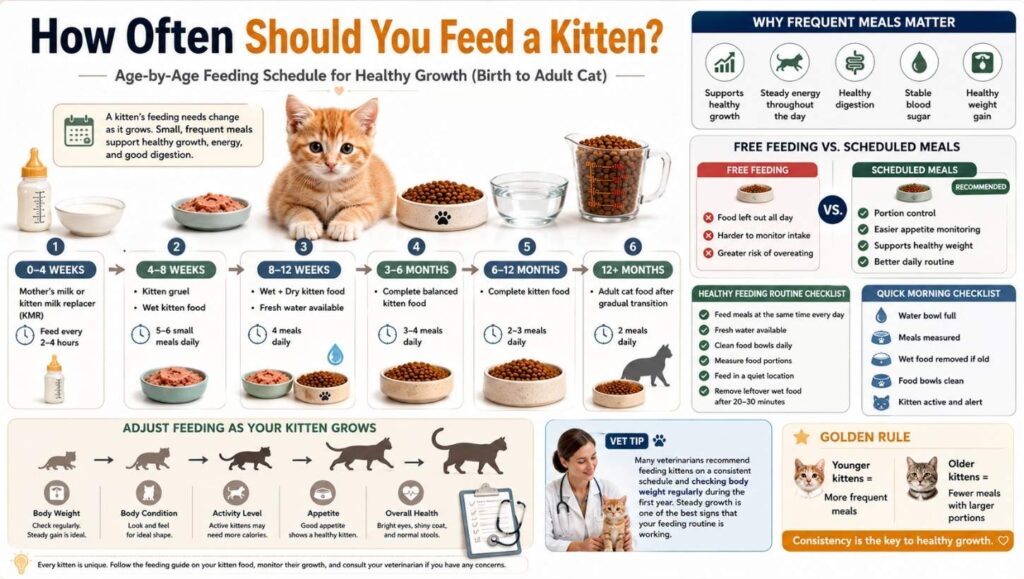
A kitten’s feeding schedule changes as it grows. Young kittens have very small stomachs and need frequent meals to get enough calories and nutrients. As they get older, they can eat larger portions and require fewer meals each day. Following a regular feeding schedule helps support healthy growth, steady energy levels, and good digestion.
The exact feeding frequency depends on your kitten’s age, body weight, activity level, and overall health. Feeding high-quality kitten food at consistent times each day also helps build healthy eating habits that can continue into adulthood.
Kitten Feeding Schedule by Age
Use the table below as a general guide for how often to feed your kitten.
| Kitten Age | Feeding Frequency | Recommended Food |
| 0–4 Weeks | Every 2–4 hours | Mother’s milk or kitten milk replacer |
| 4–8 Weeks | 5–6 small meals per day | Kitten gruel, then wet kitten food |
| 8–12 Weeks | 4 meals per day | Wet food, dry food, or both |
| 3–6 Months | 3–4 meals per day | Complete and balanced kitten food |
| 6–12 Months | 2–3 meals per day | Complete kitten food |
| 12+ Months | 2 meals per day | Adult cat food after a gradual transition |
These recommendations are suitable for most healthy kittens. Always check the feeding instructions on your kitten food and speak with your veterinarian if your kitten has special dietary needs.
Why Frequent Meals Matter
Growing kittens use a lot of energy throughout the day. Their bodies need a steady supply of nutrients to support muscle development, bone growth, brain development, and a healthy immune system.
Feeding several small meals instead of one or two large meals offers many benefits:
- Provides steady energy throughout the day
- Supports healthy digestion
- Helps maintain stable blood sugar levels
- Reduces the chance of overeating
- Encourages healthy growth and weight gain
As your kitten grows, its stomach becomes larger and can comfortably hold more food, making fewer meals possible.
Should You Leave Food Out All Day?
Some cat owners practice free feeding, where dry food is available throughout the day. While this may work for some young kittens, scheduled feeding is usually the better option.
Scheduled meals help you:
- Measure daily food intake accurately
- Monitor your kitten’s appetite
- Prevent overeating
- Maintain a healthy body weight
- Notice early signs of illness if your kitten suddenly eats less
If you feed dry kitten food, avoid leaving large amounts in the bowl all day. Fresh meals are more appealing, and portion control is easier.
Tips for Creating a Healthy Feeding Routine
A consistent routine makes feeding simple and helps your kitten know when to expect meals.
Follow these tips:
- Feed meals at the same times each day.
- Use a clean food bowl for every meal.
- Provide fresh, clean water at all times.
- Measure portions with a measuring cup.
- Feed in a quiet area away from distractions.
- Remove uneaten wet food after about 20 to 30 minutes to keep it fresh.
These small habits can improve digestion and reduce food waste.
Adjust the Schedule as Your Kitten Grows
Your kitten’s nutritional needs will change throughout the first year. As growth slows, you can gradually reduce the number of meals while slightly increasing the portion size of each meal.
Pay attention to your kitten’s:
- Body weight
- Body condition
- Activity level
- Appetite
- Overall health
If your kitten seems constantly hungry, gains weight too quickly, or leaves food behind regularly, adjust the feeding schedule and portion sizes as needed.
Key Takeaway
Feeding your kitten the right number of meals each day is just as important as choosing high-quality food. Young kittens need frequent meals because they grow quickly and have small stomachs. As they approach adulthood, you can gradually reduce meal frequency while continuing to provide a complete and balanced diet. A regular feeding schedule supports healthy growth, healthy digestion, and long-term well-being.
Quick Checklist
Before you leave home each morning, make sure you’ve checked these five things:
- Fresh water bowl is full.
- Today’s meals are measured.
- Wet food isn’t left sitting out.
- Food bowls are clean.
- Your kitten looks active and alert.
Wet Food vs. Dry Food for Kittens
Choosing between wet food and dry food for kittens is a common question for new cat owners. The good news is that both can be healthy choices when they are specially made for kittens and provide complete and balanced nutrition. The best option depends on your kitten’s age, eating habits, hydration needs, and your daily routine.
Many veterinarians recommend feeding a combination of wet and dry kitten food. This approach gives your kitten the benefits of both while providing the essential nutrients needed for healthy growth. Look for foods that meet AAFCO growth standards and contain high-quality animal protein, taurine, DHA, healthy fats, vitamins, and minerals.
Wet Kitten Food
Wet kitten food contains a high amount of moisture, making it an excellent choice for keeping kittens hydrated. It is also soft and easy to chew, which makes it ideal for kittens that are newly weaned or still developing their teeth.
Benefits of Wet Kitten Food
- High moisture content supports healthy hydration.
- Soft texture is easy for young kittens to eat.
- Strong aroma encourages picky eaters.
- Helps increase daily water intake.
- Available in many flavors and recipes.
Things to Consider
- Costs more than dry food.
- Must be refrigerated after opening.
- Should not be left out for long because it can spoil.
- Requires more frequent serving.
Dry Kitten Food
Dry kitten food, also called kitten kibble, is convenient and easy to store. It contains concentrated nutrients and can be a practical option for busy households.
Benefits of Dry Kitten Food
- Easy to measure and serve.
- More affordable than wet food.
- Longer shelf life after opening.
- Convenient for scheduled feeding.
- Available in many complete and balanced formulas.
Things to Consider
- Contains less moisture than wet food.
- Some young kittens may find hard kibble difficult to chew.
- Fresh drinking water should always be available.
Wet Food vs. Dry Food Comparison
| Feature | Wet Kitten Food | Dry Kitten Food |
| Moisture Content | High | Low |
| Texture | Soft and easy to chew | Crunchy kibble |
| Hydration | Excellent | Requires more water intake |
| Storage | Refrigerate after opening | Easy to store |
| Cost | Usually higher | Usually lower |
| Best For | Young kittens, picky eaters, hydration | Older kittens, convenience, portion control |
Can You Feed Both Wet and Dry Food?
Yes. Feeding both wet and dry kitten food is a popular and healthy choice for many kittens. A mixed-feeding approach offers variety while ensuring your kitten receives balanced nutrition.
Benefits of combining both include:
- Better hydration from wet food.
- Convenient feeding with dry food.
- Different textures that encourage healthy eating habits.
- Easier transition if food preferences change later.
- More flexibility for daily feeding schedules.
When feeding both, reduce the portion of each food so your kitten does not consume too many calories.
How to Choose the Best Kitten Food
Not all kitten foods are the same. Read the label carefully before buying.
Choose a product that:
- Is labeled specifically for kittens or growth.
- Meets AAFCO nutritional standards.
- Lists real animal protein as the first ingredient.
- Contains taurine and DHA.
- Includes healthy fats, vitamins, and minerals.
- Does not rely heavily on fillers as the main ingredients.
Quality nutrition during the first year helps support healthy muscles, strong bones, brain development, and a healthy immune system.
Tips for Feeding Wet and Dry Food
To get the best results from your kitten’s diet:
- Feed measured portions instead of guessing.
- Offer fresh, clean water at all times.
- Introduce new foods gradually over 7 to 10 days.
- Store food properly to keep it fresh.
- Remove leftover wet food after 20 to 30 minutes.
- Monitor your kitten’s body weight and body condition regularly.
Which Option Is Better?
There is no single answer that works for every kitten. Wet food provides excellent hydration and is easy to eat, while dry food is convenient and economical. For many kittens, a combination of both offers the best balance of nutrition, hydration, and convenience.
The most important factor is choosing a complete and balanced kitten food that provides the nutrients your growing kitten needs. Whether you feed wet food, dry food, or both, following the correct portion sizes and feeding schedule will help your kitten grow into a healthy and active adult cat.
Small Everyday Problems
My kitten only eats wet food.
My kitten wakes me up at 5 AM for breakfast.
My kitten eats too fast.
My kitten ignores dry food.
My kitten drinks very little water.
Signs Your Kitten Is Eating the Right Amount
Feeding your kitten the right amount of food is just as important as choosing high-quality kitten food. A healthy kitten should receive enough calories and nutrients to support steady growth without becoming overweight. By watching your kitten’s body condition, behavior, and overall health, you can tell if its current feeding routine is meeting its nutritional needs.
Every kitten grows at its own pace, so avoid comparing your kitten with others. Instead, focus on healthy weight gain, energy levels, appetite, and regular development. A complete and balanced diet rich in animal protein, taurine, DHA, healthy fats, vitamins, and minerals helps support normal growth throughout the first year.
Healthy Weight Gain
One of the clearest signs that your kitten is eating the right amount is steady weight gain. Young kittens should gradually gain weight as they grow. Regular weekly weigh-ins help you monitor progress and make small adjustments to portion sizes if needed.
A healthy kitten should:
- Gain weight consistently.
- Maintain a healthy body condition.
- Grow taller and stronger each month.
Sudden weight loss or poor weight gain may indicate that your kitten is not getting enough nutrition or has an underlying health problem.
Active and Playful Behavior
Healthy kittens are naturally curious and energetic. They spend much of the day playing, exploring, climbing, and interacting with their surroundings.
A well-fed kitten will usually:
- Play several times throughout the day.
- Explore new environments with confidence.
- Stay alert and responsive.
- Rest peacefully after meals and playtime.
Low energy or unusual tiredness may be a sign that your kitten needs a nutritional evaluation or veterinary care.
Healthy Body Condition
A kitten should look lean but not thin. You should be able to feel the ribs with gentle pressure, but they should not stick out visibly. When viewed from above, your kitten should have a slight waist behind the ribs.
A healthy body condition means your kitten is receiving the right balance of calories and nutrients.
Bright Eyes and a Shiny Coat
Nutrition affects every part of your kitten’s body, including its skin and coat.
A healthy kitten usually has:
- Bright, clear eyes
- Clean ears
- Soft, shiny fur
- Healthy skin without excessive dryness
- Strong, clean teeth as they develop
A dull coat or poor skin condition may suggest poor nutrition or another health issue.
Healthy Appetite
A kitten that is eating the right amount usually looks forward to mealtime. It should eat with enthusiasm without acting constantly hungry after finishing its meal.
A normal appetite includes:
- Eating meals regularly
- Finishing appropriate portions
- Drinking fresh water throughout the day
A sudden loss of appetite should never be ignored, especially in young kittens.
Normal Digestion
Good nutrition supports a healthy digestive system.
Signs of healthy digestion include:
- Firm, well-formed stools
- Regular bowel movements
- No frequent vomiting
- No ongoing diarrhea
- Comfortable digestion after meals
If digestive problems continue for more than a day or two, contact your veterinarian.
Healthy Growth Checklist
Use this quick checklist to monitor your kitten’s progress.
| Healthy Sign | What It Means |
| Steady weight gain | Proper calorie intake and healthy growth |
| Active and playful | Good energy and overall health |
| Healthy body condition | Balanced nutrition and correct portion sizes |
| Bright eyes and shiny coat | Adequate vitamins, minerals, and healthy fats |
| Strong appetite | Healthy feeding routine |
| Normal stools | Healthy digestion |
| Drinks fresh water | Good hydration |
When to Review Your Feeding Routine
Even healthy kittens need occasional adjustments to their feeding plan as they grow.
Review your kitten’s diet if you notice:
- Weight gain that is too fast or too slow
- Constant hunger after meals
- Food left in the bowl regularly
- Reduced activity levels
- Changes in body condition
- Digestive problems
Small changes to meal size or feeding frequency are often enough to keep your kitten on track. If you are unsure about your kitten’s nutritional needs, your veterinarian can recommend the best feeding plan based on age, body weight, and overall health.
A kitten that eats the right amount of food will continue to grow steadily, stay active, and maintain a healthy body condition. Regular monitoring and a balanced feeding routine are the keys to raising a healthy and happy adult cat.
Did You Know?
Most healthy kittens double their birth weight within the first two weeks of life. Regular weekly weigh-ins are one of the easiest ways to make sure your kitten is growing properly.
Signs Your Kitten Is Overfed
Feeding your kitten enough food is important, but giving too much can also cause problems. Many cat owners believe that a growing kitten should eat as much as it wants. While kittens need more calories than adult cats, overfeeding can lead to unhealthy weight gain and increase the risk of obesity later in life.
A complete and balanced kitten food provides the nutrients your kitten needs, but the portion size also matters. Following the feeding guide on the food package and adjusting meals based on your kitten’s age, body weight, and activity level can help prevent overfeeding.
Rapid Weight Gain
The most common sign of overfeeding is gaining weight too quickly. Healthy kittens should grow steadily, but sudden or excessive weight gain may mean they are eating more calories than they need.
Weigh your kitten every week during the first year. If you notice a rapid increase in weight, review the portion sizes and feeding schedule.
Rounded Body Shape
A healthy kitten should have a slight waist when viewed from above. If your kitten’s body looks round or you cannot easily feel its ribs with gentle pressure, it may be carrying extra body fat.
Signs of an overweight kitten include:
- No visible waist
- Rounded belly that is not related to eating
- Thick fat layer over the ribs
- Less defined body shape
Monitoring your kitten’s body condition is often more helpful than relying only on the number on the scale.
Leaving Food in the Bowl
If your kitten regularly leaves food behind after meals, it may be receiving portions that are too large.
Instead of filling the bowl, measure each meal using a measuring cup. This makes it easier to control daily calorie intake and reduce food waste.
Lower Activity Levels
Healthy kittens are usually full of energy. If your kitten becomes less active or prefers sleeping instead of playing, excess body weight may be making movement more difficult.
Although tiredness can have many causes, reduced activity together with rapid weight gain may be a sign of overfeeding.
Digestive Problems
Eating too much food in one meal can upset your kitten’s digestive system.
Possible signs include:
- Vomiting after meals
- Loose stools
- Stomach discomfort
- Eating too quickly
Offering smaller meals throughout the day often helps improve digestion.
Common Causes of Overfeeding
Many cases of overfeeding happen because owners unintentionally provide too many calories.
Common causes include:
- Giving portions larger than recommended
- Feeding too many treats
- Offering table scraps or human food
- Free-feeding without measuring food
- Feeding multiple family members without tracking meals
- Not adjusting portions as your kitten grows
Being aware of these habits can help you maintain a healthy feeding routine.
How to Prevent Overfeeding
Keeping your kitten at a healthy weight is easier than helping it lose weight later.
Follow these simple tips:
- Measure every meal instead of guessing.
- Follow the feeding guide on your kitten food package.
- Adjust portions based on body weight and activity level.
- Limit treats to a small part of the daily calorie intake.
- Encourage daily play and exercise.
- Monitor your kitten’s weight and body condition every week.
- Provide fresh, clean water at all times.
Quick Signs of Overfeeding
Use this checklist to identify possible signs that your kitten is eating too much.
| Sign | What It May Mean |
| Rapid weight gain | Too many daily calories |
| Rounded body shape | Excess body fat |
| No visible waist | Portion sizes may be too large |
| Food left after meals | Meals may be oversized |
| Lower activity | Extra weight may reduce movement |
| Frequent vomiting after eating | Meals may be too large or eaten too quickly |
Key Takeaway
Overfeeding may seem harmless during the first year, but it can lead to unhealthy weight gain and long-term health problems. Feeding measured portions of a complete and balanced kitten food, following a regular meal schedule, and monitoring your kitten’s body condition will help maintain a healthy weight while supporting steady growth and development.
Table
| Situation | What I’d Do |
| Kitten skips one meal | Watch closely and offer fresh food at the next meal. |
| Kitten refuses food for 24 hours | Contact your veterinarian. |
| Loose stool after changing food | Slow the transition and monitor for improvement. |
| Constant hunger | Review portion sizes and your feeding schedule. |
Signs Your Kitten Isn’t Eating Enough
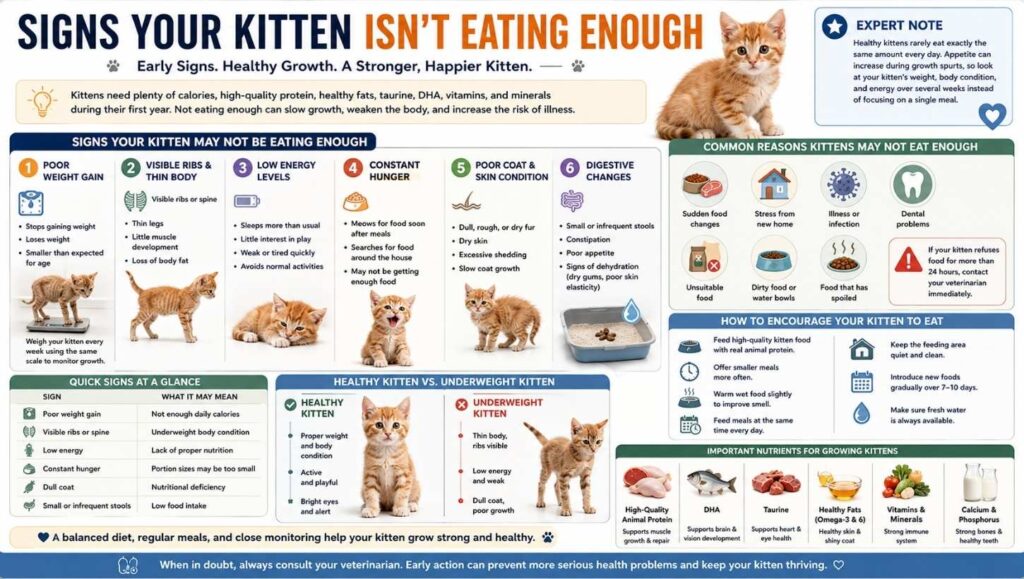
Just as overfeeding can affect your kitten’s health, underfeeding can also slow healthy growth and development. Kittens need plenty of calories, high-quality animal protein, healthy fats, taurine, DHA, vitamins, and minerals during their first year. If they do not get enough nutrition, they may not grow properly and can become weak or more likely to get sick.
Some kittens naturally eat less than others, but a healthy kitten should have a good appetite and gain weight regularly. Watching your kitten’s eating habits and body condition can help you spot problems early.
Poor Weight Gain
One of the first signs that your kitten may not be eating enough is slow or poor weight gain. Growing kittens should gain weight steadily during the first year.
If your kitten:
- Stops gaining weight
- Loses weight
- Remains much smaller than expected for its age
it may not be getting enough calories or nutrients.
Weigh your kitten every week using the same scale to monitor healthy growth.
Visible Ribs and Thin Body
A healthy kitten should have a lean body with a slight waist, but its ribs, spine, and hip bones should not be clearly visible.
Signs of being underweight include:
- Visible ribs
- Prominent spine
- Thin legs
- Little muscle development
- Noticeable loss of body fat
If your kitten looks unusually thin, review its feeding routine and consult your veterinarian if the problem continues.
Low Energy Levels
Kittens are naturally active and playful. They enjoy running, jumping, climbing, and exploring.
A kitten that is not eating enough may:
- Sleep more than usual
- Show little interest in play
- Become weak or tired quickly
- Avoid normal activities
Low energy can also be a sign of illness, so it should not be ignored.
Constant Hunger
If your kitten seems hungry all the time, meows for food shortly after meals, or searches for food around the house, it may not be receiving enough food at mealtime.
Before increasing portions, make sure you are feeding a complete and balanced kitten food with enough calories for your kitten’s age and body weight.
Poor Coat and Skin Condition
Nutrition has a direct effect on your kitten’s skin and coat.
A kitten that is not eating enough may develop:
- Dull or rough fur
- Dry skin
- Excessive shedding
- Slow coat growth
A healthy diet rich in protein, omega-3 fatty acids, vitamins, and minerals supports a soft, shiny coat.
Digestive Changes
Not eating enough can sometimes affect digestion.
Watch for:
- Small or infrequent stools
- Constipation
- Poor appetite
- Signs of dehydration, such as dry gums or reduced skin elasticity
Always provide fresh, clean water to help maintain proper hydration.
Common Reasons a Kitten May Not Eat Enough
Several factors can reduce a kitten’s appetite.
Common causes include:
- Sudden food changes
- Stress from moving to a new home
- Illness or infection
- Dental problems
- Feeding food that is not suitable for kittens
- Dirty food or water bowls
- Food that has spoiled
If your kitten refuses food for more than 24 hours, contact your veterinarian as soon as possible. Young kittens can become dehydrated and weak very quickly.
How to Encourage Your Kitten to Eat
If your kitten is healthy but eating less than expected, these tips may help:
- Feed high-quality kitten food with real animal protein.
- Offer smaller meals more often.
- Warm wet food slightly to improve its smell.
- Feed meals at the same time every day.
- Keep the feeding area quiet and clean.
- Introduce new foods gradually over 7 to 10 days.
- Make sure fresh water is always available.
Quick Signs Your Kitten May Not Be Eating Enough
| Sign | What It May Mean |
| Poor weight gain | Not enough daily calories |
| Visible ribs or spine | Underweight body condition |
| Low energy | Lack of proper nutrition |
| Constant hunger | Portion sizes may be too small |
| Dull coat | Nutritional deficiency |
| Small or infrequent stools | Low food intake |
Key Takeaway
A kitten that does not eat enough may struggle to reach a healthy weight and develop properly. Regular weight checks, measured meals, and a complete and balanced kitten diet help support healthy growth throughout the first year. If you notice ongoing weight loss, poor appetite, weakness, or other unusual symptoms, seek veterinary advice promptly. Early action can help prevent more serious health problems and keep your kitten growing strong and healthy.
Expert Note
Healthy kittens rarely eat exactly the same amount every day. Appetite can increase during growth spurts, so look at your kitten’s weight, body condition, and energy over several weeks instead of focusing on a single meal.
Common Kitten Feeding Mistakes
Even when you choose a high-quality kitten food, small feeding mistakes can affect your kitten’s growth and overall health. Many new cat owners unintentionally overfeed, underfeed, or offer foods that are not suitable for growing kittens. Learning about these common mistakes can help you build healthy feeding habits from the beginning.
A growing kitten needs a complete and balanced diet that meets AAFCO nutritional standards. Feeding the right food, in the right amount, and at the right time gives your kitten the nutrients it needs for healthy muscles, strong bones, brain development, and a healthy immune system.
1. Feeding Adult Cat Food Too Early
One of the biggest mistakes is switching to adult cat food before your kitten is ready.
Kitten food contains:
- More animal protein
- Higher calorie levels
- Healthy fats
- DHA for brain development
- Taurine for heart and eye health
- Calcium and phosphorus for growing bones
Most kittens should continue eating kitten food until they are around 12 months old. Large breeds, such as Maine Coons, may need kitten food for even longer.
2. Giving Cow’s Milk
Many people believe kittens should drink cow’s milk, but this is a common myth.
Most kittens cannot digest cow’s milk properly. It can lead to:
- Diarrhea
- Stomach upset
- Dehydration
- Digestive discomfort
If a kitten is too young to eat solid food, use a kitten milk replacer (KMR) instead of regular milk.
3. Overfeeding Your Kitten
Because kittens grow quickly, owners sometimes give more food than necessary.
Overfeeding can cause:
- Rapid weight gain
- Excess body fat
- Digestive problems
- Obesity later in life
Measure every meal and follow the feeding recommendations on your kitten food package.
4. Feeding Too Little Food
Underfeeding is just as harmful as overfeeding.
A kitten that does not receive enough calories may experience:
- Slow growth
- Weight loss
- Weak muscles
- Low energy
- Poor immune function
Regular weight checks help ensure your kitten is developing properly.
5. Changing Food Too Quickly
Suddenly changing from one food to another can upset your kitten’s digestive system.
When introducing a new food:
- Mix a small amount with the current food.
- Increase the new food gradually over 7 to 10 days.
- Watch for vomiting or diarrhea during the transition.
A slow change helps your kitten adjust comfortably.
6. Feeding Too Many Treats
Treats should only be a small part of your kitten’s diet.
Too many treats can:
- Reduce appetite for balanced meals
- Add unnecessary calories
- Lead to unhealthy weight gain
- Create picky eating habits
Use treats occasionally and choose products made specifically for kittens.
7. Feeding Human Foods
Some human foods are unsafe for cats and may even be toxic.
Avoid giving your kitten foods such as:
- Chocolate
- Onions
- Garlic
- Grapes
- Raisins
- Alcohol
- Foods containing xylitol
Even safe human foods should not replace a complete and balanced kitten diet.
8. Not Providing Fresh Water
As kittens begin eating solid food, they need constant access to clean drinking water.
Fresh water helps:
- Maintain hydration
- Support healthy digestion
- Protect kidney function
- Regulate body temperature
Wash the water bowl daily and refill it with fresh water.
9. Free-Feeding Without Measuring Portions
Leaving food available all day can make it difficult to know how much your kitten is eating.
Scheduled meals offer several advantages:
- Better portion control
- Easier weight management
- Healthy eating routine
- Early detection of appetite changes
Measure each meal instead of filling the bowl without tracking intake.
10. Ignoring Changes in Appetite
A sudden change in appetite should never be ignored.
Contact your veterinarian if your kitten:
- Refuses food for more than 24 hours
- Eats much less than usual
- Vomits frequently
- Has ongoing diarrhea
- Loses weight unexpectedly
Early treatment can prevent more serious health problems.
Quick Checklist of Feeding Mistakes
| Feeding Mistake | Possible Problem |
| Switching to adult cat food too early | Nutritional deficiencies |
| Giving cow’s milk | Digestive upset and diarrhea |
| Overfeeding | Excess weight gain |
| Underfeeding | Poor growth and low energy |
| Changing food suddenly | Stomach upset |
| Too many treats | Poor nutrition and obesity |
| Feeding unsafe human foods | Toxicity or illness |
| Not providing fresh water | Dehydration |
| Free-feeding without measuring | Overeating |
| Ignoring appetite changes | Delayed treatment of health issues |
Key Takeaway
Avoiding these common feeding mistakes can make a big difference in your kitten’s health. Feed a complete and balanced kitten food, measure each meal, provide fresh water every day, and follow a consistent feeding schedule. Small daily habits help support healthy growth, proper nutrition, and a smooth transition into adulthood.
Actionable Advice
Before moving to the next age group, spend one minute checking your kitten’s body condition. Feeling the ribs gently and monitoring weekly weight is often more useful than relying only on age-based feeding charts.
Foods Kittens Should Never Eat
Kittens are naturally curious and often try to taste foods they find around the house. However, many human foods are not safe for cats. Some can cause stomach upset, while others are highly toxic and may lead to serious health problems.
The safest choice is to feed your kitten a complete and balanced kitten food that meets AAFCO nutritional standards. These foods provide the right amount of animal protein, taurine, DHA, healthy fats, vitamins, and minerals needed for healthy growth. Human foods should never replace a kitten’s regular diet.
Safe Foods for Kittens
The following foods are generally safe when fed appropriately.
| Safe Foods | Notes |
| Complete wet kitten food | Best choice for growing kittens |
| Complete dry kitten food | Provides balanced nutrition |
| Kitten milk replacer (for newborns) | Only for kittens that are not yet weaned |
| Fresh, clean water | Essential at all times |
| Plain cooked chicken (occasionally) | No salt, seasoning, or skin |
| Plain cooked turkey (occasionally) | Serve in small amounts |
| Plain cooked salmon (occasionally) | Boneless and fully cooked |
These foods should only be given as occasional additions. Your kitten’s main diet should always be a balanced commercial kitten food.
Foods That Are Dangerous for Kittens
Some foods are toxic even in small amounts and should never be given to kittens.
| Unsafe Foods | Why They Are Dangerous |
| Chocolate | Can affect the heart and nervous system |
| Onions | Damage red blood cells and may cause anemia |
| Garlic | Toxic to cats and may lead to anemia |
| Grapes | May cause kidney damage |
| Raisins | Can lead to kidney failure |
| Alcohol | Extremely toxic, even in tiny amounts |
| Xylitol (artificial sweetener) | Dangerous for pets and found in many sugar-free products |
| Coffee and tea | Contain caffeine, which is toxic to cats |
| Raw dough with yeast | Can expand in the stomach and produce alcohol |
| Raw bones | May break teeth or cause choking and internal injuries |
Keep these foods out of your kitten’s reach at all times.
Why Cow’s Milk Is Not Recommended
Many people think kittens should drink cow’s milk, but this is a common misconception.
Most kittens lose the ability to digest lactose after they begin weaning. Drinking cow’s milk can cause:
- Diarrhea
- Stomach pain
- Gas
- Digestive upset
If a young kitten cannot nurse from its mother, use a kitten milk replacer (KMR) instead of cow’s milk.
Avoid Highly Processed Human Foods
Many everyday foods contain ingredients that are unhealthy for kittens.
Avoid feeding:
- Salty snacks
- Fried foods
- Spicy foods
- Sugary desserts
- Chips
- Fast food
- Processed meats
- Foods with heavy seasoning
These foods provide little nutritional value and may upset your kitten’s digestive system.
What to Do If Your Kitten Eats Something Unsafe
If you think your kitten has eaten a toxic food:
- Remove the food immediately.
- Check how much your kitten may have eaten.
- Watch for signs such as vomiting, diarrhea, weakness, drooling, trouble breathing, or unusual behavior.
- Contact your veterinarian as soon as possible.
Do not wait for symptoms to become severe. Early treatment can greatly improve the outcome.
Tips to Keep Your Kitten Safe
Follow these simple safety habits:
- Store human food in closed cabinets.
- Keep trash cans covered.
- Do not leave food unattended on tables or countertops.
- Teach family members not to feed table scraps.
- Read ingredient labels before offering any treats.
- Feed only foods made specifically for kittens.
Key Takeaway
A healthy kitten grows best on a complete and balanced kitten diet. While a few plain cooked foods can be offered occasionally, many human foods are unsafe or toxic. Keeping harmful foods out of your kitten’s diet helps protect its digestive system, supports healthy growth, and reduces the risk of serious health problems. When in doubt, choose high-quality kitten food and ask your veterinarian before introducing any new food.
When Should You Switch to Adult Cat Food?
Your kitten grows quickly during the first year, but it is not ready for adult cat food until its body has finished most of its development. Even if your kitten looks like a full-grown cat, it still needs the extra calories, animal protein, healthy fats, taurine, DHA, vitamins, and minerals found in complete and balanced kitten food.
For most cats, the right time to switch is around 12 months of age. At this stage, their growth has slowed, and their nutritional needs begin to change. Moving to adult cat food at the right time helps maintain a healthy weight while providing balanced nutrition for adulthood.
The Right Age to Transition
Most healthy cats can begin eating adult cat food when they are about 12 months old.
However, some large breeds continue growing for a longer period.
General guideline:
| Cat Type | Recommended Age to Switch |
| Most domestic cats | Around 12 months |
| Large breeds (such as Maine Coons) | Around 15–18 months or as advised by a veterinarian |
If you are unsure when your kitten should transition, ask your veterinarian for guidance based on its breed, body weight, and overall health.
Why You Shouldn’t Switch Too Early
Kitten food is specially designed to support rapid growth during the first year.
It provides:
- More calories for growing bodies
- Higher levels of animal protein
- Healthy fats for energy
- DHA for brain development
- Taurine for heart and eye health
- Calcium and phosphorus for strong bones and teeth
Adult cat food contains fewer calories because adult cats no longer need the extra energy required for growth. Switching too early may prevent your kitten from getting the nutrients needed for healthy development.
How to Transition to Adult Cat Food
A sudden change in diet can upset your cat’s digestive system. The safest approach is to make the transition gradually over 7 to 10 days.
Use this simple schedule:
| Days | Kitten Food | Adult Cat Food |
| Days 1–2 | 75% | 25% |
| Days 3–4 | 50% | 50% |
| Days 5–7 | 25% | 75% |
| Days 8–10 | 0% | 100% |
If your cat develops vomiting, diarrhea, or refuses the new food, slow the transition and give it more time to adjust.
Choosing the Right Adult Cat Food
Not all adult cat foods are the same. Look for a product that offers complete and balanced nutrition.
Choose adult cat food that:
- Meets AAFCO nutritional standards for adult maintenance.
- Lists real animal protein as the first ingredient.
- Contains essential vitamins and minerals.
- Supports healthy weight and muscle maintenance.
- Matches your cat’s activity level and lifestyle.
High-quality nutrition continues to play an important role throughout your cat’s adult life.
Signs Your Cat Is Ready
Your cat may be ready to transition if it:
- Is around 12 months old.
- Has reached a healthy adult body size.
- Maintains a stable body weight.
- Eats regular meals consistently.
- Has good overall health.
Regular veterinary checkups can help confirm that your cat is ready for the change.
Tips for a Smooth Transition
Follow these simple tips to make the switch easier:
- Introduce the new food slowly.
- Feed meals at consistent times each day.
- Measure portions carefully.
- Provide fresh, clean water at all times.
- Monitor your cat’s appetite and digestion.
- Watch for changes in body weight or body condition.
A gradual transition helps reduce digestive upset and encourages your cat to accept the new food.
Key Takeaway
Most kittens should continue eating complete and balanced kitten food until about 12 months of age. Large breeds, such as Maine Coons, may need kitten food for several months longer because they mature more slowly. When it is time to switch, introduce adult cat food gradually over 7 to 10 days and continue monitoring your cat’s weight, appetite, and overall health. A smooth transition helps support lifelong health and prepares your kitten for a healthy adult life.
Frequently Asked Questions
How much should a kitten eat each day?
The amount of food a kitten needs depends on its age, body weight, activity level, and the calorie content of the food. Younger kittens need smaller meals more often, while older kittens can eat larger portions fewer times a day. Always follow the feeding guide on your kitten food package and adjust the amount based on your kitten’s healthy weight and body condition.
How often should you feed a kitten?
The feeding schedule changes as your kitten grows.
- 0–4 weeks: Every 2–4 hours
- 4–8 weeks: 5–6 small meals per day
- 8–12 weeks: 4 meals per day
- 3–6 months: 3–4 meals per day
- 6–12 months: 2–3 meals per day
A regular feeding routine supports healthy digestion, steady energy, and proper growth.
Can kittens eat only dry food?
Yes, kittens can eat only dry food if it is a complete and balanced kitten formula that meets AAFCO nutritional standards. However, many veterinarians recommend feeding a combination of wet kitten food and dry kitten food because wet food provides extra moisture, while dry food is convenient and easy to measure.
Is wet food better than dry food for kittens?
Neither option is better for every kitten. Wet food helps maintain hydration and is easier for young kittens to chew, while dry food is convenient and has a longer shelf life. Feeding both together often provides the benefits of each and gives your kitten a balanced diet.
Can kittens overeat?
Yes. Some kittens continue eating even after they have had enough food. Overfeeding can lead to rapid weight gain and increase the risk of obesity later in life. Measuring each meal and following the recommended feeding guide helps prevent overeating.
Should kittens have food available all day?
Scheduled meals are usually the best choice. Feeding at regular times makes it easier to control portion sizes, monitor your kitten’s appetite, and maintain a healthy body weight. Some owners allow limited free-feeding with dry kitten food for very young kittens, but measured meals are generally recommended.
When should kittens stop drinking milk?
Most kittens begin the weaning process at around 4 weeks of age and are fully weaned by 8 weeks. At that point, they should eat complete and balanced kitten food and drink fresh water. Orphaned kittens should receive kitten milk replacer (KMR) instead of cow’s milk until they are ready for solid food.
When should kittens switch to adult cat food?
Most kittens are ready to transition to adult cat food at around 12 months of age. Large breeds, such as Maine Coons, may continue growing until 15 to 18 months and may benefit from staying on kitten food longer. Always make the transition gradually over 7 to 10 days.
How can I tell if my kitten is getting enough food?
A healthy kitten usually shows these signs:
- Steady weight gain
- Healthy body condition
- Bright eyes
- Soft, shiny coat
- Strong appetite
- High energy levels
- Normal, firm stools
If your kitten is losing weight, refusing food, or appears weak, contact your veterinarian.
What is the best food for a growing kitten?
The best choice is a complete and balanced kitten food made specifically for growing cats. Look for a product that:
- Meets AAFCO nutritional standards
- Lists real animal protein as the first ingredient
- Contains taurine and DHA
- Includes healthy fats, vitamins, and minerals
- Is appropriate for your kitten’s age and growth stage
Choosing high-quality nutrition during the first year helps support healthy muscles, strong bones, brain development, and a healthy immune system.
Conclusion
Feeding your kitten the right food at every stage of life is one of the most important steps you can take to support healthy growth and long-term health. From birth to 12 months, your kitten’s nutritional needs change quickly. Following a kitten feeding chart by age makes it easier to know what to feed, how much to feed, and how often to feed your growing companion.
Choose a complete and balanced kitten food that meets AAFCO nutritional standards and provides high-quality animal protein, taurine, DHA, healthy fats, vitamins, and minerals. Feed measured portions, provide fresh water every day, and monitor your kitten’s weight, body condition, and overall health as it grows.
Every kitten is unique, so adjust your feeding routine based on its age, activity level, and individual needs. With the right nutrition, a consistent feeding schedule, and regular veterinary care, your kitten will have a strong foundation for a healthy, happy, and active adult life.


3 Responses